That deafening bang you hear at a tire shop isn’t just another flat tire—it could be a zipper failure tire explosion with the force of a pound of dynamite. This catastrophic sidewall rupture strikes without warning, turning routine tire service into a life-threatening situation within milliseconds. Steel-cord radial tires harbor this hidden danger when accumulated stress causes steel cords to suddenly separate in a zipper-like pattern along the sidewall. Whether you’re a fleet manager, commercial driver, or tire technician, understanding zipper failure tire risks and prevention methods isn’t just helpful—it’s essential for survival in today’s transportation industry.
Most drivers never consider that their tires could explode with such violence during routine maintenance. Unlike gradual wear that provides warning signs, zipper failures often occur when tires are removed from vehicles but not yet secured in safety cages. This comprehensive guide reveals the mechanical causes behind these unpredictable blowouts, identifies high-risk tires you’re likely servicing right now, and provides the critical safety protocols that prevent serious injuries. You’ll learn exactly how to spot developing zipper failure tire conditions before they become catastrophic and implement the proven overinflation test that catches dangerous tires before they’re returned to service.
Why Steel Cord Tires Suddenly Explode During Service

Zipper failure tire events create massive 10-36 inch ruptures along the sidewall when steel cords give way under accumulated stress. The term “zipper” describes how these steel cords separate sequentially, resembling a zipper being pulled open during the explosive event. Truck tires rotate hundreds of times per mile under heavy loads, subjecting steel cords to relentless cyclic stress that eventually reaches critical failure points. Each rotation generates heat and flexing that weakens rubber-to-steel bonds, particularly when tires operate underinflated or overloaded.
How Underinflation Triggers Catastrophic Failure
Tires operating below 80% of recommended inflation pressure generate dangerous heat levels that compromise structural integrity. When underinflated by just 20%, your tire must flex 30% more to support the vehicle’s weight, creating severe bending forces on steel cords. This excessive flexing produces temperatures exceeding 200°F internally—hot enough to weaken rubber compounds and adhesives bonding steel cords. The Tire Industry Association confirms any tire running below 80% pressure likely suffers permanent steel cord fatigue, yet field inspections regularly find tires operating substantially below this threshold.
Critical warning: Never assume a tire is safe because it “looks fine.” A tire can appear perfectly normal while harboring catastrophic internal damage from previous underinflation episodes.
Air Migration: The Hidden Culprit Behind Zipper Failures
Slow air leaks and internal air migration represent major contributors to zipper failure tire events. A tiny puncture, leaking valve, or even microscopic porosity can allow air to migrate between tire layers, expanding as heat builds during operation. This trapped air creates pressure pockets that weaken structural bonds, particularly in retreaded tires where improper adhesion between cap and casing allows dangerous separation. The American Retreaders Association notes tread separations occur equally in new and retreaded tires, primarily due to air migration issues rather than manufacturing defects.
Spotting Zipper Failure Warning Signs Before It’s Too Late
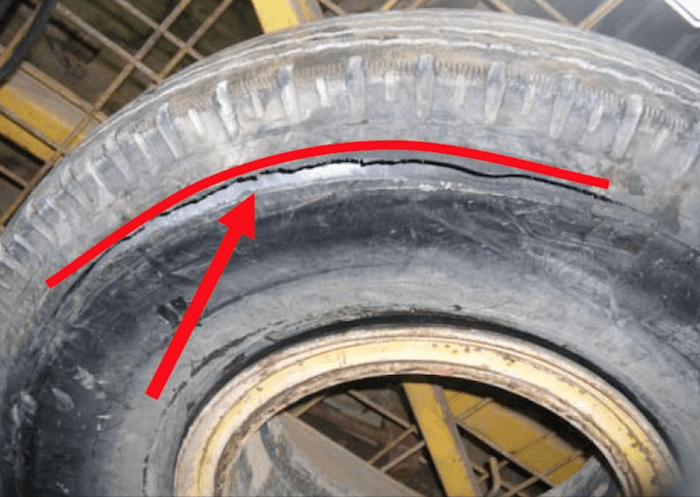
Identifying at-risk tires requires careful attention to subtle indicators that often precede catastrophic failure. While no affordable technology currently detects potential zipper ruptures before they happen, established inspection protocols dramatically reduce risk when properly implemented.
Audible Red Flags During Tire Inflation
Listen for these critical warning sounds when inflating tires:
– Distinct creaking or popping noises during inflation
– Audible “snap” accompanied by visible bulging
– Hissing sounds indicating internal air migration
– Irregular flexing patterns in the sidewall
Pro tip: Always inflate tires with the valve core removed so you can rapidly deflate from a safe distance if warning signs appear. A bulging tire at 120 psi with the valve core installed becomes extremely dangerous if the air chuck dislodges.
Visual Inspection Checklist for High-Risk Tires
Follow this OSHA-mandated inspection protocol for every steel-cord radial tire:
- Check air pressure before removing from vehicle—any tire below 80% recommended pressure requires complete deflation and inspection
-
Examine both inner and outer surfaces for:
– Discoloration or wrinkling of the innerliner
– Irregular bulges along the sidewall
– Bead damage or irregularities
– Cracks, cuts, or embedded debris -
For dual assemblies: If one tire shows underinflation, both tires must be completely deflated and inspected
The 20-Minute Safety Test That Prevents Zipper Failure Injuries
The only reliable protection against zipper failure tire events combines thorough visual inspection with a controlled overinflation test performed inside a certified safety cage. This protocol, established in 1995 and mandated by OSHA 29 CFR 1910.177, catches dangerous tires before they’re returned to service.
Step-by-Step Overinflation Testing Procedure
- Mount the tire in a certified safety cage with valve core removed
- Inflate slowly to 20 psi while monitoring for irregular bulges
- If no issues appear, inflate to 20 psi above recommended operating pressure
- Critical step: Leave the tire at overinflated state for 20 minutes
- Maintain safe distance during testing period—never stand in trajectory zone
This additional stress reveals hidden weaknesses in steel cords that would otherwise cause catastrophic failure during normal operation. While some tires may rupture during this controlled test, containment within a safety cage prevents injuries.
Essential Safety Cage Requirements
- Minimum 1/4-inch thick steel construction
- Securely anchored to floor
- Viewing window with protective mesh
- Remote inflation capability
- Clearance of at least 18 inches from cage walls to tire
Warning: Never inflate any steel-cord radial tire outside a safety cage—regardless of its apparent condition. New, used, repaired, and retreaded tires alike can experience zipper failure without warning.
High-Risk Tires You’re Likely Servicing Right Now

Zipper failure tire events affect all steel-cord radial tires, but certain applications present elevated risks that demand extra vigilance.
Dual Assembly Inner Tires: The Most Vulnerable Position
Zipper failures most commonly occur on inner twin tires, either on drive or trailer axles. This pattern stems from maintenance neglect—valve extensions often detach, leaving inner tire pressure unchecked for extended periods. Always inspect both tires in dual assemblies when one shows underinflation, as the companion tire likely experienced similar operating conditions.
Light Truck Tires with Steel Sidewall Plies
Many radial light truck tires feature steel sidewall plies, making them equally susceptible to zipper failure. For example, an LT235/35R16 mounted on a center post machine requires the same safety precautions as heavy truck tires. Simple rule: If the sidewall ply is made of steel, inflate it in a safety cage without exception.
Proven Prevention Strategies for Zipper Failure Tire Events
Implement these critical practices to dramatically reduce zipper failure risks in your fleet or service operation.
Inflation Maintenance Protocol
- Check tire pressure at least weekly using calibrated gauges
- Never rely on visual inspection or “kicking the tire”
- Investigate any tire 20-50% below recommended pressure
- Immediate action: Remove and inspect any tire more than 20% underinflated
- Never reinflate a completely flat tire without thorough inspection
Load and Age Management Essentials
Overloading creates identical stress conditions as underinflation. Never exceed vehicle weight limits and distribute loads evenly across all tires. Additionally, replace tires older than 6 years regardless of tread depth—rubber compounds degrade and steel cords weaken with age, increasing failure risk even in lightly used tires.
Emergency Response When Zipper Failure Occurs
While Driving
If you feel sudden vehicle pull or vibration:
– Maintain firm grip on steering wheel
– Gradually reduce speed by easing off accelerator
– Avoid sudden braking
– Move to safe location before inspecting tires
During Tire Service
If warning signs appear during inflation:
– Immediately retreat to safe distance
– Deflate tire remotely if possible
– Never approach until completely deflated
– When in doubt, replace the tire rather than risk catastrophic failure
Final Note: Treating every steel-cord radial tire as potentially capable of zipper failure tire events saves lives. By implementing these inspection protocols, using safety cages for all inflation operations, and maintaining proper tire pressure, you dramatically reduce the risk of catastrophic blowouts. Remember—the cost of a new tire pales in comparison to the potential consequences of a zipper failure. When you hear that distinctive creaking during inflation, recognize it as your only warning before disaster strikes. Stay vigilant, follow safety protocols without exception, and never assume a tire is safe based solely on its appearance. Your life and the lives of your colleagues depend on it.