That dreaded TPMS warning light on your dashboard in the dead of winter isn’t just an annoyance—it’s your vehicle’s urgent safety alert. When temperatures plummet, your tire pressure drops approximately 1 PSI for every 10°F temperature decrease, potentially leaving you with dangerously underinflated tires before you even back out of the driveway. Understanding exactly when to check tire pressure in winter protects your family’s safety, extends tire life, and maintains critical traction on icy roads. This guide reveals the precise moments you must check pressure, how to do it correctly, and why skipping this simple task could put you at serious risk during cold-weather driving.
Why Your Tire Pressure Drops 1 PSI for Every 10°F Temperature Drop
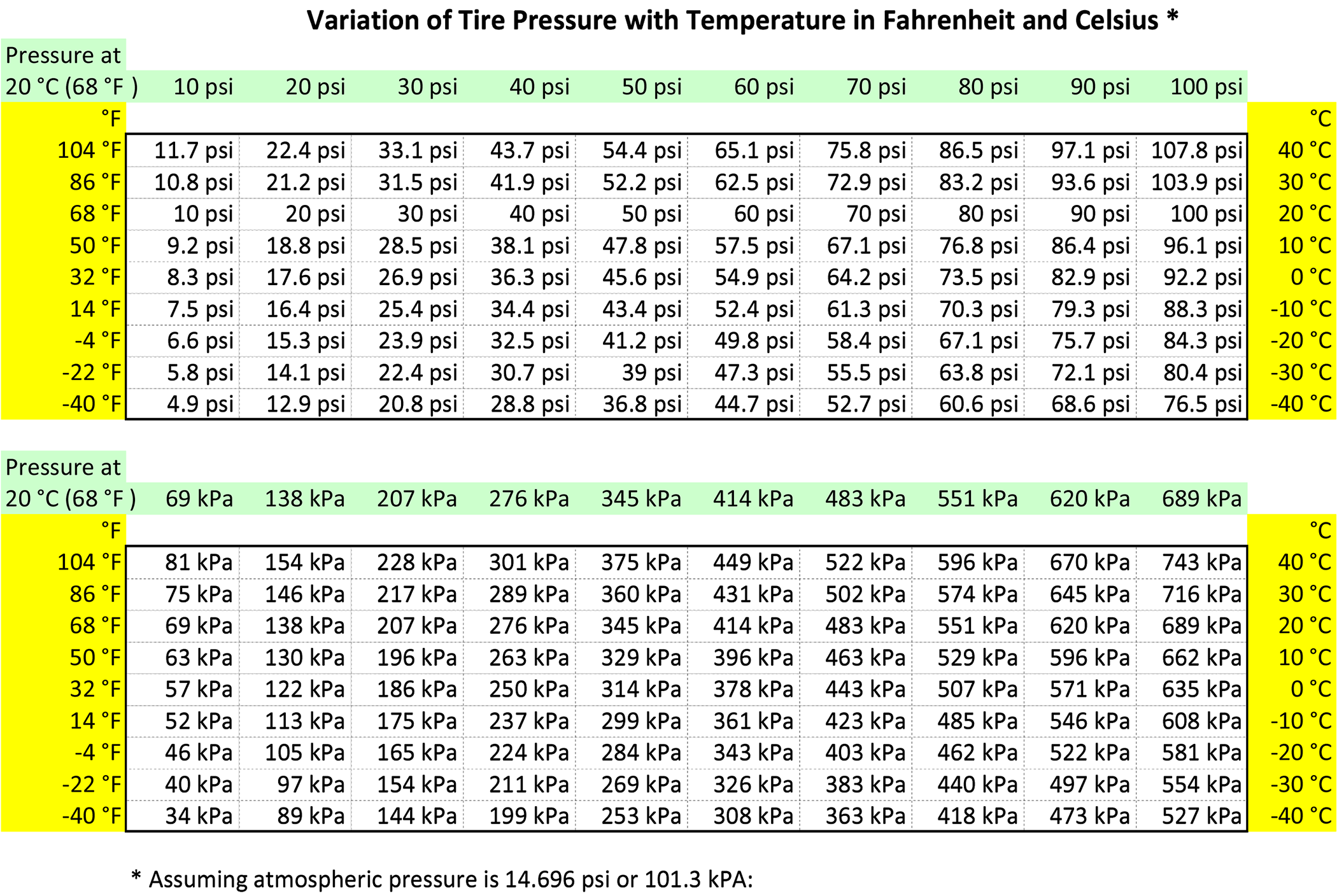
Cold air molecules slow down and condense inside your tires, creating less pressure against the tire walls—this isn’t tire leakage, but simple physics at work. Imagine blowing up a balloon in a warm room, then placing it in your refrigerator; it appears slightly deflated due to the air contraction, yet no air has escaped. Your tires experience the same phenomenon when temperatures drop overnight.
This predictable pressure loss follows a consistent mathematical relationship: for every 10°F decrease in outside temperature, tire pressure decreases by approximately 1 PSI. If your vehicle requires 32 PSI and the temperature drops from 40°F to 10°F overnight, your tires could lose 3 PSI—falling to 29 PSI before your first winter drive. This seemingly small difference dramatically impacts handling, braking distance, and tire wear when roads are covered in snow or ice.
What Temperature Triggers Significant Pressure Loss
Watch for these critical temperature thresholds that demand immediate pressure checks:
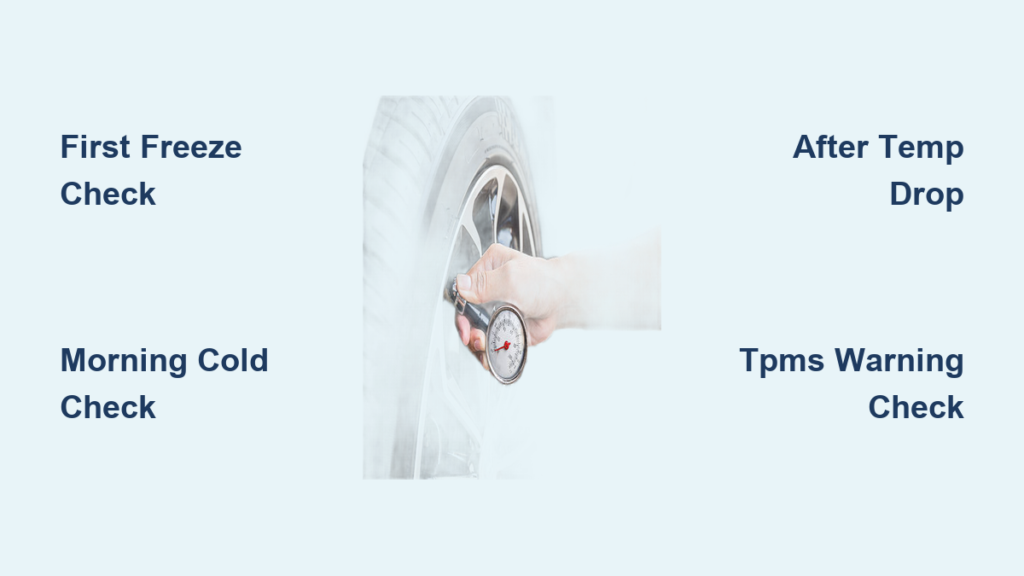
– First freeze (32°F): Check pressure when temperatures hit freezing for the first time each season
– 20°F mark: Expect 2-3 PSI loss from fall baseline measurements
– Single-digit temperatures: Prepare for 4+ PSI loss requiring adjustment
– After temperature swings: Check immediately following 20+ degree daily fluctuations
Morning vs. Evening: The Only Time That Gives Accurate Winter Readings
Checking tire pressure after work or in the evening gives dangerously misleading readings because driving heats the air inside tires, causing it to expand. A tire showing 35 PSI after highway driving might actually measure only 31 PSI when cold—adding air based on this warm reading would dangerously overinflate your tires once they cool overnight.
First Thing Morning Check Protocol
For accurate winter pressure measurements, follow this strict timing rule:
– Check before driving: Measure pressure before moving your vehicle more than a mile
– After 3+ hours parked: Ensure tires have cooled completely to ambient temperature
– During coldest part of day: Early morning readings capture maximum pressure loss
– Before extreme cold snaps: Check when forecast predicts 10+ degree drops
How Often to Check Tires When Temperatures Fall Below Freezing
Monthly pressure checks that suffice during summer become dangerously inadequate when winter arrives. Temperature fluctuations during cold months require significantly more frequent monitoring to maintain safe operating levels.
Winter Pressure Check Frequency Schedule
- Every 2 weeks minimum: Standard recommendation for all winter drivers
- After every major temperature drop: Check following 10+ degree decreases
- When switching to winter tires: Verify pressure during seasonal tire change
- Before long winter trips: Ensure proper inflation for highway safety
Finding Your Exact Winter Tire Pressure Requirements
Your vehicle’s correct winter pressure isn’t found on the tire sidewall—that number indicates maximum pressure, not your specific requirement. The precise PSI you need appears on the driver’s side door jamb placard, inside the fuel filler door, or in your owner’s manual.
Critical Pressure Details Most Drivers Miss
- Front/rear differences: Many vehicles require different pressures for front and rear tires
- Load-specific ratings: Heavier winter cargo may require adjusted pressure
- Winter tire specifications: Dedicated winter tires sometimes need different PSI
- Never exceed door jamb specs: Manufacturer recommendations override all seasonal advice
Step-by-Step: Checking Tire Pressure on Cold Winter Mornings
Checking pressure correctly in freezing conditions requires specific techniques to avoid inaccurate readings and ensure safety.
Essential Winter Pressure Check Procedure
- Gather tools: Digital pressure gauge (more accurate in cold) and portable air compressor
- Verify specs: Note exact PSI requirements from door jamb before heading outside
- Remove valve caps: Cold metal sticks to plastic—gently twist while pulling
- Seal gauge firmly: Press straight down to prevent air escape during measurement
- Record all four tires: Front left, front right, rear left, rear right
- Adjust carefully: Add air in 2-3 PSI increments, rechecking after each addition
- Recheck cold: Wait 10 minutes then verify pressure after adjustment
Pro Tip: Keep your pressure gauge in your pocket before checking—cold gauges give inaccurate readings until they warm to ambient temperature.
Why Your TPMS Can’t Replace Manual Winter Pressure Checks
Your Tire Pressure Monitoring System only triggers when pressure drops 25% below recommended levels—by that point, you’re already driving with dangerously underinflated tires. During winter, cold mornings frequently activate TPMS warnings, but waiting for these alerts means you’ve been driving with suboptimal pressure for days.
TPMS Winter Limitations You Must Understand
- Threshold-based: Only alerts at critical underinflation, not gradual loss
- Misses moderate loss: 5-10 PSI loss may not trigger warnings but affects safety
- False sense of security: Many drivers ignore manual checks when TPMS stays off
- Delayed response: Takes time for system to register pressure changes
The Hidden Dangers of Underinflated Tires on Snowy Roads

Underinflated winter tires create multiple safety hazards that most drivers underestimate until it’s too late. Reduced sidewall stiffness causes poor handling and responsiveness when you need maximum control on slippery surfaces.
Three Critical Winter Risks of Low Tire Pressure
- Extended stopping distances: Underinflated tires increase braking distance by up to 20 feet at 30 mph on snow
- Hydroplaning risk: Improper pressure prevents tread from effectively evacuating slush
- Blowout danger: Cold temperatures combined with underinflation weaken tire structure
Warning: That common myth about lowering pressure for better snow traction is dangerously false—underinflation actually reduces control and increases accident risk.
How Proper Winter Inflation Saves You Money on Fuel

Maintaining correct tire pressure during winter directly impacts your wallet through improved fuel economy. For every 1 PSI your tires are underinflated, fuel efficiency decreases by approximately 0.2%.
Winter Fuel Savings Breakdown
| Pressure Deficit | Fuel Economy Loss | Annual Cost (12,000 miles) |
|---|---|---|
| 4 PSI (all tires) | 0.8% | $25-40 |
| 8 PSI (all tires) | 1.6% | $50-80 |
| 12 PSI (all tires) | 2.4% | $75-120 |
This calculation doesn’t include additional costs from accelerated tire wear or potential accident expenses from compromised winter handling.
Winter Tire Pressure Quick Reference Guide
Use this actionable checklist to maintain optimal winter tire pressure:
| When to Check | Action Required | Critical Threshold |
|---|---|---|
| First freeze of season | Verify all four tires | 32°F mark |
| After 10°F temperature drop | Check and adjust if needed | 1 PSI loss |
| Before long winter trip | Full pressure check | Minimum 24 hours prior |
| TPMS warning activates | Immediate check and adjustment | Don’t delay |
Essential Winter Routine: Check pressure every two weeks throughout winter, always when tires are cold, and immediately after significant temperature changes. Don’t rely on TPMS alone—manual checks prevent dangerous underinflation before it triggers warnings.
Maintaining proper tire pressure throughout winter isn’t just maintenance—it’s a critical safety practice that directly affects your ability to stop, steer, and maintain control on hazardous winter roads. By checking pressure at the right times (first thing in the morning, after temperature drops, and at least every two weeks), you protect your family’s safety while saving money on fuel and tire replacement. That two-minute investment each week pays enormous dividends when icy conditions demand maximum tire performance. Start implementing this precise checking schedule today—the next time temperatures plummet, you’ll know exactly when to check tire pressure in winter and keep your family safe on the road.