A blown tire on a busy highway creates immediate safety risks and can cost your operation thousands in downtime. When your commercial truck loses traction due to sudden tire failure, knowing exactly how to respond makes the difference between a two-hour roadside fix and a multi-day disruption. This guide delivers the specific steps professional technicians take during tractor trailer tire repair emergencies, plus the maintenance habits that prevent 80% of roadside failures before they happen. You’ll learn which damage types qualify for safe repairs, how to maximize tire service life, and where to find reliable 24/7 service across major transportation corridors.
Commercial truck tires represent one of your largest operating investments, yet improper maintenance causes most premature failures. The difference between a properly executed tractor trailer tire repair and a rushed roadside fix determines whether that tire completes another 50,000 miles or fails catastrophically on your next run. Understanding professional repair protocols empowers you to make informed decisions that protect your cargo, your vehicle, and your bottom line when tire emergencies strike.
Immediate Response to Tire Blowouts
When a tire fails at highway speeds, your first actions determine whether the situation escalates into a major incident. Pull completely off the roadway onto firm, level ground away from traffic flow—never attempt repairs in the shoulder where passing vehicles create dangerous air turbulence. Activate hazard lights and deploy warning triangles at appropriate distances based on road conditions and visibility.
Contact a professional mobile tire service that operates 24/7 with response times under two hours. These specialized units carry complete repair kits, replacement tires for common sizes, and the expertise to assess whether your damaged tire qualifies for safe repair or requires immediate replacement. Attempting DIY repairs on commercial tires creates unacceptable safety risks due to the extreme pressures and structural complexity involved.
Technicians prioritize making your vehicle safe for transport before addressing the tire itself. They’ll inspect wheel rims for damage, check adjacent tires for secondary impact damage, and verify that no debris remains embedded that could cause additional failures. This comprehensive approach prevents compounding problems that turn a single tire issue into multiple replacements.
Critical Tread Damage That Requires Replacement

Not all tire damage qualifies for professional repair—knowing the difference prevents dangerous on-road failures. Tread punctures smaller than ¼ inch in the center 70% of the tread area typically qualify for safe plug-patch repairs. However, any damage within 1 inch of the shoulder edge or extending into the sidewall requires complete tire replacement regardless of visible severity.
Tread separation—when rubber layers detach from the tire carcass—demands immediate replacement. This dangerous condition often starts as a small bubble that rapidly expands during operation, eventually causing catastrophic tread loss. Never attempt repairs on tires showing signs of separation, as the structural integrity has been permanently compromised.
Sidewall damage from curb impacts or road hazards almost always requires replacement. The sidewall contains critical structural components that flex continuously during operation. Cuts, bulges, or cracks in this area indicate internal cord damage that cannot be safely restored through repair methods. Continuing to operate with damaged sidewalls risks sudden blowouts at highway speeds.
Prevent Costly Blowouts with Daily Pressure Checks
Improper inflation causes 90% of premature commercial tire failures, yet many drivers still rely on the unreliable “kick test” instead of actual measurements. Check tire pressure daily with a calibrated gauge when tires are cold (before driving or after sitting 3+ hours), as heat from operation increases pressure readings by 10-15 PSI.
Under-inflated tires flex excessively at the sidewall, generating dangerous heat that degrades internal components. This condition causes irregular wear patterns and significantly increases blowout risk—especially during hot weather or high-speed operation. Over-inflated tires develop rounded tread contact patches that accelerate center wear while reducing traction capabilities.
Establish a pressure log that tracks measurements over time to identify developing issues. Sudden pressure drops indicate slow leaks requiring immediate attention, while consistent over-pressure readings may signal faulty TPMS sensors. Fleet managers should implement mandatory cold pressure checks before every departure to prevent avoidable roadside emergencies.
Optimize Tire Rotation for Maximum Service Life
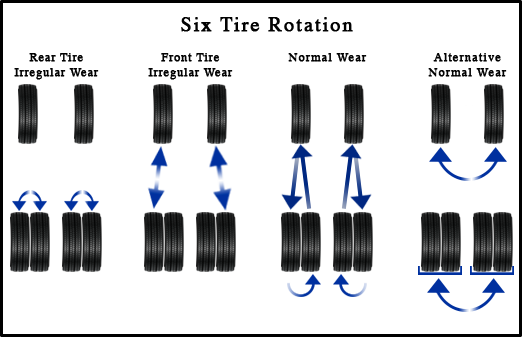
Drive tires wear 30-40% faster than trailer positions due to torque application and braking forces, yet many fleets neglect rotation schedules until uneven wear becomes visible. Rotate tires every 25,000-30,000 miles using a cross-rotation pattern that moves steer tires to drive positions, drive tires to trailer positions, and trailer tires to steer positions.
Pro Tip: Check alignment immediately after rotation—misalignment causes feathering, cupping, or diagonal wear patterns that accelerate tire degradation. Properly aligned wheels distribute forces evenly across the tread face, extending service life by 15-20% compared to misaligned setups.
Retreaded tires perform best when rotated into trailer positions after their initial service life on drive axles. This strategic placement maximizes casing value while ensuring retreads operate under less demanding conditions. Never install retreads on steer axles where handling characteristics directly impact safety.
Strategic Tire Replacement by Position
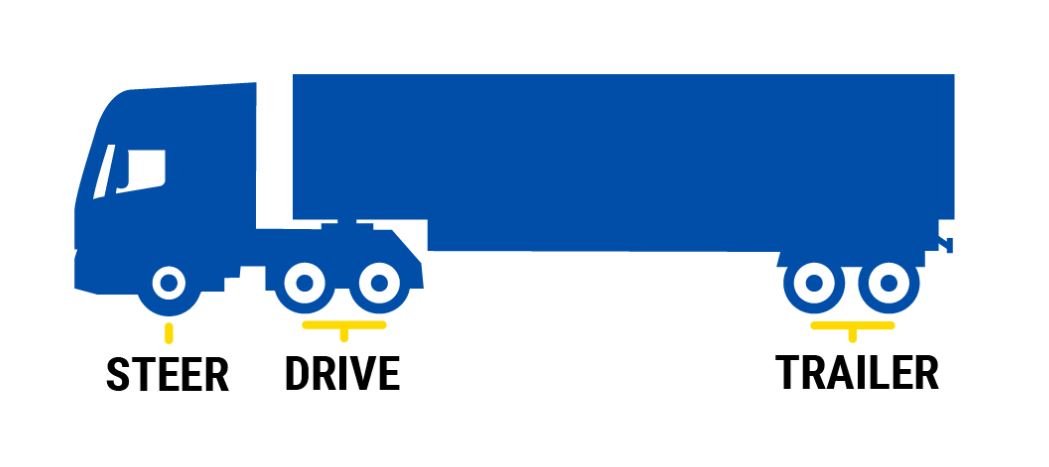
Different axle positions require specialized tire designs—installing the wrong type accelerates wear and compromises safety. Steer tires need precise tread patterns that maintain straight-line stability while providing responsive handling. Look for tires with reinforced shoulders and wear indicators that signal replacement time before reaching legal minimums.
Drive tires require aggressive tread patterns with deep grooves that maintain traction during acceleration and braking. These tires benefit from advanced rubber compounds that resist chunking and tearing under torque application. Replace drive tires when tread depth reaches 10/32-inch to maintain optimal traction before winter conditions.
Trailer tires experience constant rolling loads with minimal steering forces, making even wear patterns critical for longevity. Many fleets now use super singles on trailer positions to reduce weight and improve fuel economy, but these require precise pressure management to prevent rapid shoulder wear.
Find 24/7 Emergency Service Across Key Transportation Corridors

Rocky Mountain Truck Centers provides mobile tire repair services with two-hour response times across critical transportation routes. Their Colorado locations in Brighton and Lamar cover Denver metropolitan areas and I-70 corridors, while Arizona’s Flagstaff facility serves northern Arizona and southern routes with extended evening hours.
Texas operators benefit from the Abilene location’s 6am-10pm weekday coverage, and Wisconsin fleets can access the Poynette facility’s extended evening service. Tennessee drivers receive 24/7/365 mobile-only support in Greeneville, while Wyoming coverage spans both Cheyenne and Little America locations with weekend service.
Pro Tip: Bookmark the service center nearest your primary routes before emergencies happen. Mobile units carry common tire sizes but may need to arrange towing for specialty sizes—knowing this in advance prevents extended downtime during roadside emergencies.
Extend Tire Life with Proper Loading and Driving Techniques
Overloading remains a leading cause of premature tire failure, yet many operators exceed axle weight limits without realizing the impact. Verify actual weights using certified scales rather than relying on cargo manifests, as even 10% overload generates excessive heat that degrades internal components.
Smooth driving practices significantly extend tire life—avoid rapid acceleration that causes drive tire scrubbing and hard braking that creates flat spots on steer tires. Maintain safe following distances to minimize emergency stops, and reduce speed through construction zones where road debris increases puncture risks.
Park trailers on level surfaces to prevent flat-spotting during extended storage, and never leave tires exposed to direct sunlight for prolonged periods. These small habits compound to add 15,000-20,000 miles to each tire’s service life when consistently applied.
Verify Warranty Coverage Before Accepting Repairs
Professional tire services back their work with warranties covering materials and workmanship, but coverage details vary significantly. The Freedom Warranty offered by Rocky Mountain Truck Centers protects qualifying repairs against manufacturing defects, but requires proper documentation of service dates and technician information.
When scheduling repairs, ask specific questions about warranty duration, coverage limitations, and claim procedures. Some warranties exclude damage from road hazards or improper inflation, while others cover only the repair labor without materials. Understanding these details prevents disputes if issues arise after service completion.
Always request written documentation of completed repairs including tire identification numbers, repair methods used, and warranty information. This record protects your investment and streamlines any future warranty claims that may become necessary.
Final Note: Proper tractor trailer tire repair combines immediate emergency response with strategic maintenance habits that prevent most roadside failures. By implementing daily pressure checks, strategic rotation schedules, and position-specific replacement protocols, you’ll maximize tire service life while minimizing dangerous breakdowns. Partner with service providers offering 24/7 mobile support across your primary routes, and verify warranty coverage before accepting any repairs. These practices protect your largest rolling investment while keeping your trucks moving safely down the highway.