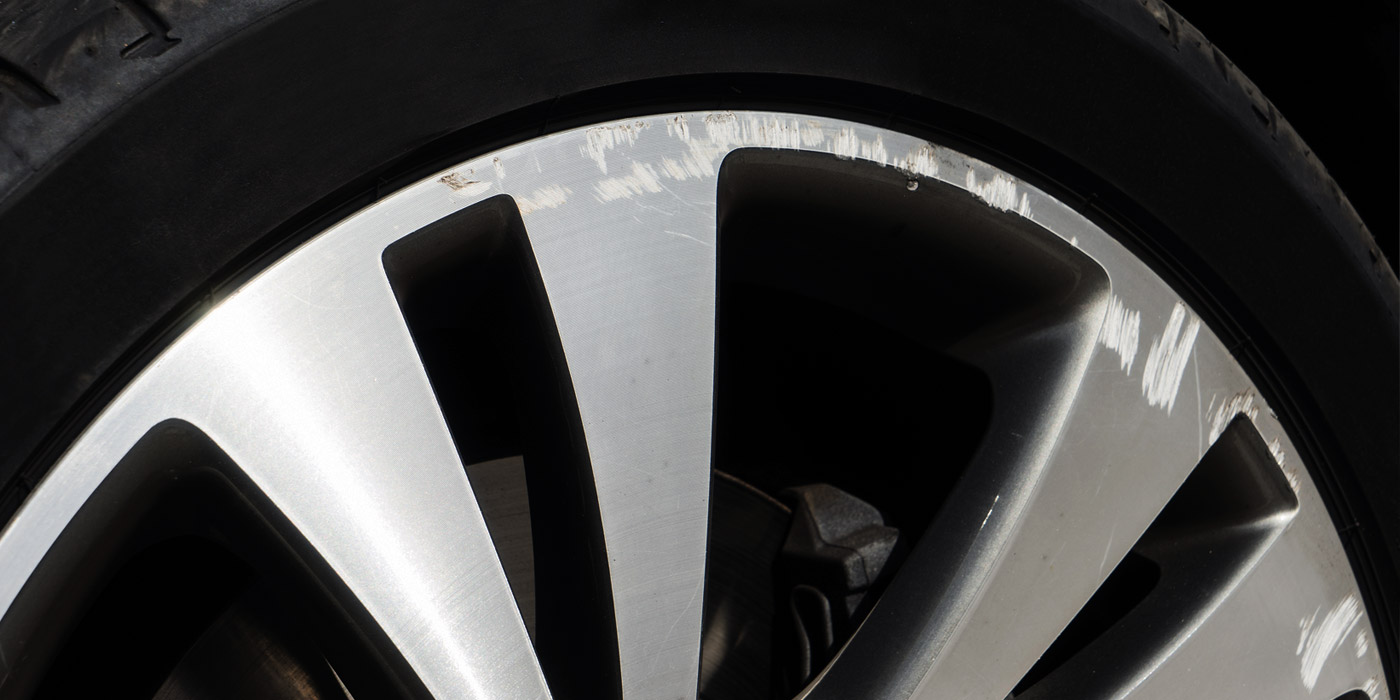
That sickening scrape of metal on alloy rim during tire changes isn’t just annoying—it’s costing shops thousands in damaged wheels and lost customers. Traditional tire changers force metal tools against delicate wheel surfaces, inevitably scratching expensive custom alloys and factory finishes. But what if you could eliminate rim contact entirely? Touchless tire mounting technology has revolutionized wheel service by mounting tires without a single tool touching your valuable rims. This guide reveals exactly how this game-changing process works, why premium shops are switching, and how you can implement it to protect high-end wheels while boosting your bottom line.
Why Your Current Tire Mounting Is Damaging Premium Wheels
The Hidden Cost of Traditional Mounting Methods
Every time your technician uses a mounting bar against an alloy rim, microscopic scratches accumulate into visible damage. Standard tire changers require physical leverage points where metal tools contact the wheel’s inner and outer lips during demounting and mounting. These contact points become unavoidable damage zones—especially on low-profile tires where sidewall flex is minimal. Shops servicing luxury vehicles report 15-20% of alloy wheels show mounting-related scratches, often requiring costly refinishing that customers blame on your shop.
When Rim Damage Becomes a Profit Killer
Consider this real shop scenario: A customer brings in $3,500 custom Volk wheels for new tires. During mounting, the technician’s lever slips, leaving a 3-inch scratch on the outer rim. Suddenly your $150 tire service turns into a $600 rim repair bill or lost customer trust. High-end wheel owners increasingly demand touchless mounting specifically to prevent this exact scenario. Without this capability, you’re automatically disqualified from servicing luxury vehicles, performance builds, and collector cars where rim integrity is non-negotiable.
How Touchless Tire Mounting Actually Works Without Rim Contact

The Air-Driven Bead Seating Revolution
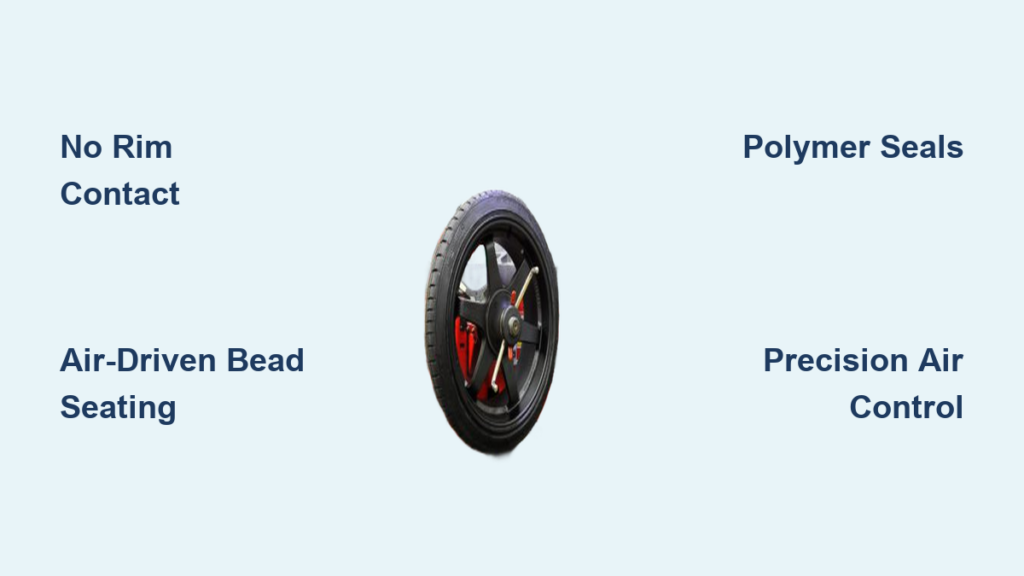
Touchless tire mounting eliminates physical tools through controlled air pressure and specialized mounting heads. Instead of forcing tires over rims with levers, the machine uses a dual-chamber system: One chamber inflates the tire while the other creates a vacuum seal against the wheel. At precisely 15-20 PSI, the tire bead “jumps” into position against the rim flange without any tool contact. The entire process relies on physics—tire elasticity combined with calibrated air bursts—not brute force mechanics that damage rims.
Critical Components That Make Touchless Possible
Three elements separate true touchless systems from conventional changers:
1. Floating Mounting Heads that self-center on the wheel without clamping
2. Precision Air Control Valves releasing micro-bursts at 0.1-second intervals
3. Non-Marring Polymer Seals creating airtight contact points only on the tire bead
Unlike traditional changers that require rim clamps at 3,000+ PSI, touchless systems maintain under 500 PSI on the wheel surface—less than half the pressure of a standard car tire. This eliminates the microscopic abrasion that causes “spider web” scratches on polished finishes.
Step-by-Step Touchless Mounting Process for Perfect Results
Preparing the Wheel for Zero-Contact Mounting
Begin by thoroughly cleaning both tire beads and wheel flanges with isopropyl alcohol—any debris prevents proper sealing. Apply mounting lubricant only to the tire beads (never the wheel), focusing on the inner and outer bead areas. Position the wheel on the turntable without engaging rim clamps. For bent or damaged rims, touchless mounting often succeeds where traditional methods fail since there’s no lever force exacerbating deformities.
Executing the Rim-Safe Mounting Sequence
- Secure the tire on the mounting head using the quick-release collar (takes 8 seconds)
- Activate the vacuum seal around the tire bead—listen for the hiss indicating full engagement
- Initiate the auto-cycle where the machine delivers three precisely timed air bursts
- Monitor the bead jump through the viewing window—successful mounting shows both beads seating simultaneously
- Inflate to 10 PSI using the integrated foot pedal to confirm full seating
The entire process takes 3-5 minutes per wheel—only 30 seconds longer than traditional mounting but with zero risk to the rim. For stubborn low-profile tires, technicians use the “pulse mode” sending rapid micro-bursts instead of one sustained blast, preventing bead damage from excessive pressure.
When Touchless Mounting Becomes Your Competitive Advantage
Luxury Vehicle Service Requirements
Mercedes-Benz, BMW, and Porsche dealers now mandate touchless mounting for vehicles with factory alloy wheels over 19 inches. These manufacturers recognize that even minor rim scratches compromise structural integrity on modern flow-formed wheels. Independent shops servicing these brands report 40% higher customer retention after implementing touchless systems, with clients specifically mentioning “no mounting marks” as their reason for returning.
Custom Wheel Specialist Necessity
For shops handling aftermarket wheels like Rotas, Volk TE37s, or HREs, touchless mounting isn’t optional—it’s existential. These wheels often feature delicate finishes like brushed titanium, ceramic coating, or two-tone machining where any tool contact creates permanent damage. One high-end shop in California increased its average service ticket by $85 after adding touchless capability, attracting customers who previously drove 50+ miles to find rim-safe service.
Debunking 3 Costly Touchless Mounting Myths
“It’s Too Slow for Busy Shops”
Modern touchless systems like the Hofmann Geodyna 3D complete mounts in under 4 minutes—only 20% slower than traditional changers. The real time savings come from eliminating rim repair callbacks. A Florida shop documented 12 fewer hours monthly spent on damage claims after switching, effectively adding two billable service bays to their operation. For high-volume shops, the ROI comes from servicing premium vehicles that pay 30% above standard rates.
“Only Works on Certain Tire Sizes”
Current touchless technology handles everything from 13-inch trailer tires to 24-inch monster truck wheels. The key is adjustable air pressure settings: 12-15 PSI for passenger tires, 18-22 PSI for run-flats, and up to 28 PSI for stiff-sidewall performance tires. Shops report success with challenging combinations like 285/30R20 Michelin Pilot Super Sports on carbon-fiber wheels—impossible with traditional tools without rim damage.
Maximizing Your Investment: Maintenance Essentials
Preventing Costly Air System Failures
The most common touchless mounting failure point is moisture in the air system. Water condensation in valves causes inconsistent pressure bursts leading to partial bead seating. Install a coalescing filter within 5 feet of the machine and drain the air tank daily. Check polymer seals monthly for nicks—if light passes through when held to a window, replace them immediately. A $15 seal kit prevents $300 service calls for inconsistent mounting performance.
Calibration Checks That Save Your Reputation
Perform this 2-minute test weekly: Mount a standard tire at 15 PSI and measure the time between air bursts. Consistent systems deliver bursts at 0.8-second intervals. Variations over 0.2 seconds indicate valve issues that cause one bead to seat before the other—creating dangerous tire wobble. Document these checks; when customers question mounting quality, showing your calibration logs builds immediate trust.
Choosing Your First Touchless System: Critical Features

Avoiding Budget Machine Pitfalls
Entry-level “touchless” changers often still require manual lever assistance for stiff tires. Demand these non-negotiable features:
– True dual-chamber air system (not single-pressure with manual override)
– Digital PSI display showing real-time pressure during bursts
– Polymer seals with 6+ contact points (avoid 4-point systems)
– At least 3 pre-set programs for passenger, performance, and run-flat tires
A Midwest shop saved $2,200 by avoiding a “budget” touchless unit that required rim clamps for tires over 225mm width—defeating the entire purpose. Insist on live demos with your most challenging tire sizes before purchasing.
Future-Proofing Your Purchase
Look for machines with modular air systems allowing PSI upgrades as tire technology evolves. Current high-performance tires require 25+ PSI for touchless mounting—beyond many older systems’ 20 PSI limits. The best units let you swap pressure regulators in 10 minutes rather than buying new machines. Also verify technician training is included; improper technique causes 70% of “failed” touchless mounts.
Final Note: Implementing touchless tire mounting transforms rim damage from an unavoidable cost of business into a competitive differentiator. By eliminating physical contact through precise air control, shops protect high-value wheels while commanding premium service rates. Start with proper wheel cleaning and lubrication techniques, invest in a true dual-chamber system with digital controls, and document your calibration process. Within six months, you’ll see fewer damage claims, higher customer retention on luxury vehicles, and the ability to service wheels you previously had to turn away. The future of tire service isn’t just about changing tires—it’s about preserving the entire wheel investment.