Your tire pressure light just flashed during rush hour. You pull over to find a tire sinking toward the rim. Without the right inflation tool, you’re stranded—waiting for roadside assistance while traffic whizzes past. Choosing the wrong tire pump type wastes precious minutes when every PSI counts. Understanding the distinct capabilities of each pump category prevents this nightmare. This guide cuts through marketing hype to show exactly which tire pump types deliver when you’re on the clock. You’ll learn how manual, electric, CO2, built-in, and commercial systems solve specific pressure crises—so you never again waste money on gear that fails when tires go flat.
Manual Foot Pumps: The No-Power Solution for Garage Emergencies
When grid power fails or you’re stranded far from outlets, foot-operated pumps become lifelines. These units convert leg strength into precise air delivery through a simple piston mechanism housed in a steel base. Unlike hand pumps, their foot treadles leverage your body weight for higher pressure output with less fatigue. Most handle standard passenger tires up to 50 PSI but struggle with trucks or run-flats requiring 60+ PSI.
Why Foot Pumps Fail on Modern Low-Profile Tires
Low-profile performance tires demand 45+ PSI to maintain sidewall integrity. Standard foot pumps often max out at 40 PSI due to limited stroke volume. Watch for the pump handle becoming immovable before reaching target pressure—this signals insufficient capacity. Upgrade to commercial-grade foot pumps with dual-piston designs if you drive sports cars or SUVs.
Proper Technique to Avoid Back Strain During Inflation
Bend knees deeply while keeping your back straight as you press down. Exhale forcefully on the downward stroke to engage core muscles. Never lock your knees—this transfers impact to your spine. For heavy inflation tasks, alternate legs every 20 strokes to prevent muscle fatigue. Keep the pump base firmly planted on asphalt; wobbling reduces efficiency by 30%.
Hand Pumps: The Compact Lifesaver for Bicycle and Car Kits
These palm-sized units fit in glove compartments and bike frames yet deliver surprising power through clever engineering. High-pressure models use narrow barrels to multiply force, while high-volume versions feature wider cylinders for rapid air transfer. Cyclists rely on them for tubeless tire seating, while drivers keep them for minor pressure top-offs between service stops.
Spotting the Critical Pressure Gauge Flaw in Budget Models
Many sub-$15 hand pumps have analog gauges with 5+ PSI variance—enough to dangerously overinflate modern tires. Test yours by inflating to 35 PSI on a digital gauge, then check the hand pump reading. If it’s off by more than 3 PSI, replace it immediately. Always verify final pressure with your vehicle’s TPMS or a standalone digital gauge.
Why Mountain Bikers Need Dual-Mode Hand Pumps
Tubeless MTB tires require sudden high-volume bursts to “pop” the bead onto the rim. Standard hand pumps can’t generate this initial surge. Look for models with a flip switch that converts from high-pressure (for final inflation) to high-volume mode (for bead seating). Without this feature, you’ll waste 10+ minutes of strenuous pumping trying to seat tires.
Electric Tire Pumps: Decoding 12V, Rechargeable, and Cordless Systems

Car battery-powered (12V) pumps dominate roadside emergencies with their brute-force inflation speed. Rechargeable lithium units offer cordless freedom but sacrifice sustained pressure capacity. True cordless models with AC adapters bridge both worlds but add bulk. All electric types share one critical vulnerability: overheating during extended use.
The 90-Second Rule That Prevents Pump Burnout
Electric pumps contain thermal cutoff switches that kill power after 90 seconds of continuous operation. Ignoring this causes permanent motor damage. Set a timer: inflate for 75 seconds, then pause 60 seconds. For tires below 10 PSI, repeat this cycle 3-4 times. Never bypass thermal protection—even “pro” models fail catastrophically when overheated.
Why Truck Owners Must Avoid Standard 12V Pumps
Standard car-rated 12V pumps deliver 1.5-2.0 CFM airflow—enough for passenger tires but inadequate for truck/SUV tires holding 80+ PSI. Attempting to inflate large tires triggers constant thermal shutdowns. Upgrade to commercial 12V units rated for 3.5+ CFM if you drive vehicles with 18+ inch wheels. Check the pump’s duty cycle rating; 50% means it can only run 30 seconds per minute.
CO2 Inflators: The Speed vs. Precision Dilemma for Cyclists and Racers
These cartridge-based systems inject compressed gas for near-instant inflation—critical during road races or trail emergencies. But CO2’s rapid expansion cools tires dramatically, causing false low-pressure readings. One 16g cartridge fills a standard road bike tire but only partially inflates a car tire.
The Temperature Trap That Ruins Tire Pressure Readings
CO2 expansion drops tire temperature by 30°F within seconds. Cold tires read 3-5 PSI lower than actual pressure. Never adjust based on initial readings—drive 1 mile or ride 5 minutes to normalize temperature before rechecking. For critical applications like track days, use nitrogen cartridges instead of CO2 to avoid thermal distortion.
Calculating Exact Cartridge Needs for Different Tires
Car tires require 2-4x more air volume than bike tires. Use this formula: (Target PSI x Tire Volume) ÷ 240 = Cartridge grams needed. Example: A 225/45R17 car tire (volume ~14 liters) at 35 PSI needs (35×14)/240 ≈ 2.04 grams. Since cartridges come in 16g/25g sizes, you’d need two 16g cartridges for full inflation. Always carry spares—partial cartridges can’t be reused.
Built-In TPMS Pumps: The Hidden Convenience with Critical Limitations

Modern luxury vehicles embed pumps in trunks that auto-inflate tires to preset pressures via dashboard controls. These systems shine for daily top-offs but fail catastrophically during actual flats. Their tiny motors overheat after adding 5 PSI, and they lack the power to reinflate tires below 15 PSI.
Why These Pumps Can’t Fix Real Flats
Built-in systems move minimal air volume—typically 0.5 CFM versus 3+ CFM for portable compressors. A tire leaking at 1 PSI per minute will never reach target pressure. Worse, continuous operation triggers “TPMS fault” warnings that disable the system entirely. Use these only for minor pressure loss (2-3 PSI), never for punctures.
The $200 Repair You Can Avoid with Proper Usage
Forcing built-in pumps to inflate severely underinflated tires melts wiring harnesses. Dealers charge $400+ for replacements. Never run the system longer than 90 seconds. If pressure doesn’t rise within 30 seconds, stop immediately—your tire has a leak requiring patching, not pumping.
Commercial Air Compressors: When You Need Serious Power
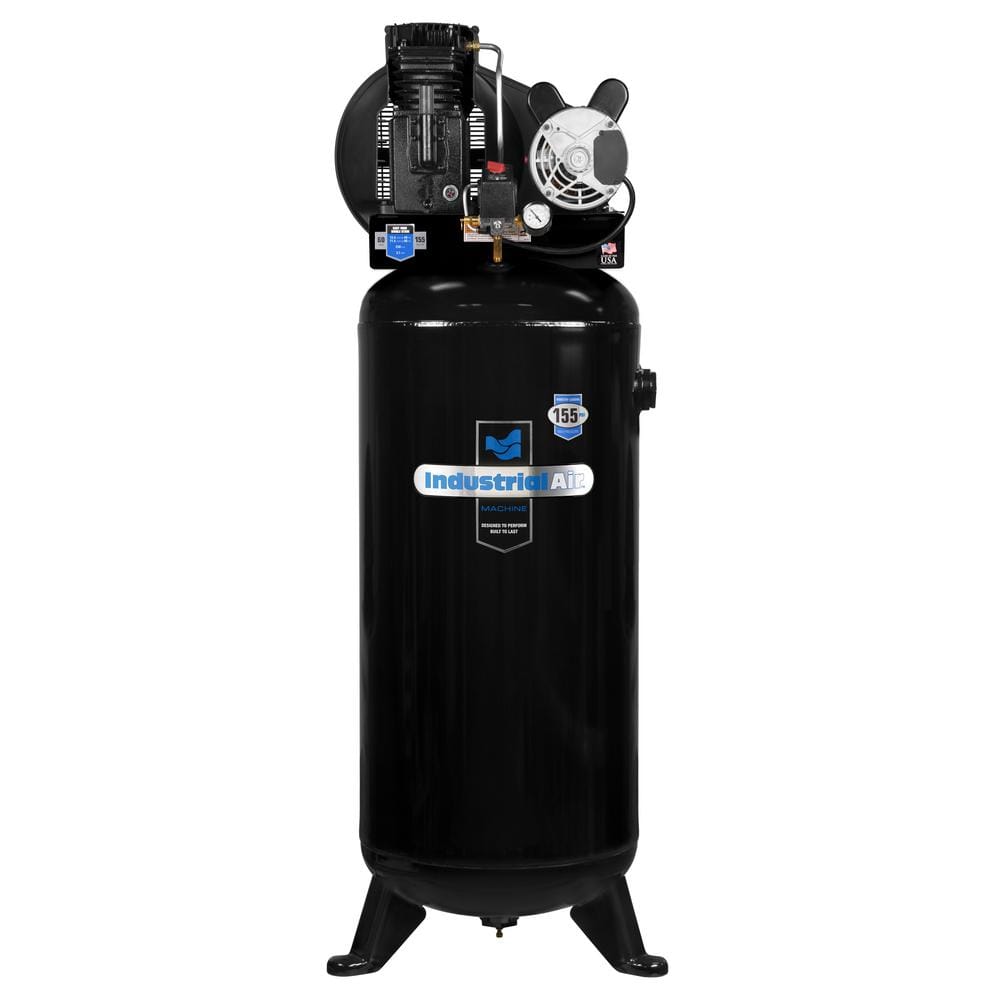
Garage-grade compressors (5+ HP) deliver relentless airflow for fleet operations and heavy equipment. Their oil-lubricated pumps sustain 100+ PSI indefinitely—unlike consumer models that overheat. But their 50+ pound weight and noise levels make them impractical for roadside use.
The Critical PSI/CFM Ratio for Truck Tire Inflation
Commercial pumps list two specs: PSI (maximum pressure) and CFM (airflow at specific PSI). For 100 PSI truck tires, verify CFM at 100 PSI—not the higher CFM rating at 40 PSI. A unit rated “5 CFM at 90 PSI” becomes useless for semi-trucks requiring 100+ PSI. Always match the pump’s MAX PSI to your tire’s MAX PSI rating.
Avoiding Moisture Contamination in Tank Systems
Compressor tanks collect condensation that corrodes valves and contaminates tires. Drain tanks after every use by opening the petcock valve until air stops hissing. In humid climates, add desiccant filters to the air line. Never skip this—water in tires causes dangerous pressure fluctuations as temperatures change.
Final Note: Choosing the right tire pump type prevents roadside disasters but requires matching the tool to your specific vehicle and usage patterns. Manual pumps offer reliability when power fails but demand physical effort. Electric units deliver speed yet require thermal management discipline. CO2 inflators save critical minutes for cyclists but introduce pressure-reading complications. Built-in systems provide convenience for minor top-offs but fail during real emergencies. Commercial compressors handle heavy-duty tasks but lack portability. Always verify pressure with a digital gauge after inflation—never trust a pump’s built-in reading. For daily drivers, keep a 12V electric pump rated for your tire size plus a backup hand pump. Cyclists should carry dual-mode CO2 inflators with nitrogen cartridges. Truck owners need commercial-grade 12V compressors with sustained 100+ PSI capacity. Test your equipment quarterly: inflate a tire 5 PSI low, then time how long it takes to reach target pressure. This reveals performance degradation before you’re stranded. Remember—the right pump doesn’t just fill air; it delivers peace of mind when tires betray you.