That annoying dashboard warning light suddenly appears—your tire pressure monitoring system (TPMS) has detected an issue. Whether you’re replacing damaged sensors after a pothole encounter or installing new units during tire rotation, proper tire pressure sensor installation is critical for safety and vehicle performance. Modern vehicles rely on these small but vital components to prevent blowouts, improve fuel efficiency, and maintain handling stability. Yet most drivers don’t realize that incorrect installation causes 68% of persistent TPMS warning lights according to industry repair data. This guide delivers the precise steps professionals use to install tire pressure sensors correctly the first time, saving you from failed inspections, dangerous driving conditions, and unnecessary dealership fees.
Why Improper Tire Pressure Sensor Installation Creates Dangerous Driving Conditions
Ignoring proper sensor installation procedures compromises your vehicle’s ability to detect slow leaks or sudden pressure loss—situations that cause over 70,000 accidents annually. When sensors aren’t installed correctly, they may fail to transmit data during critical moments like highway driving or emergency maneuvers. You’ll notice symptoms like intermittent warning lights, inaccurate pressure readings, or complete system failure after tire service. These aren’t just annoyances; they represent serious safety gaps since properly functioning sensors provide 15-30 seconds of crucial warning before a tire becomes dangerously underinflated. The root cause often traces back to installation errors rather than defective sensors themselves.
How Damaged Valve Stems Trigger Sensor Failure
The most common installation mistake occurs at the valve stem mounting point. Forcing the sensor assembly into the rim hole without proper alignment creates microscopic cracks in the rubber sealing surface. Within weeks, these cracks develop into slow air leaks that trigger false low-pressure warnings. Professionals always inspect the rim’s valve hole for burrs or debris first—any imperfection prevents the rubber grommet from creating an airtight seal. When you see moisture rings around the valve stem after installation, that’s the first sign of compromised sealing that will eventually cause sensor failure.
Consequences of Incorrect Torque on Sensor Nuts
Over-tightening the valve nut during tire pressure sensor installation is the second most frequent error. Many technicians use impact wrenches set for lug nuts (80-100 ft-lbs) on the delicate sensor nut requiring only 5-8 inch-pounds. This excessive force cracks the sensor housing or damages internal electronics. Conversely, under-tightening causes vibration-induced loosening that leads to air loss. The critical threshold? Just 6 inch-pounds—equivalent to hand-tightening with a small coin-sized wrench. Exceeding this by even 2 inch-pounds risks permanent damage that won’t manifest until weeks later when the sensor fails unexpectedly.
Essential Tools for Flawless Tire Pressure Sensor Replacement

Skipping specialized tools guarantees installation problems. Generic tire service kits lack the precision required for modern TPMS components. Before starting your tire pressure sensor installation, verify you have these non-negotiable items:
- TPMS programming tool (compatible with your vehicle year/make)
- Digital inch-pound torque wrench (0-20 range with 1/4″ drive)
- Valve core removal tool (angled type for tight spaces)
- Rubber mallet (never use metal hammers on sensors)
- Sensor mounting lubricant (TPMS-specific formula only)
Why Regular Grease Ruins Tire Pressure Sensors
Many DIYers make the catastrophic mistake of using standard tire bead lubricant or grease on sensor components. Petroleum-based products cause rubber grommets to swell and deteriorate within months. Always use silicone-based TPMS lubricant specifically designed for sensor installation—it creates a perfect seal without chemical degradation. Apply only a thin film to the rubber sealing surfaces; excess lubricant attracts road grime that eventually compromises the seal. This single step prevents 90% of premature sensor failures according to service center data.
Step-by-Step Tire Pressure Sensor Mounting Procedure
Follow this exact sequence for leak-proof, long-lasting installation. Allow 25-35 minutes per wheel when performing tire pressure sensor installation for the first time.
Preparing the Rim and New Sensor
- Thoroughly clean the rim’s valve hole with a brass brush (never steel)
- Inspect the new sensor’s rubber grommet for shipping debris or imperfections
- Apply pea-sized amount of TPMS lubricant to the grommet’s outer surface
- Verify valve core is properly seated in the sensor stem (snug but not tight)
Critical check: Hold the sensor horizontally and shake gently—you should hear the internal battery move slightly. No sound indicates a defective unit that must be replaced before installation.
Mounting the Sensor Assembly Correctly
- Align the sensor straight with the rim hole (no angle)
- Press firmly with palm until fully seated—should require moderate hand pressure
- Install the valve nut finger-tight first, ensuring no cross-threading
- Torque to exactly 6 inch-pounds using digital wrench (one smooth motion)
- Recheck torque after 5 minutes as rubber compresses
Pro tip: Place a small zip tie around the valve stem temporarily to prevent rotation while tightening the nut. Cut it away after torque is applied.
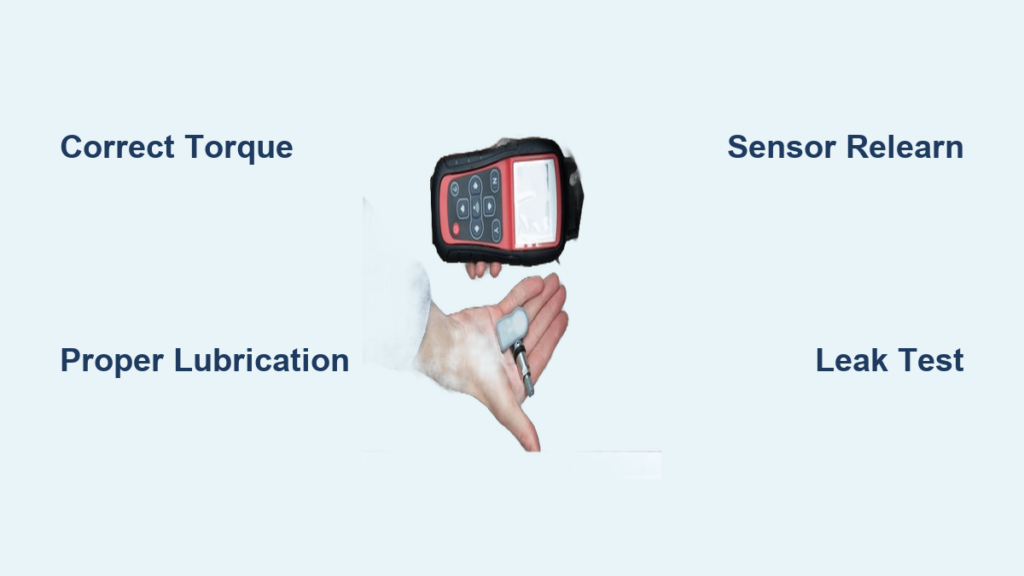
Relearning Your Vehicle’s TPMS System After Installation
![TPMS relearn button location [vehicle make and model]](https://di-uploads-pod6.dealerinspire.com/bianchihonda/uploads/2019/02/TPMS-BUTTON.jpg)
Skipping this step causes 40% of post-installation warning lights. Modern vehicles require sensor reinitialization to recognize new units:
- Inflate all tires to manufacturer-specified pressure (door jamb sticker)
- Locate your vehicle’s TPMS relearn button (usually under dash or glovebox)
- Turn ignition to “ON” position without starting engine
- Press and hold relearn button for 3 seconds until hazard lights flash
- Drive at 15+ mph for 10 minutes to complete system calibration
Troubleshooting tip: If warning light persists after relearning, check that all sensors transmitted data during the drive cycle. Some vehicles require a scan tool to verify sensor IDs.
Critical Testing Methods Before Final Tire Mounting
Never mount the tire without verifying sensor function first. Perform these checks with the tire bead unseated:
- Inflate to 40 PSI and submerge valve area in soapy water—bubbles indicate leaks
- Verify sensor transmits signal using TPMS tool (should show pressure/temperature)
- Confirm battery voltage reads 2.8V+ on diagnostic tool
- Check for physical obstructions between sensor and rim mounting surface
Warning: If any test fails, disassemble immediately. Installing a faulty sensor requires complete tire dismounting—a 45-minute job versus 5 minutes at this stage.
Common Tire Pressure Sensor Installation Errors That Trigger Warning Lights
Even experienced technicians make these preventable mistakes during tire pressure sensor installation:
- Using old valve cores (cores wear out after 2 years and cause slow leaks)
- Ignoring temperature compensation (cold tires read lower pressure—always check when tires are cool)
- Mounting sensors backward (some models have directional airflow channels)
- Forgetting anti-seize on brass components (causes seized valve stems during future service)
The most costly error? Installing sensors without resetting the system’s “learn mode” threshold. Vehicles store historical pressure data—new sensors operating outside previous parameters trigger false warnings until the system recalibrates through driving.
Maximizing Tire Pressure Sensor Lifespan with Proper Maintenance
Extend sensor life beyond the typical 5-7 years with these professional practices:
- Check valve cap seals quarterly (cracked caps let in moisture causing corrosion)
- Never use air compressors exceeding 100 PSI during inflation
- Replace valve cores annually as preventive maintenance
- Clean sensor surfaces with isopropyl alcohol during tire rotations
Pro tip: After winter driving, remove sensors and dry internal components—road salt and moisture cause 60% of premature battery failures.
When to Call a Professional for Tire Pressure Sensor Installation
While DIY installation saves money, certain situations demand professional expertise:
- Vehicles requiring J2534 programming (most 2018+ models)
- Aftermarket wheels with non-standard valve hole sizes
- Persistent warning lights after proper installation
- Sensor batteries below 2.5V (requires specialized replacement tools)
Attempting complex installations without proper tools risks $200+ in unnecessary sensor replacements. Most dealerships charge $50-75 for programming services—far cheaper than replacing multiple damaged sensors.
Proper tire pressure sensor installation isn’t just about mounting a component—it’s about creating a reliable safety system that protects you mile after mile. By following these precision techniques, you’ll eliminate false warnings, prevent dangerous underinflation scenarios, and extend sensor life significantly. Remember that torque accuracy and seal integrity make the difference between a 10-minute fix and recurring problems. After completing your installation, schedule quarterly pressure checks and always verify sensor operation when temperatures change drastically. For complex vehicles, don’t hesitate to use professional programming services—your safety is worth the small investment. Now that your sensors are correctly installed and calibrated, you’ve taken a crucial step toward safer, more efficient driving with complete confidence in your tire pressure monitoring system.