Your tire pressure monitoring system (TPMS) silently protects you by alerting when tire pressure drops to dangerous levels. But what happens when the battery inside these sensors finally gives out? Understanding tire pressure sensor battery life is crucial for maintaining vehicle safety and avoiding unexpected roadside emergencies. Most TPMS batteries last between five and ten years before needing replacement, but this timeframe varies dramatically based on your driving patterns, climate conditions, and sensor quality. Unlike your car battery that shows clear signs of weakness, TPMS batteries fail without warning—leaving you vulnerable to driving on underinflated tires without knowing it. This comprehensive guide reveals how to recognize failing sensors, maximize battery life, and make smart replacement decisions that keep you safe while saving money.
How Your Tire Pressure Monitoring System Actually Works
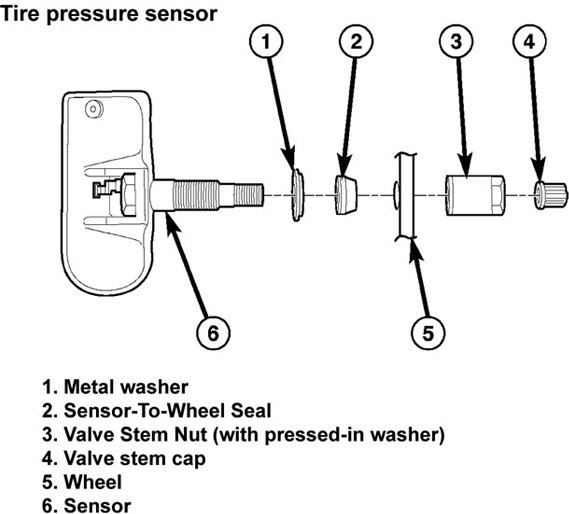
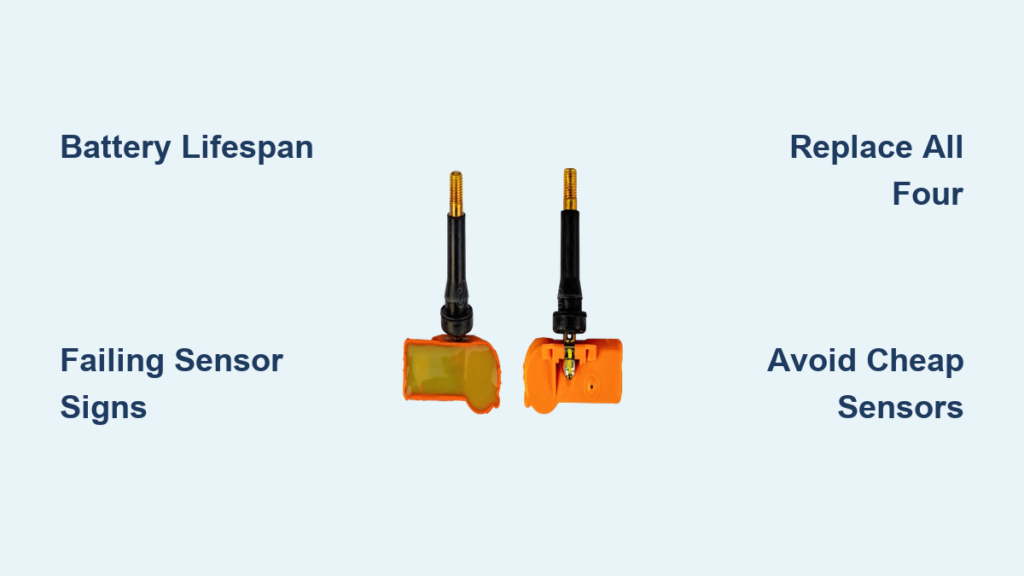
TPMS sensors are engineering marvels packed into compact units mounted inside each wheel. These devices contain four critical components working in harmony: a pressure transducer that measures air pressure hundreds of times per minute, a temperature sensor tracking thermal changes inside the tire, a microcontroller processing this data, and a radio transmitter sending signals to your vehicle’s computer. The battery powers this entire operation, making it the system’s lifeline.
When your tire pressure drops below manufacturer specifications—typically 25% below recommended PSI—the sensor triggers your dashboard warning light. Modern systems go further by displaying individual tire pressures on your instrument cluster, but this advanced functionality consumes more battery power. Unlike traditional maintenance items with clear service intervals, TPMS batteries deplete silently with no “low battery” warning. You’ll only discover the problem when the sensor stops transmitting entirely during your next tire rotation or when you experience an actual pressure loss with no warning.
Exact TPMS Battery Lifespan: What to Expect
Original equipment TPMS batteries are engineered to last seven to ten years under average driving conditions, though many manufacturers specify a minimum five-year lifespan or 100,000 miles—whichever comes first. This design life accounts for normal temperature fluctuations, typical vibration exposure, and standard transmission frequency. However, real-world performance varies significantly based on environmental factors and driving habits.
Extreme climates dramatically impact battery longevity. Sensors in Minnesota face brutal cold winters that increase battery internal resistance, while Phoenix sensors endure scorching summers that accelerate chemical decomposition within the battery cells. High-performance drivers who regularly push their vehicles to limits experience faster battery drain as sensors transmit more frequently to capture rapid pressure changes during aggressive cornering. Aftermarket sensors typically offer shorter lifespans of five to seven years due to lower-quality battery cells and less rigorous manufacturing standards compared to OEM parts.
Spotting a Dying TPMS Sensor Before Complete Failure

Since vehicles lack specific low-battery warnings for TPMS sensors, you must recognize subtle signs of impending failure. The most telling symptom is an intermittent TPMS warning light that appears during temperature extremes—particularly during cold morning starts when tire pressure naturally decreases. As battery voltage drops, the transmitter struggles to maintain consistent signal strength, causing the warning light to flicker on and off rather than staying steadily illuminated.
Another red flag appears on vehicles with digital tire pressure displays: one tire consistently showing “—” or erratic readings while others display normally. This pattern indicates a failing sensor rather than an actual pressure problem. Some advanced TPMS diagnostic tools available at automotive retailers can read actual battery voltage levels, giving you precise insight into remaining sensor life before complete failure occurs. If your vehicle has TPMS diagnostics buried in the infotainment menu, check this regularly as battery depletion approaches.
Why TPMS Batteries Fail: The Science Behind the Lifespan
TPMS sensors use specialized lithium-manganese dioxide batteries designed for low-power, long-duration operation—similar to watch batteries but engineered for harsh automotive environments. These batteries generate power through controlled chemical reactions that gradually deplete active materials inside the cell. Unlike your phone battery that you recharge regularly, TPMS batteries operate continuously until exhaustion with no recharge capability.
Temperature extremes accelerate the chemical reactions that drain these batteries. Cold weather increases internal resistance, reducing effective capacity, while heat speeds up decomposition of battery components. Every pothole and speed bump your vehicle encounters transmits shock through the wheel to the delicate sensor electronics, causing microscopic damage that accumulates over years of driving. Sensors mounted directly on valve stems experience significantly more vibration than those strapped inside the wheel, explaining why valve-stem sensors often fail earlier than wheel-mounted alternatives.
Smart Replacement Strategies for Failed Sensors

When your TPMS sensor battery dies, you face two primary options: replacing just the battery inside the existing sensor or installing a complete new sensor assembly. Battery-only replacement costs $10-$25 per sensor but requires specialized tools and technical expertise to disassemble the sealed unit without damaging sensitive electronics. This approach voids any remaining warranty and risks premature failure of other aged components within the sensor housing.
Complete sensor replacement ensures you get a fresh, warrantied unit with a battery guaranteed for its full design life. OEM sensors cost $50-$150 each plus installation, while quality aftermarket options range from $25-$75. Many vehicle manufacturers now design sensors with non-replaceable batteries, making complete replacement the only viable option. For most drivers, replacing all four sensors simultaneously—even if only one has failed—provides consistent performance and eliminates the inconvenience of staggered failures over the next year or two.
Professional Installation vs. DIY Sensor Replacement
Professional TPMS replacement offers peace of mind through expert installation, proper programming, and service warranties. Most tire shops include sensor replacement during tire service for $200-$600 total (parts and labor), and technicians have access to specialized programming tools ensuring proper system function. This option makes sense for complex European vehicles requiring dealer-level programming equipment.
DIY replacement can save 50% or more but demands mechanical skill and research. Aftermarket universal sensors often work with basic programming tools available at auto parts stores, bringing total costs down to $100-$300 for all four wheels. However, incorrect sensor selection, programming errors, or valve stem leaks from reused components can create new problems. Before attempting DIY replacement, verify your vehicle’s specific TPMS requirements—some models require VIN-specific programming that only dealerships can perform.
Maximizing Your TPMS Battery Longevity
While you can’t stop battery depletion entirely, several practices extend sensor life significantly. Park in garages or shaded areas whenever possible to minimize extreme temperature exposure that stresses battery chemistry. Maintain proper tire pressure (check monthly using an accurate gauge) to reduce unnecessary transmission events—sensors transmit less frequently when pressure remains stable. Address TPMS warnings immediately to prevent sensors from entering high-transmission alert mode that drains batteries faster.
When replacement becomes necessary, invest in OEM or premium aftermarket sensors with high-quality batteries rather than the cheapest available options. The additional $20-$30 per sensor often translates to two or three extra years of reliable service, particularly for vehicles in harsh climates or driven frequently on rough roads. Always replace valve stems during sensor service—reusing old stems causes slow leaks that trigger unnecessary sensor transmissions and accelerate battery drain.
Avoiding Costly TPMS Replacement Mistakes
Many drivers unknowingly shorten TPMS sensor life through preventable errors. Reusing old valve stems during tire service is the most common mistake—these components develop micro-cracks that cause slow leaks, triggering frequent TPMS warnings and unnecessary battery drain. Always install new valve stems with proper sealing washers whenever sensors are removed.
Ignoring TPMS warning lights allows small problems to escalate into major failures. A persistent warning light might indicate a simple slow leak that, if addressed promptly, prevents the sensor from entering continuous transmission mode that rapidly depletes the battery. Choosing ultra-cheap replacement sensors often costs more long-term as these frequently experience premature failure, requiring multiple service visits.
Most importantly, don’t wait until sensors fail completely before taking action. If your vehicle has original sensors approaching eight years old, consider proactive replacement before you’re left without tire pressure monitoring during an actual emergency. This strategic approach ensures continuous safety coverage while avoiding inconvenient breakdowns at inopportune times.