That blinking warning light on your dashboard creates immediate concern—is it just low tire pressure or something more serious? When your tire pressure monitoring system light flashing pattern appears, it’s signaling a critical malfunction in the monitoring system itself, not simply low air in your tires. Unlike a steady TPMS light that means “inflate your tires,” a flashing pattern indicates your vehicle’s pressure monitoring system has failed and requires diagnosis. Understanding this distinction could save you from unnecessary tire inflation attempts while preventing potential safety hazards on the road.
The tire pressure monitoring system has been mandatory in all new U.S. vehicles since 2007, making it a standard safety feature in virtually every car on the road today. When your tire pressure monitoring system light flashing sequence begins—typically blinking for 60-90 seconds after startup before either settling into a steady glow or continuing to flash—it’s communicating a system failure that won’t resolve with simple air pressure adjustments. This article explains exactly what causes this warning pattern, how to diagnose the problem yourself, and what solutions will get your TPMS functioning properly again.
Immediate Meaning of a Flashing TPMS Warning Light
Solid vs. Flashing Light: Critical Distinction
A solid TPMS light means one or more tires has dropped below the manufacturer’s recommended pressure threshold (usually 25% underinflated), requiring only an air pressure check and adjustment. However, when your tire pressure monitoring system light flashing pattern appears, it signals a malfunction within the monitoring system itself. This critical difference determines your entire response strategy—ignoring a flashing light won’t make it go away with proper inflation, and attempting to “fix” it with air will waste your time.
The flashing sequence serves as your vehicle’s diagnostic message. Most systems flash for 60-90 seconds after ignition as part of a self-check routine. If the system detects no faults during this period, the light turns off. If it detects a problem, the light continues flashing or transitions to a solid illumination. This specific pattern tells you the TPMS control module cannot properly communicate with one or more sensors, making accurate pressure monitoring impossible until the system malfunction is addressed.
Why Ignoring a Flashing TPMS Light Is Dangerous
Driving with a malfunctioning TPMS system creates significant safety risks. Without accurate pressure monitoring, you lose early warning of dangerous underinflation that can lead to blowouts, especially at highway speeds. Underinflated tires also reduce vehicle handling, increase stopping distances, and dramatically raise the risk of hydroplaning in wet conditions. Additionally, undetected low pressure accelerates tire wear unevenly, potentially requiring premature tire replacement.
The flashing light also indicates your vehicle’s computer may be storing diagnostic trouble codes that could affect other systems. In some vehicles, a persistent TPMS malfunction can trigger the check engine light or affect traction control and stability systems. Rather than ignoring this warning, treat it as urgent—your safety and vehicle performance depend on a functioning TPMS.
Top 3 Causes of Tire Pressure Monitoring System Light Flashing

Sensor Battery Failure (70% of Cases)
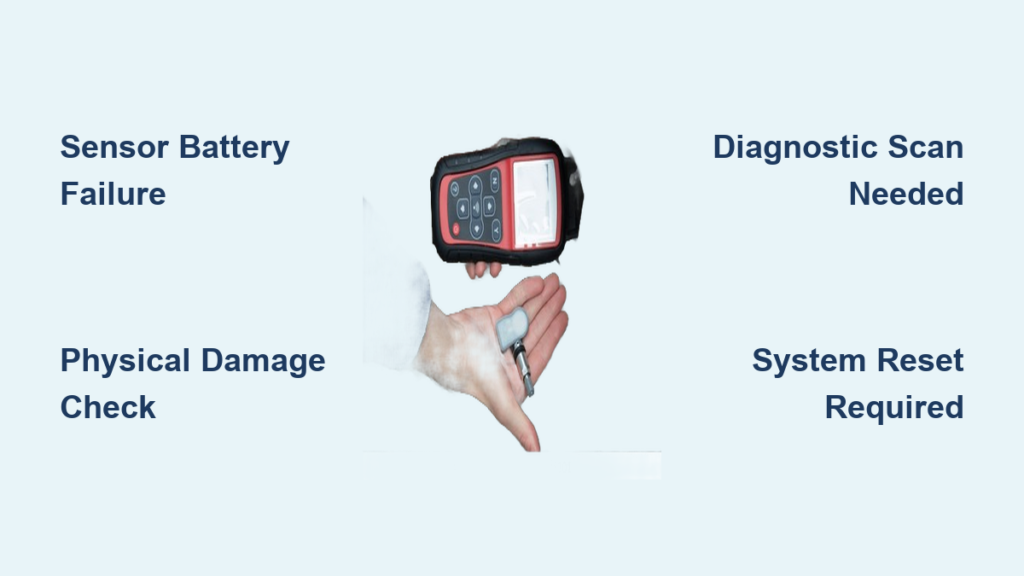
The most common cause of your tire pressure monitoring system light flashing pattern is dead or dying batteries inside the TPMS sensors. Each sensor contains a non-replaceable lithium-ion battery designed to last 5-10 years, but extreme temperatures—both severe cold and excessive heat—can dramatically shorten this lifespan. When these batteries weaken, sensors transmit intermittent or weak signals that the control module interprets as system failures.
You’ll notice battery-related failures more frequently in seasonal transitions. Sensors that functioned through summer may suddenly fail in winter’s cold as lithium batteries lose capacity in low temperatures. Delivery drivers or those frequently driving on rough roads experience accelerated battery drain because constant pressure changes trigger more frequent sensor transmissions. If your vehicle is 7+ years old and the light flashes only in extreme temperatures, battery failure is almost certainly the culprit.
Physical Sensor Damage from Road Hazards
TPMS sensors live a tough life mounted inside your wheels, making them vulnerable to damage from potholes, curbs, and road debris. A single hard impact can crack the sensor housing or damage internal components, disrupting communication with the control module. Improper tire service also causes many sensor failures—technicians using incorrect tools during tire rotations or replacements can easily damage these delicate components.
Water intrusion and corrosion represent another major damage pathway. Road salt, moisture, and temperature fluctuations degrade sensor seals over time, allowing moisture inside the housing. Even minor corrosion at electrical connections interrupts signal transmission, causing the intermittent flashing patterns that characterize sensor damage. If your tire pressure monitoring system light flashing began after hitting a pothole or following tire service, physical damage is likely the cause.
TPMS Control Module Malfunctions
When multiple sensors fail simultaneously or the system behaves erratically after electrical work, the TPMS control module itself may be faulty. This central processing unit interprets signals from all four sensors and determines when to activate warnings. Electrical system problems—including battery issues, alternator failures, or poor ground connections—often disrupt module operation without permanently damaging it.
True module failures require professional diagnosis. The control module may need software updates available only at dealerships, or complete replacement if internal components fail. Unlike sensor issues that typically affect one wheel position, module problems usually cause system-wide malfunctions with inconsistent warning patterns. If your tire pressure monitoring system light flashing persists after sensor replacement or correlates with other electrical issues, the module needs expert attention.
Step-by-Step Diagnosis for Flashing TPMS Lights
First Response: Don’t Panic, Verify Pressure
Despite the flashing light indicating a system malfunction, always verify actual tire pressures first using a reliable digital gauge. Check pressures when tires are cold (before driving or after 3+ hours parked), comparing readings to the manufacturer’s recommendation on your driver’s door jamb. Inflate any significantly underinflated tires to the proper PSI and observe if the warning pattern changes.
If the light continues flashing after proper inflation, you’ve confirmed a true system malfunction. Document the exact pattern—does it flash continuously, alternate with solid illumination, or behave differently when driving? This information helps professionals diagnose the issue more efficiently. Never ignore a persistent flashing light, as your TPMS cannot accurately monitor pressure until repaired.
Professional Diagnostic Scan (Required for Accurate Repair)
While DIY fixes work for simple pressure issues, a flashing tire pressure monitoring system light flashing pattern requires professional diagnostic equipment. Visit an auto parts store or repair shop that offers free TPMS code reading—most can retrieve the specific diagnostic trouble code causing your warning light. These codes precisely identify whether the problem involves sensor batteries, damaged components, or control module issues.
Common codes include:
– C2122: Low battery signal from a specific wheel position
– C2144: Sensor not detected (physical damage or signal interference)
– U0155: Lost communication with TPMS control module
Armed with this code information, you’ll avoid unnecessary part replacements and target the actual problem. Sensor replacement costs $50-$150 per wheel, while module repairs can exceed $500—getting the right diagnosis first saves significant money.
Most Cost-Effective Repair Solutions

Sensor Replacement Protocol

When diagnostics confirm sensor failure, complete replacement is usually necessary since batteries aren’t serviceable. The process involves:
1. Removing the tire from the wheel
2. Unscrewing the old sensor from the valve stem
3. Installing the new sensor with proper torque
4. Relearning the sensor positions to the control module
OEM sensors cost $50-$150 each while quality aftermarket options range from $20-$50. Labor runs $15-$50 per wheel. If your vehicle is 7+ years old, replace all four sensors simultaneously—remaining sensors likely have similarly depleted batteries. This “one-time service” approach saves money compared to replacing sensors individually as they fail.
Post-Repair System Reset Procedures
After sensor replacement, your TPMS requires reinitialization. Most vehicles need a specific relearn sequence:
– Stationary method: Inflate/deflate tires in sequence while vehicle is off
– Driving method: Drive at specific speeds (usually 20-50 mph) for set durations
– Scan tool method: Use professional equipment to force sensor recognition
Consult your owner’s manual for your exact procedure. Skipping this step leaves your system inoperable despite new sensors. Many modern vehicles require special scan tools for proper initialization—factor this into your repair cost when choosing where to have work performed.
Preventing Future TPMS Malfunctions
Sensor Longevity Best Practices
Extend your TPMS sensor life with these simple habits:
– Maintain proper inflation: Reduces sensor activation frequency
– Install valve stem caps: Prevents moisture and debris entry
– Request careful handling during tire service: Specify “TPMS-equipped” to technicians
– Check valve stems during rotations: Look for corrosion or damage
Sensors typically last 7-10 years, but proper care can maximize their lifespan. During every tire rotation (every 5,000-8,000 miles), inspect valve stems for cracks, corrosion, or loose components that indicate developing problems.
When to Seek Professional Help Immediately
Don’t attempt DIY repairs for these critical situations:
– Intermittent flashing patterns that come and go unpredictably
– Multiple sensor failures occurring simultaneously
– Persistent warnings after electrical system work
– Flashing light combined with other dashboard warnings
These scenarios often indicate complex electrical issues requiring manufacturer-specific diagnostic equipment. Professional technicians can perform signal strength tests, battery voltage checks, and module diagnostics that consumer tools cannot replicate.
A flashing tire pressure monitoring system light flashing pattern always indicates a system malfunction rather than simple low tire pressure. Sensor battery failure accounts for most cases, especially in vehicles over 7 years old. Never ignore this warning—it means your vehicle cannot properly monitor tire pressure, creating serious safety risks. Start with basic pressure verification, then obtain professional diagnostic codes before proceeding with repairs. Sensor replacement typically costs $200-$600 for all four wheels, while module repairs can exceed $500. By understanding this critical warning pattern, you’ll respond appropriately to maintain safety and avoid unnecessary repair expenses. When your tire pressure monitoring system light flashing appears, treat it as urgent—you’re driving without a critical safety system until resolved.