That unsettling vibration in your steering wheel could signal more than just an unbalanced tire—it might be your first warning of inner liner damage. When your tire’s inner liner fails, the consequences range from slow air leaks to catastrophic blowouts that endanger your safety. This critical rubber layer maintains the airtight seal between your tire and rim, and any compromise to its integrity threatens your entire driving experience. Discover exactly how inner liner damage happens, recognize the warning signs before it’s too late, and learn whether your tire can be repaired or requires immediate replacement.
Why Your Tire’s Inner Liner Matters for Safety
Your tire contains multiple integrated layers working together, but the inner liner serves as the essential airtight barrier that maintains proper inflation pressure. Located on the innermost surface, this specialized rubber component traps air between the tire and rim, allowing your vehicle to maintain stability and handling precision. Without an intact inner liner, tires cannot sustain the pressure needed to support your vehicle’s weight during acceleration, braking, and cornering.
When this critical layer becomes damaged, air escapes through the breach and migrates between internal layers, weakening the tire’s structural integrity. The damage might start small but can progress rapidly, especially when subjected to continued driving stresses. Understanding how inner liner damage occurs helps you recognize risks and take preventive action before minor issues become dangerous emergencies.
Common Causes of Inner Liner Damage You Can’t Ignore
Impact Damage from Road Hazards
Hitting a deep pothole at high speed doesn’t just jar your suspension—it can collapse your tire’s internal structure and compromise the inner liner. When your tire forcefully contacts road hazards, the resulting compression creates gaps between layers that were designed to work as one unit. This separation allows air to escape through the inner liner breach and migrate outward, eventually forming the telltale bulge you see on the tire’s surface.
Pro tip: Drive 15-20 mph below the speed limit when encountering rough road conditions. This simple adjustment gives your tires more time to absorb impacts rather than transmit destructive force to the inner liner.
Sidewall Vulnerability to Cuts and Gashes
The sidewall area presents unique risks because it lacks the heavy reinforcement of the tread section. When your tire contacts curbs during parking or slices against sharp roadside debris, the thinner sidewall structure allows damage to reach the inner liner more easily. Unlike tread damage, sidewall cuts face constant flexing stress during normal driving that accelerates deterioration.
Look for these visual cues of sidewall damage:
– Visible cuts or gashes in the rubber
– Discoloration along the sidewall
– Small bubbles forming near the damage site
– Irregular wear patterns developing rapidly
Puncture Damage That Breaches the Inner Liner
Nails, screws, and glass fragments can penetrate deep enough to damage the inner liner, creating both immediate air loss and long-term structural concerns. The danger with punctures isn’t just the air leak—it’s the instability around the penetrating object that can cause progressive separation of internal layers.
Critical warning: Never ignore a slow leak. Even a small puncture that seems repairable might have caused hidden inner liner damage that worsens with continued driving.
Spotting Inner Liner Damage Before It’s Too Late

Bulges and Bubbles: The Red Flag You Can’t Miss
A bulge or bubble on your tire’s sidewall or tread area signals serious inner liner damage. This visible swelling forms when air escapes through a compromised inner liner and becomes trapped between internal layers. The bulge represents structural weakness that dramatically increases blowout risk, especially at highway speeds.
Immediate action step: If you spot a bulge, reduce speed immediately and drive only to the nearest safe location. Continuing to drive puts you at serious risk of sudden tire failure.
Unexplained Pressure Loss Patterns
Sudden pressure drops or gradual air loss without visible tread damage often indicates inner liner compromise. While tread punctures typically cause measurable leaks, inner liner damage creates less predictable pressure loss patterns because the breach might be hidden between layers.
Check your tire pressure at least once monthly and after long trips. A tire losing more than 1-2 PSI per month likely has an inner liner issue requiring professional inspection.
Tread Irregularities That Feel Like Bumps
A rhythmic bumping sensation while driving often indicates tread separation caused by inner liner damage. When the inner liner fails, air migrates between layers and creates separation that manifests as a visible bulge on the tread area. This condition significantly weakens the tire’s structural integrity and demands immediate attention.
When Repair Is Possible (And When It’s Not)
Repairable Inner Liner Damage: Strict Criteria Apply
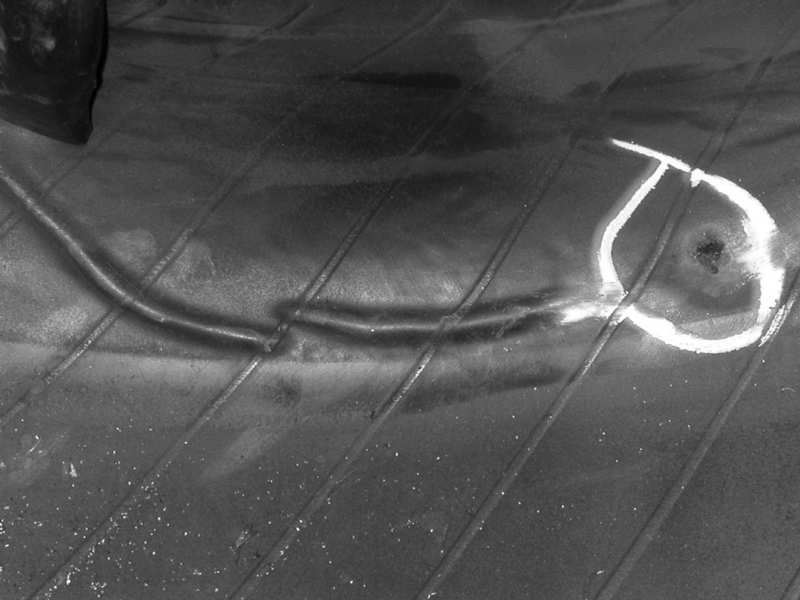
Certain inner liner damage can be repaired if it meets these specific requirements:
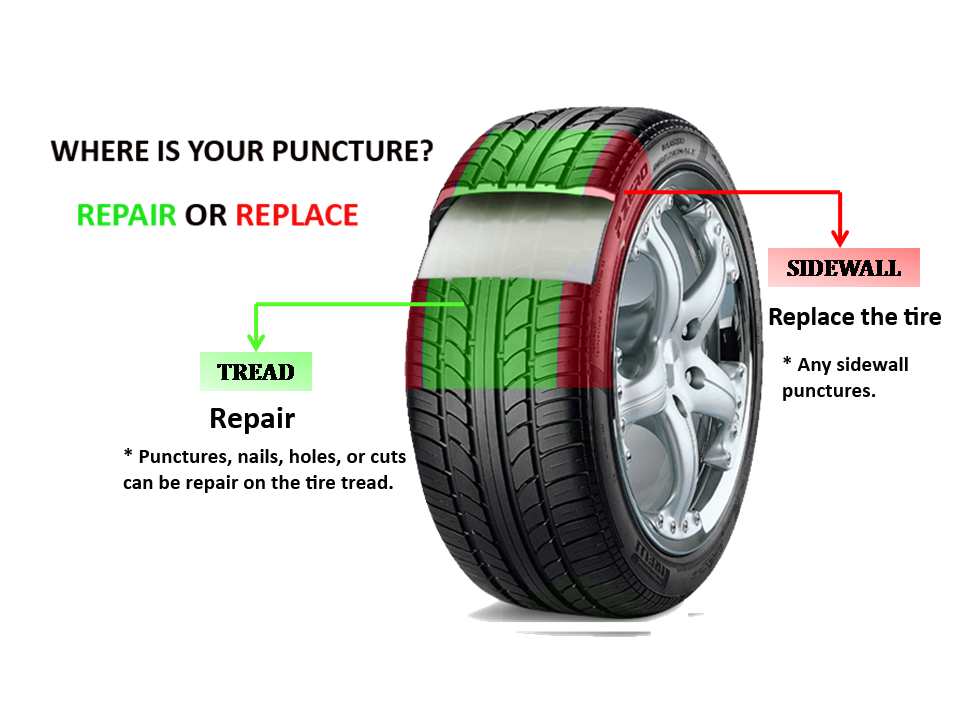
– Damage located in the tread area only (never the sidewall)
– Puncture smaller than 6mm in diameter
– No visible damage to internal cords or belts
– Damage not near the tire’s shoulder area
Important: Only trained technicians with proper equipment should perform these repairs. On-the-wheel “string plug” fixes provide temporary air retention but don’t address underlying structural damage.
Non-Repairable Damage That Requires Immediate Replacement
Tire bulges, sidewall damage, and multiple close-together punctures cannot be safely repaired. The fundamental reason: these conditions indicate structural compromise that patches cannot restore. Even if the external damage appears small, the internal damage to cords and the inner liner creates unacceptable blowout risks.
Critical warning: Never drive on a tire with visible bulges. The structural integrity is already compromised, and failure can happen without warning at any speed.
Preventing Inner Liner Damage Through Smart Maintenance
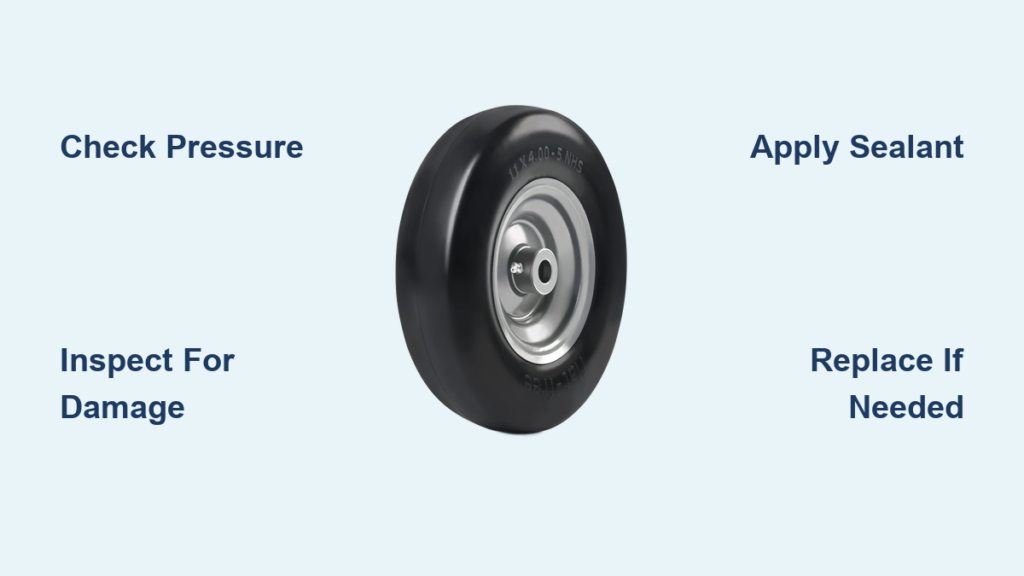
Maintain Perfect Tire Pressure
Underinflation increases sidewall flexing that stresses the inner liner, while overinflation concentrates stress in the tread center. Check your owner’s manual for the correct PSI and measure pressure when tires are cold (before driving). Proper inflation reduces impact damage risk by 35% according to tire industry studies.
Implement a Tire Inspection Routine
Conduct thorough tire inspections monthly:
– Walk around your vehicle and visually examine all tires
– Check for cuts, punctures, and bulges
– Feel for abnormalities by running your hand along the tread and sidewall
– Measure tread depth with a gauge (replace tires at 4/32″ for safety)
Pro tip: Schedule tire inspections during oil changes—technicians often spot problems drivers miss.
Adopt Damage-Reducing Driving Habits
Adjust your driving to protect tires:
– Reduce speed when approaching potholes or rough road sections
– Avoid curbs during parking maneuvers
– Steer clear of road debris when safe to do so
– Don’t overload your vehicle beyond manufacturer specifications
When to Replace vs. Repair: Making the Critical Decision
Immediate Replacement Indicators
Replace your tire immediately if you notice:
– Any visible bulge or bubble
– Sidewall cuts deeper than 3mm
– Multiple punctures within 40mm of each other
– Damage near the bead area (where tire meets rim)
These conditions indicate structural compromise that cannot be safely repaired, regardless of remaining tread depth.
Smart Replacement Strategy
When replacing tires due to inner liner damage:
– Replace in pairs (front or rear axle) to maintain handling balance
– Match replacement tires to existing ones in size, type, and tread pattern
– Have new tires professionally mounted, balanced, and aligned
– Reset your tire pressure monitoring system if equipped
Tire Lifespan Management for Long-Term Safety
Tires typically last 95,000-120,000 kilometers, but inner liner damage can end their service life prematurely. Regular tire rotations every 10,000 kilometers help distribute wear evenly while providing opportunities to catch developing problems early. Even with perfect maintenance, tire rubber degrades over time—most manufacturers recommend replacing tires after six years regardless of tread depth.
Final warning: Don’t gamble with inner liner damage. What starts as a minor air leak can progress to catastrophic failure in as little as 500 miles of driving. When in doubt about your tire’s condition, consult a professional technician immediately. Your safety depends on tires that maintain their structural integrity—and that begins with an intact inner liner. Regular inspections, proper inflation, and prompt attention to warning signs remain your best defense against dangerous tire failures.