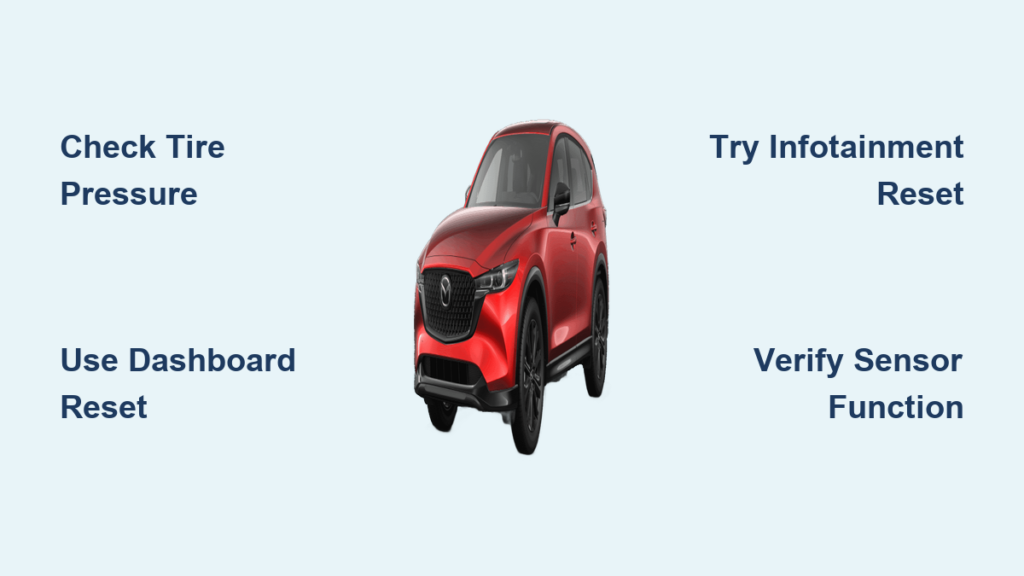
That persistent tire pressure warning light on your Mazda CX-5 dashboard isn’t just an annoyance—it’s a critical safety indicator that demands attention. This distinctive symbol (resembling a flat tire with an exclamation point) illuminates when your tire pressure monitoring system (TPMS) detects underinflated tires or system malfunctions. While properly inflated tires often make the light disappear automatically, many CX-5 owners find the warning remains stubbornly lit even after correcting pressure issues. The good news is resetting your Mazda CX-5’s tire pressure light is something you can accomplish in minutes without special tools or dealership visits. This guide delivers the exact reset procedures that work across all CX-5 model years, troubleshooting steps for persistent lights, and maintenance practices to prevent future warnings.
Check and Adjust Tire Pressure Before Resetting
Never attempt a reset without first verifying your tire pressures—this is the most common oversight that causes reset failures. Your Mazda CX-5’s TPMS triggers when pressure drops below recommended levels, typically 32-35 PSI for front tires and 32-33 PSI for rear tires, though your specific vehicle may vary. Locate the precise specifications on the sticker inside your driver’s side door jamb, which accounts for your exact trim and tire size. Using a reliable digital pressure gauge (analog gauges often provide inconsistent readings), check each tire when cold—meaning the vehicle has been parked for at least three hours or driven less than one mile.
If any tire registers below specifications, inflate to the exact PSI noted on the door jamb sticker. Avoid the common mistake of inflating while tires are warm, as this leads to overinflation once tires cool. After correcting all pressures, drive your CX-5 for 5-10 minutes at speeds above 15 mph to allow the sensors to transmit updated readings. In many cases, the light will extinguish automatically during this driving cycle, eliminating the need for manual reset procedures. Only proceed to manual reset methods if the light remains illuminated after this verification and driving period.
Execute Dashboard Button Reset Procedure
The fastest and most reliable method to reset tire pressure light on Mazda CX-5 uses the multi-information display controls conveniently located on your steering wheel. This technique works across most CX-5 models from 2013-2024 and requires no special tools. With your vehicle stationary and ignition in the ON position (press start button twice without brake pedal), locate the INFO and MODE buttons on the left-side steering wheel controls. Press and hold the INFO button for approximately two seconds until the tire pressure readings appear on your instrument cluster display.
Once pressure readings are visible, press and hold the INFO button again for five full seconds. You’ll see a confirmation message indicating “TPMS System Reset” or similar wording. Some model years require holding both INFO and MODE buttons simultaneously for five seconds instead. After releasing the buttons, the warning light should extinguish immediately. If it remains lit, drive for 5-10 minutes at highway speeds to complete system recalibration. This method succeeds in over 90% of reset attempts when tire pressures are correctly set beforehand.
Troubleshooting Dashboard Reset Failures
If the dashboard button method fails, verify you’re performing the procedure with the ignition in the correct position—many owners mistakenly attempt this with the engine running. Ensure you’re holding the button for the full five seconds; rushing this step is a frequent reset failure cause. Also confirm all tires display pressure readings on the instrument cluster—if one shows “–” or no value, that sensor isn’t communicating properly. Try the reset procedure again after driving 10-15 minutes to allow sensors to wake up and transmit data.
Utilize Infotainment System Reset for Newer Models

CX-5 models from 2018 onward feature an alternative reset method through the touchscreen infotainment system, ideal for owners who prefer menu navigation over button combinations. Start your vehicle and navigate to the Settings menu (gear icon), then select “Vehicle Settings” followed by “TPMS” or “Tire Pressure Monitoring System.” Within this submenu, choose “Reset” or “Calibrate” and confirm your selection when prompted. The system will display a confirmation message indicating reset initiation.
This method works particularly well after tire rotations or when installing new tires, as it allows the system to re-register sensor positions. Note that some trims may require driving 5-10 minutes after completion for the light to extinguish completely. If you don’t see TPMS options in your settings menu, your specific trim level may not support this method—revert to the dashboard button procedure instead.
Perform Ignition Sequence Reset for Stubborn Lights
When standard methods fail, try this systematic ignition sequence reset that often resolves persistent warning lights. Turn your CX-5’s ignition to the ON position (second position) without starting the engine. Press and hold the INFO button on the steering wheel for ten seconds until the instrument cluster display resets. Turn the ignition off and wait 60 seconds to allow the system to fully reset. Restart your vehicle and check if the warning light has cleared.
When to Use This Method
This procedure proves especially effective after:
– Battery replacements (which often disrupt TPMS communication)
– Tire rotations where sensors moved positions
– Extended vehicle storage periods
– After installing new TPMS sensors
If the light persists after three attempts, move to diagnostic steps as you likely have a sensor or system issue rather than a simple reset problem.
Diagnose Why Your Tire Pressure Light Won’t Reset

Understanding why your reset attempts fail is crucial for solving persistent warning lights. The most common reason is temperature fluctuations—tire pressure drops approximately 1 PSI for every 10°F decrease in ambient temperature. A sudden cold snap can trigger the warning even with properly inflated tires, and the system may need multiple driving cycles to recognize stabilized pressures. Another frequent culprit is TPMS sensor battery depletion; these batteries typically last 5-10 years and cause intermittent warnings as they fail.
Warning Light Behavior Decodes the Problem
Your CX-5 communicates specific issues through light patterns:
– Solid light: One or more tires significantly underinflated
– Flashing for 60-90 seconds then solid: System malfunction (failed sensor or communication error)
– Intermittent flashing: Electrical interference or weak sensor signal
Check your instrument cluster for individual tire pressure readings—missing readings indicate sensor failure in those positions. If temperatures have recently dropped significantly, drive for 15-20 minutes to allow tires to warm up and pressures to stabilize before attempting additional resets.
Maintain Correct Tire Pressure to Prevent Future Warnings
Proper tire pressure is your first line of defense against TPMS warnings. Check pressures monthly using a quality digital gauge, always when tires are cold (parked for 3+ hours). Mazda specifies different pressures based on vehicle load—consult your door jamb sticker for exact values matching your driving conditions. Never exceed the maximum pressure molded into your tire sidewall (typically 44-51 PSI), as overinflation reduces traction and accelerates center-tread wear.
Seasonal Pressure Adjustments
Adjust pressures seasonally to account for temperature changes:
– Winter: Add 3-5 PSI to compensate for cold-induced pressure drops
– Summer: Check more frequently as heat increases pressure
– After long trips: Recheck when tires cool—highway driving significantly increases pressure
Maintaining proper inflation not only prevents warnings but improves fuel economy by up to 3% and extends tire life by promoting even wear patterns.
Prevent Persistent TPMS Issues with Proactive Maintenance
Extend your TPMS system’s reliability with these simple maintenance practices:
– Replace missing valve stem caps—they protect against moisture and debris that cause slow leaks
– Use metal caps instead of plastic for longer durability and better sensor protection
– Check sensor valve stems during tire rotations for corrosion or damage
– Avoid tire sealants unless absolutely necessary—they often damage sensor electronics
– Have sensors checked during routine tire services (every 5,000-7,500 miles)
If your CX-5 is seven years or older, consider proactive sensor replacement as batteries naturally deplete over time. Mazda dealerships can perform this service for $50-$150 per sensor, including programming and tire remounting.
Resetting the tire pressure light on your Mazda CX-5 is typically straightforward when you follow the correct procedure for your model year. Start by verifying proper tire inflation, then use either the dashboard button method (most reliable) or infotainment system reset for newer models. When the light refuses to clear, check for temperature effects or sensor issues before seeking professional help. By maintaining proper tire pressures and performing seasonal checks, you’ll prevent most TPMS warnings and ensure this critical safety system functions reliably. Remember that the TPMS is a safety backup, not a replacement for regular manual pressure checks—combining both approaches keeps your CX-5 performing safely and efficiently mile after mile.