Your delivery truck just pulled over on the interstate with a shredded tire. Your entire shipping schedule teeters on a knife’s edge while drivers wait hours for traditional shop repairs. For fleet managers, this scenario wastes $243 per hour in lost productivity according to industry benchmarks—and it’s entirely preventable. Mobile fleet tire repair services now solve this crisis by bringing professional repair capabilities directly to your vehicles, slashing downtime by up to 70%. In this guide, you’ll discover exactly how mobile tire technicians diagnose field failures, execute on-site repairs for common commercial tire issues, and integrate with fleet management systems to keep your operation moving.
Unlike consumer tire services, mobile fleet repair addresses the unique demands of commercial vehicles—18-wheelers with dual-wheel setups, delivery vans operating on tight schedules, and construction equipment working in remote locations. These services deploy fully equipped service trucks carrying specialized tools for heavy-duty repairs that standard shops often can’t handle. By the time you finish this guide, you’ll know precisely when to call mobile technicians versus towing, how to verify technician qualifications, and the exact protocols that prevent roadside repairs from becoming safety hazards.
Why Fleet Tire Failures Demand Specialized Mobile Response
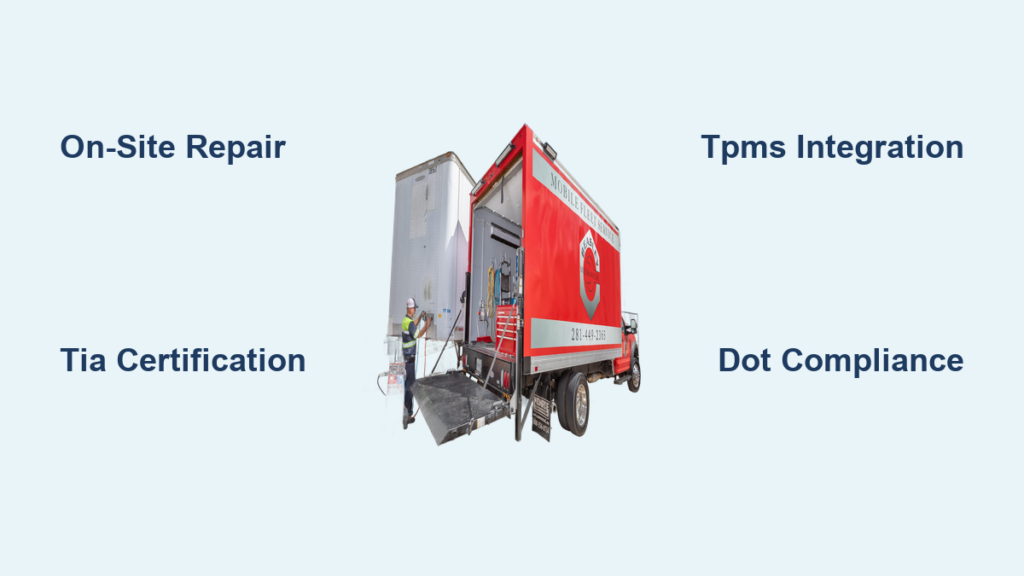
Commercial tire failures operate under different physics than passenger vehicles. A single blown tire on a fully loaded semi creates catastrophic instability that can trigger jackknifing, while dual-wheel configurations on delivery trucks complicate access for repairs. Mobile fleet technicians carry purpose-built equipment like hydraulic tire changers rated for 22,500 lbs capacity and bead breakers designed for 22.5″ commercial rims—tools too heavy for standard mobile services. When your refrigerated box truck loses traction on Route 90 due to a slow leak, these specialists arrive within 90 minutes (industry average) with inflation systems capable of handling 110 PSI commercial tires, bypassing the 4-6 hour shop wait that derails same-day deliveries.
Critical Differences Between Consumer and Fleet Tire Repairs
Commercial tire repairs follow FMVSS No. 119 standards requiring specialized techniques:
– Radial tire puncture protocols: Repairs must stay within the first 25% of tread width (vs. 50% for passenger tires)
– Dual-wheel access challenges: Technicians use offset rim clamps to service inner tires without removing outer wheels
– Load capacity verification: Every repair includes load/speed recalculations per tire manufacturer specs
– DOT-compliant documentation: Digital repair logs automatically sync with fleet maintenance systems
Common mistake: Using standard plug kits on commercial tires. Fleet-grade repairs require mushroom-style patches vulcanized to the inner liner—never temporary string plugs.
When Mobile Repair Beats Towing: The 3-Point Decision Framework
Not every flat tire qualifies for on-site repair. Apply this technician-approved checklist before dispatching mobile units:
-
Location safety assessment
– ✅ Repairable: Wide shoulder with 300+ ft visibility, no curves/hills
– ❌ Tow required: Intersections, tunnels, or lanes under 10 ft width -
Tire damage triage
– ✅ Repairable: Punctures ≤ ¼” diameter in tread area, no sidewall damage
– ❌ Tow required: Gashes exposing cords, bead damage, or tread separation -
Vehicle operability test
– ✅ Repairable: Wheel remains seated, no rim cracks, vehicle stable on jack
– ❌ Tow required: Bent rims, damaged suspension components, or hydraulic leaks
Pro tip: Mobile technicians carry portable wheel alignment sensors. If repairs complete before 10 AM, they’ll verify alignment to prevent premature wear—saving $400+ in future tire costs.
Step-by-Step Mobile Fleet Tire Repair Process

When your dispatch system alerts a mobile tire provider, certified technicians follow a strict 7-phase protocol. Understanding this sequence helps you evaluate service quality and prevent rushed repairs that compromise safety.
Phase 1: Roadside Safety Setup (12-18 Minutes)
Never skip this critical phase. Technicians deploy:
– Reflective warning triangles placed 250 ft behind vehicle (DOT minimum)
– Hydraulic wheel chocks rated for 80,000 lbs GVWR
– LED perimeter lighting for night operations
– Traffic cones creating 20-ft safety buffer zone
Visual cue: Look for technicians wearing ANSI Class 3 high-visibility gear with retroreflective strips—not basic safety vests.
Phase 2: Damage Assessment and Repair Planning
Using digital inspection tools, technicians:
1. Photograph tire damage with timestamped GPS metadata
2. Measure puncture depth with ultrasonic gauges (must be <15mm)
3. Scan rim for cracks using borescope cameras
4. Consult tire manufacturer’s digital repair matrix for load/speed limits
Key question: “Can you show me the DOT-compliant repair specification sheet for this tire model?” Legitimate providers carry instant access to manufacturer databases.
Phase 3: Precision Repair Execution
Commercial tire repairs require industrial-grade tools most shops lack:
– Bead unseating: Pneumatic bead loosening tools (no hammer strikes!)
– Puncture preparation: Rotary cutters creating uniform 30° repair cavity
– Vulcanization: 220°F heat plates bonding patch/rubber for 20+ minutes
– Re-inflation: Controlled nitrogen fills with pressure decay testing
Critical warning: Repairs taking <25 minutes likely skipped vulcanization—creating explosive separation risks at highway speeds.
Selecting a Mobile Fleet Tire Provider: 5 Non-Negotiables

Choosing the wrong vendor turns roadside repairs into liability nightmares. These criteria separate professional operators from dangerous amateurs.
Must-Have Certification: TIA Commercial Tire Service Certification
Verify technicians hold current TIA (Tire Industry Association) Commercial Tire Service credentials—not just basic ASE certs. This 40-hour program covers:
– Dual-wheel separation safety protocols
– Retreaded tire repair limitations
– OSHA-compliant hazardous material handling
– Load inflation chamber operation
Red flag: Providers claiming “all technicians are certified” without showing individual license numbers.
Fleet Management System Integration Capability
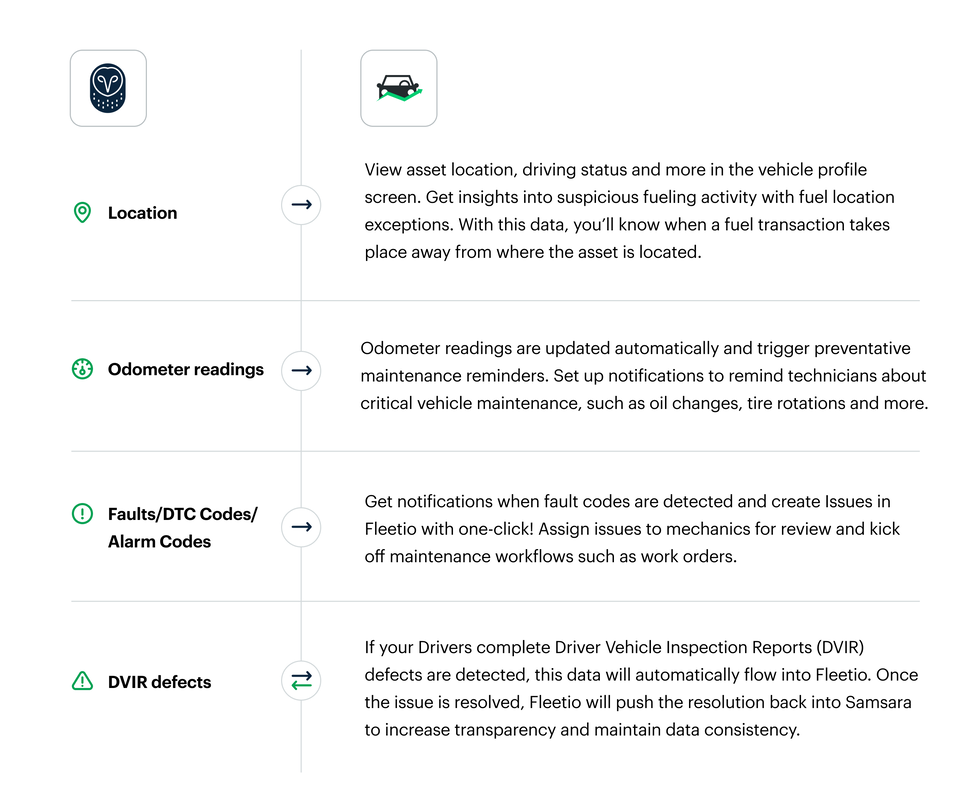
Top providers sync repair data directly into your existing platforms:
| System Type | Integration Method | Benefit |
|————-|——————-|———|
| Samsara | API repair logs | Automatic downtime tracking |
| Fleetio | CSV export | Real-time maintenance cost reporting |
| Custom TMS | Webhooks | Preventive maintenance scheduling |
Without this, you’ll waste hours manually entering repair details—defeating the purpose of mobile service.
Preventing Roadside Emergencies: Proactive Fleet Tire Strategies
Mobile repair solves crises, but smart fleets reduce incidents through predictive maintenance. Implement these three tactics:
Daily Driver Tire Inspection Protocol
Train drivers to perform 90-second checks using the “T.A.P.” method:
– Temperature: Feel sidewalls for abnormal heat (indicates underinflation)
– Air pressure: Verify with calibrated gauges—not tire tread depth alone
– Probes: Insert tire tread depth gauge at 3 points across tread
Pro tip: Drivers who skip checks cost fleets $1,200+ annually in preventable repairs—make it part of safety bonuses.
Inflation Monitoring System Implementation
Install TPMS (Tire Pressure Monitoring Systems) with these non-negotiable features:
– Alerts at 10% underinflation (critical for load-bearing tires)
– Dual-sensor design (valve stem + inner liner)
– Fleet-wide dashboard showing PSI trends
Fleets using TPMS report 32% fewer roadside tire incidents based on industry surveys.
When Mobile Repair Isn’t Enough: Critical Tow Triggers
Know these 5 scenarios requiring immediate towing—no exceptions:
1. Sidewall bulges or cuts deeper than 2mm
2. Tread separation exceeding 3 inches
3. Rim damage visible at bead seat area
4. Any tire operating 20+ minutes while flat
5. Repairs attempted more than once in same location
Urgent reminder: Continuing to drive on damaged tires after mobile repair attempts risks catastrophic failure. If the technician recommends towing, follow their expertise—your drivers’ lives depend on it.
Maximizing Mobile Tire Service ROI: The Fleet Manager’s Checklist
Transform tire repairs from cost centers into strategic advantages:
- Contract clause must-haves:
- 90-minute urban response guarantee with $100/hr delay penalty
- Digital repair certificates meeting FMCSA audit requirements
-
Tire disposal documentation for environmental compliance
-
Post-repair verification:
- Require 24-hour follow-up pressure check
- Audit 10% of repairs with third-party inspectors
-
Track repair longevity in maintenance logs
-
Cost avoidance metrics:
- Calculate saved revenue using:
(Downtime hours avoided) x (Revenue per hour) - Track reduced secondary damage (brake/wheel costs from limp-driving)
Fleets implementing these practices report 22% lower tire-related costs within 18 months.
Final Note: Mobile fleet tire repair isn’t just convenience—it’s operational insurance. By deploying certified technicians with commercial-grade equipment directly to breakdowns, you convert hours of costly downtime into 45-minute service windows. Start by vetting your current provider against the TIA certification and integration standards outlined here. Then implement the driver inspection protocol immediately—your next roadside emergency could strike before lunch. The true measure of success? When your dispatch team stops counting repair hours and starts tracking on-time delivery improvements instead.