Stranded on the side of the highway with a flat tire while your family waits in the backseat? Discovering a slow leak right before an important job interview? Mobile tire repair services eliminate these stressful scenarios by bringing professional tire solutions directly to your location—whether you’re at home, stuck on the interstate shoulder, or parked at your office. Unlike traditional repair shops that require towing and hours of your valuable time, mobile technicians arrive equipped to fix common tire issues within an hour, getting you back on the road faster with minimal disruption to your day.
This critical service has transformed how drivers handle tire emergencies, offering convenience without compromising on professional quality. Understanding exactly what mobile tire repair can and cannot fix helps you make informed decisions when tire trouble strikes unexpectedly. By the end of this guide, you’ll know precisely when to call for mobile assistance, what to expect during service, and how to ensure you receive safe, reliable repairs that won’t leave you stranded again.
Emergency Puncture Repairs You Can Get On-Site

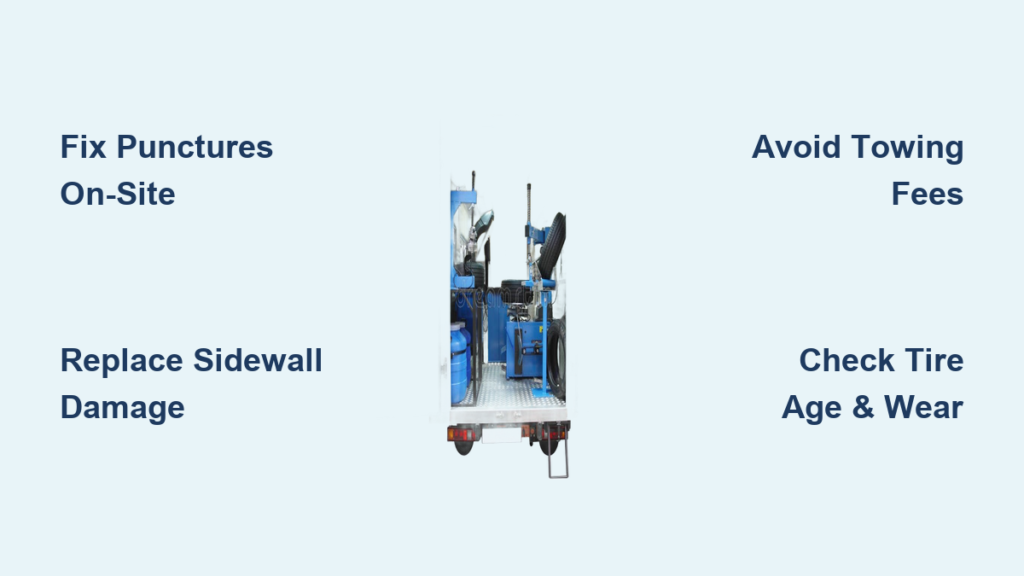
Mobile tire repair technicians carry specialized equipment to fix most common punctures without requiring you to visit a physical shop. When a nail, screw, or road debris pierces your tire tread, these professionals can often complete the repair in under 45 minutes—right where your vehicle is parked.
Locating and repairing tread punctures follows a precise procedure that ensures safety and longevity. The technician first identifies the exact puncture location, often using soapy water to spot air bubbles. After removing any embedded objects, they prepare the damaged area by buffing and applying rubber cement before inserting a high-quality plug-patch combination that seals both the inner and outer surfaces of the tire.
Sidewall damage requires immediate replacement rather than repair due to safety concerns. If you notice bulges, cuts, or exposed cords along your tire’s sidewall, stop driving immediately and call for mobile tire replacement service. The sidewall experiences constant flexing during normal operation, and any damage here compromises the tire’s structural integrity, creating dangerous blowout risks.
Slow leaks from valve stem issues are easily resolved on-site without replacing the entire tire. Corroded or damaged valve stems cause gradual air loss that often goes unnoticed until significant pressure drops occur. Mobile technicians replace these inexpensive components in minutes, restoring proper inflation and preventing further damage to your tire and wheel assembly.
Cost-Saving Advantages Over Traditional Repair Shops
Choosing mobile tire repair delivers substantial financial benefits that extend beyond the initial service fee. When you factor in all associated costs of traditional shop service, mobile options frequently prove more economical while providing superior convenience.
Eliminating towing fees saves $75-$150 per incident—the typical cost for roadside assistance to transport your vehicle to a repair facility. Mobile technicians come directly to you, whether you’re at home, work, or stranded roadside, removing this significant expense from your emergency repair budget. Many drivers don’t realize that towing alone often exceeds the cost of the actual tire repair.
Time savings translate to real financial value for busy professionals and families. Consider the hours lost waiting at a shop, arranging alternative transportation, or coordinating pickup—time that could be spent working, with family, or simply relaxing. Mobile service restores your mobility within the time it would take to complete a typical shop visit, effectively putting money back in your pocket through recovered productivity.
Transparent pricing prevents surprise charges common at traditional shops. With mobile tire repair, you observe the entire process and receive a clear cost breakdown before work begins. This visibility ensures you understand exactly what you’re paying for and why, eliminating the “mystery fees” that sometimes appear on shop invoices.
Step-by-Step Mobile Service Process Explained
Knowing exactly what happens during a mobile tire repair appointment helps you prepare and ensures you receive quality service. Reputable technicians follow a standardized process that prioritizes safety, accuracy, and customer education at every stage.
Pre-repair inspection determines repair viability within minutes. Upon arrival, the technician conducts a thorough examination of the damaged tire, checking for:
– Puncture location and size
– Internal damage to tire structure
– Previous repairs or existing weaknesses
– Overall tire condition and age
The actual repair follows industry safety standards precisely. For a typical puncture:
1. The technician removes any foreign objects from the tire
2. They prepare the injury site using specialized tools
3. A rubber plug-patch combination is inserted through the tread
4. The repair is sealed with vulcanizing solution
5. The tire is reinflated to proper specifications
Quality verification confirms lasting results before the technician leaves. Most professionals perform multiple pressure checks over 10-15 minutes to ensure the repair holds. They’ll also inspect surrounding areas for additional damage and provide you with documentation of the repair for future reference.
Critical Repair vs. Replacement Guidelines

Understanding when a tire can be safely repaired versus when replacement is necessary prevents dangerous situations and unnecessary expenses. Industry standards established by the Rubber Manufacturers Association provide clear guidelines that reputable mobile technicians follow.
Tread punctures under ¼ inch in diameter are generally repairable when located in the center tread area. Repairs become unsafe when damage occurs within ½ inch of the shoulder or sidewall, as these areas lack the structural reinforcement needed to maintain integrity after repair. Any puncture larger than ¼ inch requires immediate replacement regardless of location.
Tire age significantly impacts repair safety. Check your tire’s manufacture date using the DOT code on the sidewall—tires older than six years should be replaced rather than repaired, even if they appear serviceable. Rubber compounds degrade over time, compromising structural integrity regardless of tread depth.
Multiple previous repairs indicate replacement necessity. Most manufacturers consider a tire unsafe after three repairs, as each repair weakens the surrounding structure. If your tire has already been patched multiple times, even a small new puncture warrants replacement rather than risking further damage.
Finding Certified Mobile Tire Repair Technicians
Selecting a qualified mobile tire repair provider ensures your safety and protects your investment. Not all services employ properly trained technicians, so taking time to verify credentials prevents substandard repairs that could fail unexpectedly.
Look for technicians certified by the Tire Industry Association (TIA). These professionals complete rigorous training in proper repair techniques and safety protocols. While certification isn’t legally required everywhere, it demonstrates a commitment to industry best practices and ongoing education.
Verify insurance coverage before authorizing service. Reputable mobile tire repair companies carry liability insurance that protects you in case of property damage or accidents during service. Ask for proof of insurance before allowing work to begin—this simple step provides crucial protection.
Check warranty terms carefully. Quality mobile services offer 30-90 day warranties on repairs, demonstrating confidence in their workmanship. Be wary of companies that offer unusually long warranties (like “lifetime” coverage), as these often contain restrictive terms that limit actual protection.
Preventing Costly Tire Emergencies
Proactive tire maintenance significantly reduces your chances of needing emergency mobile tire repair. Implementing these simple practices extends tire life and keeps you safely on the road.
Monthly pressure checks prevent 80% of common tire failures. Use a quality digital gauge (not the gas station air pump gauge) to check pressures when tires are cold. Proper inflation, as specified on your driver’s door jamb placard, ensures optimal performance and prevents dangerous underinflation that leads to blowouts.
Visual inspections before each drive catch developing problems early. Spend 30 seconds walking around your vehicle to check for:
– Embedded nails or screws
– Uneven tread wear patterns
– Sidewall bulges or cuts
– Valve stem condition
Rotate tires every 5,000-7,000 miles to promote even wear. This simple maintenance task, which many mobile services offer during routine visits, extends tire life by 20-30% and provides opportunities for early problem detection.
When Immediate Mobile Tire Service Is Critical
Recognizing situations requiring emergency mobile tire repair prevents catastrophic failures and ensures your safety. Certain tire conditions demand immediate professional attention rather than waiting for scheduled service.
Driving on a flat tire for more than 100 yards causes irreversible damage. The heat generated from driving on an underinflated tire destroys the internal structure, transforming what would have been a simple repair into a necessary replacement. If your tire goes flat while driving, pull over safely and call for mobile assistance immediately.
Visible sidewall damage requires urgent replacement. Bulges, blisters, or exposed cords indicate structural failure that can lead to sudden blowouts at highway speeds. These conditions are unsafe to drive on and require immediate mobile tire replacement service.
Hissing sounds or rapid pressure loss signal serious air leaks. If you notice your tire losing air quickly or hear escaping air, stop driving and contact mobile repair immediately. Continuing to drive risks complete tire failure and potential loss of vehicle control.
Mobile tire repair services deliver professional solutions directly to your location, eliminating the stress and inconvenience of traditional shop visits. By understanding repair limitations, verifying technician qualifications, and implementing preventative maintenance, you can maximize the value of these convenient services while ensuring your safety on the road. When tire trouble strikes, having a trusted mobile repair provider on speed dial keeps you moving with minimal disruption to your day. Remember that while mobile services handle most common repairs effectively, safety should always come first—when in doubt about a tire’s condition, opt for replacement rather than risking a dangerous failure.