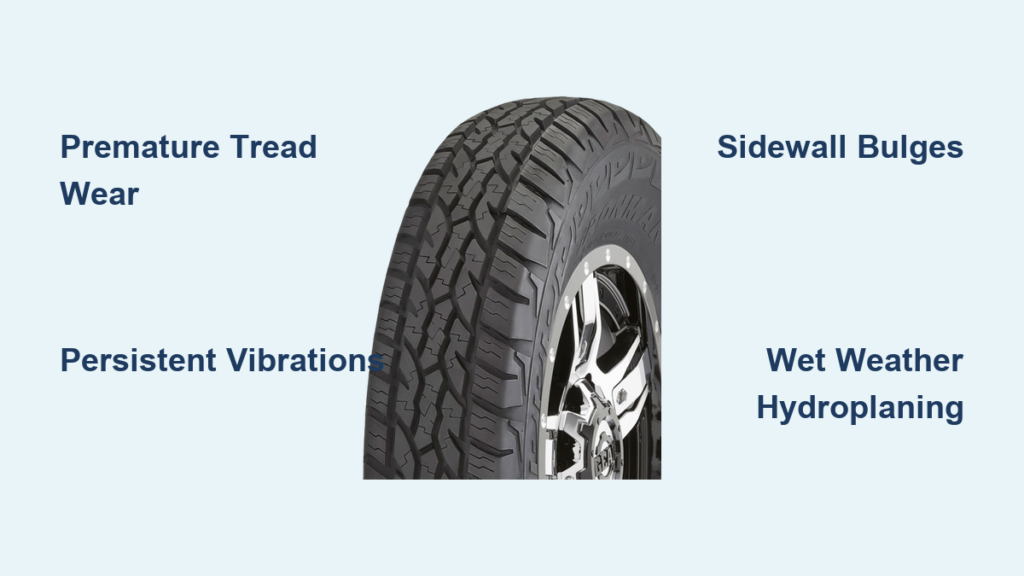
You’re driving down the highway when your Ironman tire starts vibrating violently. The steering wheel shakes in your hands as the tread pattern wears unevenly right before your eyes. This isn’t just an inconvenience—it’s a serious safety hazard affecting thousands of drivers who chose Ironman tires for their budget-friendly promise. Ironman tires, sold through major retailers like Discount Tire and Costco, have developed a troubling reputation for premature wear, dangerous tread separation, and disappointing performance in wet conditions. If you’re experiencing unusual vibrations, rapid tread wear, or noise issues with your Ironman iMove, Radial A/S, or Country Hwy tires, you’re not alone. This guide details the specific problems plaguing Ironman tire owners, how to identify them early, and what immediate actions you must take to protect yourself and your vehicle.
Why Ironman Tires Develop Premature Tread Wear Within Months
Ironman tires frequently exhibit abnormal tread wear patterns that compromise safety and value. Drivers report replacing these tires after only 15,000-20,000 miles despite manufacturer claims of 40,000+ mile tread life. The primary culprits behind this premature wear include inconsistent rubber compounds and inadequate tread block stabilization.
How to Identify Dangerous Tread Wear Patterns on Ironman Tires
Check your Ironman tires monthly for these specific wear indicators that signal immediate replacement is necessary:
- Shoulder wear: Excessive inner or outer edge wear indicates improper alignment or underinflation
- Cupping or scalloping: Uneven dips around the tread circumference reveal suspension issues
- Center wear: Accelerated center wear suggests chronic overinflation
- Feathering: Tread blocks worn smooth on one side but sharp on the other indicates toe misalignment
When inspecting your Ironman tires, run your hand across the tread blocks—if you feel pronounced ridges or smooth patches, the tire has developed dangerous wear patterns that affect handling.
Immediate Actions for Abnormal Tread Wear on Ironman Tires
Don’t wait for complete tire failure when you notice unusual wear patterns. Take these steps within 24 hours of discovery:
- Check tire pressure with a calibrated gauge (not the gas station pump)
- Visually inspect for embedded debris like nails or glass shards
- Measure tread depth at multiple points using a penny or tread depth gauge
- Schedule a professional alignment check—even new vehicles often need adjustments
- Rotate tires immediately if wear is uneven but tread depth remains above 4/32″
Ignoring these early warning signs can lead to complete tread separation at highway speeds, putting you at serious risk.
Ironman Tire Vibration Issues That Won’t Go Away After Balancing
Many Ironman tire owners report persistent vibrations that continue despite multiple balancing attempts. These aren’t just annoying—they indicate structural problems within the tire that balancing weights cannot correct.
Diagnosing True Ironman Tire Vibration vs. Wheel Balance Problems
Distinguish between simple imbalance issues and serious structural defects with these diagnostic steps:
- Speed-specific vibration: If shaking occurs only between 55-65 mph, it’s likely a balance issue
- Progressive vibration: Shaking that worsens steadily with speed suggests tire uniformity problems
- Steering wheel vs. seat vibration: Steering wheel shake points to front tires; seat vibration indicates rear tire issues
- Braking vibration: Pulsation only when braking signals warped rotors, not tire problems
Ironman tires with manufacturing defects often show radial force variation exceeding acceptable industry standards, causing vibrations that persist even after perfect balancing.
Permanent Fixes for Ironman Tire Vibration Problems
When standard balancing fails, implement these solutions to eliminate dangerous vibrations:
- Road force balancing: Demand this specialized balancing that measures tire stiffness variations
- Tire matching: Ensure tire manufacturers’ high-point marks align with wheel valve stems
- Tire rotation pattern adjustment: Switch from standard rotation to cross-rotation for better weight distribution
- Replacement with different batch: Request tires from a different manufacturing date code to avoid batch-specific defects
If vibrations persist after these interventions, document the issue thoroughly and demand replacement tires—don’t accept repeated balancing attempts that won’t solve the core problem.
Ironman All-Season Tire Failures in Wet Weather Conditions

Ironman tires consistently underperform in rainy conditions, with owners reporting alarming hydroplaning incidents at speeds as low as 45 mph. The shallow tread grooves and inadequate siping patterns fail to evacuate water effectively, creating dangerous driving conditions.
Critical Wet Weather Performance Tests for Your Ironman Tires
Before the next rainstorm hits, verify your Ironman tires’ wet weather capability with these simple tests:
- Tread depth check: Measure at multiple points—replace tires immediately if below 6/32″ for safe wet weather driving
- Water evacuation test: Spray water across tread pattern—observe how quickly it channels away from contact patch
- Groove inspection: Ensure all circumferential grooves maintain consistent depth without blockage
- Siping evaluation: Check that small tread cuts remain flexible and haven’t hardened with age
Tires with less than 4/32″ tread depth lose 50% of their wet weather traction capability—don’t risk driving in rain with worn Ironman tires.
Emergency Protocols When Hydroplaning in Ironman Tires
If your Ironman tires lose traction on wet roads, follow these life-saving steps immediately:
- Ease off the accelerator gradually—never brake or turn abruptly
- Hold steering wheel firmly but avoid making correction inputs
- Wait for tires to regain contact with road surface before resuming normal driving
- Pull over safely to assess tire condition and reduce speed for remainder of trip
After any hydroplaning incident, have your Ironman tires inspected by a professional—repeated water contact can accelerate internal damage.
Ironman Tire Sidewall Bulges: Hidden Danger Signs You Can’t Ignore
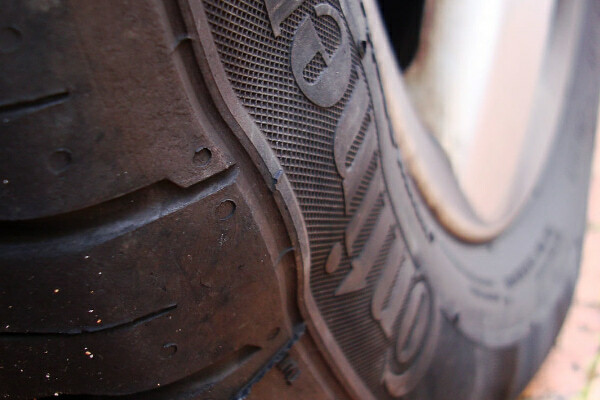
Sidewall bulges on Ironman tires represent one of the most dangerous failure modes, often preceding catastrophic blowouts. These bulges indicate internal cord damage that compromises the tire’s structural integrity.
Identifying Early-Stage Sidewall Damage on Ironman Tires
Check your Ironman tires weekly for these subtle signs of developing sidewall problems:
- Localized soft spots: Areas that feel less firm when pressed
- Discoloration: Lighter patches where internal damage affects rubber composition
- Vibration changes: New vibration patterns that correlate with specific tire positions
- Air pressure drops: Unexplained slow leaks that require frequent top-offs
Run your hands carefully along the entire sidewall surface—do not rely solely on visual inspection as early damage may be undetectable to the eye.
Immediate Response Protocol for Ironman Tire Sidewall Bulges
When you discover a sidewall bulge on any Ironman tire:
- Stop driving immediately—even short distances can cause complete failure
- Do not deflate or reinflate—this stresses damaged areas further
- Replace with a temporary spare—never drive on a tire with visible bulging
- Document the damage thoroughly with photos for warranty claims
- Contact the retailer with purchase documentation and damage evidence
Sidewall damage cannot be repaired—attempting to patch or plug these areas creates false security and extreme danger.
Ironman Tire Noise Problems That Worsen Over Time
Excessive road noise from Ironman tires isn’t just annoying—it indicates underlying issues with tire construction that often correlate with other performance problems. Many owners report noise levels increasing dramatically after the first 10,000 miles.
Decoding Ironman Tire Noise Patterns for Early Problem Detection
Different noise types reveal specific developing issues:
- Constant humming: Indicates uneven wear or alignment problems
- Rhythmic thumping: Suggests internal separation or belt damage
- Squealing during turns: Points to improper inflation or suspension issues
- Clicking sounds: May indicate embedded debris or tread damage
Record audio of the noise with your smartphone while driving at consistent speeds—this documentation helps professionals diagnose the exact issue.
Effective Noise Reduction Strategies for Troubled Ironman Tires
While complete noise elimination may require tire replacement, these measures can reduce noise levels temporarily:
- Adjust inflation pressure within manufacturer’s recommended range (try 1-2 PSI lower)
- Install sound-deadening mats in wheel wells to block noise transmission
- Apply tire dressing with noise-reducing properties to tread surface
- Install wheel hub centric rings if aftermarket wheels contribute to vibration noise
Persistent noise often signals deeper problems—address the root cause rather than masking symptoms.
Preventing Future Ironman Tire Failures Through Proper Maintenance
Proactive maintenance extends tire life and prevents many common Ironman tire problems. Implement this monthly maintenance routine to catch issues early:
- Check pressure weekly with a digital gauge (never rely on TPMS readings alone)
- Inspect tread and sidewalls for embedded objects and abnormal wear
- Measure tread depth at multiple locations across each tire
- Verify alignment if you notice pulling or uneven wear
- Rotate tires every 5,000 miles using the correct pattern for your drivetrain
Keep a tire maintenance log documenting pressure readings, rotations, and observations—that evidence proves critical if you need to file a warranty claim.
Final Note: Ironman tire problems often stem from manufacturing inconsistencies rather than driver error. When issues arise, document everything thoroughly and don’t accept “normal wear” explanations for premature failures. Consider upgrading to tires from manufacturers with better quality control if you’ve experienced multiple Ironman tire failures. Your safety depends on reliable tires that perform as promised—don’t settle for repeated problems that compromise your driving experience.