
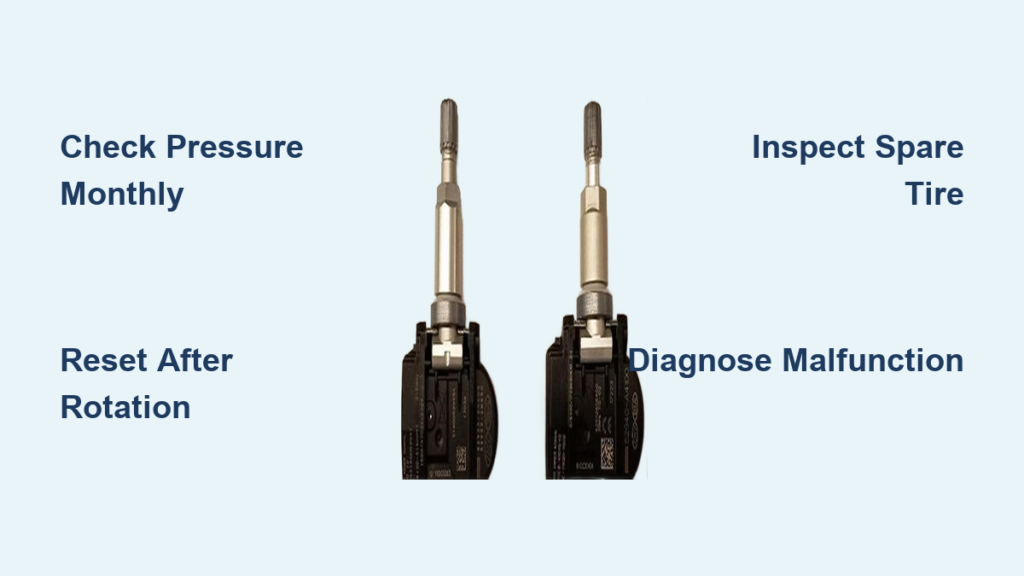
That sudden amber warning light on your dashboard—a simple U-shaped symbol with an exclamation point—could be your Hyundai’s Tire Pressure Monitoring System (TPMS) signaling a potentially dangerous situation. This critical safety feature operates silently in the background, continuously tracking pressure across all four tires to alert you when inflation drops to unsafe levels. Ignoring these warnings risks tire failure, reduced fuel efficiency, and compromised handling that could lead to accidents. Understanding how your Hyundai TPMS functions, what its signals mean, and how to respond properly transforms this dashboard light from a nuisance into a life-saving tool. This guide provides actionable steps to maintain optimal tire pressure year-round while keeping your TPMS operating at peak performance.
Identify Critical TPMS Warning Light Patterns

Your Hyundai’s TPMS uses a single dashboard indicator to communicate two distinct conditions: low tire pressure or system malfunction. Recognizing these patterns determines whether you need a quick pressure adjustment or professional service.
The low tire pressure warning appears as a steady amber light showing an exclamation mark inside a U-shaped bracket. This activates when one or more tires drops approximately 25% below the manufacturer’s recommended cold inflation pressure—typically signaling dangerously under-inflated tires. When this light appears, stop safely as soon as possible and inspect all tires with a reliable pressure gauge. Never assume the system is mistaken; check each tire’s actual pressure against the specifications on your driver’s side door jamb placard.
The malfunction indicator shows the same physical light but flashes continuously for about one minute after startup before becoming steady. This specific flash-then-steady pattern means your TPMS itself has failed and may not detect actual tire pressure issues. Unlike the low-pressure warning, this requires professional diagnosis since your safety net has been compromised. If you see this flashing pattern, schedule service immediately while manually checking tire pressure weekly until repairs are completed.
Conduct Proper Monthly Tire Pressure Checks
Checking tire pressure monthly when tires are “cold”—meaning the vehicle has sat undisturbed for at least three hours or driven less than one mile—provides the most accurate readings. Thermal expansion from driving artificially increases pressure readings, leading to incorrect adjustments.
Follow these steps for accurate pressure measurement:
– Locate your exact pressure specifications on the vehicle placard (usually driver’s door jamb)
– Remove valve caps and press a quality gauge firmly on the valve stem
– Record actual pressure for each tire and compare to placard specifications
– Add air as needed using a reliable compressor, rechecking after each adjustment
– Always reinstall valve caps to prevent slow leaks
Never assume uniform pressure across all tires—front and rear often require different specifications based on your Hyundai’s weight distribution. If your vehicle includes a spare tire, check its pressure monthly using the specific spare tire pressure noted on your placard, which typically differs from regular tire specifications.
Adjust Tire Pressure for Seasonal Temperature Changes

Temperature fluctuations significantly impact tire pressure, with readings dropping approximately 1 PSI for every 10°F decrease in ambient temperature. This explains why TPMS warnings frequently appear during sudden cold snaps. Drivers should check pressure weekly during extreme temperature transitions in fall and spring.
During summer months, monitor for over-inflation as heat increases pressure. While under-inflation poses greater safety risks, over-inflated tires wear unevenly in the center of the tread and reduce traction. Before road trips or seasonal transitions, perform these checks:
- Measure all tires when cold early in the morning
- Adjust to placard specifications regardless of temperature
- Inspect tread depth and look for embedded objects
- Verify spare tire readiness
Winter demands special attention—check pressure every time temperatures drop significantly overnight. Keep a portable air compressor in your vehicle during cold months to quickly address pressure losses before they trigger warnings.
Resolve Common TPMS Warning Light Problems
Intermittent TPMS light illumination often indicates pressure fluctuations near the activation threshold, common during dramatic overnight temperature drops. If your warning light comes and goes:
- Check actual tire pressures with a reliable gauge
- Inflate all tires to exact placard specifications
- Monitor for recurrence over the next week
- Consider slightly over-inflating by 2-3 PSI during extreme cold snaps
A TPMS light that remains illuminated despite proper inflation suggests sensor issues. Common causes include:
– Depleted sensor batteries (typically lasting 5-10 years)
– Physical damage from road debris or curb impacts
– Interference from aftermarket electronic equipment
– Receiver module malfunctions requiring professional diagnosis
If you recently rotated tires or performed wheel service, your Hyundai may require a TPMS reset. Consult your owner’s manual for model-specific reset procedures—many newer models automatically recognize rotation patterns while older models need manual reset via the trip computer.
Maintain TPMS During Tire Replacement

When replacing tires or wheels, ensure new components maintain TPMS compatibility. Not all aftermarket wheels accommodate sensors, and some tire replacements require specific sensor types. Verify compatibility before installation to avoid persistent malfunction warnings.
After any tire service, immediately check for proper TPMS function:
– Start the vehicle and observe the TPMS indicator
– Confirm no flashing malfunction pattern appears
– Drive briefly to verify the system recognizes all tires
– If warnings persist, return to the service provider immediately
Hyundai strongly recommends professional verification after tire replacement. Authorized dealers possess specialized programming equipment to confirm sensor communication and calibrate new sensors if needed. This verification ensures your safety system operates correctly when you need it most.
Maximize Tire Life Through Proper Inflation
Maintaining exact manufacturer-specified pressure extends tread life by ensuring even contact patch distribution. Under-inflated tires wear rapidly on the outer edges as sidewalls flex excessively, generating heat that accelerates rubber degradation. This edge wear pattern can shorten tire life by 20% or more compared to properly maintained tires.
Over-inflated tires create the opposite problem—center tread wear that also indicates premature wear. Both conditions compromise safety while increasing operating costs. Proper inflation maintains your Hyundai’s engineered handling characteristics, ensuring optimal steering response and cornering stability during emergency maneuvers.
Boost Fuel Efficiency With Correct Tire Pressure
Under-inflated tires create significant rolling resistance that forces your engine to work harder. Research confirms properly inflated tires improve fuel economy by several percentage points compared to significantly under-inflated tires. For average drivers covering 12,000 miles annually, this translates to $150-$300 in annual fuel savings.
A tire just 5 PSI under specification noticeably increases fuel consumption, while 10 PSI under can reduce efficiency by more than 2%. Given the minimal effort required for monthly pressure checks, the return on investment is substantial. Beyond direct fuel savings, proper inflation extends tire life, compounding your financial benefits.
Keep Your Spare Tire TPMS Ready for Emergencies
Many Hyundai owners overlook spare tire maintenance until an emergency occurs. Include your spare in monthly pressure inspections using the specific spare tire pressure noted on your vehicle placard. If your spare uses a TPMS sensor—common on newer models—ensure it functions properly during rotation procedures.
Spare tires with sensors require special attention:
– Check spare pressure monthly along with other tires
– Verify sensor functionality if spare is placed into service
– Replace valve caps to prevent slow leaks
– Consult your dealer about spare sensor programming
When to Seek Professional TPMS Diagnostics
Persistent TPMS warnings despite proper inflation require professional diagnosis. Dealer technicians access specialized scan tools that communicate directly with your TPMS control module, identifying sensor faults or communication failures that DIY methods can’t detect.
Professional diagnostics prove invaluable for:
– Intermittent issues that don’t appear during routine checks
– Real-time monitoring of TPMS data streams
– Sensor battery life testing
– Identifying interference sources causing sporadic warnings
Authorized dealers also maintain access to technical service bulletins addressing known TPMS issues specific to your Hyundai model. These resources often reveal software updates or repair procedures that resolve common complaints more efficiently than general troubleshooting.
Essential TPMS Maintenance Habits for Hyundai Owners
Your Hyundai’s Tire Pressure Monitoring System serves as a critical safety backup but never replaces monthly manual pressure checks. The TPMS alerts you to significant under-inflation but cannot detect minor pressure losses, uneven wear, or physical tire damage. Always verify actual pressure when the warning light appears, and never ignore persistent malfunction indicators.
Establish these habits for optimal TPMS performance:
– Check all tires (including spare) monthly when cold
– Inflate to exact placard specifications, not “close enough”
– Inspect tires visually for damage during pressure checks
– Schedule professional TPMS verification after any tire service
– Reset the system following tire rotation when required
By maintaining proper tire inflation and responding appropriately to TPMS warnings, you protect your passengers, extend tire life, improve fuel efficiency, and ensure your Hyundai delivers the safe, reliable performance its engineers designed. This simple maintenance task delivers outsized returns in safety, economy, and peace of mind.