That persistent orange tire pressure warning light glowing on your Toyota Camry dashboard can be incredibly frustrating—especially when you know your tires are properly inflated. The Tire Pressure Monitoring System (TPMS) is designed to keep you safe by alerting you to significant pressure drops, but it doesn’t always behave as expected. Whether your light came on after a temperature change, following a tire rotation, or simply refuses to turn off despite correct inflation, you have several options to reset the system. This guide covers every Camry generation from 2007 through current models, including the critical detail that many Camrys lack a dedicated reset button entirely.
Understanding your specific Camry model’s TPMS reset procedures saves you time and prevents unnecessary trips to the dealership. The solution depends heavily on your model year, trim level, and sometimes even the manufacturing plant that built your vehicle. We’ll walk through button location variations, step-by-step reset procedures, troubleshooting for stubborn warning lights, and when professional diagnostic tools become necessary—so you can turn off that tire light on Toyota Camry for good.
Why Your Toyota Camry Tire Light Won’t Turn Off
The TPMS light serves as an early warning system, and understanding why it remains illuminated helps you choose the correct fix. A steady glowing light typically indicates one or more tires have fallen below the system’s pressure threshold, usually about 25% below recommended pressure. However, the light may stay on even with proper inflation if the system hasn’t recalibrated after pressure adjustments, tire rotation, or sensor battery depletion.
Toyota programs most Camrys to enter an initialization mode when you start the vehicle, during which the TPMS light blinks for 60 to 90 seconds. This blinking phase represents the system performing its standard startup check. If all sensors report acceptable pressure, the light turns off. If the system detects a problem, the light remains steady after this initialization period. A light that continues blinking beyond this 90-second window often signals a different issue, such as a failing sensor battery or communication problem with the TPMS control unit.
Temperature fluctuations commonly trigger the warning light without any actual pressure problem. When temperatures drop significantly overnight, tire pressure can decrease by 1-2 PSI per 10 degrees Fahrenheit, enough to trigger the warning on borderline-inflated tires. This is why Toyota recommends checking pressure when tires are cold—meaning the vehicle has been parked for at least three hours or driven less than one mile.
How to Check if Your Tires Are Actually Underinflated
Use a reliable digital tire pressure gauge (not the one at the gas station) to check all four tires and your spare if equipped with a TPMS sensor. Compare readings to the sticker inside your driver-side door jamb, not the maximum pressure printed on the tire sidewall. Most Camrys specify 32-35 PSI depending on tire size and load conditions. If you find underinflated tires, inflate them to the specified pressure rather than guessing. Remember that overinflated tires should be deflated to specification—not while hot, as driving causes air to expand.
Locate Your Specific Camry’s TPMS Reset Button

Button location varies significantly across Camry generations and trim levels. Finding the correct location for your specific vehicle prevents wasted time searching in the wrong places.
2007–2011 Camry Models: Glove Box Reset Location
For these earlier models, open your glove box and feel along the left inner edge where you’ll typically find a small black button recessed beneath a plastic lip. The button sits directly below the release mechanism that opens the glove box door and may be partially hidden from view. Many owners discover it by feel—run your fingers along the left side of the glove box opening while seated in the driver’s position. This button requires deliberate pressure to activate and may feel stiff if it’s never been used before.
2012–2014 Camry Models (Especially LE Trim): The Missing Button Problem
Here’s where many Camry owners encounter unexpected confusion: Toyota deleted the TPMS reset button from a significant number of 2012-2014 LE trim vehicles. If you open your glove box expecting to find the button and instead see a blank plastic insert or an empty recessed square where a button should be, you’re not alone. Dealership technicians have confirmed that certain production runs for these model years omitted the reset switch entirely. These vehicles rely on automatic recalibration, meaning you’ll need to drive the car after inflating tires rather than pressing a button to reset the system.
2015 and Newer Camry Models: Dual Location Possibilities
Recent Camry models typically have the reset button inside the glove compartment, directly below the glove box open button on the left side as you face the opening. The button is often hard to spot unless viewed from an angle, and many owners spend several minutes searching before locating it by touch. Alternatively, check along the bottom edge of the plastic panel beneath the steering column, nearly aligned with the right edge of the brake pedal. Getting down to floorboard level with a flashlight helps reveal this otherwise hidden button.
Step-by-Step Procedure to Turn Off Tire Light on Toyota Camry
Once you’ve located the reset button, follow this precise procedure to clear the warning light. The exact timing depends on your model year and TPMS calibration state.
Turn your ignition to the “ON” position without starting the engine. Press and hold the TPMS reset button for 10 to 20 seconds until you see the tire pressure light blink slowly three times. Release the button immediately after observing this blinking pattern. Turn the ignition off, then start the engine normally. Drive your Camry for 10-15 minutes at speeds exceeding 50 mph to allow the system to complete recalibration.
Pro Tip: If pressing the reset button causes the warning light to flicker or flash in response, the system is receiving your input—continue driving and monitor the light over the next few days. Some model years require the vehicle to remain running for 5-10 minutes after releasing the reset button to give the system time to relearn all sensor signals.
No Reset Button? Automatic Recalibration Methods
For Camrys built without a dedicated reset button (common in 2012-2014 LE models), you have two primary options to turn off that tire light on Toyota Camry:
Highway Driving Reset Method
After inflating all four tires to the recommended specification, drive the vehicle for 10 to 15 minutes at speeds exceeding 50 mph. The TPMS control unit monitors sensor signals during this driving period and will extinguish the warning light once it confirms acceptable pressure readings. This process may require multiple driving sessions if the system is slow to recognize corrected pressures.
Pressure Fluctuation Technique
Inflate all tires to 3 PSI above recommended pressure, including the spare if equipped. After reaching this overinflated state, completely deflate all tires before reinflating them to the correct specification. The pressure fluctuation can prompt sensors to reset on the next driving cycle. This method works particularly well for Camrys without reset buttons that stubbornly refuse to recalibrate.
Troubleshooting When the Tire Light Won’t Turn Off

When the TPMS light refuses to extinguish despite proper inflation and reset attempts, several underlying causes require investigation.
Sensor Battery Depletion (5-10 Year Lifespan)
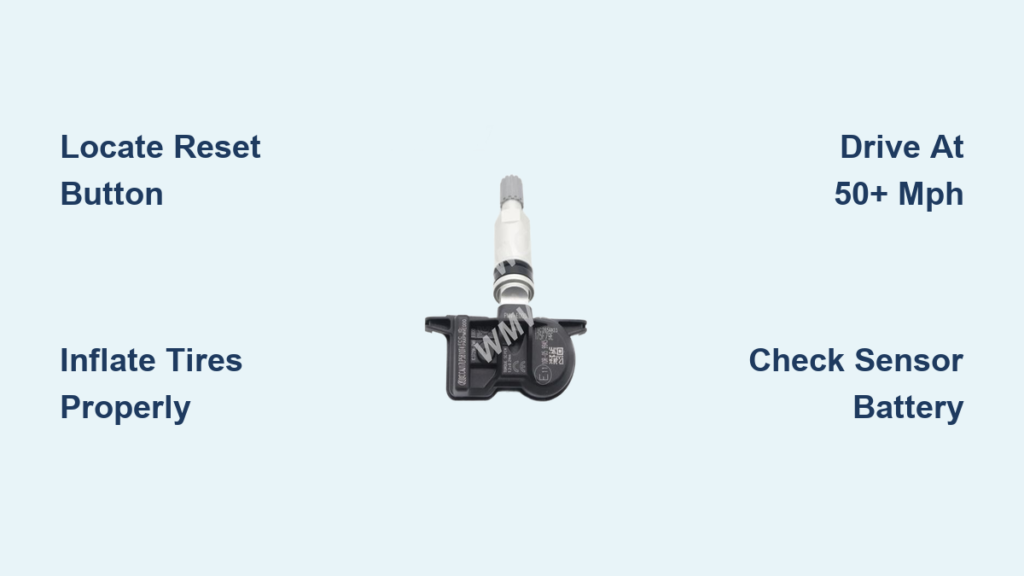
TPMS sensors contain internal batteries designed to last 5-10 years before depletion. Signs of battery failure include a light that illuminates intermittently or refuses to reset regardless of pressure readings. Sensor replacement costs range from approximately $25 per sensor for online purchases to $100 or more at dealerships.
Valve Stem and Sensor Damage
Inspect each tire’s valve stem for visible damage, corrosion, or debris. The sensor mounts directly to the valve stem, and damage to either component triggers warning lights. Pothole impacts or curb contact can damage sensors without causing visible tire damage. Corrosion around the valve stem base can also create inconsistent readings.
Recent Tire Service Complications
If your light appeared immediately after tire rotation, replacement, or repair, the shop should have addressed TPMS reset as part of their service. Some Camrys automatically adjust after driving, while others need manual reset procedures. Return to the shop and request verification if the light remains on.
Professional Solutions for Persistent TPMS Lights

When self-diagnosis fails to resolve the persistent tire light, professional tools become necessary.
Dealerships and independent tire shops possess TPMS scan tools capable of reading specific sensor data and performing forced system resets. These tools communicate directly with the TPMS control unit, bypassing the need for automatic recalibration cycles. For Camrys without reset buttons, this is often the only way to achieve an immediate reset without extended driving.
Cost-Saving Tip: Many independent tire shops offer TPMS reset services for approximately $25, making it a cost-effective option compared to dealership pricing. Ask about this service when getting routine tire maintenance.
Long-Term Tire Pressure Maintenance Strategies
Preventing TPMS warnings requires consistent tire maintenance rather than reactive resets. Check tire pressures monthly using a reliable gauge. Temperature changes of 10-15 degrees can shift pressure by 1-2 PSI, so adjust seasonal pressure accordingly. Keep a record of your pressure readings to identify slow leaks before they trigger warning lights.
When changing between seasonal tire sets, remember that different tire types often have different pressure requirements. Some Camrys without reset buttons may trigger repeated warnings if your winter tires have different PSI specifications than your summer tires. Dealership technicians can adjust threshold programming to match your specific tire requirements.
Regardless of your Camry model year, the path to turning off that tire light begins with correct tire pressure and follows with patience for recalibration or the appropriate reset procedure. When button-based resets aren’t available, automatic recalibration through highway driving offers a reliable alternative. For stubborn cases, professional diagnostic tools quickly identify and resolve sensor issues. Keep your tires properly inflated, understand your model’s reset capabilities, and that persistent orange light will become a rare occurrence rather than a constant frustration.