Your tires might look perfectly fine with plenty of tread remaining, but age could be silently compromising their safety. Rubber compounds degrade over time due to oxidation, ozone exposure, and temperature fluctuations—even when tires sit unused. Understanding how to tell how old a tire is isn’t just technical knowledge; it’s essential for keeping yourself and your passengers safe on the road. This guide walks you through the exact process of reading tire date codes, interpreting the identification system, and making informed decisions about tire replacement based on age rather than tread wear alone.
Every tire manufactured for sale in the United States contains standardized markings that reveal its production date. Learning to decode these markings empowers you to verify warranty coverage, assess safety risks, and plan for replacement before failure occurs. Whether you’re buying used tires, inspecting a vehicle you’ve just purchased, or simply performing routine maintenance on your own car, knowing how to tell how old a tire is provides crucial information that tread depth alone cannot reveal.
Find the DOT Marking on Your Tire Sidewall
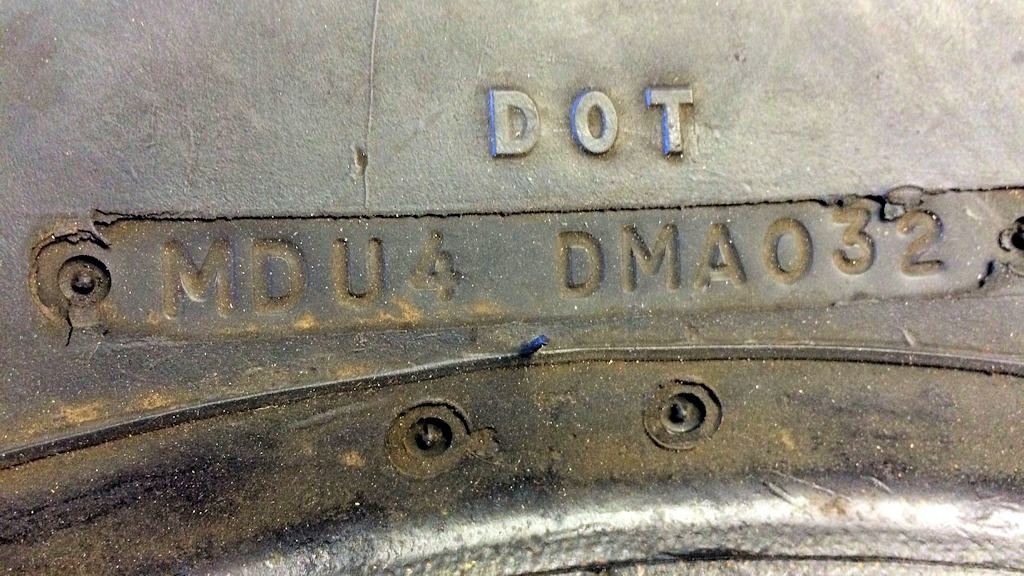
The Department of Transportation (DOT) symbol is your starting point when trying to determine how old a tire is. This mandatory marking appears on every tire sold for highway use in the United States and certifies compliance with federal safety standards. Unlike decorative elements, this symbol serves as your entry point to the tire’s manufacturing history.
Look for the letters “DOT” embossed on the outer sidewall of your tire. You may need to rotate your wheel to access the full sidewall, as portions of the marking can be hidden when the vehicle is parked. The DOT symbol precedes a string of eight to thirteen characters known as the Tire Identification Number (TIN), which contains the critical date information you need.
Federal regulations require the complete TIN to appear on at least one sidewall, though you might notice only partial information on the opposite side. This dual-branding approach exists because mold technicians who install date codes on hot tire molds need to avoid reaching into tight spaces for safety reasons. If you can’t find the full TIN on one side, check the other sidewall for the complete sequence.
Identify the Date Code Within the TIN Sequence
The Tire Identification Number follows a standard format that organizes manufacturing information in a logical sequence. Understanding this structure helps you quickly locate the date code portion without getting confused by other manufacturing details. The TIN consists of three main sections, with the final segment containing the production date information you need to determine how old a tire is.
The first section identifies the manufacturing plant code, indicating where the tire was produced. The middle section typically contains tire size information and the manufacturer’s internal model code. These sections vary significantly between brands and models but don’t contribute directly to age determination.
Focus your attention on the final section of the TIN, which always contains the production date code. For tires made since 2000, this appears as four digits; for older tires, it’s three digits. The date code consistently appears at the very end of the TIN string, making it relatively easy to identify once you know what you’re looking for. This standardized placement ensures you won’t waste time examining irrelevant portions of the identification number.
Decode Four-Digit Date Codes for Modern Tires

Tires manufactured after 1999 use a four-digit date code system that provides precise production dating without decade ambiguity. This format was implemented specifically to give consumers clear, unambiguous information about when their tires were produced. The first two digits represent the week of the year (01-52), while the last two digits indicate the year of manufacture.
For example, a date code ending in “3815” means the tire was manufactured during the 38th week of 2015. Similarly, “0309” indicates production during the third week of 2009, while “5115” shows manufacture during the 51st week of 2015. This mathematical precision allows you to calculate the tire’s age down to a two-week window with complete certainty.
To determine your tire’s age, locate the final four digits of the TIN. If you find “2422,” your tire was made during the 24th week of 2022. Subtract this manufacture date from the current date to establish the tire’s exact age. A tire manufactured in week 24 of 2022 would be approximately 2 years old as of mid-2024. This precise dating becomes critical when assessing whether your tires have exceeded recommended service life, regardless of their tread depth.
Interpret Three-Digit Date Codes for Older Tires
Tires produced before 2000 use a three-digit date code format that presents unique challenges for age determination. In this system, the first two digits indicate the week of manufacture (01-52), while the single remaining digit represents the year within the decade. A code ending in “328” indicates production during the 32nd week of the 8th year of the decade—but without context, you can’t determine whether this refers to 1988 or 1998.
This three-digit system operated under the flawed assumption that tires wouldn’t remain in service for ten years or longer. When this assumption proved incorrect, the decade ambiguity became a significant safety concern for consumers. Some manufacturers attempted to address this by adding a small triangle after the TIN on tires from the 1990s, but this practice wasn’t standardized across the industry, making it unreliable as a decade identifier.
If you encounter a tire with a three-digit date code, treat it as a serious safety concern regardless of its appearance. These tires are at minimum 24 years old and potentially 40+ years old. Industry standards universally recommend immediate replacement for any tire with a three-digit date code, as the safety risks of continued use far outweigh any potential cost savings from delaying replacement.
Protect Your Warranty Coverage with Purchase Documentation
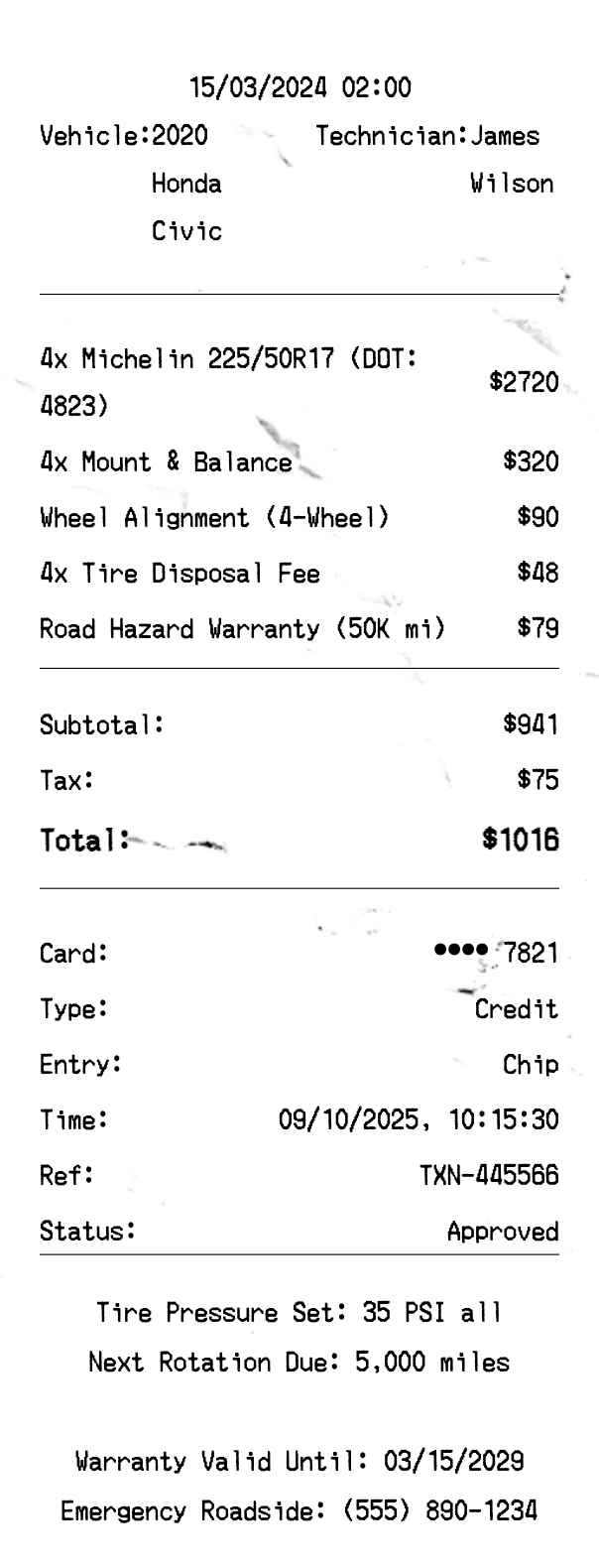
Understanding how to tell how old a tire is becomes especially important when dealing with warranty claims. Most tire manufacturers offer coverage based on either purchase date or manufacture date, whichever provides more favorable terms for the consumer. Typically, warranties extend for four years from purchase or five years from manufacture, though specific terms vary between brands.
If you purchase tires manufactured two years before your purchase date with a four-year warranty from purchase, your effective coverage extends six years from manufacture. However, this extended protection depends entirely on your ability to document the purchase date with a sales receipt. Without proof of purchase, warranty coverage calculates from the manufacture date rather than purchase date.
Critical mistake to avoid: Losing your tire purchase receipt can significantly reduce your effective warranty period. In the example above, without a receipt, your warranty would end after five years from manufacture—just three years from purchase instead of the potential six years. Keep your receipt in a safe location, and consider taking a digital photo as backup for the duration of the warranty period.
Follow Age-Based Replacement Guidelines for Safety
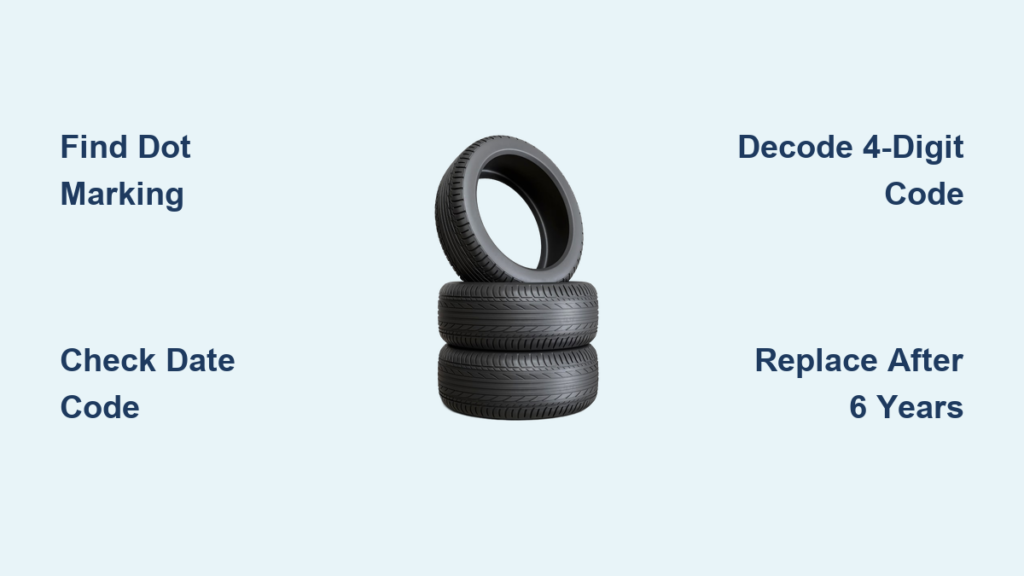
Industry consensus and manufacturer recommendations agree that tires should be replaced based on age, regardless of tread depth or apparent condition. The National Highway Traffic Safety Administration and major tire manufacturers generally recommend tire replacement after six years of age, with some suggesting replacement by ten years regardless of condition.
Key visual inspection points as tires age:
– Check for sidewall cracking (sometimes called “dry rot”)
– Look for tread area cracking between the tread blocks
– Inspect for bulges, blisters, or uneven wear patterns
– Note any hardening or loss of flexibility in the rubber
However, external appearance can be deceiving—internal structural degradation may not produce visible symptoms. When uncertainty exists about aged tires, consult a qualified tire professional for thorough inspection. These experts can assess internal conditions that external examination cannot reveal and provide expert guidance on whether replacement is necessary.
Pro tip: Even if you have low mileage or store a spare tire in your trunk, age affects all tires equally. A spare tire stored in a garage for ten years may need replacement before use, despite having never touched the road. The modest cost of replacement should be weighed against the potentially catastrophic consequences of tire failure at highway speeds.
Check Additional Sidewall Information for Context
While determining how old a tire is, you’ll notice other important information molded into the sidewall. The load index shows the maximum weight capacity, while the maximum inflation pressure appears in both metric and English units (typically “Max Load 730 kg (1609 lbs) at 240 kPa (35 psi)”). These specifications help ensure proper tire maintenance but don’t contribute to age determination.
Tires with radial construction must display the word “RADIAL” or include the character “R” in the size designation (like P225/60R16). Winter and all-season tires feature “M+S” or mountain-snowflake symbols indicating their intended use conditions. While this information provides valuable context about your tire’s capabilities, it won’t help you determine how old a tire is.
When checking tire age, focus your attention on the DOT marking and date code rather than these secondary specifications. The critical information you need appears in the standardized date code format at the end of the TIN sequence, not in these additional performance indicators.
Final Note: Determining how old a tire is requires locating the DOT symbol, identifying the TIN sequence, and correctly interpreting the date code format. For tires manufactured since 2000, the four-digit code provides precise manufacturing information. For older tires with three-digit codes, immediate replacement is recommended due to excessive age. Always keep your purchase receipt for warranty protection, and follow the six-to-ten-year replacement guideline to ensure your safety on the road—regardless of how much tread remains. Regularly checking your tire age could prevent a dangerous blowout and keep you and your passengers safe during every journey.