You’ve invested in a tubeless mountain bike setup to eliminate flats and run lower tire pressures for better traction, but now you’re struggling to get that stubborn tire bead to seat properly on the rim. This frustrating experience affects nearly every cyclist who makes the switch to tubeless – you’ve carefully installed the rim tape, added sealant, and are pumping vigorously, yet the tire just won’t “pop” into place. Properly seating a tubeless mountain bike tire requires specific techniques that differ from traditional tubed setups, and skipping critical steps can lead to dangerous blow-offs or persistent air leaks that ruin your riding experience. In this guide, you’ll learn the exact methods professional mechanics use to consistently seat tubeless tires on the first try, including preparation essentials, multiple inflation techniques for different scenarios, and how to troubleshoot common seating failures.
Essential Preparation Before Attempting to Seat Your Tubeless Tire
Verify Your Components Are Tubeless-Ready and Compatible
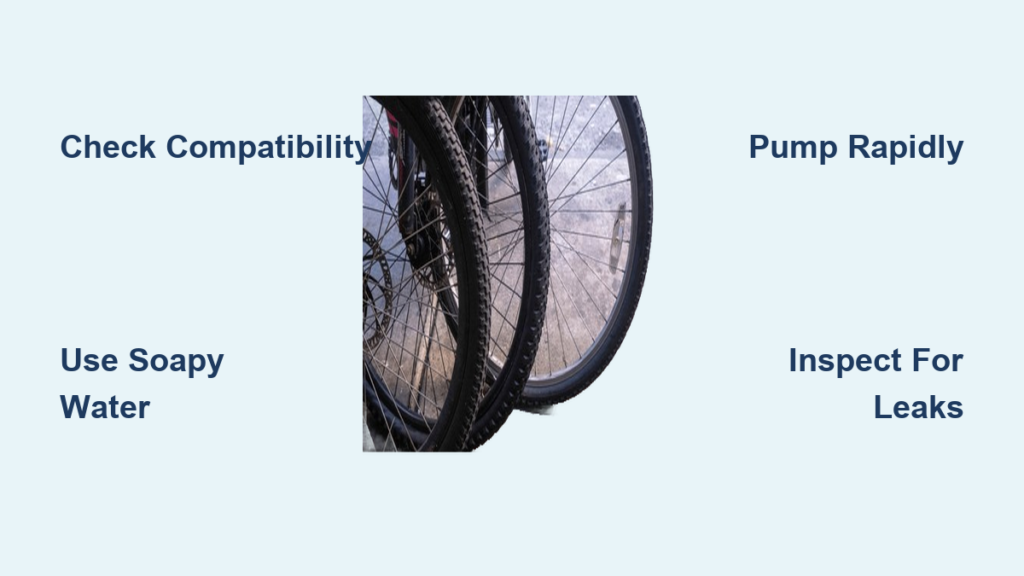
Before you even touch a pump, confirm your rim, tire, and valve are designed for tubeless operation. Many modern mountain bike rims feature a specific “hooked” bead design that securely locks the tire bead in place when properly inflated. Check for the “TL” or “Tubeless Ready” marking on both your tire sidewall and rim. Using non-tubeless-specific components significantly increases seating difficulty and creates safety hazards. Inspect your rim tape for proper installation with no gaps or wrinkles that could allow air to escape through spoke holes – this is the most common cause of persistent leaks during seating attempts.
Required Tools and Materials Checklist
Gather these items before starting to avoid mid-process frustration:
– High-volume floor pump with pressure gauge (minimum 120 PSI capacity)
– Tubeless valve core removal tool or small pliers
– Soapy water solution in spray bottle (dish soap and water)
– Tire levers (preferably plastic to avoid rim damage)
– Rim protector strips (if not pre-installed)
– Sealant (add after successful seating for most setups)
Step-by-Step Tire Seating Process
Proper Tire Installation Technique
Begin by lubricating only the tire beads with soapy water – never the rim bed. Position one bead fully seated in the rim’s center channel, then work the second bead over the rim hook using your thumbs, starting opposite the valve stem. As you reach the final 12 inches near the valve, apply significant downward pressure while pulling the tire toward you. The last section requires the most force as you’re stretching the tire over the rim’s widest point. If using tire levers, place them no more than 4 inches apart to prevent pinching the tubeless valve. A properly installed tire will have both beads resting just below the rim hook before inflation.
Initial Inflation Methods for Successful Seating
Floor Pump Technique for Stubborn Tires
With the valve core removed for maximum airflow, attach your floor pump and begin pumping rapidly with short, full strokes. As pressure builds to 20-30 PSI, you’ll hear the characteristic “pop” as one section of the bead seats. Immediately spray soapy water along the unseated bead while continuing to pump. The lubrication helps the bead slide into position as pressure increases. Most tubeless tires seat completely between 35-60 PSI, but some stubborn combinations may require higher pressure – never exceed your rim manufacturer’s maximum pressure rating.
Emergency Air Compressor Method
When a floor pump fails, an air compressor provides the sudden air volume needed for difficult seats. Remove the valve core completely and hold the compressor nozzle firmly against the valve stem. Deliver three short, powerful bursts of air while listening for the seating “pop.” Have a helper spray soapy water along the bead as it seats. Critical safety note: Never use excessive compressor pressure (keep below 80 PSI for initial seating) and maintain firm control of the tire – improperly seated tires can blow off violently at high pressure.
Sealant Installation Timing Strategies
Add sealant after successful seating for most modern tubeless-ready systems. Remove the valve core, tilt the wheel to access the valve stem opening, and pour in the recommended amount (typically 30-60ml depending on tire volume). Reinstall the valve core, spin the wheel to distribute sealant, then remount on your bike. For particularly difficult seats, some mechanics add sealant before initial inflation – the liquid helps lubricate the bead and can assist seating while immediately sealing minor leaks.
Troubleshooting Common Tubeless Tire Seating Failures

Persistent Air Leaks During Seating Attempts
If air escapes continuously without the bead seating, immediately check for these issues:
– Rim tape improperly installed with gaps over spoke holes (most common)
– Valve not fully seated or core not tightened properly
– Tire bead damaged or incompatible with rim profile
– Rim hook area dirty or contaminated with old sealant
Remove the tire completely and inspect rim tape by submerging the bare rim in water while pressurizing through the valve. Bubbles will reveal tape failures requiring complete re-taping with proper tubeless-specific tape.
Partially Seated Tire Bead Problems
When only part of the bead seats but sections remain unseated, follow this sequence:
1. Deflate completely and apply additional soapy water to the unseated bead
2. Work the unseated section with your hands to ensure it’s positioned in the rim’s center channel
3. Focus soapy water application on the problematic section during re-inflation
4. If using a pump, have a helper press down on the unseated section while pumping
5. For extreme cases, partially inflate to 15 PSI, then roll the wheel on the ground to help position the bead
Dangerous Tire Blow-Off Risks and Prevention
Tire blow-off occurs when the bead fails to seat properly but pressure builds sufficiently to force the tire off the rim violently. Prevent this by:
– Never exceeding 80 PSI during initial seating attempts
– Keeping your body clear of the tire sides during inflation
– Using rim protectors on carbon rims
– Ensuring tire and rim have compatible ETRTO sizing
If you hear a sudden loud pop without the expected seating sound, deflate immediately and inspect for damage before attempting again.
Maintenance and Long-Term Tubeless Performance Tips
Post-Seating Pressure Management
After successful seating, reduce pressure to your riding specification (typically 18-30 PSI for mountain biking). Higher initial seating pressure helps overcome friction but creates excessive tension on the bead that can lead to burping (sudden air loss) during hard cornering. Spin the wheel to distribute sealant evenly, then remount on your bike and check for leaks by listening and spraying soapy water at the bead interface.
Regular Sealant Maintenance Schedule
Replace sealant every 2-6 months depending on climate and riding frequency. Dry conditions accelerate evaporation while frequent wet rides dilute sealant effectiveness. Check sealant levels monthly by removing the valve core and tilting the wheel – if liquid doesn’t flow freely, add more. Properly maintained sealant prevents most slow leaks and allows continued riding after punctures up to 1/4 inch.
Critical Warning Signs Requiring Tire Replacement
Monitor these indicators that suggest immediate tire replacement:
– Visible bead damage or fraying at the rim interface
– Persistent leaks after multiple seating attempts with verified rim integrity
– Tire consistently burping air during normal riding
– Sidewall cuts deeper than the casing layer
Continuing to ride with compromised tubeless tires risks catastrophic failure at speed, potentially causing loss of control.
Advanced Techniques for Problematic Tire/Rim Combinations

Heat-Assisted Seating for Stubborn Setups
On extremely tight-fitting tires, carefully apply heat to the bead area using a hair dryer on medium setting. Rotate the tire while heating for 30 seconds per section – the warmth makes the rubber more pliable without damaging the tire. Never use open flames or excessive heat which can degrade the tire casing. Attempt seating immediately after heating while the rubber remains flexible.
Dual-Pump Method for Maximum Airflow
For particularly challenging setups, connect two floor pumps simultaneously using a Y-valve adapter. Have two people pump in unison to maximize air volume delivery during the critical seating phase. This method combines the safety of manual inflation with the air volume typically requiring a compressor.
Seating tubeless mountain bike tires becomes straightforward once you understand the specific requirements of the system. Proper preparation, correct technique application, and systematic troubleshooting of failures will transform this frustrating process into a reliable routine. Remember that each tire and rim combination has unique characteristics – what works for one setup might need adjustment for another. By following these professional methods, you’ll spend less time wrestling with stubborn tires and more time enjoying the benefits of a properly seated tubeless system on the trail.