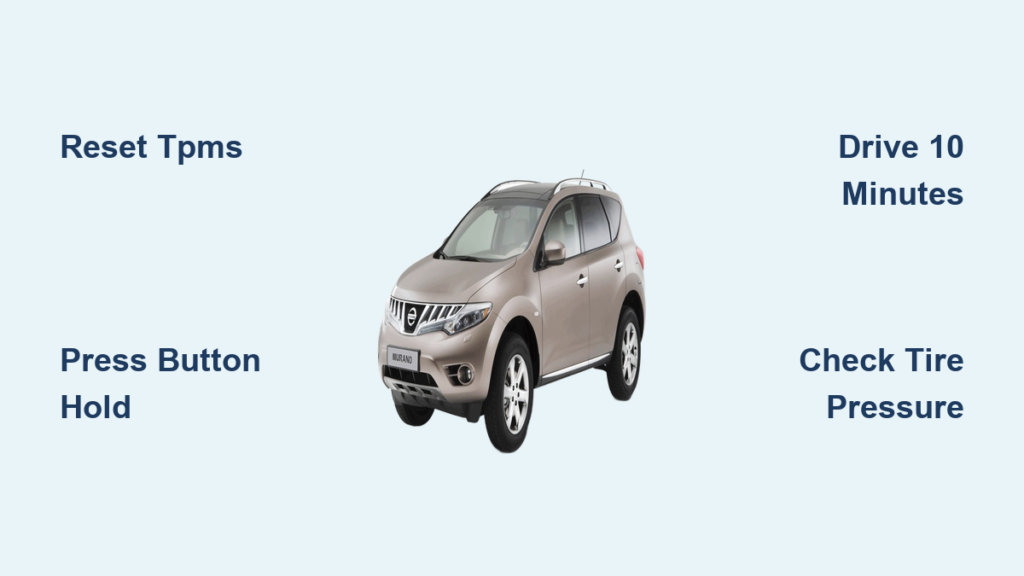
Your Nissan Murano’s tire pressure monitoring system (TPMS) is flashing an annoying warning light after your recent tire rotation, and you’re wondering how to reset tire rotation on Nissan Murano. This common maintenance headache occurs because the vehicle’s system needs to recognize that your tires have moved to new positions. Without completing this quick reset procedure, your dashboard will continue displaying false warnings, making it difficult to distinguish real pressure issues from simple positioning confusion. Whether you rotated your tires yourself or had a professional do it, this guide provides the exact steps to silence that warning light and get your TPMS functioning properly again.
The tire rotation reminder exists because modern Nissan Muranos use the TPMS not just for low-pressure alerts but also to track maintenance intervals. When you move tires to different positions, the system must be reset so it can properly monitor each tire’s pressure from its new location. If you skip this step, the system may incorrectly flag tires as having pressure problems simply because they’re in a new spot, potentially causing unnecessary stress and service visits. This comprehensive guide covers every reset method for Nissan Murano models from 2009 through 2020, so you can solve this problem in under five minutes regardless of your vehicle’s year.
Complete 2015-2020 Murano Reset Procedure

Newer Nissan Murano models feature an intuitive menu system that makes resetting the tire rotation reminder straightforward with visual confirmation of success. This method works for all 2015-2020 Murano trims and provides the most reliable reset experience for these model years.
Access Instrument Cluster Menu System
Sit in the driver’s seat with all doors closed and turn your ignition to the ON position without starting the engine—this powers up electrical systems while keeping the powertrain disengaged. Locate the control buttons on the right side of your steering wheel that manage the multi-information display. Press the menu button repeatedly until you see “Vehicle Information” appear on your instrument cluster screen. Navigate through the submenu options until you find either “Tire Pressure” or “Tire Rotation” settings—this may require pressing the “Down” arrow button 3-4 times depending on your starting position in the menu hierarchy.
Execute the Tire Rotation Reset
Once you’ve located the tire rotation option in your Murano’s menu system, press the “Enter” or “OK” button to select it. You’ll see a prompt asking if you want to reset the tire rotation monitoring system. Press and hold the “Enter” button for approximately three seconds until you see “COMPLETED” appear on your display. Some models will emit a single confirmation beep while others show a checkmark icon. If nothing happens after holding for three seconds, continue holding for up to five seconds—some vehicles require a longer press duration to register the command. This visual confirmation means your Nissan Murano now recognizes the new tire positions and will accurately monitor pressure from each location.
Simple 2009-2014 Murano Reset Method

Older Nissan Murano models lack the digital menu interface but feature an equally effective reset process using the trip computer button. This method works for all 2009-2014 Murano models regardless of trim level and requires no special tools or equipment.
Locate and Activate Trip Computer Button
With the driver’s door closed, turn your ignition to the ON position without pressing the brake pedal or starting the engine. Find the trip computer button on the right side of your instrument cluster—it’s the small button you normally use to cycle through trip mileage and fuel economy data. Press this button repeatedly until you see the tire pressure monitoring display appear. This may take 5-8 button presses depending on your starting position in the display cycle. The tire pressure screen shows individual tire pressures with front tires on top and rear tires on bottom, or may display a simple “TIRE ROTATION” message if the reminder is active.
Perform the Button Hold Reset
Once the tire pressure display is visible, press and hold the trip computer button for approximately five seconds. Watch for the display to begin flashing—this indicates the system has entered reset mode. Continue holding the button until the flashing stops and you see either a solid checkmark or “RESET” message appear. Some models will emit a single confirmation beep when the reset completes successfully. If the display doesn’t flash after five seconds, hold the button for up to ten seconds, as some older Muranos require a longer press duration. Release the button immediately when you see confirmation to avoid accidentally cycling through additional menu options.
Find and Activate TPMS Reset Button

Certain Nissan Murano models feature a dedicated physical TPMS reset button that provides a direct reset method without menu navigation. This approach works regardless of model year but requires knowing exactly where to find this often-hidden button.
Locate Your Murano’s Reset Button
Check three possible locations for your Nissan Murano’s TPMS reset button: First, feel under the driver’s side dashboard near the steering column for a small recessed button—this is the most common location. Second, open your glove box and check the left interior wall for a small black or gray button. Third, look beneath the center console near the cup holders for an unlabeled circular button. The button may be labeled “SET” or “TPMS” but often has no markings at all. If you’re having trouble finding it, use a flashlight and run your fingers along these areas carefully—you’re looking for a button about the size of a pencil eraser that requires firm pressure to activate.
Execute Physical Button Reset
Turn your ignition to the ON position without starting the engine, then press and hold the TPMS reset button for exactly three seconds. Watch your dashboard TPMS warning light—it should blink slowly three times, then remain solid for several seconds. This blinking pattern confirms the system has entered reset mode. Release the button after the third blink, start your engine, and drive at speeds above 15 mph for 10 minutes. During this drive, the system detects and registers each tire’s pressure signal from its new position. Avoid sudden stops or aggressive acceleration during this period, as smooth driving helps the system accurately learn the new tire locations.
Troubleshoot Persistent TPMS Warning Light
Even after correctly resetting your tire rotation system, you might encounter situations where the TPMS light remains illuminated. Understanding these common issues helps you determine whether you need professional assistance or can fix the problem yourself.
Diagnose Low Pressure vs System Malfunction
Check all tire pressures immediately if your TPMS light stays on after resetting. Use an accurate tire gauge to verify each tire’s pressure when cold (not driven for at least three hours). The standard recommended pressure for most Nissan Murano models is 33 PSI for normal load conditions—check your driver’s side door jamb sticker for exact specifications. Inflate any underinflated tires to the recommended pressure, then drive for 10 minutes at speeds above 15 mph to allow the system to update. If the light remains on after proper inflation, it likely indicates a system malfunction rather than low pressure.
Identify Specific Sensor Problems

When the TPMS light flashes for about 60 seconds after starting your Murano and then stays solid, this indicates a system fault rather than low pressure. This pattern means the system has lost communication with one or more tire pressure sensors. To identify which sensor is problematic, access your tire pressure display through the trip computer. If one tire shows “—” or “Err” while others display actual pressure readings, that’s the faulty sensor location. Common causes include dead sensor batteries (typically lasting 5-10 years), damaged sensors from road debris, or interference from aftermarket electronic devices.
Verify Reset Success and Complete System Relearn
After performing any reset method, completing the verification process ensures your Nissan Murano’s TPMS functions correctly with the newly rotated tires.
Confirm Proper System Function
Start by checking your dashboard for any illuminated warning lights after driving for 10-15 minutes. Access the tire pressure display through your trip computer button and verify all four tires show actual pressure readings rather than dashes or error messages. Each tire should display a specific PSI value within normal range (typically 28-38 PSI when properly inflated). If all readings appear normal and no warning lights illuminate during normal driving, your tire rotation reset was successful. Pro tip: Drive on both straight roads and make several turns during your verification drive, as this helps the system better distinguish between individual tire positions.
Complete the Driving Relearn Process
For the TPMS to fully recognize your rotated tires, drive your Murano at varying speeds for at least 15 minutes after resetting. Begin with 5 minutes of city driving at 15-30 mph, then spend 5 minutes on a highway or open road at 45-65 mph, and finish with 5 minutes of stop-and-go driving. This varied driving pattern helps the system collect comprehensive pressure data from each tire under different conditions. During this period, avoid parking for extended periods as the system needs continuous motion to accurately correlate pressure readings with specific wheel positions. After completing this drive cycle, your Nissan Murano’s TPMS will be fully calibrated to monitor your rotated tires.
When to Seek Professional Assistance
While most tire rotation resets can be completed at home, certain situations warrant professional help to avoid further complications or safety concerns.
Recognize Complex System Failures
Visit a Nissan dealership or qualified mechanic if your TPMS light continues flashing after multiple reset attempts and proper tire inflation. Professional diagnosis typically costs $50-$100 but can save you from replacing unnecessary parts by pinpointing the exact issue. Technicians use specialized TPMS diagnostic tools that can communicate directly with each sensor to determine if the problem is a dead battery, damaged sensor, or issue with the vehicle’s TPMS control module. If you’ve recently had tire work done and the system won’t reset, the shop that performed the service should address the issue at no additional cost.
Understand Sensor Replacement Requirements
If a TPMS sensor needs replacement, expect to pay $50-$150 per sensor plus $30-$70 labor for installation. Critical note: Replacement sensors must be programmed to your specific Nissan Murano’s VIN, which requires specialized equipment most tire shops possess. Some newer Murano models automatically learn new sensors after replacement, while older models require manual programming through the OBD-II port. Before paying for sensor replacement, confirm whether the issue is actually a dead battery versus a damaged sensor—many shops can test sensor functionality without replacement. Consider having sensors replaced when installing new tires, as this often provides the best value with installation labor already accounted for.
Final Note: Resetting tire rotation on your Nissan Murano is essential maintenance that takes just minutes but prevents ongoing dashboard warnings and ensures accurate tire pressure monitoring. Use the method appropriate for your model year, drive to complete the relearn process, and verify success before considering professional help. By following these steps after each tire rotation—recommended every 5,000-7,500 miles—you’ll maintain optimal TPMS functionality and extend your tire life through proper pressure monitoring.