That persistent tire pressure warning light glowing on your Lexus GX 460 dashboard isn’t just an annoyance—it’s a critical safety alert signaling potentially dangerous tire conditions. When the exclamation mark inside a U-shaped tire icon illuminates, your vehicle is telling you one or more tires has dropped approximately 25% below the recommended pressure. Whether you’ve recently inflated your tires, completed a rotation, or experienced seasonal temperature changes, knowing how to properly reset this light ensures your tire pressure monitoring system (TPMS) functions correctly. This guide delivers precise reset instructions for all GX 460 model years, explains what different warning patterns mean, and provides troubleshooting steps when the light refuses to turn off—so you can maintain optimal safety and performance without unnecessary trips to the dealership.
Access TPMS Calibration Menu from Steering Wheel Controls

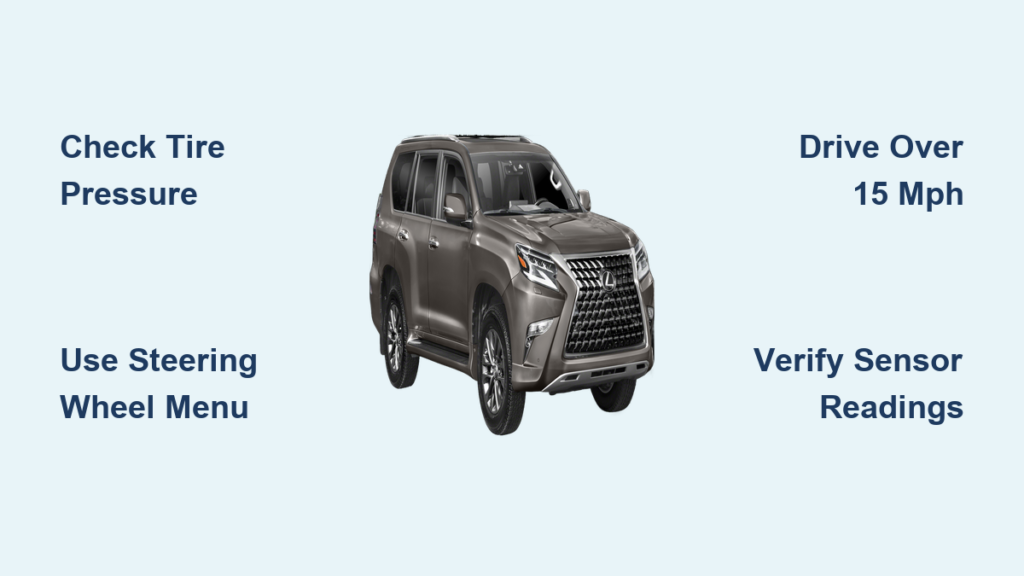
The most reliable method for resetting your GX 460’s tire pressure light involves using the vehicle’s multi-information display through the steering wheel controls. This procedure works across all model years, though menu structures may vary slightly between production runs.
Step-by-Step Calibration Process for All Model Years
Before starting any reset, confirm all four tires are inflated to the correct pressure found on your driver’s side door jamb placard—typically 32 PSI front and 33 PSI rear under normal load conditions. With your vehicle parked and the engine running (or ignition in “ON” position), locate the information display controls on the right side of your steering wheel.
- Press and hold the “OK” or “SET” button to enter the main menu
- Use arrow keys to navigate to “Vehicle Settings” or “TPMS”
- Select “TPMS Calibration” or “Set Tire Pressure” from the submenu
- Confirm when prompted to initialize current pressure readings as your new baseline
This calibration process takes approximately 30 seconds and teaches your system what “normal” pressure looks like for your specific tires and current conditions.
Confirm Successful Reset with Driving Verification
After confirming the calibration selection, wait for the display to show “Calibration Complete” or “TPMS Set.” Start driving at speeds above 15 mph—the warning light should extinguish within 5-10 minutes as the system registers your updated pressure readings. If the light persists, continue driving for 15-20 minutes, especially in temperatures below 40°F, as cold conditions slow sensor response time. Never assume the reset worked without driving verification—this learning cycle is essential for accurate monitoring.
Alternative Reset Methods When Menu Navigation Fails
When steering wheel controls prove challenging or the display is restricted, your GX 460 offers backup reset procedures using dashboard buttons or, as a last resort, battery disconnection.
Using Dashboard Buttons for Quick Reset
Some GX 460 models feature a trip meter reset button near the speedometer for TPMS calibration. With the ignition in “ON” position (engine off):
- Locate the trip meter reset button on the speedometer bezel
- Press and hold for 3-5 seconds until individual tire pressure readings appear
- Continue holding until “TPMS Reset” confirmation displays
- Release the button and start driving above 15 mph
Pro tip: This method works best when performed immediately after inflating tires to correct pressure—waiting too long allows the system to re-detect low pressure.
Battery Disconnection as Last Resort Reset
Disconnecting the battery can clear persistent warning lights but resets other vehicle settings. Only use this method after standard procedures fail:
- Turn off the vehicle completely and remove the key
- Locate the negative battery terminal (marked with “-“)
- Disconnect the cable and wait 15-30 minutes for full system discharge
- Reconnect the terminal securely and restart your vehicle
Warning: This method may not work on newer GX 460 models due to TPMS memory architecture, and you’ll need to reset radio presets, clock, and other electronic settings.
Verify Correct Tire Pressure Before Any Reset
Resetting the system with underinflated tires teaches your TPMS to expect dangerously low pressure as normal—a critical safety risk you must avoid.
Recommended PSI Specifications by Loading Condition
Your GX 460 requires specific pressures based on load conditions:
– Normal load (1-2 passengers, minimal cargo): 32 PSI front, 33 PSI rear
– Maximum load (full passengers, cargo, or towing): 35 PSI front, 38 PSI rear
These specifications balance handling precision, braking performance, and tire wear while accounting for the GX 460’s rear-weighted design. Always return to normal specifications after heavy loads to prevent uneven tire wear.
Finding Your Exact Pressure Requirements on Door Jamb
Your official tire pressure specifications appear on a placard attached to the driver’s side door jamb—never rely on the maximum pressure molded into the tire sidewall. This placard shows recommended cold pressures for front, rear, and spare tires (if applicable). Check this placard before every reset procedure to ensure you’re using your vehicle’s exact requirements.
Decoding TPMS Warning Light Patterns on GX 460

The TPMS warning light communicates different conditions based on whether it appears solid or flashing—understanding these patterns helps you respond appropriately.
Solid Light Meaning and Immediate Action Required
A solid tire pressure warning light indicates significant underinflation (25%+ below specification). When this light appears:
- Check all four tire pressures with an accurate gauge
- Inflate to door jamb specifications immediately
- Perform the TPMS calibration procedure after inflation
Expert note: A solid light may also signal rapid pressure loss from a puncture—visually inspect tires for embedded objects or sidewall damage before driving further.
Flashing Light Indicates System Malfunction
A flashing tire pressure warning light (typically flashing for 60-90 seconds then remaining solid) indicates a system fault rather than underinflation. Common causes include:
- Sensor battery depletion (sensors last 7-10 years)
- Physical damage during recent tire service
- Sensor registration errors after rotation
- Electromagnetic interference
When you see this pattern, professional diagnostic equipment is usually required to identify the specific fault.
Reset Procedures After Common Tire Services

Tire service procedures often trigger TPMS warnings, requiring specific reset steps to restore proper system function.
Post-Rotation Reset to Update Sensor Locations
After rotating tires between positions, your GX 460 needs to relearn which sensor belongs at each corner:
- Perform standard calibration through the vehicle menu
- Drive 10-15 minutes above 20 mph to allow sensor identification
- Verify all tire pressure readings display correctly on your dashboard
If the warning light remains on after rotation, a sensor may have been disturbed during service.
Sensor Registration After Tire or Sensor Replacement
When replacing tires or TPMS sensors, new sensors must be registered with your vehicle:
- Professional tire shops have specialized TPMS programming tools
- The process assigns unique identification codes to each sensor
- After registration, perform the standard calibration procedure
Time-saving tip: Request sensor registration during tire service to avoid return trips—most reputable shops include this in their service.
Troubleshooting Persistent Tire Pressure Lights
When the tire pressure warning light refuses to extinguish despite proper inflation and calibration, systematic troubleshooting identifies the underlying issue.
Light Remains After Proper Reset: Common Causes
If the warning light persists after correct reset procedures:
- Ensure you’ve driven long enough (10-20 minutes above 15 mph)
- Check spare tire pressure if your GX 460 monitors it (typically 60 PSI)
- Verify all valve stem caps are installed—they provide secondary seals
Pro tip: Test each tire with a physical gauge—sometimes sensor readings differ from actual pressure.
Inconsistent Sensor Readings and Diagnosis
If one tire consistently shows different readings from others:
- Compare vehicle display readings with a known-accurate pressure gauge
- If readings differ significantly, that sensor may be failing
- If gauge and display agree but warnings persist, a calibration issue exists
Damaged valve stems or corrosion can also cause erratic readings—inspect all stems carefully.
When Professional TPMS Service Is Necessary
Some TPMS situations require professional diagnosis and service equipment beyond DIY capabilities.
System Fault Diagnosis with Specialized Equipment
When the TPMS warning light flashes continuously then remains solid, indicating a system fault, professional service is essential. Dealership technicians have:
- Manufacturer-specific scan tools
- Sensor programming equipment
- Ability to read detailed diagnostic trouble codes
Attempting repairs without proper equipment can cause additional damage or continued malfunction.
Sensor Replacement and Registration Process
TPMS sensor batteries typically last 7-10 years but degrade faster with temperature extremes. When sensors require replacement:
- New sensors must be registered to your specific vehicle
- Registration assigns unique identification codes to each sensor
- Without proper registration, the TPMS cannot identify which tire is which
This specialized process requires professional tools and expertise—don’t attempt it yourself without proper equipment.
Extending Your GX 460’s TPMS System Lifespan
Regular maintenance preserves TPMS functionality and prevents premature sensor failure.
Monthly Pressure Verification Routine
Check tire pressures monthly when tires are cold (before driving):
- Use a reliable pressure gauge rather than relying solely on vehicle display
- Document each tire’s pressure to identify gradual pressure loss
- Inflate to specifications before seasonal temperature changes
Expert note: Underinflated tires generate excess heat, increasing blowout risk by up to 50% according to NHTSA studies.
Protecting Sensors During Tire Service
Whenever tires are serviced:
- Ensure service providers inspect TPMS components
- Request valve stem replacement if showing age or damage
- Confirm sensor seals and grommets are replaced to prevent air leaks
After any tire service, always perform the TPMS calibration procedure—this single step prevents most post-service warning lights.
Resetting the tire pressure light on your Lexus GX 460 is straightforward when you follow the correct procedure: verify proper inflation first, then use the steering wheel menu to calibrate the system. If the light persists after proper reset procedures, check for system faults or sensor issues requiring professional attention. Monthly pressure checks and prompt response to warnings keep your TPMS functioning reliably, ensuring your luxury SUV maintains optimal safety, handling, and fuel efficiency. Never ignore TPMS warnings—underinflated tires significantly increase accident risk while reducing your GX 460’s legendary performance capabilities.