That annoying tire pressure warning light on your Nissan Sentra dashboard won’t turn off, even though you’ve checked your tires. You’re not alone—thousands of Sentra owners face this frustrating issue every year. When that flat-tire icon with an exclamation point illuminates, it means your vehicle’s Tire Pressure Monitoring System has detected pressure below the recommended 32 psi for most models. The light might stay on after you’ve added air, following a tire rotation, or during seasonal temperature changes. Understanding how to reset the tire pressure light on Nissan Sentra properly saves you unnecessary dealership visits and keeps your vehicle safe.
This guide provides every proven method to reset your Sentra’s TPMS warning light, from simple button presses to advanced troubleshooting. You’ll learn why the light stays on despite proper inflation, what preparation steps you must complete first, and when professional help becomes necessary. By the end, you’ll confidently resolve this common issue and maintain your TPMS system correctly.
Verify Correct Tire Pressure Before Any Reset Attempt
Never attempt a TPMS reset with underinflated tires—this wastes your time and causes the light to return immediately. The reset procedure tells your Sentra’s computer to accept current pressure readings as “normal,” so inaccurate readings lock in incorrect baseline pressure. Start by locating your specific model’s recommended pressure on the sticker inside the driver’s door jamb—most Nissan Senta models require 32 psi for standard 16-inch and 17-inch wheels, while 18-inch performance trims need 33 psi.
Use a quality digital pressure gauge (not the one at the gas station) to check all four tires when they’re cold—meaning the vehicle hasn’t moved for at least three hours. If any tire measures more than 3 psi below specification, inflate it to the correct level. Remember that tire pressure naturally decreases by 1-2 psi per month and drops significantly during cold weather. After inflating, drive your Sentra for 5-10 minutes at moderate speed—sometimes this simple action clears the light without needing a formal reset.
Why Driving After Inflation Sometimes Clears the Light Automatically
Your Sentra’s TPMS system requires movement to update pressure readings. When tires maintain proper pressure for several minutes of driving, the system automatically recalibrates and turns off the warning light. This happens because the sensors transmit updated pressure data to the vehicle’s computer only when the wheels are rotating. If the light persists after driving with properly inflated tires, your system needs manual resetting—proceed to the specific reset methods below.
Execute the Physical TPMS Reset Button Procedure
The most reliable way to reset tire pressure light on Nissan Sentra involves the dedicated reset button beneath your steering column. This method works for all Sentra models from 2013 through current production and requires no special tools.
Turn your ignition to the “ON” position without starting the engine—your dashboard lights should illuminate. Locate the TPMS reset button, which sits tucked under the steering wheel on the driver’s side, typically near the hood release lever. It’s a small black button recessed into the panel that you’ll need to feel for with your fingers. Press and hold this button for exactly 3-5 seconds until the TPMS warning light begins flashing rapidly—this visual confirmation means the reset cycle has activated.
Release the button, start your engine, and drive your Sentra at 15-30 mph for 10-15 minutes. During this drive, the system reads pressure data from all four sensors and establishes new baseline readings. The warning light should turn off automatically once all sensors report correct pressure. If it remains illuminated, double-check your tire pressures—many failed reset attempts stem from one tire being 2-3 psi below specification.
Troubleshooting Common Button Reset Failures
If the light won’t reset using the button method, consider these frequent issues:
– Button not held long enough: The system requires 3 full seconds of continuous pressure
– Ignition position incorrect: Must be in “ON” position (not “ACC” or “START”)
– Insufficient driving time: Sensors need 10+ minutes of driving to transmit updated data
– Extreme temperature conditions: Below 20°F or above 100°F can interfere with sensor communication
Use Your Driver Information Display for Modern Senta Models

If your Nissan Sentra has a digital instrument cluster (2018+ models), you can reset the tire pressure light through the driver information menu—often easier than locating the physical button.
With tires properly inflated, turn your ignition to “ON” and press the “MENU” button on your steering wheel. Navigate to “Vehicle Settings” > “TPMS Settings” using the toggle switch, then select “Reset TPMS” or “Set Tire Pressures.” Confirm the selection when prompted, and watch for the TPMS light to flash on your dashboard—this confirms the reset initiation. Start your vehicle and drive for 10-15 minutes at highway speeds to complete the calibration.
Model-Year Specific Menu Navigation Tips
Different Sentra years organize their menus differently:
– 2018-2020 models: Settings > Vehicle > TPMS Reset
– 2021+ models: Vehicle Info > System Settings > Tire Pressure Reset
– SV and SR trims: May require pressing “OK” twice to confirm reset
Force Reset with the Inflate-Deflate Method
When standard reset procedures fail, this aggressive technique often resolves stubborn TPMS lights by triggering sensor recalibration through dramatic pressure changes.
Inflate all four tires to 35 psi (3 psi above standard 32 psi specification). Wait five minutes, then completely deflate each tire using a valve core tool to speed the process. After all tires read zero psi on your gauge, reinflate each to the exact recommended pressure shown on your door jamb sticker. This sequence—overinflation followed by complete deflation—forces the sensors to register significant pressure changes, often clearing communication errors that prevent normal resetting.
Drive your Sentra for 15-20 minutes after this procedure, varying your speed between 15-45 mph to ensure all sensors transmit data at different rotation speeds. This method proves particularly effective after tire rotations or when installing winter tires, as it helps the system re-identify sensor positions relative to each wheel well.
Disconnect Battery for Hard System Reset
Use this method only when all others fail—battery disconnection resets all vehicle systems, erasing radio presets, clock settings, and learned engine parameters.
Turn off your Sentra and remove the key from the ignition. Open the hood and locate the negative battery terminal (marked with a “-” symbol). Using a 10mm wrench, loosen the terminal clamp and carefully remove the cable. Insulate the disconnected cable with a clean rag to prevent accidental contact with the battery post. Wait precisely 20 minutes to ensure all vehicle computers fully discharge.
Reconnect the negative terminal, tighten securely, and start your vehicle. Check if the TPMS light has cleared—many persistent issues resolve with this complete electrical reset. If the light returns immediately, your Sentra likely has a faulty sensor requiring professional diagnosis.
Identify Critical Light Behavior Patterns

Your Sentra’s TPMS light communicates specific problems through its flashing pattern—understanding these prevents wasted effort on ineffective resets.
A solid, steady light means one or more tires are underinflated—address tire pressure first before attempting resets. A flashing light that becomes solid after 60-90 seconds indicates successful reset initiation—continue driving to complete calibration. However, a continuously flashing light signals a system malfunction unrelated to tire pressure, such as a failed sensor or receiver module.
When Flashing Means Professional Help Is Required
If your TPMS light flashes constantly without becoming solid, don’t waste time attempting resets—the system has detected a hardware failure. Common causes include:
– Dead TPMS sensor battery (typically fails after 7-10 years)
– Damaged sensor from road impact (potholes or curbs)
– Corroded valve stem connections preventing signal transmission
– Aftermarket wheels incompatible with factory sensors
Resolve Chronic TPMS Warning Light Issues
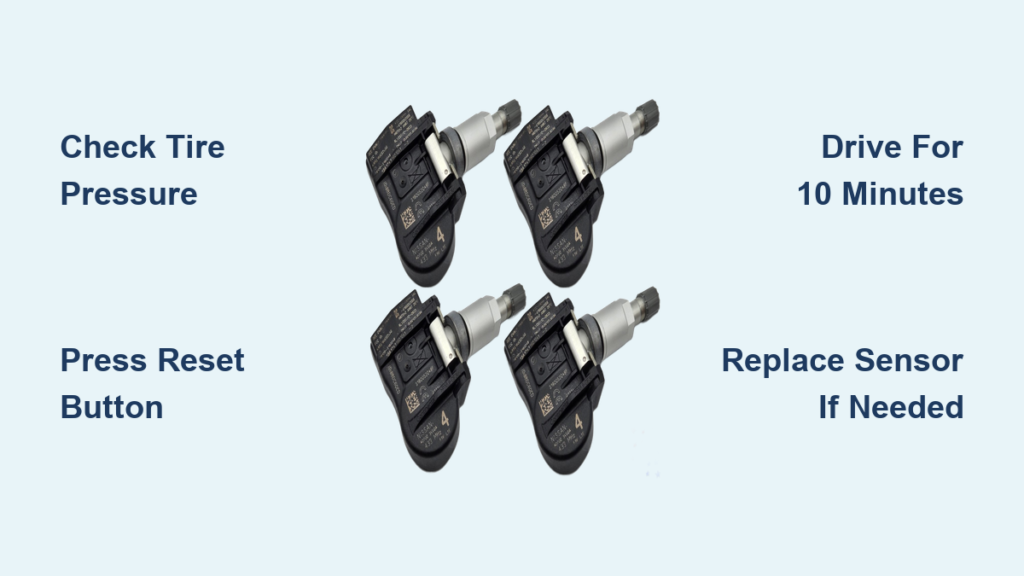
When the tire pressure light returns repeatedly despite proper inflation and multiple reset attempts, you’re dealing with sensor failure rather than a simple reset issue. TPMS sensors contain sealed batteries that deplete over time—most Nissan Sentra sensors last 7-10 years before requiring replacement.
Check each tire’s valve stem area for physical damage or corrosion. Look for green or white powder around the valve core—this indicates moisture intrusion and sensor failure. Replacement sensors cost $60-120 each at dealerships, with programming adding $25-50 per sensor. While some aftermarket sensors work, factory Nissan units ensure perfect compatibility and prevent communication errors that trigger false warnings.
Cost-Effective Sensor Replacement Strategy
If replacing multiple sensors, consider these money-saving tips:
– Replace sensors during tire rotations to avoid separate mounting/dismounting costs
– Ask for recycled sensors which function like new but cost 30-40% less
– Verify warranty coverage—some Nissan extended warranties include TPMS components
– Compare dealership vs. independent shop pricing—specialized tire shops often charge 20-30% less
Maintain Optimal Tire Pressure for Reliable TPMS Operation
Proper tire pressure prevents most TPMS warning light issues before they start. Check pressures monthly using an accurate digital gauge, always when tires are cold (before driving). Most Nissan Sentra models require 32 psi for standard wheels, but consult your door jamb sticker for exact specifications.
| Wheel Size | Front Pressure | Rear Pressure | Common Model Years |
|---|---|---|---|
| 205/55R16 | 32 psi | 32 psi | 2013-2019 |
| 215/50R17 | 32 psi | 32 psi | 2013-2022 |
| 215/45R18 | 33 psi | 33 psi | 2020+ SR/SV |
Underinflated tires wear 25% faster on the outer edges and reduce fuel economy by up to 3%, while overinflation causes center wear and compromises handling. Seasonal temperature drops of 10°F decrease tire pressure by 1-2 psi—check pressures more frequently during fall and winter months.
Prevent Future TPMS Warning Light Problems
Implement these simple habits to avoid recurring tire pressure light issues:
– Check pressures monthly using a quality digital gauge
– Rotate tires every 5,000 miles to ensure even sensor wear
– Replace valve stem seals during tire services to prevent slow leaks
– Use nickel valve caps which resist corrosion better than plastic
– Avoid aftermarket wheels unless they include compatible TPMS sensors
When getting new tires, insist technicians remove sensors carefully—improper handling during tire mounting causes 40% of premature sensor failures. Ask for a TPMS system check during routine maintenance to catch developing issues before they trigger warning lights.
By following these precise methods to reset tire pressure light on Nissan Sentra, you’ll maintain safe driving conditions while avoiding unnecessary service costs. Remember that persistent warning lights often indicate sensor failure rather than simple pressure issues—when in doubt, consult a Nissan specialist who can diagnose the exact problem using factory-level equipment.