When your Ford Focus TPMS warning light glows steadily on the dashboard, it’s more than just an annoyance—it’s your vehicle signaling a potential safety issue that needs immediate attention. Since 2008, every Ford Focus has relied on direct Tire Pressure Monitoring System (TPMS) sensors to maintain optimal tire pressure, and when one fails, you’ll face persistent dashboard warnings that won’t clear until properly addressed. Replacing a faulty tire pressure sensor yourself can save you $100-$250 compared to dealership service, but requires specific knowledge of Ford’s system and proper tools to complete successfully.
The most common sign of sensor failure appears as a solid amber warning light shaped like a U with an exclamation point inside—don’t confuse this with the flashing light that indicates system malfunction rather than low pressure. Ford’s sensors contain non-replaceable lithium batteries designed to last 5-10 years, but extreme temperatures, frequent tire changes, or physical damage during service can significantly shorten their lifespan. By learning how to replace tire pressure sensor Ford Focus models require, you take control of both your vehicle’s safety and your repair budget.
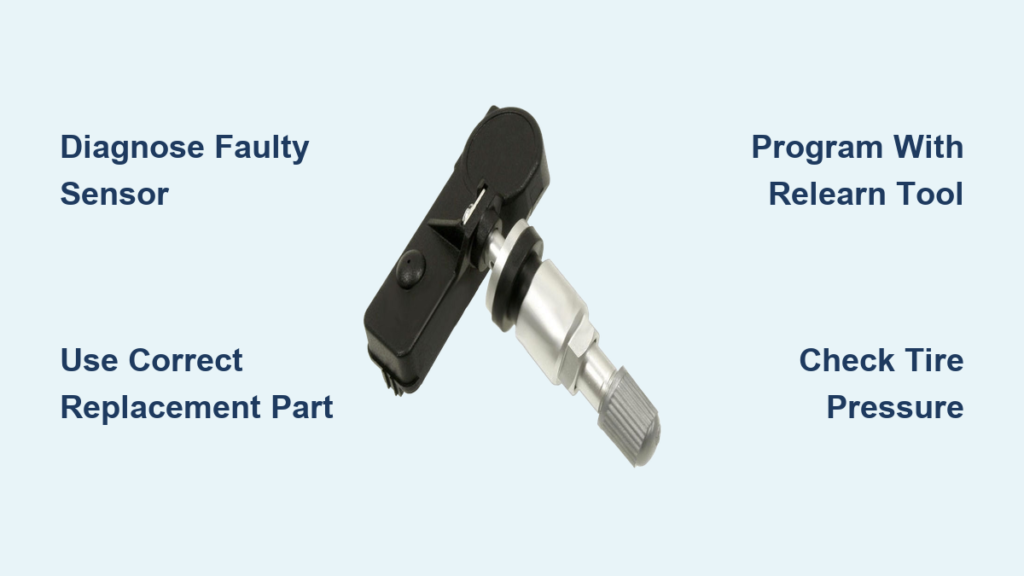
Diagnose Which TPMS Sensor Needs Replacement
Before purchasing parts, confirm which specific sensor has failed to avoid unnecessary expenses. Start with a physical inspection: check all tires with a quality pressure gauge when cold (driven less than 1 mile)—if one tire consistently shows lower pressure without visible puncture or valve stem damage, that sensor likely needs replacement. Pay special attention if you’ve owned your Focus for 7-10 years, as battery depletion becomes the probable cause when multiple sensors approach their expected lifespan.
When the TPMS warning light flashes for 60-90 seconds after ignition before staying solid, your system has detected an internal malfunction rather than simple underinflation. This specific pattern indicates communication issues between sensors and the control module. For definitive diagnosis, visit AutoZone, O’Reilly, or Advance Auto Parts where they’ll scan TPMS-specific trouble codes for free—these stores can pinpoint exactly which wheel position has failed using codes like C0035 (left front), C0036 (right front), C0041 (left rear), or C0042 (right rear).
What to Look for During Visual Inspection
- Check valve stem condition: Corrosion or bent valve stems often cause slow leaks that mimic sensor failure
- Examine rubber grommets: Cracked or hardened seals around the sensor create air leaks
- Inspect sensor housing: Look for physical damage from road debris or improper tire installation
- Verify sensor orientation: Misaligned sensors on the wheel hub cause signal transmission issues
Gather Exact Sensor Models and Required Tools

Ford Focus TPMS sensors operate at 315 MHz frequency but require specific part numbers depending on your model year—using incompatible sensors triggers persistent warning lights even after installation. For most 2008-2018 Focus models, the correct OEM sensor part number begins with 8A2Z-1A189-A, though 2019 and newer models may use different configurations. Quality aftermarket options from Schrader, Continental, or Denso cost $40-70 per sensor compared to $80-120 for genuine Ford parts, but always verify compatibility with your VIN before purchasing.
Essential Tools for Successful Installation
- Valve core removal tool: Releases air completely from tires before sensor replacement
- Snap-ring pliers: Required for band-mounted sensor removal on most Focus models
- Torque wrench: Ensures lug nuts are properly secured at 100 ft-lbs after reinstallation
- TPMS relearn tool: Critical for programming new sensors ($50-150) or borrow from auto parts store
- Replacement valve stems and seals: Prevent leaks from degraded rubber components
Skipping the proper relearn tool is the #1 mistake DIYers make—without programming the new sensor to your vehicle’s system, the TPMS light will remain illuminated despite correct installation. Many auto parts stores provide free relearn service when you purchase sensors from them, making this a valuable cost-saving option if you lack the specialized equipment.
Execute Sensor Replacement Without Tire Damage
Begin by loosening lug nuts while your Ford Focus remains on level ground, then raise the vehicle using a hydraulic jack at Ford’s specified lift points (pinch welts behind front wheels and inboard of rear wheel wells). Never work beneath a vehicle supported only by a jack—always use jack stands rated for your vehicle’s weight. Deflate the tire completely using your valve core tool, then separate the tire bead from the rim using a bead breaker or tire iron, working systematically around the circumference.
With the tire partially removed, locate the TPMS sensor mounted inside near the valve stem. Band-mounted sensors require snap-ring pliers to release the tension clamp before extraction, while valve-stem integrated sensors secure with a retaining nut. Before installing your new sensor, thoroughly clean the valve stem hole of rust and debris—this critical step prevents air leaks that would trigger false warnings later. For band-mounted sensors, position the new unit on the wheel hub in the exact same orientation as the original, securing it with the new stainless steel band included in your kit.
Proper Torque Specifications You Must Follow
- Sensor retaining nut: 35-45 inch-pounds (over-tightening cracks the sensor housing)
- Lug nuts: 100 ft-lbs in star pattern (under-torquing causes wheel vibration)
- Valve core: Hand-tight plus 1/4 turn (excessive force damages sensor electronics)
Reassemble the tire onto the rim by working the lower bead over first, using tire lubricant to prevent damage. Inflate to 40-50 PSI briefly to ensure proper bead seating, then adjust to your Focus’s recommended 32-35 PSI as shown on the driver’s door jamb sticker. Double-check pressure after driving 5-10 miles as temperature changes affect readings.
Complete TPMS Sensor Programming Successfully

The installation isn’t finished until you program the new sensor to your Ford’s system—a step many DIYers overlook. For 2008-2011 Focus models, turn ignition to “on” (engine off), press and hold the TPMS reset button until the light flashes three times, then inflate/deflate each tire in left-front, right-front, right-rear, left-rear sequence. Your horn will honk when each sensor is successfully learned. 2012 and newer models require a scan tool for programming due to enhanced security protocols.
If you lack the proper relearn tool, most major auto parts stores provide free programming service when you purchase sensors from them—simply drive to the store after installation and their technicians will complete the process in minutes. After successful programming, drive your Focus for 5-10 minutes to allow the system to calibrate; the TPMS warning light should extinguish automatically once all sensors communicate properly.
Evaluate Cost Savings of DIY vs Professional Service

Professional TPMS replacement at a Ford dealership costs $150-300 per sensor including parts, labor, and programming, potentially reaching $1,200 for all four wheels. Independent tire shops charge $50-150 per sensor, making them a more economical option while still providing warranty coverage. DIY replacement reduces costs to $40-120 per sensor for parts alone, though initial tool investment adds $100-150 if you don’t already own specialized equipment.
Consider replacing all four sensors simultaneously if your Focus has exceeded 8 years of age—sensors from the same production batch typically fail within similar timeframes, making this approach cost-effective in the long run. Many owners schedule complete sensor replacement during tire changes since the tire mounting process already exposes all sensors, minimizing additional labor costs.
Prevent Future TPMS Sensor Failures
Extend your new sensors’ lifespan by avoiding tire sealants during puncture repairs—these chemical compounds corrode electronic components and often void sensor warranties. During seasonal tire rotations, always request TPMS reprogramming to recognize new sensor positions; failure to do this causes persistent warning lights and incorrect pressure location identification. Keep detailed records of sensor replacements to track when components may approach end of life.
Check tire pressure monthly with a calibrated gauge, as the TPMS only alerts when pressure drops 25% below specifications. Temperature fluctuations affect pressure by approximately 1 PSI per 10°F change, so verify pressure more frequently during seasonal transitions. When the warning light illuminates, first confirm actual pressure before assuming sensor failure—cold weather alone can trigger warnings without component issues.
Troubleshoot Common Post-Replacement Issues
If the TPMS light remains illuminated after proper installation and programming, check for signal interference from metallic wheel finishes or aftermarket rims that block the 315 MHz frequency. Repositioning the sensor on the wheel hub or installing a sensor with improved antenna design often resolves these communication issues. Persistent system-wide failures affecting all sensors typically indicate problems with the TPMS control module rather than individual sensors—located beneath the dash near the steering column, module replacement requires dealer-level programming costing $200-500.
Remember that TPMS sensor batteries cannot be replaced—the entire assembly requires replacement when power depletes. Quality aftermarket sensors typically include 2-5 year warranties compared to Ford’s 12-month coverage, providing better long-term protection for your investment. Address TPMS issues promptly to maintain optimal tire monitoring, which directly impacts your safety, fuel economy, and tire longevity—properly inflated tires improve gas mileage by up to 3% and extend tread life by thousands of miles.