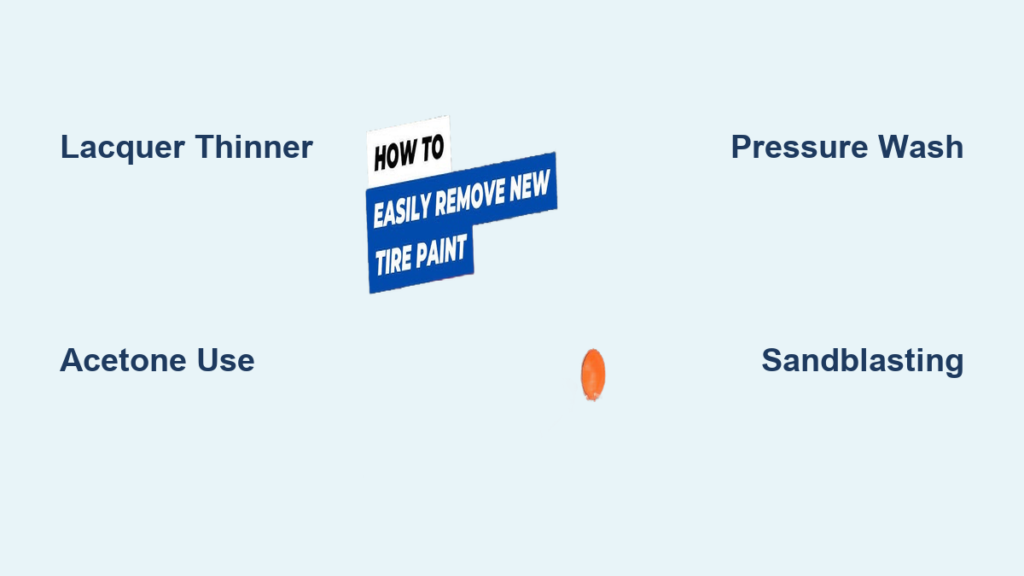
You’re driving home when you notice unsightly paint streaks marring your tires—a frustrating discovery that makes your vehicle look unkempt and neglected. Whether you accidentally rolled through fresh road markings, got caught in spray paint overspray, or your decorative white-letter paint has turned an unattractive shade of brown, knowing how to remove tire paint effectively saves you from expensive professional detailing or the embarrassment of driving with stained rubber. The good news is that most paint contamination responds well to DIY treatment, with solutions ranging from household solvents to mechanical techniques depending on the severity of the situation.
Tire paint removal requires special consideration because tires are made of porous rubber that readily absorbs and holds onto contaminants. Unlike smooth surfaces where paint sits on top, rubber allows paint to seep into microscopic textures and tread grooves, creating a stubborn bond that regular washing can’t break. Understanding the type of paint you’re dealing with—road markings, decorative coatings, or accidental overspray—helps you select the right removal method immediately, saving time and preventing potential damage to your tires or wheels.
This guide covers every proven approach to remove tire paint, from gentle solvents ideal for fresh splatters to aggressive mechanical techniques for old, bonded coatings. You’ll learn exactly how to execute each method safely, which precautions matter most, and how to prevent paint transfer from becoming a recurring problem for your vehicle.
Why Lacquer Thinner Works Best for Most Paint Types

Lacquer thinner remains the top choice among automotive professionals for how to remove tire paint effectively. Its powerful solvent properties dissolve paint binders quickly while its fast evaporation rate prevents prolonged rubber exposure. For best results, saturate a clean cloth until damp (not dripping) and gently rub painted areas with moderate pressure—fresh paint typically lifts away within seconds while older coatings may require multiple applications.
Critical technique tip: Work in small sections and use fresh cloth areas frequently to avoid redepositing paint. One body shop veteran with thirty years of experience regularly uses lacquer thinner on tires without observing long-term damage, confirming that brief exposure (under sixty seconds) causes no visible harm to properly formulated rubber. When removing tire paint with lacquer thinner, always work in a well-ventilated area away from ignition sources and keep the cloth damp rather than soaked to prevent drips that could damage wheel finishes.
Acetone for Discolored Decorative Tire Paint
When white-letter tire paint turns an unattractive brown, acetone provides the fastest solution to restore your tires’ appearance. This solvent excels at breaking down the specific binders used in decorative tire coatings while leaving the underlying rubber intact. Simply apply acetone to a clean cloth and rub the discolored areas until the paint transfers completely—most users report complete removal in just one or two applications.
The Duplicolor company itself recommends acetone for cleaning their tire paint products, though they acknowledge rubber degradation concerns with prolonged exposure. Your key to success is applying acetone judiciously: rub the affected areas thoroughly but wipe away dissolved paint promptly. After treatment, your tires should return to their original shiny black appearance without visible damage or chalkiness. Always test acetone on a small, inconspicuous area first to ensure compatibility with your specific tire formulation.
Isopropyl Alcohol for Fresh Paint Spills
For recently acquired paint splatters, isopropyl alcohol (IPA) offers a gentler alternative that minimizes chemical exposure while still delivering effective results. Available at pharmacies in concentrations from 70% to 99%, higher percentages work faster but may require more applications. The beauty of using isopropyl alcohol to remove tire paint lies in its accessibility and reduced risk to surrounding surfaces—perfect when working with mounted tires near sensitive components.
Apply IPA to a cloth and rub the painted areas with moderate pressure, reapplying as needed until the paint lifts completely. Fresh paint typically responds within minutes, while older coatings may resist this milder approach. If you’re wondering how long to leave isopropyl alcohol on tires, most experts recommend no more than thirty seconds of contact time before wiping away. This method works particularly well for accidental overspray from home projects where the paint hasn’t fully cured.
Pressure Washing for Heavy Paint Buildup
When solvents prove insufficient for old, bonded paint, high-pressure washing delivers mechanical removal without chemical concerns. Consumer-grade electric pressure washers lack the necessary power—opt for gas-powered units with at least 5 horsepower to generate sufficient force. One user with a 9-horsepower Subaru-engined pressure washer reported paint blasting off tires “almost unbelievably fast,” revealing clean rubber underneath.
Your technique matters significantly: direct the high-pressure stream systematically across painted areas while maintaining consistent movement to prevent uneven wear. Paint typically flakes away rather than dissolving, requiring periodic debris clearing to maintain visibility. Unlike commercial car wash pressure washers (which use high-flow tips that reduce tip pressure), dedicated gas-powered units provide the concentrated force needed to dislodge stubborn paint from rubber surfaces. Always wear eye protection during this process to guard against flying paint chips.
Sandblasting for Extreme Cases
For tires with heavily bonded paint that resists all other methods, sandblasting represents the most aggressive—and often most effective—solution. This technique requires careful execution to avoid damaging your tires: use a curved sheet metal shield between the rim and tire to protect wheel surfaces while focusing the blast exclusively on the rubber. Small spot blasters available from Harbor Freight operate with standard air compressors, making this approach accessible to home mechanics.
Maintain appropriate pressure and keep the blaster moving constantly to prevent concentrated abrasive force in one spot. Users report that properly executed sandblasting makes tires appear “essentially new” by removing not only paint but also accumulated road grime. While sandblasting tires with wheels mounted is possible, unmounted tires allow for more complete access and eliminate any risk to wheel finishes. Always wear appropriate respiratory protection when sandblasting to avoid inhaling paint particles.
Protecting Wheels During Paint Removal

When tires remain mounted, protecting surrounding surfaces becomes as crucial as removing the paint itself. The same solvents that successfully strip paint from rubber will damage wheel finishes, brake components, and adjacent body panels. Create custom sheet metal shields that match your rim contours to physically block solvent overspray and drips—thin aluminum works well as it bends to fit wheel shapes while maintaining rigidity.
Alternatively, use masking tape and newspaper to cover wheel faces, lug nut holes, and nearby body panels before applying any solvents. One professional detailer recommends treating this protection step as non-negotiable: “I’ve seen too many customers accidentally strip their wheel paint while trying to remove tire paint.” Lay plastic drop cloths underneath to catch drips and prevent environmental contamination—solvent-soaked materials require proper disposal according to local regulations, not simply washing down storm drains.
Prevent Future Paint Transfer Immediately
After successfully removing tire paint, implement these preventive measures to avoid recurrence:
- Avoid construction zones where fresh road markings create paint transfer risks
- Inspect tires immediately after driving through potentially hazardous areas
- Wash tires promptly with dish soap and water when paint exposure occurs
- Focus on tread grooves where paint can lodge and cure unnoticed
For vehicles frequently exposed to paint hazards, establish a regular inspection routine to catch fresh contamination before it bonds strongly. If you must use decorative tire paint, select quality products and follow application instructions precisely—cheap paints often fail quickly and create more difficult removal scenarios when they deteriorate. Many enthusiasts find that the maintenance required for decorative paints outweighs their visual benefits, making complete removal the smarter long-term solution.
Complete Your Paint Removal Process Properly
After removing tire paint using your chosen method, finish with these critical steps:
- Wash tires thoroughly with dish soap and water to remove all solvent residue
- Inspect the surface for any remaining paint that might have been missed
- Dry completely before applying tire dressing to restore appearance
- Check for any unusual rubber texture changes that might indicate damage
Successful tire paint removal should restore your wheels to their original appearance without visible damage when proper techniques are used. Solvent-based methods typically leave tires looking clean and black, while mechanical approaches like pressure washing often make tires appear remarkably new. The investment in proper removal pays dividends in both appearance and tire longevity—removing bonded contaminants prevents accelerated deterioration caused by paint trapping moisture against rubber surfaces.
When executed correctly, how to remove tire paint becomes a straightforward maintenance task rather than a source of frustration. By matching your method to the specific paint type and condition, protecting surrounding surfaces, and following through with proper finishing steps, you’ll maintain your vehicle’s appearance while extending tire life. For persistent paint problems that resist standard methods, consider professional assistance—but with these proven techniques, most DIYers can successfully restore their tires to like-new condition.