You’re stranded with a flat tire, lug nuts removed, but your BMW wheel refuses to budge. This frustrating scenario affects thousands of BMW owners each year as rust bonds the wheel to the hub, creating what feels like an impossibly stuck tire. Knowing how to remove a BMW tire properly saves you from costly tow bills and dealership fees, whether you’re facing an emergency roadside situation or performing routine maintenance. This guide delivers proven techniques that actually work, from simple kicking methods to professional-grade solutions—plus crucial prevention tips so you never struggle with a stuck wheel again.
The secret to successfully removing a stuck BMW tire lies in understanding why these wheels bond so stubbornly to the hub. Unlike most vehicles, BMWs have a design quirk that accelerates rust formation between the wheel and brake rotor, creating a chemical weld that requires specific techniques to break. You’ll learn exactly which methods work best for different scenarios, how to avoid damaging expensive components, and the simple preventive step that takes just 30 seconds but saves hours of frustration during future tire changes.
Why Your BMW Wheel Won’t Budge from the Hub
BMW wheels become stubbornly stuck due to rust forming between the brake rotor face and wheel mounting surface—a problem exacerbated by BMW’s unique hub design. That tiny lip around the hub center, intended to help position the wheel during installation, actually collects moisture and road salt, accelerating corrosion in exactly the spot where separation needs to occur. When you try to remove a BMW tire after months of exposure to these elements, you’re not just fighting gravity—you’re battling a chemical bond that can feel welded in place.
Most BMW owners unknowingly contribute to this problem by reinstalling wheels without any protective barrier between metal surfaces. Without anti-seize compound or high-temperature grease, oxidation occurs rapidly between the aluminum wheel and steel hub. The longer wheels remain mounted—especially through winter months in salt-heavy regions—the stronger this rust bond becomes. This explains why many owners experience no issues for years, then suddenly face an impossible-to-remove wheel during their first tire rotation.
Essential Tools Before Attempting Removal
Gather these specific tools before starting your BMW tire removal process to avoid mid-attempt frustration:
- Lug wrench or 17mm socket set (BMW typically uses 17mm lug bolts)
- Rubber mallet or deadblow hammer (never use metal hammers directly on wheels)
- Jack stands rated for your BMW’s weight (never work under a vehicle supported only by a jack)
- Penetrating oil (PB Blaster works best for rusted BMW hubs)
- Wire brush (for cleaning hub surface after removal)
Critical safety warning: Always perform removal on level ground with the transmission in park and parking brake engaged. Chock the wheels opposite the one you’re removing to prevent rolling. If you’re roadside, position your vehicle as far from traffic as possible before attempting any removal techniques. Remember that the forces generated when a stuck wheel suddenly releases can throw you off balance—brace yourself properly and never position your body where the wheel might roll toward you.
Kicking Technique That Actually Breaks Rust Bonds
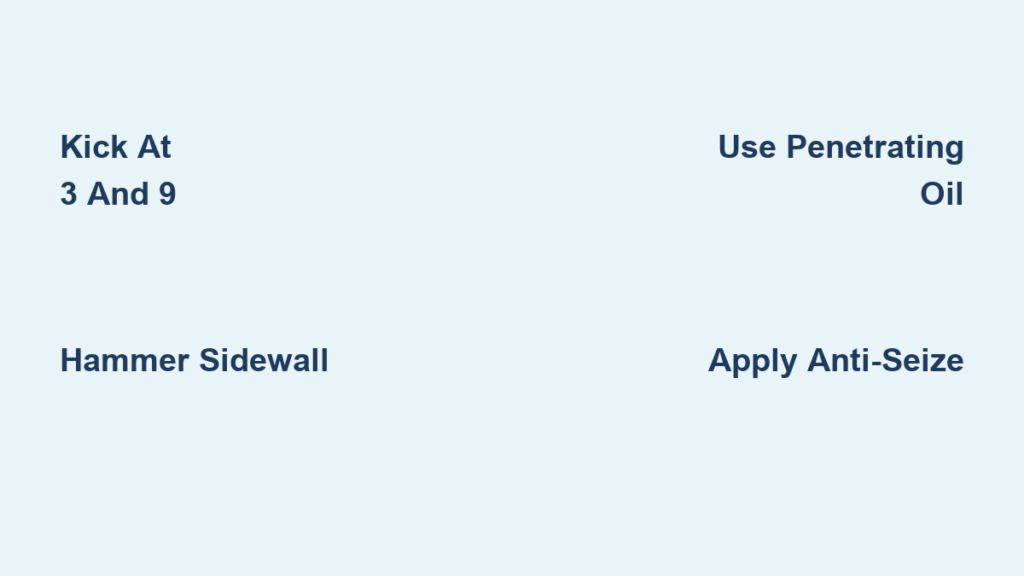
The most reliable method for how to remove a BMW tire without special tools involves strategic kicking that targets the rust interface directly. Position yourself with your back against the vehicle’s bumper or a wall, sitting on the ground with your legs extended toward the tire. Deliver alternating kicks to the tire’s outer edge at the 3 and 9 o’clock positions using the flat of your foot—this generates maximum force perpendicular to the rust bond.
Pro tip: Wear sturdy boots and kick with your entire leg rather than just your ankle. Most stuck BMW wheels release within 20-30 alternating kicks when performed correctly. If you feel the wheel beginning to loosen, continue kicking for another 5-10 repetitions to ensure complete separation before attempting to pull it off. This technique works because the repeated impacts create vibration that works deep into the rust interface, breaking the corrosion’s grip without risking damage to expensive alloy wheels.
Hammer and Lever Solutions for Extreme Cases

When kicking fails, combine these mechanical methods for maximum effectiveness:
-
Tire sidewall hammering: Strike the tire’s sidewall (not the wheel itself) with a rubber mallet at 2-inch intervals around the circumference. Focus extra force at the 3, 6, 9, and 12 o’clock positions where rust typically concentrates.
-
Controlled crowbar leverage: Insert a pry bar between the tire tread and ground surface, then gently apply upward pressure. Never place the bar between wheel and hub—this can damage critical components. The goal is to create micro-movements that break the rust seal.
For severe cases, apply penetrating oil through the lug bolt holes and wait 15 minutes before retrying these techniques. The oil works its way into the rust interface, significantly reducing the force required for separation. This dual approach—chemical penetration followed by mechanical force—solves 95% of stubborn BMW tire removal situations.
Vehicle-Assisted Removal Methods
When manual techniques fail, strategically use your BMW’s weight to break the rust bond:
-
Controlled weight transfer: Loosen lug bolts 2 full turns, then slowly lower the vehicle until the tire just begins supporting weight. The gradual application of force often breaks the rust seal without requiring extreme manual effort. Important: Only perform this with the factory jack or a hydraulic floor jack—never with unstable jack stands.
-
Curb bump technique: With lug bolts loosened but still engaged, drive slowly over a curb or driveway rise. The sudden change in elevation creates suspension movement that transfers force through the hub, breaking stubborn rust bonds. Drive at 2-3 mph maximum and stop immediately when you hear the wheel pop free.
These methods generate forces impossible to replicate manually but require careful execution. Always have an escape route planned in case the wheel releases suddenly while the vehicle is moving.
Prevent Future Stuck Wheels in 60 Seconds

After successfully removing your BMW tire, apply this critical prevention step before reinstalling:
- Clean the hub surface thoroughly with a wire brush to remove all rust residue
- Apply a pea-sized amount of anti-seize compound (NAPA brand works well) to the hub face
- Spread a thin, even layer using a clean rag—never apply excessive amounts that could affect wheel balance
This simple procedure creates a protective barrier that prevents rust formation between wheel and hub. Reapply during every tire rotation (typically every 5,000-7,000 miles) for continued protection. Owners in coastal or snowy regions should consider reapplying anti-seize every 3 months for maximum effectiveness. Properly maintained hubs will release with just a gentle tap—transforming what was once a battle into a simple lug nut removal process.
When to Call a Professional Immediately
Stop attempting removal and seek professional help if:
- You’ve tried all methods for more than 30 minutes without success
- The wheel shows signs of severe corrosion around the hub
- Lug bolts spin freely but wheel remains stuck (indicating possible hub damage)
- You notice any cracks in the wheel or damaged hub components
BMW dealerships and specialty shops have specialized tools like hydraulic wheel pullers that safely remove even the most stubborn wheels without damage. The $50-$100 service fee typically costs less than potential damage from excessive force attempts. Remember that safety should always outweigh pride—forcing a stuck wheel can lead to serious injury if components fail unexpectedly.
Standard Flat Tire Replacement Procedure

When changing an actual flat tire rather than dealing with a stuck wheel, follow this BMW-specific sequence:
- Park on level ground, engage parking brake, and chock opposite wheels
- Loosen lug bolts ¼ turn in star pattern before raising vehicle
- Jack at manufacturer-specified points (consult owner’s manual)
- Remove flat tire and mount spare, hand-tightening lug bolts in star pattern
- Lower vehicle completely before final torqueing to 140 Nm (103 lb-ft)
Critical reminder: BMW run-flat tires require special attention—never drive more than 50 miles at speeds exceeding 50 mph on a spare. The vehicle’s suspension and transmission are calibrated for the original tire specifications, and extended run-flat use can cause expensive damage.
Final Tips for Hassle-Free BMW Tire Removal
Mastering how to remove a BMW tire comes down to understanding the rust interface and applying targeted force correctly. Start with the kicking technique at 3 and 9 o’clock positions, progress to hammering the tire sidewall if needed, and use vehicle-assisted methods only as last resorts. Always apply anti-seize compound during reinstallation—this 60-second step prevents 90% of future stuck wheel problems.
When facing a stubborn BMW tire removal situation, remember that patience pays off. Rushing the process leads to damaged components or injury. Take breaks between attempts to let penetrating oils work deeper into the rust interface. With these proven techniques, you’ll handle stuck BMW wheels confidently—saving time, money, and frustration on your next tire change.