Wheel and tire theft has become an increasingly common crime across the United States, leaving vehicle owners frustrated and searching for effective protection strategies. Whether you drive a luxury sedan with expensive alloy wheels or a practical crossover with all-season tires, your wheels represent a significant investment that thieves actively target. Understanding how to prevent tire theft requires a multi-layered approach combining physical security devices, strategic parking decisions, and community awareness. This comprehensive guide walks you through proven methods to protect your vehicle, from basic deterrents to advanced security systems, helping you create a defense strategy that makes your car a less appealing target for opportunistic criminals.
The financial impact of tire theft extends far beyond the cost of replacement tires. When thieves steal your wheels, they often leave your vehicle stranded on blocks, potentially causing suspension damage, alignment issues, and unexpected emergency expenses. Many victims find themselves facing hundreds of dollars in repairs beyond the cost of new tires and wheels, not to mention the inconvenience of arranging repairs and finding alternative transportation. By implementing the prevention measures outlined in this guide, you can significantly reduce your risk and enjoy greater peace of mind about your vehicle’s security.
Why Tire Theft Continues Thriving
Understanding the factors that make tire theft so prevalent helps explain why simple preventive measures often prove insufficient on their own. Thieves have developed efficient methods for targeting vehicles, and they exploit several systemic weaknesses in how wheels are bought, sold, and tracked.
The speed at which professional thieves can remove a complete set of wheels might surprise you. Equipped with a hydraulic jack and a battery-powered impact wrench capable of substantial torque, a determined thief can strip all four wheels from a vehicle in approximately ten minutes. According to automotive security experts, these criminals work with the efficiency of a NASCAR pit crew, often operating in two-person teams where one individual handles jacking the vehicle while the other rapidly removes lug nuts. This efficiency means thieves can target multiple vehicles in a single night if left undisturbed, making wheel theft an appealing criminal enterprise despite the associated legal risks.
Unlike vehicles themselves, which have Vehicle Identification Numbers and strict registration requirements, wheels and tires lack serial numbers that allow authorities to trace ownership. When police raid establishments suspected of dealing in stolen goods, they often find stacked wheels with no way to identify their rightful owners or connect them to specific thefts. This traceability gap creates a significant challenge for prosecution and makes it nearly impossible for victims to recover stolen property, even when thieves are caught.
The secondary market for tires and wheels fuels ongoing theft operations. Aftermarket wheels rank among the most popular automotive accessories, with larger wheels measuring 20 inches or more commanding premium prices. A stolen set of wheels might sell for anywhere from $1,000 to $5,000 or more, typically fetching approximately half of their retail price. This substantial profit margin ensures that wheel theft will continue as long as demand exists in the underground market.
Install Lug Nut Locks for Essential Defense

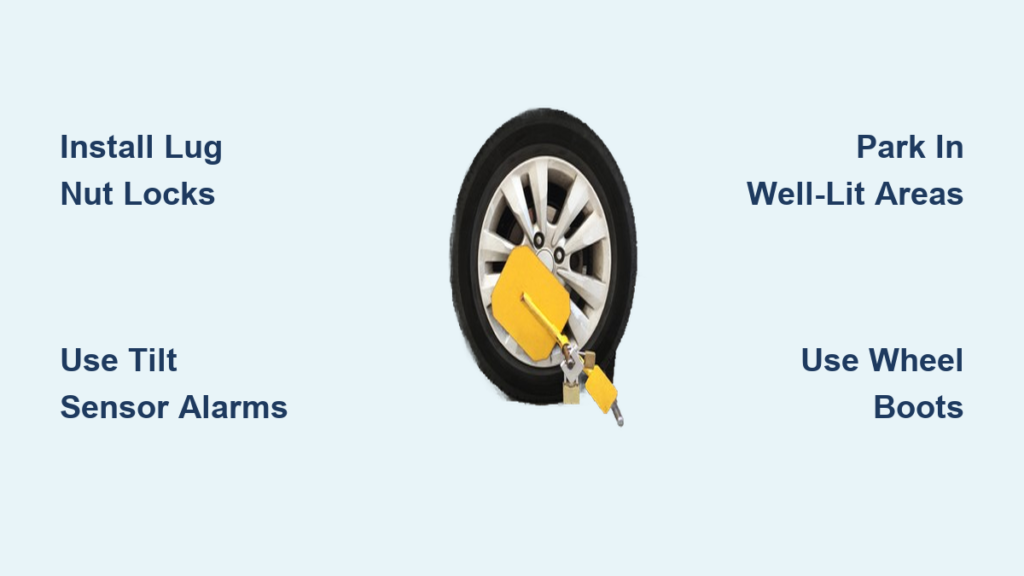
Lug nut locks represent one of the most effective and widely recommended solutions for protecting your wheels from theft. These specialized locking mechanisms replace one or more standard lug nuts on each wheel with a version that requires a unique key tool for removal. Without the proper key, would-be thieves face significant obstacles that dramatically increase the time and difficulty required to steal your wheels.
A basic set of four lug nut locks typically costs around $100, representing a minimal investment compared to the potential cost of replacing stolen wheels. You can purchase these locks as dealer add-ons when buying a new vehicle, or find them at auto parts stores and online retailers for slightly lower prices. Installation requires basic automotive knowledge and common tools, though having a mechanic install them adds minimal cost if you’re not comfortable performing the work yourself.
For enhanced security, consider purchasing lock kits that cover all lug nuts on each wheel rather than just one per wheel. Standard lug nut lock sets that protect only one nut per wheel offer basic deterrence but leave the remaining nuts vulnerable to quick removal. Full-coverage lock sets significantly increase the time thieves must spend working on each wheel, potentially discouraging them from targeting your vehicle altogether when they encounter unexpected resistance.
The critical responsibility that comes with lug nut locks is key management. Store the lock key in a secure but memorable location—losing it means you’ll need a locksmith or mechanic to remove the locks should you ever experience a flat tire away from home. Some vehicle owners keep their lug nut key in their glove compartment, while others secure it with their other important vehicle documents. Whatever system you choose, ensure all household drivers know the key’s location and can access it in emergencies.
Add Tilt Sensor Alarms for Early Warning
Standard car alarms that trigger when someone opens your doors provide limited protection against wheel theft since they don’t address the specific method thieves use to target wheels. For comprehensive protection, consider installing or activating an alarm system equipped with tilt sensors capable of detecting when your vehicle is being raised or angled—exactly what happens when thieves use a jack to lift your car for wheel removal.
Tilt sensor alarms work by monitoring your vehicle’s angle and triggering a loud siren if someone attempts to jack up the car. This early warning system can startle thieves and draw attention to their illegal activities, potentially causing them to abandon their attempt before successfully stealing any wheels. Many newer vehicles come equipped with this type of alarm as a standard feature, making them inherently more protected than older models that lack this capability.
Aftermarket tilt sensor systems typically cost between $250 and $500 for the equipment itself, with professional installation recommended for proper integration with your vehicle’s existing electrical system. Installation costs average around $225, bringing the total investment to over $700 when you factor in both equipment and labor. While this may seem expensive, it represents a fraction of what you would spend replacing a complete set of stolen wheels, making it a worthwhile investment for vehicles with valuable wheels or that face elevated risk factors.
Before purchasing an aftermarket tilt sensor system, verify compatibility with your vehicle’s existing alarm and electrical systems. Some universal sensors may not sync properly with factory security features, potentially creating gaps in your protection or triggering false alarms. Consulting with a professional installer can help you identify the best system for your specific vehicle and ensure proper functionality.
Park Strategically to Deter Thieves
Where and how you park your vehicle plays a crucial role in determining its vulnerability to wheel theft. Thieves prefer targets that offer privacy, darkness, and minimal foot or vehicle traffic, which reduces the likelihood of discovery during the theft process. By making strategic choices about parking locations and vehicle positioning, you can significantly reduce your risk without spending any money on additional equipment.
Always prioritize parking in well-lit areas with high foot and vehicle traffic. Thieves almost always operate at night, selecting areas where they’re less likely to be noticed, such as dark streets without lighting or isolated parking lots. When possible, park in locations covered by security cameras, as the presence of surveillance equipment serves as a powerful deterrent. If you’re parking somewhere overnight, ensure your car remains visible from passing traffic and neighboring properties. Parking inside a garage provides the best protection for home storage, especially when leaving your vehicle unattended for extended periods.
When parallel parking on the street, position your vehicle as close to the curb as possible. The closer your car sits to the curb, the more difficult it becomes for thieves to place a jack underneath it to lift the vehicle. While the street-side wheels remain somewhat exposed, the tires on the curbside receive significantly better protection. This simple technique costs nothing and requires minimal effort, yet it substantially increases the difficulty of wheel theft.
Turning your wheels to a 45-degree angle when parking creates an additional obstacle for thieves attempting to remove your wheels. This positioning makes it more difficult for criminals to access the lug nuts because the inner fender interferes with their tools and working angle. While this measure alone won’t stop a determined thief with sufficient time and equipment, it adds another layer of difficulty that may cause less committed criminals to move on to easier targets.
Use Wheel Boots for Extended Protection
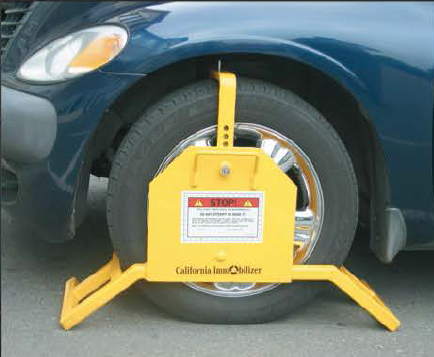
Wheel boots represent one of the most physically secure options for protecting your wheels, though they require more effort to deploy than other prevention methods. These metal devices cover the lug nuts like earmuffs, making it virtually impossible to remove the wheels without first removing the boot. While this approach may seem extreme for everyday use, it provides excellent protection when you need to leave your vehicle parked outside for extended periods.
The primary drawback of wheel boots is the time required for proper installation. Attaching each boot can take between five and twenty minutes, and some models require special tools for correct deployment. This investment of time makes wheel boots impractical for situations where you frequently use your vehicle, such as daily commuting. However, for vehicles that sit idle for days or weeks at a time, the protection they provide often justifies the inconvenience.
Wheel boots typically cost approximately $70 per pair, and you’ll need two pairs to protect all four wheels on a standard passenger vehicle. They are available through online retailers and at auto parts stores, making them relatively easy to acquire. When comparing this cost to the potential expense of replacing stolen wheels—which can easily run into thousands of dollars—wheel boots represent a sound investment for owners of high-value wheels or vehicles that must be parked in high-risk areas.
Build Community-Based Defenses
Building relationships with your neighbors and maintaining awareness of your surroundings can significantly reduce the risk of wheel theft in your community. Criminals prefer to operate in areas where no one pays attention, and a vigilant community creates natural barriers against their activities.
Talk to your neighbors about wheel theft and car crime prevention. Building relationships with people in your area creates a natural surveillance network where suspicious activity is more likely to be noticed and reported. If neighbors know each other and look out for one another, they’re more likely to notice unfamiliar vehicles or people acting strangely around parked cars. When someone notices suspicious activity, contacting authorities promptly increases the likelihood that thieves will be caught before they can complete their theft.
Remain aware of your surroundings even in familiar neighborhoods. You never know when car thieves might have come into your area looking for easy targets. If you see something out of place—such as unfamiliar vehicles circling the block, people examining parked cars, or activity near vehicles late at night—contact authorities to report it. It’s always better to make a potentially unnecessary call than to ignore suspicious behavior that turns out to be criminal activity.
Participating in or organizing a neighborhood watch program formalizes this community protection. Regular communication between neighbors about suspicious activity patterns helps identify emerging threats before they result in thefts. Many neighborhoods have successfully reduced crime rates simply by increasing the number of people who remain alert and report suspicious observations to appropriate authorities.
Strengthen Overall Vehicle Security
While this guide focuses specifically on wheel and tire theft, protecting your entire vehicle from theft reduces the risk of targeted attacks on your wheels. Many strategies that prevent car theft also make wheel theft more difficult, creating overlapping layers of security.
Always lock your vehicle, even if you’re only stepping away briefly or plan to return quickly. It can be tempting to leave your car running while warming it up on cold mornings or making quick stops, but unlocked vehicles are prime targets for theft. Most newer cars automatically lock their doors when the vehicle exceeds five miles per hour or shifts out of park, but you should still manually verify that all doors are locked after parking. Ensure all windows, including sunroofs, are completely closed before exiting.
Never leave valuables visible in your vehicle, as this can attract break-ins that may escalate to wheel theft. Store items in the trunk rather than leaving them on seats or dashboards. If you need to store items in your trunk during a day of errands, place them there before reaching your first destination rather than in parking lots where observers might watch you stashing belongings. A clean, empty vehicle is less likely to attract attention from thieves looking for quick targets.
Never leave your vehicle running and unattended, even for brief periods. A parked car that’s unlocked and still running is an invitation to criminals. Whether you’re stopping at a gas station convenience store, picking up children from school, or resting at a highway rest area, always turn off the ignition, take your keys, and lock your car. This simple habit prevents both car theft and creates one more obstacle for wheel thieves who might otherwise find an easy opportunity.