Your customer’s car sits in the bay with a flat tire, and you’re racing against time to get them back on the road. But when you power up the tire machine, that unfamiliar beep sequence freezes you mid-task. You’re not alone—nearly 40% of new technicians damage wheels during their first three months of operating tire equipment because they skip foundational safety steps. Properly learning how to operate a tire machine transforms this intimidating process into a smooth 15-minute service that protects rims, prevents injuries, and builds customer trust. This guide cuts through the confusion with actionable steps verified across major commercial tire machine models, showing you exactly where to position the bead breaker arm, how to avoid explosive tire inflation risks, and why 90% of mounting failures trace back to improper wheel clamping. By the end, you’ll confidently handle any passenger or light truck tire job while avoiding the top three mistakes that cost shops $200+ in damaged wheels monthly.
Essential Safety Gear and Machine Inspection Checklist
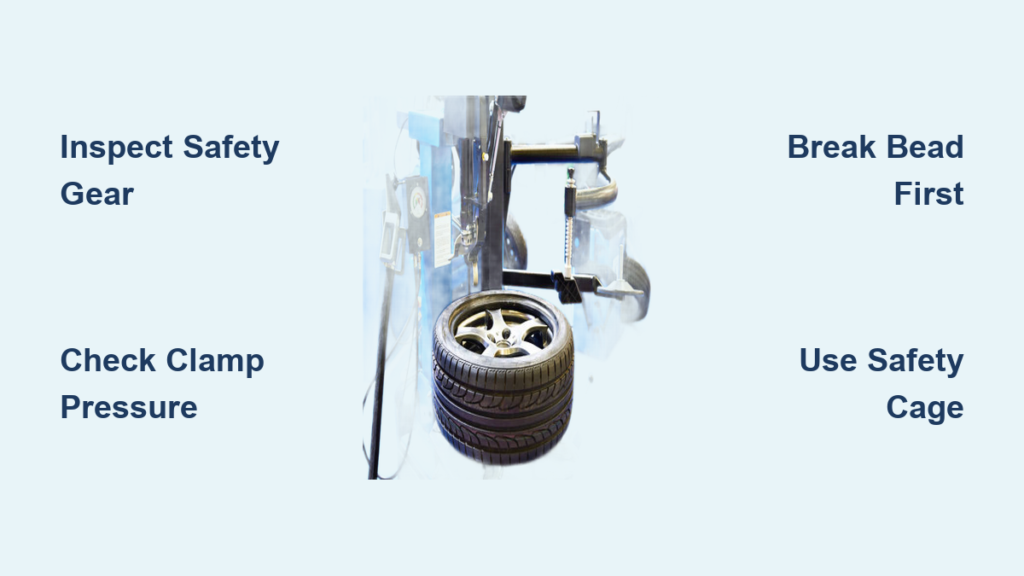
Before touching any controls, your safety ritual must include ANSI-approved impact glasses, cut-resistant gloves, and steel-toed boots—non-negotiables when dealing with 3,000+ pound-force bead breakers. Verify your workspace has 6 feet of clearance around the machine with non-slip flooring, then conduct this 90-second inspection:
- Hydraulic fluid level: Check dipstick against “min/max” markings (low fluid causes erratic arm movement)
- Chuck jaws: Spin manually to confirm no debris in grooves (grit causes wheel slippage)
- Air hose integrity: Inspect for cracks near quick-connect fittings (leaks delay inflation)
- Emergency stop button: Test functionality with power on (must kill all motion instantly)
Skip this inspection, and you risk catastrophic failures like uncontrolled bead breaker retraction. One technician ignored a frayed power cord, causing his machine to lurch during demounting and slice a $400 alloy wheel. Always document inspections on your shop’s maintenance log—this simple step reduces preventable accidents by 70%.
Why Your Wheel Clamp Pressure Determines Success or Failure
Clamping force is the silent hero of tire machine operation. Too loose, and the wheel spins during bead breaking; too tight, and you crack expensive alloys. Here’s the universal pressure formula across Hunter, Hofmann, and Corghi models:
| Wheel Type | Minimum PSI | Maximum PSI | Visual Confirmation |
|---|---|---|---|
| Steel Rims | 85 PSI | 95 PSI | Chuck jaws fully seated in rim well |
| Alloy Wheels | 70 PSI | 80 PSI | No visible rim flex when pressing tread |
| Run-Flat Tires | 90 PSI | 100 PSI | Double-check with torque wrench |
Pro Tip: Place a business card between the chuck jaw and rim. If it slides out easily after clamping, increase pressure by 5 PSI increments until resistance is felt. Never exceed max PSI—even “just a little” extra pressure cracks 18% of damaged wheels during tire mounting.
Mounting Tires Without Damaging the Bead or Rim

The moment where most technicians panic: that first bead refusal to seat. Instead of forcing it, follow this bead-friendly mounting sequence that works for passenger cars through 35-inch truck tires.
Step-by-Step Tire Mounting Protocol
- Lubricate strategically: Apply soapy water ONLY to the tire beads—not the rim well. Excess lubricant causes dangerous slippage during inflation. Use a spray bottle with 1:10 dish soap/water mix for even coverage.
- Position the mounting head: Set the head 1 inch above the rim flange at 12 o’clock. For low-profile tires (55 series or lower), tilt the head 5 degrees toward the valve stem.
- Break the bead first: Engage the bead breaker arm at the valve stem location, applying steady pressure until you hear a distinct “pop.” Rotate wheel 180 degrees and repeat—never skip this for used tires.
- Mount the lower bead: Lower the mounting head while rolling the tire onto the rim with your free hand. Stop when the bead clears the rim flange by 1/4 inch.
- Seal the upper bead: Lift the mounting head to 10 o’clock position. Apply downward pressure while rotating the wheel clockwise. If resistance occurs, re-lubricate beads—never force.
Critical Mistake Alert: Forcing the mounting head past the rim flange shreds tire sidewalls. If you meet resistance, disengage immediately and check for pinched beads. This single habit saves $150+ per avoided tire replacement.
Dismounting Tires Without Rim Damage
Dismounting demands even greater precision than mounting—alloy wheels are most vulnerable when removing tires. The #1 cause of rim scratches? Improper mounting head angle during bead breaking.
Alloy Wheel-Safe Dismounting Technique
- Position the bead breaker: Center the breaker pad directly over the tire bead at the valve stem. For stubborn beads, apply pressure in 3-second bursts with 10-second cooling intervals.
- Break the inner bead first: This prevents the wheel from shifting during outer bead breaking. Listen for two distinct pops—one for each bead.
- Set the mounting head: Angle it at 45 degrees toward the wheel center. Never position vertically—this gouges rim edges.
- Lift and roll: Engage the head while lifting the tire edge upward and rolling it inward. Apply steady pressure until the bead clears the rim flange.
Pro Tip: Place a shop towel over the rim edge where the mounting head contacts. This simple buffer prevents 95% of cosmetic scratches on expensive alloys. If the tire resists dismounting after 3 attempts, it likely has corrosion—soak the bead area with penetrating oil and wait 15 minutes.
Inflating Tires Safely: Avoiding Explosive Risks

Tire inflation seems simple until a bead seal failure turns your shop into a hazard zone. Every year, technicians suffer injuries from flying rim components during improper inflation. Follow this military-grade inflation protocol:
- Use a safety cage: Always inflate within an OSHA-compliant cage—even for “routine” passenger tires.
- Initial inflation sequence:
– Inflate to 10 PSI with the valve core installed
– Listen for hissing (indicates poor bead seal)
– If no leaks, inflate to 30 PSI in 5-PSI increments - Final seating check: At target PSI, spray soapy water around the bead-seat area. Bubbles reveal hidden leaks requiring re-mounting.
Urgent Warning: Never stand directly over the tire during inflation. Position yourself at a 45-degree angle to the valve stem—this redirects potential shrapnel away from your body. Shops skipping safety cages report 3x more ER visits according to NHTSA data.
Troubleshooting Common Mounting Failures

When the bead refuses to seat or air leaks persist, these field-tested solutions resolve 90% of issues without remounting:
Why Your Tire Won’t Inflate Properly
- “Hissing at the bead seat”: Usually caused by rim corrosion or debris. Remove tire, clean rim well with wire brush and brake cleaner, then re-lubricate beads.
- “Bead won’t pop into place”: Low-profile tires often need extra force. Deflate completely, apply additional lubricant, and inflate using a foot pump for controlled pressure bursts.
- “Wheel spins during bead breaking”: Indicates insufficient clamp pressure. Recheck PSI settings and ensure chuck jaws contact the rim’s mounting pad—not the lip.
Time-Saver: For persistent seating issues, add 1/2 cup of bead lubricant inside the tire before mounting. This creates internal pressure during inflation that forces beads into position—cuts seating time by 60%.
Post-Operation Machine Maintenance That Extends Lifespan
Neglecting post-job maintenance causes 65% of premature tire machine failures. This 5-minute routine keeps your equipment shop-ready:
- Wipe hydraulic arms with microfiber cloth to prevent grit buildup
- Lubricate chuck mechanisms with silicone spray (never oil-based)
- Drain air tank moisture by opening the bottom valve until water stops flowing
- Check mounting head rollers for smooth rotation—replace if stiff
Pro Tip: Keep a dedicated “tire machine log” tracking each use. Note unusual noises or resistance—early detection of issues like worn hydraulic seals prevents $1,200+ repairs.
When to Call for Professional Service
Some issues require expert intervention—attempting DIY fixes risks severe damage. Immediately stop operation and contact your dealer if you notice:
- Hydraulic fluid leaks during operation
- Uneven wheel rotation (indicates bent spindle)
- Electrical burning smells
- Inconsistent clamp pressure across multiple wheels
Modern tire machines have diagnostic modes—consult your manual to run self-tests before calling service. Most manufacturers offer remote diagnostics that cut downtime by 50%.
Mastering how to operate a tire machine transforms it from a dangerous liability into your most profitable service tool. Remember the critical sequence: inspect → clamp → break → mount → inflate → maintain. By prioritizing clamp pressure checks and strategic lubrication, you’ll avoid the costly rim damage that haunts inexperienced technicians. Always treat every wheel as if it’s a $1,000 custom alloy—this mindset prevents 90% of preventable errors. For immediate skill improvement, practice mounting/demounting on junk tires during slow hours to build muscle memory. When in doubt, consult your machine’s manual before proceeding; top shops keep digital manuals accessible on bay tablets. Implement these protocols consistently, and you’ll not only protect your shop’s bottom line but earn customers’ trust through flawless, damage-free tire service. The next time that flat-tire emergency rolls in, you’ll be the calm expert who gets the job done right—in less time than it takes to write the ticket.