Winter driving demands reliable traction, and your tires are the only point of contact between your vehicle and potentially dangerous road conditions. Knowing how to measure winter tire tread depth isn’t just a maintenance task—it’s a critical safety step that could prevent accidents during snowstorms and icy conditions. Worn winter tires lose their ability to grip snow, channel water away from the contact patch, and provide the stopping power you need when roads turn treacherous. This guide walks you through the essential techniques for measuring tire tread depth accurately, understanding when replacement becomes necessary, and maintaining optimal winter tire performance throughout the season.
Why Winter Tire Tread Measurement Matters
Winter tires are specifically engineered with softer rubber compounds and aggressive tread patterns designed to remain flexible in freezing temperatures. Unlike all-season tires that stiffen in cold weather, winter tires maintain their grip properties when temperatures drop below 45°F. However, this specialized design means winter tires wear differently than standard tires, and their tread depth directly impacts performance in snow and ice conditions.
The tread grooves in winter tires serve multiple critical functions. They evacuate slush and water from beneath the tire to prevent hydroplaning, create biting edges that grip snowy surfaces, and provide space for snow to compact and create additional traction. As tread depth decreases, these functions become compromised. A winter tire with 7/32 inch of tread depth performs significantly better than one worn down to 3/32 inch, even though both might appear to have adequate tread at a glance.
Measuring your winter tire tread regularly—ideally at the start of each winter season and monthly throughout—ensures you can plan for replacements before performance degrades dangerously. Unlike summer tires that can often be used until bald, winter tires have specific tread depth thresholds below which they no longer provide adequate winter performance. Understanding these thresholds and measuring against them keeps you and your passengers safe.
The Penny Test: Quick Tread Assessment
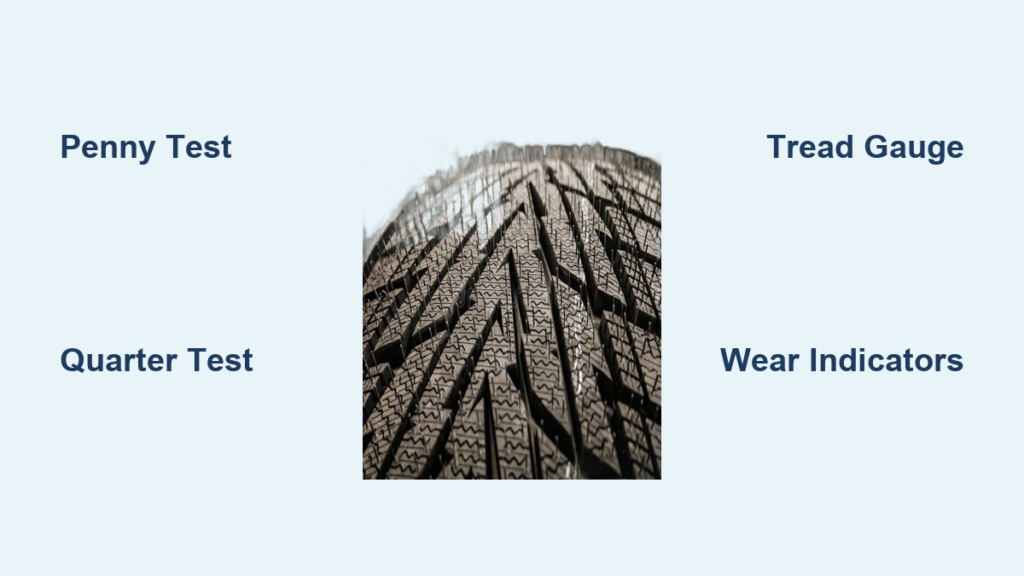
The penny test remains the most accessible method for checking tire tread depth without specialized equipment. This simple technique requires only a United States penny and takes less than a minute to complete. The test works because Abraham Lincoln’s head on the penny extends to a specific point that corresponds with the 2/32-inch tread depth threshold—the minimum legal limit for passenger tires in most states.
To perform the penny test correctly:
- Insert the penny into the tire’s tread grooves with Lincoln’s head facing downward toward the tire
- Position the coin upside down so that Lincoln’s entire head is visible above the tread surface
- Examine where Lincoln’s head sits relative to the surrounding tread blocks
If the top of Lincoln’s head is completely visible above the tread, your tire has reached or fallen below 2/32 inch depth and requires immediate replacement. If any portion of Lincoln’s head is covered by tread, you still have at least 2/32 inch of depth remaining. This test takes just 15-30 seconds per tire and requires no special skills.
When conducting the penny test, measure across multiple points on each tire. Tires don’t wear evenly—they may have deeper tread in the center than at the shoulders, or more wear on one side if alignment issues exist. Check the center of the tread, the inner shoulder, and the outer shoulder on each tire. The deepest measurement determines your actual tread depth, but any area reaching the 2/32-inch threshold indicates the tire needs attention. For winter driving specifically, consider replacing tires before they reach 2/32 inch, since winter conditions demand maximum traction.
The Quarter Test: Winter-Specific Assessment

While the penny test identifies the legal minimum, the quarter test provides a better gauge for winter driving safety. This method uses a quarter instead of a penny and checks against the 4/32-inch depth threshold that many safety experts recommend for winter tire replacement. The quarter test is particularly valuable because it helps you identify when winter performance begins degrading significantly, rather than waiting until tires are legally worn out.
Perform the quarter test by inserting the coin head-first into the tread groove with George Washington’s head facing downward. If the top of Washington’s head is completely visible, your tread depth is at or below 4/32 inch. At this depth, winter tires have lost substantial ability to evacuate snow and water, reducing their effectiveness in winter conditions. Most manufacturers and safety organizations recommend replacing winter tires when they reach 4/32 inch, even though they remain legal until 2/32 inch.
The 4/32-inch threshold matters for winter driving because this is the point where tread grooves begin losing their ability to channel slush away from the tire’s contact patch. When groove depth falls below 4/32 inch, the tire’s aquaplaning resistance decreases noticeably on wet or slushy roads. Additionally, the reduced groove volume means less space for the compacted snow that winter tires rely upon for lateral grip in turns. For drivers who frequently encounter heavy snow or depend on their vehicles for commuting in winter conditions, replacing tires at 5/32 inch or 6/32 inch provides an extra margin of safety.
Using a Tread Depth Gauge: Precision Measurement
For the most accurate assessment of winter tire tread depth, a dedicated tread depth gauge provides measurements down to the millimeter or 1/32 inch. These inexpensive tools eliminate the guesswork involved with coin tests and allow you to track tread wear precisely over time. Digital gauges provide instant digital readouts, while analog gauges with a sliding pin offer reliable measurements without requiring batteries.
To use a tread depth gauge effectively:
- Insert the gauge’s probe straight down into the tread groove until the base rests firmly on the tread surface
- Read the exact depth measurement on the scale or digital display
- Measure at least three points across each tire’s width (center, inner shoulder, outer shoulder)
- Record these measurements for each tire to track wear over time
Tread depth gauges also allow you to measure the depth of individual grooves within the tread pattern. Winter tires often feature complex groove designs with main grooves and smaller auxiliary grooves that may wear at different rates. Some winter tires include siping—small slits cut into tread blocks—that can wear differently than the surrounding rubber. Measuring multiple groove depths ensures you’re evaluating the tire’s overall condition rather than just one representative groove. When any groove reaches the replacement threshold, the tire’s performance is compromised regardless of the condition of other grooves.
Understanding Tread Wear Indicators
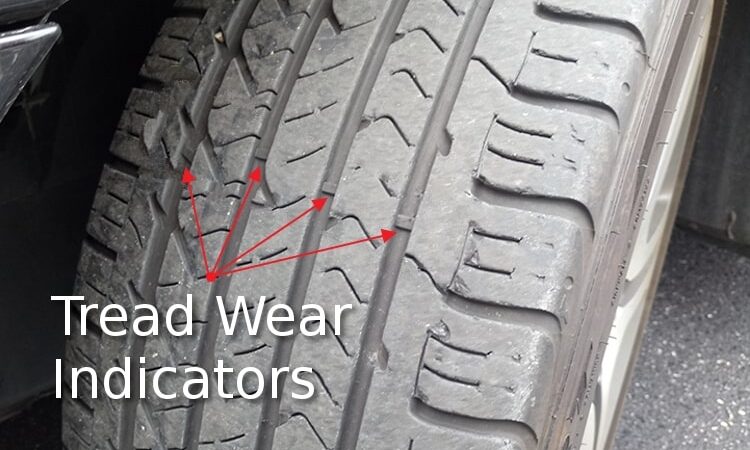
Modern tires include built-in tread wear indicators that provide visual cues when replacement is necessary. These indicators, sometimes called tread wear bars, are small raised bars positioned between tread grooves at six points around the tire. When the tread wear bars become flush with the surrounding tread surface, the tire has reached approximately 2/32 inch of remaining tread depth and is legally worn out.
Locating tread wear indicators requires close examination of your winter tires. Look for thin strips of rubber running perpendicular to the tire’s circumference, positioned in the grooves between tread blocks. On most tires, these indicators appear at the base of the grooves and connect the tread blocks on either side. When the tread has worn down to the indicator’s level, the tire’s performance has degraded significantly and replacement should occur immediately.
In addition to manufacturer-installed wear indicators, some winter tires feature manufacturing markers embedded in the tread grooves. These are often small raised bumps or colored bands that indicate specific tread depths when they become visible. Checking your tire’s documentation helps you identify these markers and understand what depth they represent. Some tires include multiple markers at different depths, providing graduated warning as the tire wears. Familiarizing yourself with your specific winter tire’s wear indicators ensures you don’t miss the optimal replacement window.
When to Replace Winter Tires
.png)
Replace winter tires when tread depth reaches 5/32 inch if you frequently drive in snow and ice conditions. At this depth, the tires still provide adequate winter performance but have lost enough groove volume that replacement should be planned. Order replacement tires early to ensure availability before the next winter season begins. If you only occasionally encounter winter conditions and drive primarily on cleared roads, you might safely wait until 4/32 inch, but recognize that performance will be reduced in emergency maneuvering situations.
Age also influences replacement decisions even when tread depth appears adequate. Most manufacturers recommend replacing winter tires after six years of service regardless of tread depth, as rubber compounds degrade over time and become less effective. Inspect older tires carefully for cracking, dry rot, or other signs of age-related deterioration. If your winter tires are approaching their sixth season, begin budgeting for replacement even if substantial tread remains. The cost of new tires is minor compared to the potential consequences of tire failure during winter driving.
Extending Winter Tire Tread Life
Maximizing winter tire tread life requires attention to inflation pressure, driving habits, and seasonal storage practices. Proper maintenance can extend the usable life of winter tires by thousands of miles while ensuring consistent performance throughout their service life. Investment in winter tire care pays dividends through reduced replacement costs and maintained safety throughout the tire’s lifespan.
Follow these specific steps to maximize winter tire life:
- Check inflation pressure monthly during winter use (about 1 PSI change for every 10°F temperature shift)
- Maintain pressure at vehicle manufacturer’s recommended specification (found on driver’s door jamb)
- Rotate tires every 5,000-8,000 miles according to manufacturer’s recommended pattern
- Avoid aggressive acceleration and braking, especially on rear-wheel-drive vehicles
- Store properly during off-season (clean, dry place, away from direct sunlight and ozone sources)
Driving habits significantly impact winter tire wear. Highway driving on clear roads causes uniform wear, while stop-and-go urban driving accelerates wear at the tread shoulders. Proper rotation ensures even wear across all four tires and extends the set’s useful life.
Measuring winter tire tread depth regularly and interpreting results correctly ensures your winter tires provide the safety and performance you expect when road conditions deteriorate. By using the penny or quarter test for quick checks, investing in a tread depth gauge for precise measurements, and understanding the meaning behind your results, you can make informed decisions about tire replacement. Replace winter tires before they reach 4/32 inch of tread depth for optimal safety, maintain proper inflation pressure throughout the season, and plan for replacement based on both tread wear and tire age. These practices keep you and your passengers protected during winter’s most challenging driving conditions while maximizing the value from your winter tire investment.