
Snow-covered mountain passes and icy job sites demand more than careful driving—they require proper traction equipment. Knowing how to install tire chains on a truck separates professional drivers from stranded travelers when winter weather strikes. Whether you’re maneuvering a semi-truck through a Colorado blizzard or navigating your 4×4 pickup to a remote worksite, correctly installed chains can mean the difference between completing your journey and waiting hours for assistance. This guide provides the exact steps commercial truckers and pickup owners need to install tire chains safely and effectively, covering critical preparation, installation techniques, and legal requirements specific to different truck configurations.
Before attempting installation, understand that improperly secured chains can damage tires, wheels, and even cause accidents. Chains must be properly aligned, securely connected, and tightened to allow minimal movement while still enabling slow rotation around the tire. The core principles remain consistent across vehicle types, but specific techniques vary significantly between semi-trucks and pickup trucks. Taking time to learn the correct approach now prevents equipment damage and ensures maximum safety when you need it most.
Essential Pre-Installation Safety Measures for Truck Tire Chains
Choosing the right location before installing chains determines whether the process takes minutes or becomes a dangerous struggle. Park on flat, stable ground away from active traffic lanes where you can safely move around your vehicle. Rest areas, truck stops, or company facilities typically provide adequate space for semi-trucks, while pickup owners should find level ground with room to work around all necessary wheels. Never attempt installation on an incline—this complicates positioning and creates unnecessary safety hazards. Always engage your parking brake completely, and for pickup trucks, place wheel chocks against the tires opposite those being chained to prevent any vehicle movement.
Why Location Choice Affects Installation Success
Many drivers make the critical mistake of stopping too close to traffic or on uneven surfaces, forcing them to rush the installation process. Semi-truck operators particularly need space to access both sides of the tractor-trailer and work beneath the vehicle if necessary. For 4×4 pickups, ensure you have room to move freely around both drive wheels, which are typically the front tires on most four-wheel-drive configurations. Proper location selection reduces installation time by up to 50% and significantly lowers injury risk when working with heavy chains in cold conditions.
Required Tools for Proper Truck Chain Installation
Having the right tools ready before you start installation streamlines the entire process and prevents frustration in freezing conditions. For semi-truck installations, a tensioning tool or cam tool is essential for properly tightening chains around large commercial tires. Heavy-duty work gloves protect your hands from cold temperatures, sharp chain links, and potential injuries during the installation process. Some professional drivers keep bungee cords in their chain kits for additional security, particularly when driving extended distances on semi-trucks. For 4×4 pickup trucks, pull-chain style tensioning mechanisms significantly simplify the installation process compared to traditional chain configurations.
Chain Inspection Checklist Before Installation
Before attempting installation, thoroughly inspect your chains for damaged links, broken hooks, or worn tensioning mechanisms that could fail during use. Remove chains from their storage bag and untangle any sections that have hooked together during storage. Check for rust, particularly at connection points and tensioning mechanisms, as moisture weakens chain components over time. This preparation step prevents mid-installation frustrations and ensures your chains will function properly when mounted on your tires.
Correct Chain Positioning Techniques for Semi-Truck Tires
Laying out chains properly makes the difference between a smooth installation and a frustrating struggle beneath your truck. Remove chains from storage and lay them flat on the ground beside each tire requiring chains, ensuring hooks or cam locks face upward. This orientation guarantees they face outward when positioned on the tires. All tensioners should be in the open position, ready for connection. If chains have been stored on snow-covered ground, brush accumulated snow off before proceeding, as ice interferes with proper connection.
Step-by-Step Chain Placement for Drive Axles
Drape each chain over its corresponding tire, making sure at least half falls to each side for even distribution. The hooks or cam locks must face outward, away from the tire, because internal positioning causes rubbing against the tire’s sidewall and leads to premature wear. Use your fingers to clean any remaining snow or debris from the chains while positioning them. The chain should fall evenly on either side of the tire, with the tensioning mechanism accessible for later adjustment. For dual-wheel configurations, position chains on the outside wheels first before addressing inner wheels.
Critical Chain Connection Process for Semi-Trucks
Connecting the chains requires getting beneath the truck in most cases, making this the most challenging step of the entire installation process. Begin by connecting the outside chain first, ensuring the cam locks face outward as specified. The inside chain is typically the hardest to connect, so patience is essential during this step. The chain links should be even on both the inside and outside of the tire, with matching connection points on each side.
Why Link Alignment Determines Chain Performance
A critical but often overlooked step involves checking that the same number of links connect on both sides of the tire. For example, if the inside chain connects at the third link, the outside chain must also connect at the third outside link. This balance ensures the chains will rotate properly around the tire during driving. If an imbalance exists, disconnect and restart the connection process, because improperly aligned chains will not function correctly and may cause uneven wear or potential failure.
Proper Tightening Techniques for Truck Tire Chains

Use your tensioning tool to tighten the chains around the tire until all slack is removed. The proper tightness allows approximately one finger’s worth of space between the chains and the tire surface. This space is crucial because the chains must be able to rotate slowly around the tire as the vehicle moves. Do not overtighten the chains, as this restricts necessary movement and potentially damages the tire or wheel components.
Adding Supplementary Security for Long Distances
For extended driving or particularly challenging conditions, bungee cords provide additional chain security. Hook bungee cords from one part of the chain to another in an “X” pattern across the tire’s rim and wheel disk. Begin by attaching one cord to the bottom tire chains, then connect it diagonally to the top chains. This X-pattern configuration provides extra stability and helps maintain proper chain positioning over longer distances. After driving forward 100 feet to set the chains, recheck tension and adjust as necessary to maintain the one-finger clearance specification.
How to Install Tire Chains on 4×4 Pickup Trucks Correctly
Pickup truck installation follows a simpler process than semi-truck installation due to smaller tires and typically fewer wheels requiring chains. Turn off your engine and engage the parking brake before beginning. Remove all snow, ice, and debris from the tire treads before positioning chains—this ensures proper chain-to-tread contact. Place each chain under its corresponding tire, aligning it with the center of the tread. For 4×4 trucks, chains typically install on both drive wheels (usually the front wheels).
Securing and Testing Pickup Truck Chains
Pull the chain ends together and secure them through the tensioning mechanism. For pull-chain style installations, thread the ends through the designated tensioning device and pull to remove slack. The chain should be snug against the tire but not so tight that it prevents free rotation. After installing chains on both drive wheels, conduct a careful test drive at speeds under 30 mph for a short distance. Listen for unusual noises indicating improper positioning and verify that chains rotate properly with the tires before continuing your journey.
Understanding Legal Requirements for Truck Tire Chains
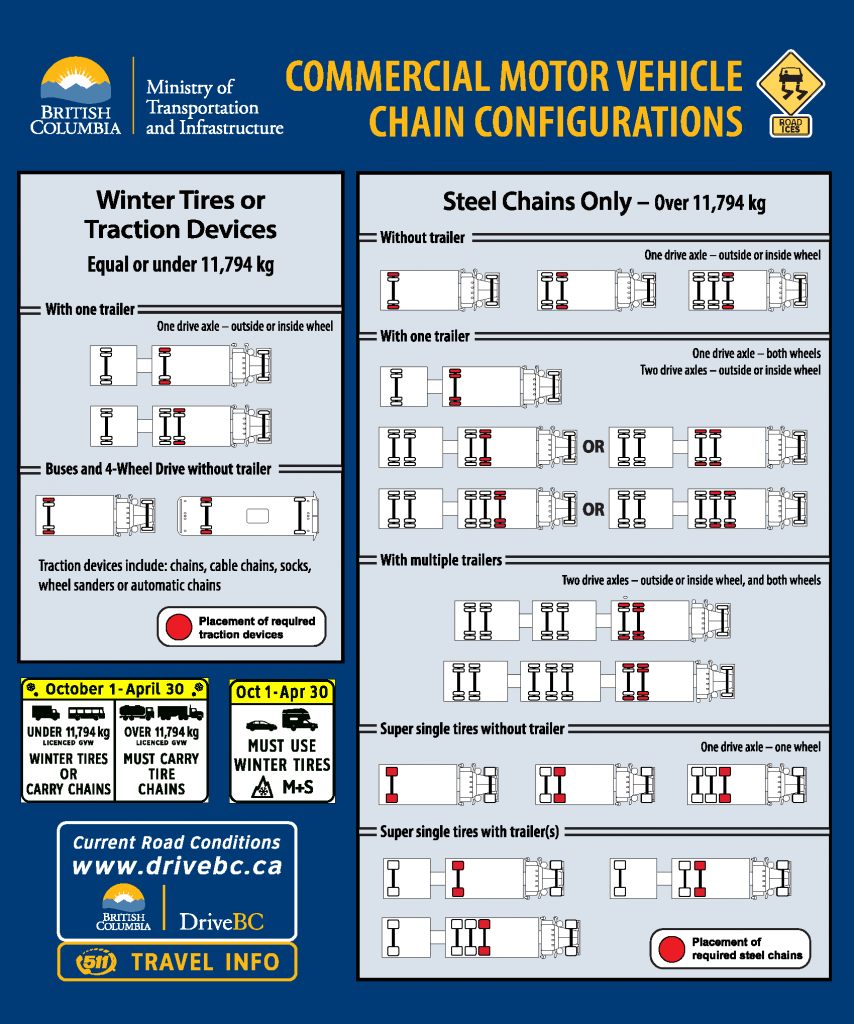
Chain laws vary significantly across the United States, and truck drivers must understand regulations for each state they traverse. Mountainous states including Wyoming, Utah, and Colorado typically require drivers to carry chains during winter months and mandate their use when conditions deteriorate. California maintains specific requirements: chains on all four tires of the first drive axle, outside wheels of the second drive axle, and outside wheels of the rear trailer axle under certain conditions.
When to Install and Remove Tire Chains
Install chains only when road conditions genuinely require their traction benefits—look for snow or ice-covered roads where standard tires cannot maintain adequate traction. Equally important is knowing when to remove chains: take them off as soon as road conditions improve to prevent unnecessary tire and chain wear. Driving on clear pavement with chains installed causes rapid deterioration of both components, potentially creating hazardous conditions when equipment fails unexpectedly.
Tire Chain Maintenance Practices for Maximum Longevity
Inspect chains after every use for damaged links, stretched components, or worn connection points. Replace any damaged sections before storing your chains for the next use. Clean and dry chains thoroughly before storage—moisture leads to rust, which weakens chain links. Store chains in their designated bag in a location where they won’t be crushed or damaged by other equipment. Proper maintenance extends chain life significantly and ensures reliable performance when you need them most.
Professional drivers recommend carrying tire chains beginning September 1 each year, as winter weather can affect higher elevations at any time. Research routes before departure to identify sections where chain requirements are likely, and always exercise your stop work authority if conditions exceed safe operating parameters. Remember that tire chains are permitted in all lower 48 states when conditions warrant their use, but when authorities mandate chain usage, compliance is non-negotiable for continued travel.