Your tires represent one of the most significant maintenance investments you’ll make for your vehicle, yet they’re often overlooked until problems arise. The average driver spends between $400 and $1,000 on replacement tires every few years, but this expense can stretch considerably farther with proper care. Understanding how to increase tire life isn’t just about saving money—it’s also about maintaining optimal safety, fuel efficiency, and handling performance throughout your vehicle’s lifespan. The practices outlined in this guide require minimal time investment but deliver substantial returns in extended mileage and reduced replacement frequency.
Learning to maximize tire longevity involves mastering several interconnected maintenance practices, from proper inflation techniques to smart driving habits. Each factor influences the others, creating a cumulative effect that can either preserve or degrade your tires over time. By addressing each of these areas systematically, you can potentially add thousands of miles to your tire’s service life while simultaneously improving your vehicle’s overall performance and safety.
Fix Underinflated Tires to Prevent Premature Wear
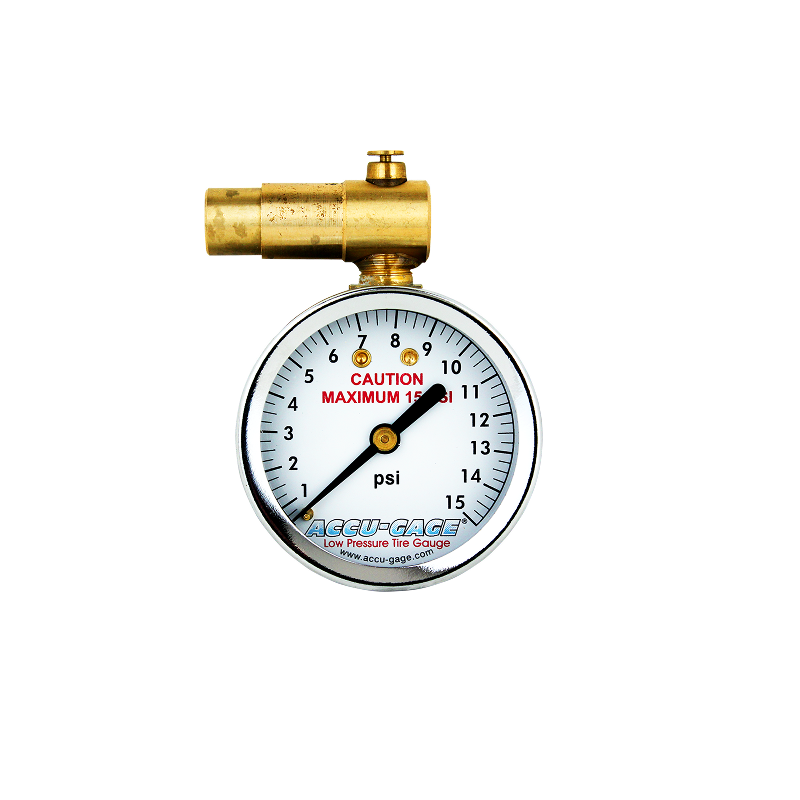
Proper tire pressure represents the single most effective way to increase tire life, yet it remains one of the most neglected maintenance tasks. Both underinflation and overinflation fundamentally alter how your tire contacts the road, creating irregular wear patterns that dramatically reduce usable tread life. When a tire maintains 100% of its proper inflation, you receive 100% of its designed tire life. However, a tire that is 20% underinflated loses approximately 20% of its potential lifespan, while a tire that is 20% overinflated loses around 8% of its tire life. This mathematical reality makes underinflation the more damaging condition.
Stop Fuel Waste from Low Pressure
Underinflated tires create excessive rolling resistance that forces your engine to work harder, directly reducing fuel efficiency by up to 3.3%. This means you’re simultaneously paying more at the pump while destroying your tires. Beyond the financial impact, underinflation causes sluggish handling, increased stopping distance, accelerated wear across all tire components, and significantly heightened risk of catastrophic blowout. The National Highway Transportation Safety Administration estimates that tire-related issues factor into approximately one out of every eleven vehicle crashes.
Check Pressure Every Month
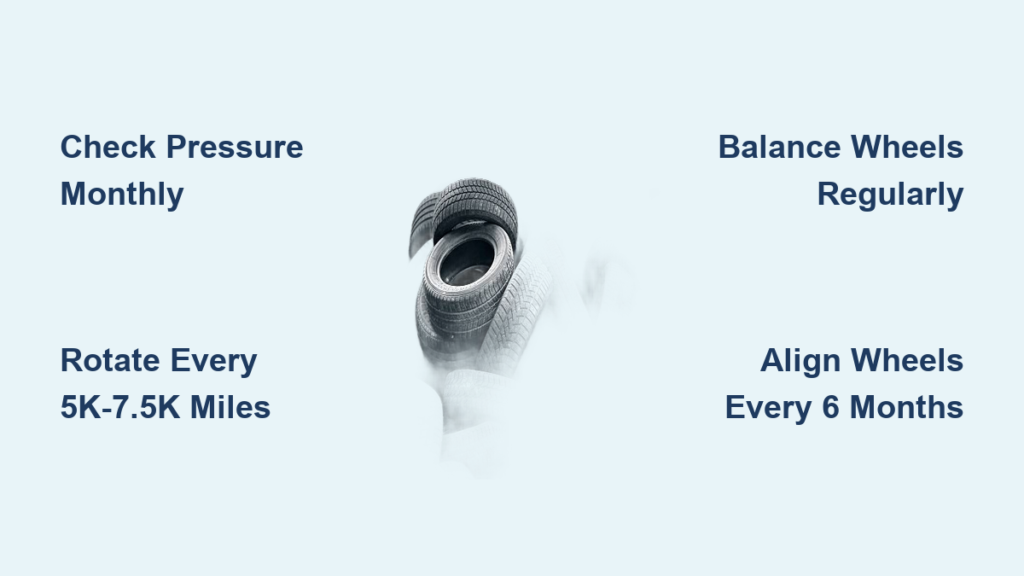
Tires naturally lose approximately one pound per square inch of pressure monthly under normal conditions, making monthly pressure checks essential rather than optional. Beyond this routine monthly loss, tire pressure fluctuates significantly with seasonal temperature changes—colder winter temperatures cause pressure to drop, while warm summer weather increases it. These seasonal variations necessitate more frequent monitoring during extreme weather periods. Checking pressure when tires are cold provides the most accurate readings, as driving warms the air inside tires and artificially inflates measurements.
Rotate Tires Every 5,000-7,500 Miles
Tire rotation addresses the fundamental physics of how vehicles generate motion and handle forces. In most vehicles, only one or two wheels actively drive the car at any given time, creating inherently unequal wear patterns across the four tires. Front-wheel-drive vehicles place disproportionate stress on front tires due to steering forces, braking loads, and power delivery. Rear-wheel-drive vehicles conversely wear rear tires more quickly. Even all-wheel-drive vehicles experience uneven wear, as most systems dynamically shift power distribution between wheels based on traction conditions.
Equalize Front and Rear Wear Patterns
Rotating tires systematically moves them between wheel positions, giving tires that have been subjected to driving forces a respite while allowing tires from less-stressed positions to share the workload. This equalization of wear dramatically extends overall tire life by preventing any single tire from reaching its wear limit prematurely. The recommended rotation interval falls between 5,000 and 8,000 miles, with many sources specifying 5,000 to 7,500 miles as the optimal range for most vehicles.
Follow Your Vehicle’s Specific Rotation Pattern
Consult your owner’s manual for the specific rotation pattern recommended for your vehicle, as different drivetrain configurations require different rotation approaches. Some patterns move tires front-to-back on the same side, while others cross patterns or employ more complex sequences depending on whether your vehicle features directional or asymmetrical tires. Directional tires can only rotate front-to-back on the same side, while asymmetrical tires allow more flexibility in rotation patterns. Regardless of the specific pattern, ensure no tire spends its entire lifespan in the same position.
Balance Wheels During Every Rotation Appointment
Every tire and wheel assembly contains slight manufacturing variations that create minute weight imbalances, typically measuring between one-quarter and one-half ounce of difference. While seemingly insignificant, this tiny mass differential causes measurable vibration as the assembly rotates at highway speeds. This vibration transmits through the suspension components and chassis, creating driver discomfort while simultaneously generating uneven wear patterns across the tire’s contact patch.
Attach Counterweights to Eliminate Vibration
Wheel balancing involves using specialized equipment to identify heavy spots on each assembly and attaching small counterweights to neutralize the imbalance. These weights may require adjustment or replacement as tires wear, since the removal of rubber through normal use gradually changes the assembly’s mass distribution. The balancing process is relatively quick and inexpensive compared to the cost of premature tire replacement, making it one of the highest-return maintenance investments available.
Schedule Balance Checks with Rotations
Balancing should occur during every tire rotation appointment, creating a natural service pairing that maximizes efficiency and ensures both procedures happen on schedule. Additionally, any time you notice vibration through the steering wheel, floorboard, or seat—especially at speeds above 60 mph—your tires should be evaluated for balance issues regardless of when they were last serviced. Addressing balance problems promptly prevents the uneven wear patterns that accompany sustained vibration exposure.
Correct Wheel Alignment Every Six Months
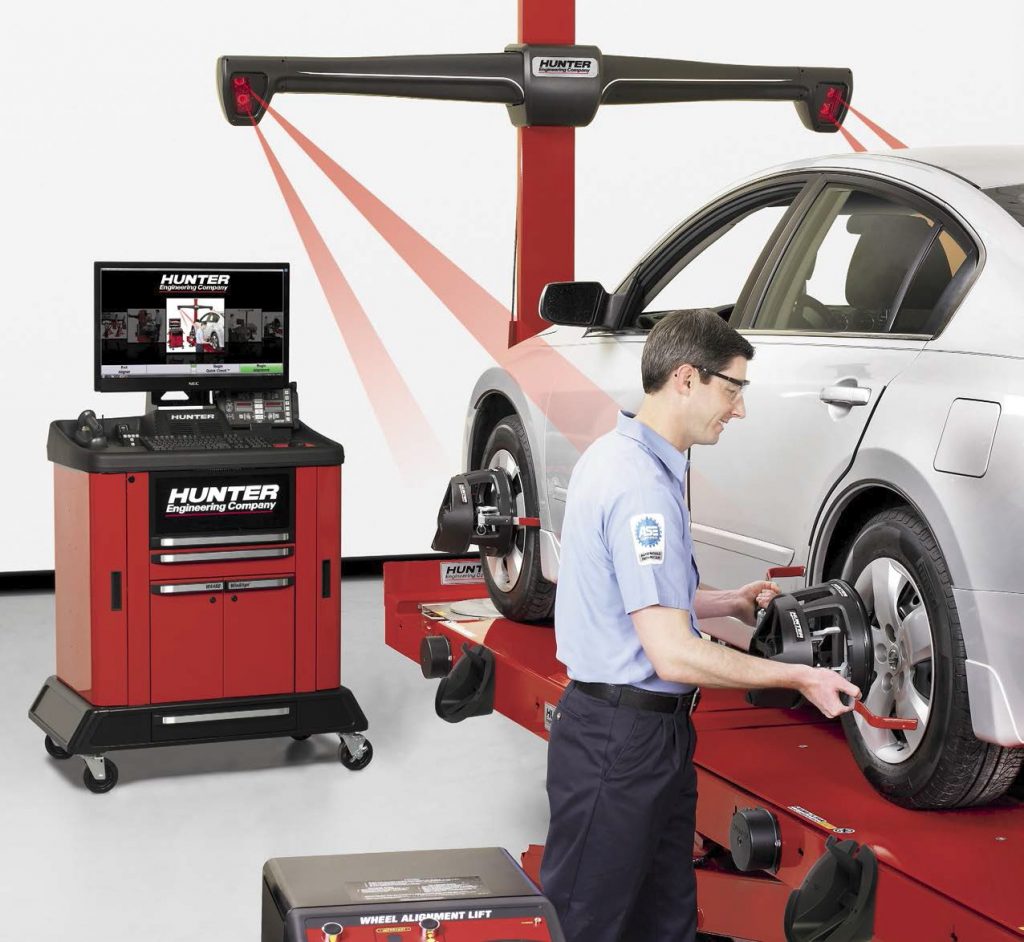
Wheel alignment refers to the precise angular relationship between your wheels and the road surface, as well as the relationship between wheels on the same axle. Over time, normal driving forces, suspension component wear, and impacts with road hazards like potholes, curbs, and speed bumps gradually push alignment settings out of specification. Even minor misalignment generates substantial tire wear while simultaneously reducing fuel efficiency through increased rolling resistance.
Save 35% of Tire Life Through Professional Alignment
Professional alignment programs can save up to 35% of tire life that would otherwise be lost to misalignment-related wear. However, alignment adjustments must address both front-end geometry and drive axle alignment, as misaligned drive axles significantly impact steer tire wear even when front-end settings appear correct. The goal of alignment is minimizing rolling resistance while ensuring even contact across the entire tread width.
Diagnose Misalignment Through Wear Patterns
Misalignment manifests in two primary directional patterns: toe-in positions the fronts of tires inward, while toe-out positions them outward. Front-end toe-out causes excessive wear along the inside edges of both steer tires, while front-end toe-in causes corresponding wear along the outside edges. Identifying which edge wears faster provides diagnostic information about which specific alignment parameter has shifted. Vehicle alignment should be checked at least annually or every six months for vehicles driven frequently on roads with potholes or other hazards.
Drive at Moderate Speeds to Extend Tread Life

Aggressive driving behaviors directly accelerate tire wear through increased friction, heat generation, and mechanical stress. Hard braking forces tires to skid slightly against the road surface, scrubbing rubber from the tread blocks. Rapid acceleration causes similar scrubbing at the drive wheels, particularly in front-wheel-drive vehicles where tires must both propel the vehicle and handle steering forces. Sharp turns generate lateral forces that wear the shoulder treads more quickly than center treads.
Slow Down to Add 25% More Tire Life
Speed itself represents a significant factor in tire longevity. At 50 miles per hour, tires achieve approximately 100% of their designed lifespan. Increase speed to 70 miles per hour, and tire life drops by approximately 25%. The physics underlying this effect involve tread expansion: at higher speeds, the center portion of the tread expands outward while the shoulder portions remain constrained by the sidewall structure. This differential expansion creates circumferences that don’t perfectly match the road surface, causing the shoulders to wear more rapidly as they scrub against the pavement.
Take Road Hazards at Reduced Speed
When encountering speed bumps, curbs, or road debris, reducing speed and approaching as straight as possible minimizes impact forces transmitted to tires and wheels. Gravel roads, potholes, and rough surfaces pose particular risks—slowing down when traversing these conditions prevents damage from impact and reduces the abrasive wear caused by loose material striking tire sidewalls.
Prevent Overloading Damage with Proper Weight Management
Every vehicle has a manufacturer-specified maximum load capacity, and exceeding this limit places extraordinary stress on tire structures. Overloaded vehicles generate higher contact pressures, increase heat buildup during extended driving, and accelerate wear across all tire positions. More critically, overloading significantly increases the risk of catastrophic tire failure, including blowouts that can lead to devastating accidents.
Respect Your Vehicle’s Load Capacity Limits
The relationship between load and tire stress is not linear—exceeding capacity by even modest amounts can dramatically increase the probability of structural failure. Always consult your vehicle’s manual or the load specification sticker, typically found on the driver-side door jamb, and account for passengers, cargo, and any vehicle-mounted equipment when calculating total weight. Distributing loads as evenly as possible across the vehicle further reduces stress concentrations on individual tires.
Choose the Right Tires for Your Driving Conditions
Using tires appropriately matched to your driving conditions and climate significantly impacts both lifespan and performance. All-season tires provide acceptable performance across a range of conditions for most drivers, offering reasonable tread life in exchange for moderate capability in extreme weather. Winter tires employ specialized rubber compounds that remain flexible in cold temperatures, providing superior grip in snow and ice while sacrificing some tread longevity for that performance advantage.
Match Tire Specifications to Your Vehicle
Selecting the correct tire size, load index, and speed rating for your vehicle ensures the tires operate within their designed parameters. Installing tires with incorrect specifications—whether too small, too large, or with inadequate load capacity—causes accelerated wear and potentially dangerous handling characteristics. When replacing tires, consult your vehicle manual or a qualified professional to ensure proper specification matching.
Inspect Treads Monthly for Early Problem Detection
Regular visual inspection identifies developing problems before they cause complete tire failure or dangerous driving conditions. Look for visible damage including cuts, cracks, bulges, punctures, and embedded objects such as nails, stones, or debris. Sidewall damage particularly warrants attention, as this area lacks the reinforced construction of the tread area and is more susceptible to failure when compromised.
Measure Tread Depth with the Penny Test
Tread depth measurement provides the most objective assessment of remaining tire life. The penny test offers a simple verification method: insert a penny into the tread groove with Lincoln’s head facing downward. If the top of Lincoln’s head remains visible, tread depth has reached 1/32 inch or less and tire replacement should be considered immediately. Many jurisdictions require minimum tread depths of 2/32 inch for safe driving, while some safety recommendations suggest replacing tires at 4/32 inch to maintain adequate wet-weather performance.
Replace Tires Before They Reach Critical Age
Even with exemplary maintenance, tires eventually reach the end of their service life and require replacement. Beyond tread depth reaching legal minimums, age-related degradation affects tires even when tread remains adequate, as rubber compounds gradually lose flexibility and become more susceptible to cracking and failure. Most manufacturers recommend tire replacement after six to ten years regardless of tread depth.
Recognize Irreparable Damage That Requires Immediate Replacement
Visible damage including cuts that penetrate to cord layers, bulges indicating internal structural failure, or punctures in the shoulder or sidewall areas require immediate replacement rather than repair. Once a tire has been repaired following a puncture, its structural integrity is compromised and close monitoring or replacement becomes necessary. When replacing tires, replacing all four simultaneously provides the most consistent handling characteristics, though replacing only two tires with matching specifications is acceptable when the remaining tires have substantial tread depth remaining.