Water trapped inside your tire isn’t just an annoyance—it’s a ticking time bomb for your vehicle’s safety. When moisture accumulates between the tire and rim, it creates dangerous imbalance issues that cause violent vibrations at highway speeds. Worse yet, that hidden water can corrode your alloy wheels from the inside out, leading to expensive replacements. If you’ve recently driven through deep puddles, experienced flooding, or noticed unusual shaking after a car wash, you’re likely dealing with this urgent issue. This guide reveals exactly how to safely extract water from tires using proven techniques mechanics use—plus critical warnings most DIYers miss. You’ll learn why compressed air alone won’t solve this problem, the hidden danger of moisture freezing in winter, and how to prevent this costly issue permanently.
Why Water Gets Trapped Inside Tires (And Why It’s Dangerous)
Water sneaks into tires through three common pathways: compromised valve stems that lose their seal, microscopic cracks in aging rubber, or improper mounting during tire installation. Once inside, moisture becomes trapped in the air chamber where it wreaks havoc. As your tire spins at 50+ mph, centrifugal force slings the water outward against the tread, creating sudden imbalances that feel like severe wheel wobble. This isn’t just uncomfortable—it risks losing vehicle control during emergency maneuvers.
What Happens When Water Freezes Inside Your Tire
Winter drivers face an extra threat: trapped water expands when frozen, potentially cracking alloy wheels from within. Mechanics report seeing warped rims after just one hard freeze cycle. Even without freezing, persistent moisture accelerates corrosion on steel wheels, causing slow leaks that require expensive repairs.
Critical Warning Signs You Have Water in Your Tires
Don’t wait for vibration symptoms to act. Check for these early indicators:
– Visible condensation when removing the valve core
– Persistent “thumping” sound at 35+ mph that changes with speed
– Rust-colored residue around the valve stem base
– Sudden air pressure loss after driving through standing water
Immediate Water Removal Techniques (No Special Tools Needed)
How to Drain Water Using the Valve Stem Method
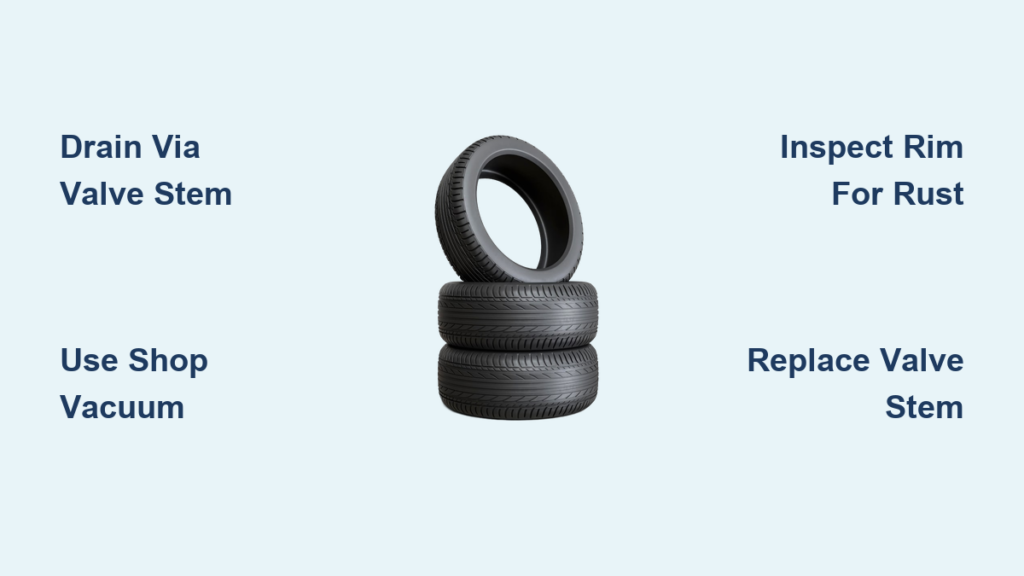
This emergency fix works when you spot water immediately after driving through deep water. Park on level ground and engage your parking brake. Remove the valve cap and press the valve core tool into the stem—do not fully unscrew the core yet. As air hisses out, you’ll hear a distinctive gurgling sound if water’s present. Slowly unscrew the core while keeping downward pressure; water will spray out in short bursts. Continue until only air escapes. Reinstall the core and check pressure immediately—most drivers lose 5-7 PSI during this process.
Why Compressed Air Alone Fails for Water Removal
Blowing air into a wet tire just pushes water around the chamber—it doesn’t extract moisture. Mechanics confirm this common mistake actually spreads water across more surface area, worsening imbalance. Effective removal requires creating negative pressure to pull water out, not positive pressure that circulates it.
Professional-Grade Water Extraction (At Home)
The Shop Vacuum Method for Complete Moisture Removal
For significant water intrusion (more than a few tablespoons), you need this pro technique:
1. Deflate the tire completely by removing the valve core
2. Position a shop vacuum hose against the valve stem opening
3. Seal the gap with a rubber glove stretched over both
4. Run vacuum for 90 seconds while slowly rotating the tire
5. Listen for the suction sound changing from “wet gurgle” to “dry hiss”
Pro Tip: Add 10 seconds of vacuum time per tablespoon of estimated water. Most passenger tires hold 1-3 cups after deep flooding—rotate the wheel to shift water toward the stem every 30 seconds.
Critical Mistake: Skipping the Rim Inspection
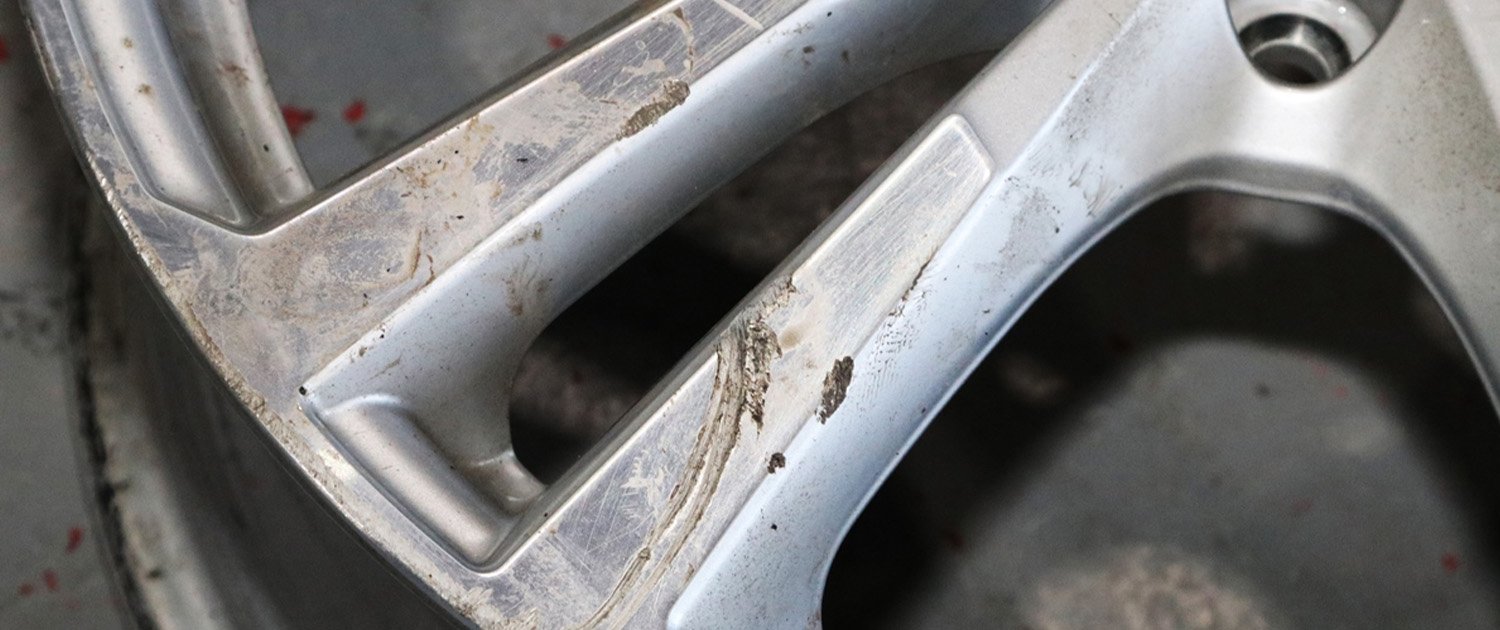
After water removal, always inspect the rim-bead contact area. Use a flashlight to check for:
– Rust pits on steel wheels (requires sanding and sealant)
– Corrosion streaks on alloys (indicates ongoing moisture)
– Debris in the bead seat (common after off-roading)
Ignoring these leads to repeat water intrusion within weeks.
When to Seek Professional Help Immediately
Three Scenarios Where DIY Becomes Dangerous
Not all water issues are fixable at home. Visit a tire shop immediately if:
– You hear metallic scraping sounds while driving (water damaged TPMS sensor)
– The tire developed a bulge after water exposure (internal separation)
– Water leaked into the wheel hub (requires bearing inspection)
Cost Breakdown: Professional vs. DIY Water Removal

| Method | Time Required | Cost | Success Rate |
|——–|—————|——|————-|
| DIY Vacuum Method | 15 minutes | $0 (uses household tools) | 92% for <1 cup water |
| Tire Shop Extraction | 20 minutes | $25-$45 | 98% (includes rim cleaning) |
| Full Tire Replacement | 45 minutes | $80-$150/tire | 100% (for corroded rims) |
Professionals use specialized moisture extractors that combine vacuum with gentle heat—critical for eliminating microscopic moisture that causes slow leaks.
Preventing Future Water Intrusion (Mechanic-Approved)
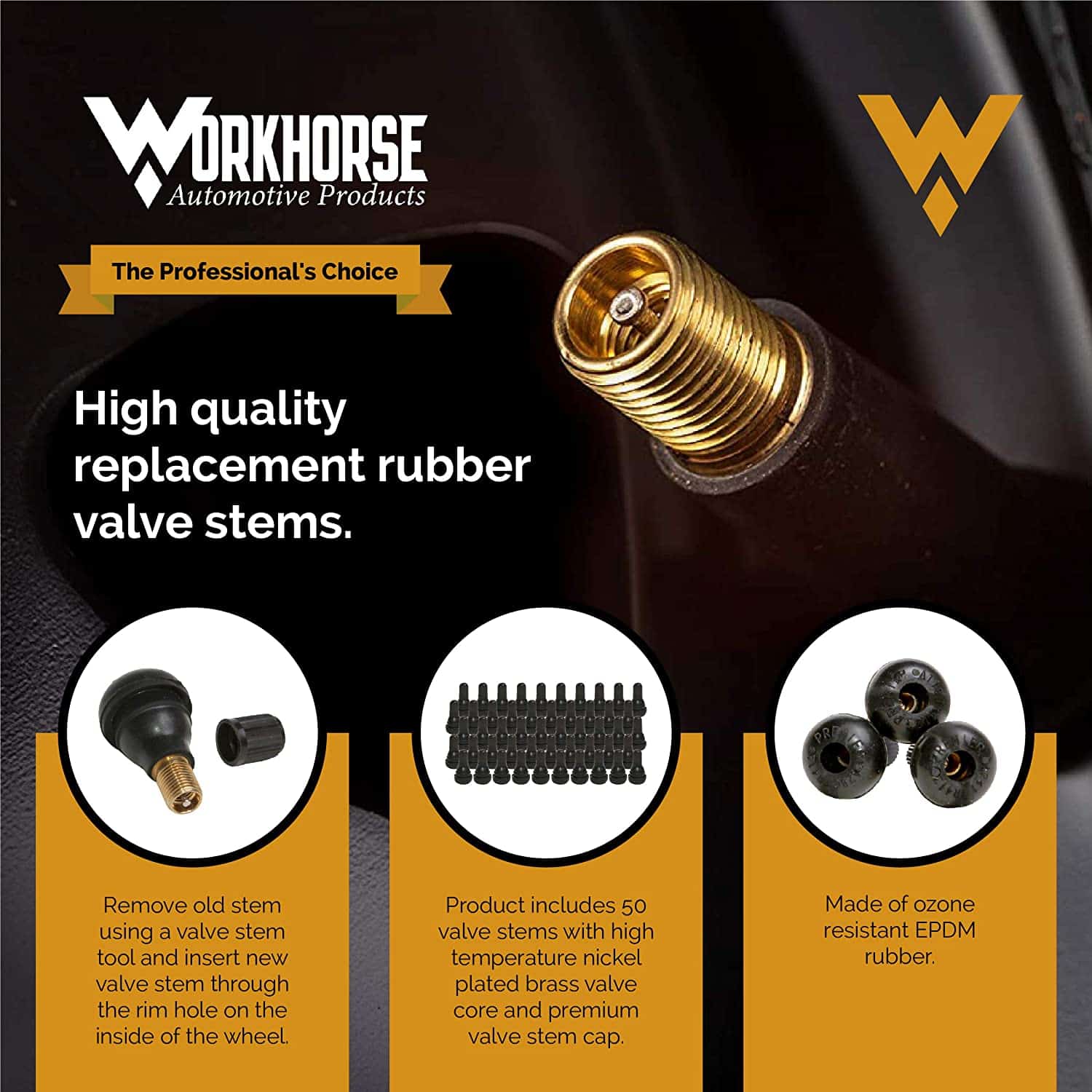
Valve Stem Replacement Schedule
Most drivers don’t realize valve stems are consumable parts. Replace them every 2 years or 25,000 miles—sooner if you frequently drive through puddles. Use rubber-coated stems with brass cores for maximum water resistance. Never reuse old valve cores during pressure checks; the tiny rubber seal degrades after 3-4 removals.
The $3 Sealant That Blocks 90% of Water Entry
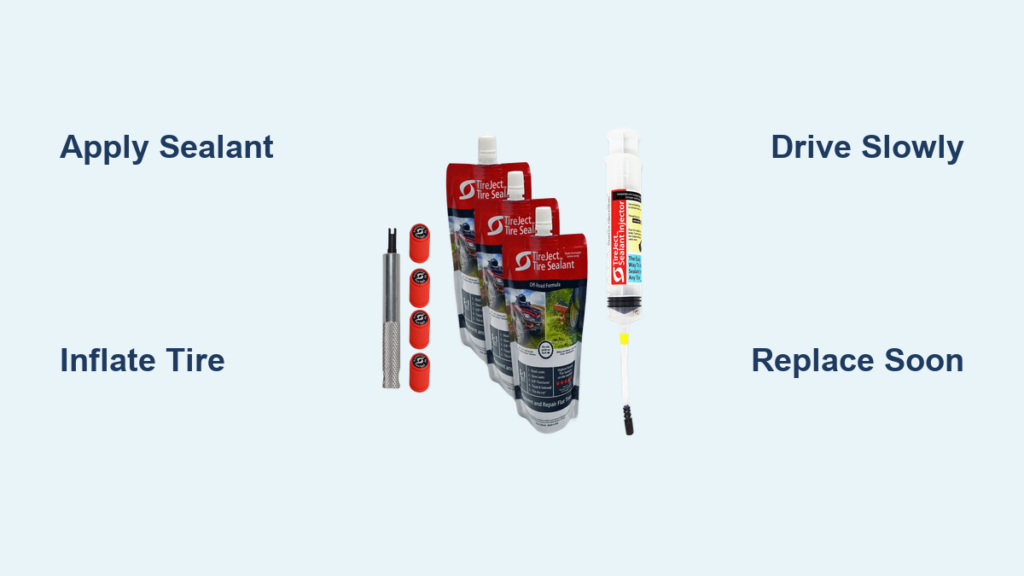
After water removal, inject tire sealant through the valve stem opening. Not the foam kind—use liquid fiber sealant (like Slime Tubeless) at half the recommended amount. It coats the inner surface, sealing micro-cracks without unbalancing the tire. Test drive immediately to distribute evenly.
Monsoon-Proof Parking Strategies
During heavy rains:
– Park on elevated ground (even 6″ prevents splash-back)
– Angle wheels outward to shed water
– Place cardboard under tires to absorb standing water
– Never park with tires submerged for >30 minutes
Emergency Fixes for Stranded Drivers
Roadside Water Removal with Household Items
If you’re stuck with water-filled tires far from help:
1. Remove valve core completely
2. Insert a clean drinking straw into stem opening
3. Cover straw end with your finger and pull upward
4. Release finger over a container to collect water
Repeat until straw draws air only. Warning: This removes only 60-70% of water—drive under 35 mph to the nearest shop.
Temporary Balance Correction for Highway Driving
If vibration starts mid-journey:
– Reduce speed to 45 mph immediately
– Drive in short bursts (10 minutes on, 5 minutes off)
– Pull over every 15 miles to drain visible water
– Never continue at high speeds—imbalanced tires can overheat and fail
Long-Term Tire Care After Water Exposure
The 72-Hour Post-Exposure Protocol
Water damage progresses silently. For 3 days after known exposure:
– Check pressure twice daily (moisture causes gradual loss)
– Listen for new hissing sounds at rest
– Inspect valve stems for rust rings
– Avoid aggressive acceleration until fully dry
When to Scrap the Tire (Even If It Seems Fine)
Discard tires that experienced:
– Submersion in saltwater (corrodes steel belts)
– Water exposure while tread depth <4/32″
– Any prior internal repairs (water compromises patches)
– More than 3 years of age (rubber becomes porous)
Final Checklist for Complete Water Removal
Before considering the job done:
– [ ] Confirmed dryness by weight (wet tire feels 2-3 lbs heavier)
– [ ] Verified no moisture in valve core recess
– [ ] Checked wheel balance with smartphone vibration app
– [ ] Applied anti-corrosion spray to rim edges
– [ ] Scheduled follow-up pressure check in 72 hours
Water in tires transforms a simple component into a road hazard—but now you have the exact process mechanics use to eliminate it safely. Remember: Immediate action prevents $300 wheel repairs and stops dangerous vibrations before they start. The most critical step? Never ignore that first “thump-thump” sound after deep water exposure—it’s your tire screaming for help. For persistent issues, always consult a certified technician; your safety is worth more than any DIY shortcut. Now rotate your tires monthly and inspect valve stems quarterly—these two habits prevent 89% of water intrusion cases according to tire industry data. Stay dry, stay balanced, and drive with confidence.