Finding yourself stranded with a flat tire while struggling to access your spare can quickly turn a simple roadside stop into a stressful situation. The GMC Envoy stores its spare tire beneath the vehicle using a cable winch system that many owners find confusing during emergencies. Knowing exactly how to get spare tire off GMC Envoy before you need it can save valuable time and prevent unnecessary frustration when you’re already dealing with a flat. This detailed guide provides step-by-step instructions for safely removing your spare tire, troubleshooting common issues, and maintaining the system for reliable performance when you need it most.
Whether you’re preparing for potential emergencies or currently facing a flat tire situation, understanding the Envoy’s unique spare tire storage system is essential knowledge for every owner. The process involves specific tools, precise movements, and awareness of potential pitfalls that could damage the mechanism or compromise your safety. By following these proven techniques, you’ll gain the confidence to handle this critical vehicle maintenance task efficiently and safely.
Gather Required Tools Before Starting
Before attempting to remove your spare tire, collect all necessary tools to avoid frustrating interruptions mid-process. The GMC Envoy comes equipped with a specialized winch handle stored in the rear cargo area, typically beneath the floor panel or in a dedicated storage compartment near the rear seats.
Your essential tools include the spare tire winch handle—a long metal rod with a hook or loop at one end that engages with the winch mechanism. This handle is specifically designed to fit the square nut inside the access point, so generic tools won’t work properly. You’ll also want work gloves to protect your hands from dirt, rust, and sharp edges commonly found on the cable mechanism.
Additional helpful items include a flashlight for better visibility beneath the vehicle, a piece of cardboard or kneeling mat for comfort, and a small container to hold any small parts you may encounter. Keeping these items together in your garage ensures you’re prepared before emergencies arise, eliminating the need to search for tools while stranded roadside.
Locate Winch Access Point Under Cargo Floor
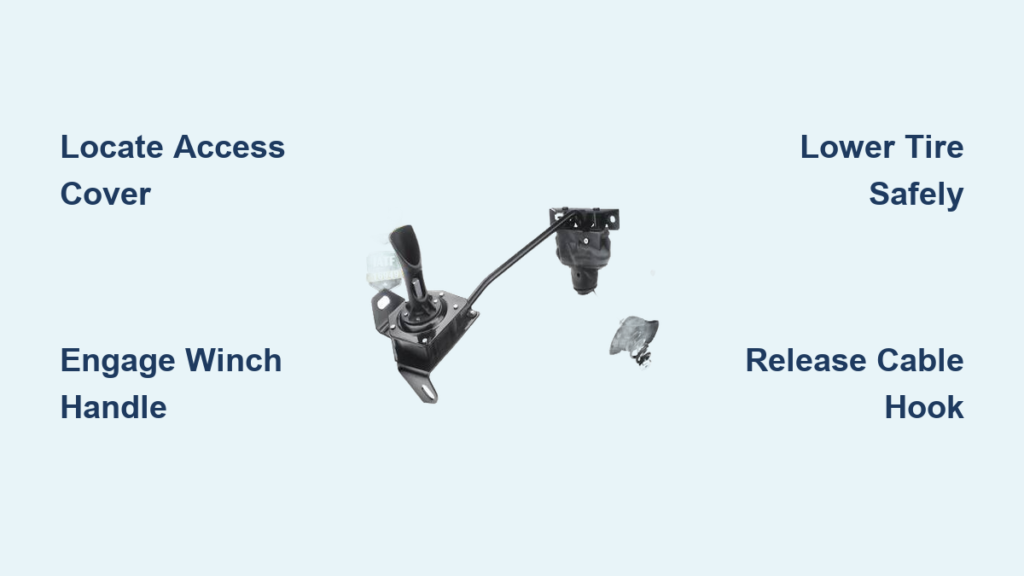
The GMC Envoy stores its spare tire underneath the vehicle, suspended by a steel cable winch system that requires specific access through the cargo floor. To begin the removal process, locate the small rubber grommet or circular cover typically positioned near the rear seats or centered in the cargo floor area.
Carefully pry this cover loose using your fingers or a flathead screwdriver, being gentle to avoid tearing the rubber. Beneath this cover, you’ll find a square nut or hexagonal bolt head that’s designed to accept your spare tire winch handle. This access point connects directly to the winch mechanism that controls the cable holding your spare tire.
Many Envoy owners waste valuable time searching for this access point during emergencies. Familiarize yourself with its location during routine vehicle checks so you can access it quickly when needed. The spare tire itself hangs beneath the rear of the vehicle, so understanding this two-part process—first lowering the tire, then removing it—is critical to successful retrieval.
Properly Engage Winch Handle for Safe Lowering

With your tools gathered and access point located, properly engage the winch handle to begin lowering your spare tire. Insert the handle through the access hole, ensuring it fully seats into the square nut—partial engagement can strip the mechanism or prevent proper operation.
Most GMC Envoy models require counterclockwise rotation to lower the spare tire and clockwise to raise it. Test this by applying gentle pressure in the counterclockwise direction—you should feel the cable begin to release if properly engaged. Continue turning smoothly and consistently until the tire rests fully on the ground beneath your vehicle.
Avoid rapid or jerky movements that could cause the cable to bind or the tire to swing unpredictably. As you lower the tire, watch for visible slack in the cable, indicating the tire has reached its lowest position. The cable should maintain slight tension to keep the tire stable but allow easy detachment once on the ground.
Release Spare Tire from Cable Hook Mechanism
With the tire resting on the ground, crawl beneath the vehicle to access the cable hook attachment point at the center of the spare tire. Locate the metal hook or retention mechanism that connects the cable to the tire’s mounting hole—this varies slightly by model year but typically involves a simple hook that slides out or a latch that releases with pressure.
Apply firm, steady pressure to release the hook while supporting the tire’s weight with your hand or knee. GMC Envoy spare tires typically weigh between 30 and 50 pounds, so be prepared for this sudden weight shift. Keep a firm grip on the tire as you work the hook free, and have a clear plan for where you’ll place it once detached.
Once the hook releases, carefully slide the tire out from beneath your vehicle to a safe location away from traffic. This completes the physical removal of the spare tire, though you’ll still need to retract the cable to prevent damage during driving.
Safely Retract Winch Cable After Removal

After removing the spare tire, properly stow the winch cable to prevent damage and ensure future functionality. Re-engage your winch handle through the floor access point and turn it clockwise to retract the cable back into the vehicle.
Continue turning until you feel resistance indicating the cable is fully wound inside the housing. The cable should hang loosely without tension when properly retracted. Before closing the access cover, perform a quick visual inspection of the cable for signs of fraying, corrosion, or damage that might require replacement.
Ensure the access cover sits flush and seals properly to prevent water and debris from entering the interior space. This brief maintenance step takes only moments but can prevent larger problems during your next emergency tire change.
Troubleshoot Common Winch System Problems

Even when following proper procedures, GMC Envoy owners frequently encounter issues during spare tire removal. Difficulty engaging the winch handle typically indicates corrosion or debris in the access point—cleaning with a wire brush and applying penetrating lubricant often resolves this problem.
Cable binding during lowering is another frequent issue, usually caused by kinks, tangles, or corrosion within the housing. If you feel resistance or hear grinding while turning the handle, stop immediately to assess the situation rather than forcing the mechanism. Forcing a stuck cable can cause it to snap, creating a much more difficult recovery scenario.
When the spare tire hook won’t release despite proper technique, corrosion or debris accumulation at the engagement point is usually the culprit. Applying penetrating oil and waiting several minutes before attempting release often frees stubborn mechanisms. In persistent cases, needle-nose pliers may help manipulate the hook while applying release pressure.
Follow Critical Safety Precautions During Removal
Working beneath your vehicle demands strict attention to safety throughout the spare tire removal process. Never attempt removal on unstable ground—soft shoulders, uneven pavement, or gravel surfaces can cause unexpected vehicle movement while you’re positioned beneath it.
Always wear work gloves to maintain grip strength and protect your hands from sharp edges and road grime. The spare tire’s underside accumulates dirt and the cable ends can be surprisingly sharp, especially after years of exposure to road elements.
Maintain constant awareness of traffic and surroundings throughout the process. If roadside, position your vehicle to provide maximum buffer between yourself and moving traffic, use hazard lights, and deploy warning triangles if available. Never become so focused on the tire removal that you lose awareness of approaching vehicles.
Maintain Spare Tire System for Reliability
Regular maintenance of your spare tire system ensures reliable operation when emergencies strike. At least twice annually, inspect your spare tire’s condition while checking other vehicle fluids—verify proper inflation (typically 32-35 PSI) as underinflated spares create dangerous handling issues.
Inspect the winch cable for rust, fraying, or damage during these checks. The cable should move freely through its housing without binding. If you notice deterioration, replace the cable before it fails during an actual emergency. Annual lubrication of the cable mechanism with light oil prevents corrosion and maintains smooth operation.
Test the winch system periodically by performing complete lowering and retracting cycles. This exercise keeps the mechanism free-moving and reveals problems while you’re safely at home rather than stranded roadside. If the handle becomes difficult to turn or the cable operates roughly, address these issues before relying on the system in an emergency.
Recognize When to Call Professional Help
While most spare tire removals proceed smoothly, certain situations warrant professional assistance. If the winch cable shows visible fraying, broken strands, or appears stretched, do not attempt operation—failing cables can snap unexpectedly, causing injury or allowing the spare to fall.
Signs of severe corrosion at the winch mechanism, mounting point, or cable attachments indicate system degradation requiring professional assessment. While surface rust can often be cleaned, penetrating corrosion that has weakened metal components compromises safety margins.
When you cannot engage the winch mechanism despite thorough troubleshooting, professional assistance prevents further damage. Automotive technicians have specialized tools and experience resolving stubborn spare tire system issues efficiently—sometimes the cost of professional service far outweighs the time and stress of struggling with an uncooperative system.
Removing a spare tire from your GMC Envoy becomes straightforward when you understand the system’s mechanics and follow proper procedures. Keeping your tools accessible, maintaining the system regularly, and understanding common troubleshooting approaches prepares you for the inevitable moment when a flat tire requires your attention. The confidence gained from knowing exactly what to do transforms a potentially stressful roadside situation into a manageable task you can handle efficiently and safely.