You’re stranded on the side of the road with a flat tire, and your GMC Denali’s spare won’t budge. The crank handle spins endlessly, the cable lowers but the tire stays put, or worse—you hear that terrifying grinding noise when trying to release the mechanism. This frustrating scenario happens to Denali owners more often than you’d think, especially after the spare tire has been stored for months or years beneath your vehicle. What many drivers don’t realize is that GMC Denali models (like other modern SUVs) use a specific underbody-mounted spare tire system that requires precise technique—not just brute force—to access properly. In this guide, you’ll learn the exact troubleshooting steps to retrieve your spare tire safely, understand why the mechanism sometimes fails, and discover the preventative measures that will save you from this roadside nightmare in the future.
Common GMC Denali Spare Tire System Failures
Why Your Spare Tire Won’t Release Properly
GMC Denali models use an underbody-mounted spare tire system with a locking mechanism that often fails due to corrosion, improper storage, or previous improper installation. When you turn the crank handle under your vehicle, the cable should lower the spare tire assembly, but instead you might experience:
- Endless spinning: The handle turns freely without lowering the tire
- Partial descent: The tire lowers slightly then stops completely
- Stuck winch mechanism: The handle won’t turn at all
- Cable jamming: The cable appears tangled or stuck in the mechanism
These failures typically occur because moisture has caused corrosion in the winch assembly or the spare tire isn’t properly seated on the mounting plate. Many Denali owners unknowingly exacerbate the problem by applying excessive force when the mechanism binds, potentially damaging the release system beyond simple repair.
Critical Safety Warning Before Attempting Removal
Never stand directly under the spare tire assembly while lowering it—these tires weigh 40-60 pounds and can fall unexpectedly if the mechanism fails. Always work from the side and keep your body clear of the potential drop zone. If you’ve recently driven on the flat tire, allow the vehicle to cool for 15 minutes before beginning any work, as brake components and wheel areas become extremely hot. Keep children and bystanders at least 15 feet away from your work area, and engage your parking brake before attempting any spare tire removal.
Required Tools for GMC Denali Spare Tire Access
Essential Equipment You Must Have
Unlike older vehicles where you might improvise, the GMC Denali’s spare tire system requires specific tools to access properly:
- Original GMC crank handle (typically stored with your jack equipment)
- Flashlight or work light (the undercarriage area is extremely dark)
- Rubber mallet or dead-blow hammer
- Penetrating oil (specifically formulated for automotive use)
- Gloves (heavy-duty work gloves protect against sharp edges)
- Jack stands (never rely solely on the factory jack)
Many Denali owners discover too late that the factory crank handle is missing from their emergency kit. If yours is missing, you’ll need a 15/16-inch socket wrench as an alternative, but be warned—improvised tools often slip and damage the mechanism.
Why Standard Tools Won’t Work on Denali Models
GMC Denali spare tire systems use a unique 15/16-inch square drive that differs from standard lug nut sizes. Attempting to use a regular socket wrench without the proper adapter will round off the drive mechanism, making future spare tire access impossible without professional repair. The underbody location also creates severe clearance issues—most standard flashlights won’t provide adequate illumination in the tight space beneath your Denali. This is why the factory toolkit includes specifically designed components that fit the unique geometry of your vehicle’s spare tire system.
Step-by-Step Spare Tire Release Procedure
Proper Technique for Lowering Your Denali’s Spare Tire
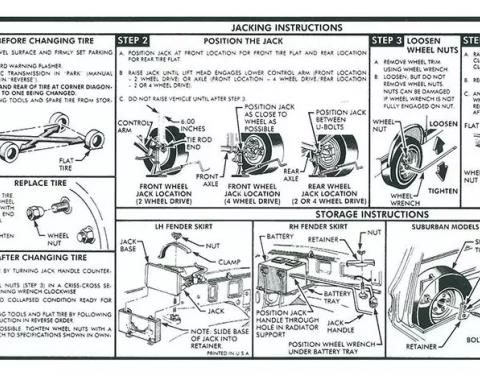
1. Locate the access point: The spare tire crank access is beneath your Denali, directly under the rear cargo area. You’ll need to crawl to the rear of your vehicle and look upward between the rear bumper and the vehicle frame.
2. Insert the crank handle: Fully engage the handle into the square drive mechanism—partial insertion is a common reason for handle slippage and mechanism damage.
3. Turn counterclockwise slowly: Rotate the handle in 1/4-turn increments, pausing between turns to check if the tire is lowering properly. GMC specifically designs this mechanism to require slow, deliberate operation.
4. Lower completely: Continue turning until the spare tire reaches the ground and the cable is fully extended. Never stop midway through the lowering process.
5. Remove the tire: Once on the ground, slide the spare tire out from under the vehicle. Do not attempt to remove it while suspended.
Troubleshooting Common Release Problems
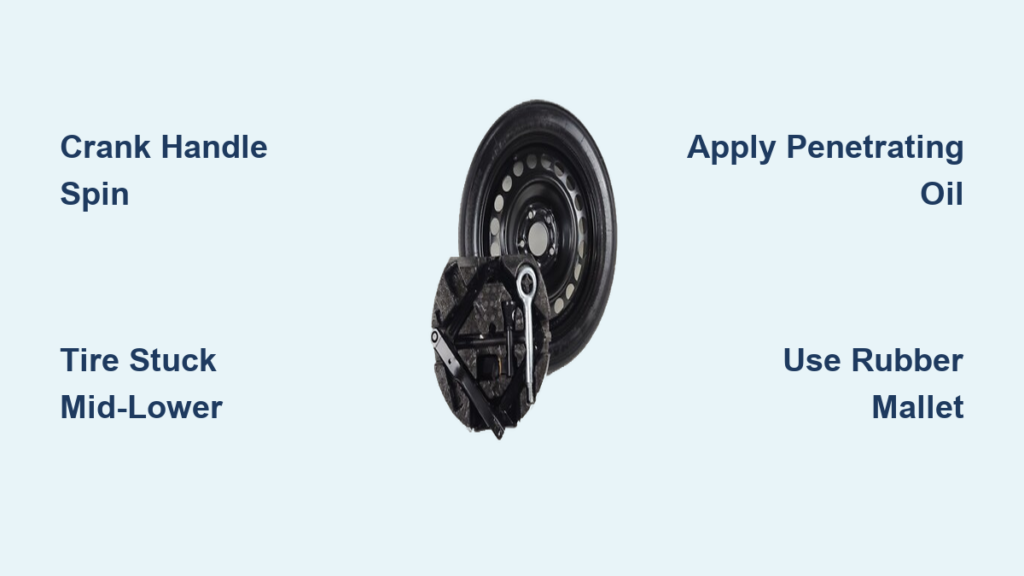
“The Crank Handle Spins Freely Without Lowering the Tire”
This indicates the winch mechanism has disengaged. Here’s how to fix it:
- Raise the handle to its highest position
- Apply firm downward pressure while turning counterclockwise
- Listen for a “click” indicating re-engagement
- Continue turning slowly once you feel resistance
If this doesn’t work, your winch cable may have jumped off the spool—a common issue after years of storage. In this case, you’ll need to access the winch assembly directly.
“The Tire Lowered Partially Then Stopped Completely”
This typically means the spare tire is binding against the mounting plate. To resolve:
- Raise the tire slightly by turning clockwise 1/8 turn
- Apply penetrating oil around the tire’s mounting hub
- Tap the tire’s rim gently with a rubber mallet (8-10 firm taps)
- Try lowering again with slow, steady pressure
Never force the mechanism—this is how most permanent damage occurs. The mounting plate has specific alignment tabs that must seat properly during both installation and removal.
Emergency Solutions When Standard Methods Fail

Improvised Techniques for Stuck Spare Tires
When the standard procedure fails, these emergency methods can help—use with extreme caution:
The Two-Person Method: Have an assistant apply upward pressure on the spare tire while you turn the crank handle. This relieves tension on the binding mechanism. Communicate clearly and maintain safe positioning—never place any body parts under the tire.
The Gravity Assist Technique: If your Denali is on a slight incline, position the vehicle so gravity helps pull the tire away from binding points. Place wheel chocks on the front tires first for safety.
The Penetrating Oil Soak: For severely corroded mechanisms, apply penetrating oil generously and wait 20 minutes before attempting again. Reapply if necessary, but never use excessive force during this process.
Why Professional Help Is Sometimes Necessary
When to Call Roadside Assistance Instead
Certain situations require professional intervention rather than DIY attempts:
- If you’ve heard a loud “snap” during removal attempts (indicating broken components)
- When the cable appears visibly damaged or frayed
- If multiple removal attempts have failed over several hours
- When working in unsafe conditions (heavy traffic, poor visibility)
Attempting further DIY repairs in these scenarios often transforms a simple spare tire access issue into a $300+ repair job for a completely replaced winch assembly. GMC dealerships keep the specific replacement parts in stock specifically because this is such a common failure point on Denali models.
Preventative Maintenance to Avoid Future Issues
Simple Steps to Ensure Spare Tire Accessibility
The best time to address spare tire access problems is before you need the tire:
Quarterly Inspection Routine:
– Lower the spare tire completely
– Clean corrosion from the winch mechanism
– Apply automotive-grade grease to moving parts
– Check cable tension and condition
– Ensure the tire is properly centered on the mounting plate
Critical Storage Tip: Never store the spare tire without first applying a light coating of dielectric grease to the mounting hub. This simple step prevents the most common cause of stuck spare tires—corrosion bonding the tire to the mounting plate.
Model-Specific Considerations for Recent Denali Years

Differences Between 2018-2023 Models
Newer Denali models (2020 and later) feature an improved winch mechanism with a secondary safety lock that requires an additional step during removal. If you own a recent model and your spare won’t release, check for a small lever near the winch that must be depressed while turning the crank handle.
Older models (2018-2019) are more prone to cable fraying due to a design flaw in the cable guide. If you own one of these models, inspect the cable carefully each time you access the spare tire—replacing the cable assembly proactively costs less than emergency roadside service.
Final Safety Check Before Driving
Before stowing your flat tire and driving on the spare, verify:
- The spare tire is properly inflated (60 PSI is standard for most Denalis)
- All lug nuts are tightened in a star pattern to 140 ft-lbs
- The flat tire is secured properly in your cargo area
- You’ve reset your tire pressure monitoring system
Remember that most spare tires are rated for only 50 miles of driving at speeds under 50 MPH—pushing beyond these limits risks dangerous tire failure.
Key Takeaways for Stress-Free Spare Tire Access
The most reliable way to avoid roadside spare tire emergencies is through regular maintenance of the winch mechanism. Every time you check your oil or rotate your tires, take the extra three minutes to verify your spare tire system operates smoothly. Keep the factory toolkit complete and stored properly—many Denali owners discard these tools during routine cleaning, only to discover they’re missing when needed most. Most importantly, practice the removal procedure in your driveway before you need it on the highway—familiarity with your specific vehicle’s quirks will save you critical time and stress during an actual emergency. By following these specific Denali-focused procedures, you’ll transform what many drivers consider a terrifying ordeal into a simple, routine maintenance task.