Nothing ruins the crisp appearance of your driveway or garage floor quite like those stubborn black tire marks that seem to appear overnight. These greasy-looking stains from your vehicle’s rubber tires can transform a clean concrete surface into an eyesore that makes your property look neglected. The good news is that you don’t have to live with these marks—whether they’re fresh stains from yesterday’s parking or years-old discoloration that’s baked into the concrete. This guide delivers proven methods to eliminate tire marks completely while protecting your concrete surface. You’ll learn exactly which products work best, the proper techniques for different concrete types, and how to prevent future marks.
Tire marks aren’t merely surface dirt—they’re the result of chemical compounds from your tires penetrating deep into concrete’s porous structure. When tires heat up during driving, plasticizers (flexibility compounds) soften and transfer onto concrete surfaces. Surprisingly, higher-quality tires often leave worse marks because they contain more plasticizers for better traction. Understanding this process is crucial for selecting the right removal approach. With the proper techniques outlined here, you can restore your concrete to its original condition and maintain that clean appearance long-term.
Why Premium Tires Leave Worse Marks Than Budget Tires
The frustrating reality is that your high-end tires are likely causing those unsightly stains. Premium tires contain more plasticizers—chemical compounds that make rubber flexible and improve road grip. When these tires heat up during driving, the plasticizers soften and transfer onto concrete surfaces as you park or maneuver. This explains why your new, expensive tires might be leaving marks that your old budget tires never did.
How Heat Accelerates Tire Mark Formation
Tire marks form most severely when rubber is hot, which is why you’ll notice more staining during summer months. The plasticizers in tires become significantly more fluid at elevated temperatures, allowing them to penetrate deeper into concrete pores. Parking on concrete immediately after driving—when tires are hottest—creates the worst staining scenarios. In regions with extended warm seasons (March through November), you’ll face more persistent marking problems as the concrete surface stays warm enough to accept these transferred compounds.
Why Some Marks Penetrate Deeper Than Others
Several factors determine how deeply your tire marks embed into concrete. Unsealed concrete with high porosity allows stains to penetrate more deeply than sealed surfaces. The age of the stain matters significantly—fresh marks respond better to cleaning than those that have been baking in the sun for months. Your local climate plays a role too; hotter regions experience more severe marking as concrete surfaces reach temperatures that facilitate deeper compound transfer. Marks formed during acceleration or hard braking create the most challenging stains due to increased friction and heat.
Essential Pressure Washer and Scrubbing Tools for Tire Mark Removal

Your equipment choices make or break your tire mark removal success. A pressure washer rated between 2,800-3,000 PSI provides ideal cleaning power for residential concrete surfaces. However, pressure alone rarely removes tire marks—you need proper cleaning chemicals first. For indoor garage floors, a high-pressure nozzle attached to your garden hose delivers sufficient rinsing capability without creating water damage risks.
Must-Have Scrubbing Tools for Concrete Surfaces
Straw scrub brushes with stiff bristles deliver the aggressive action needed to work degreasers deep into tire marks. For larger areas like driveways, rent a Clark floor machine (available at home improvement stores for $27-$37 per day) with black abrasion discs. These machines require a 20-amp circuit but can clean a 2,400 square foot area efficiently. Floor scrubbers or buffing machines with aggressive stripping pads dramatically reduce labor for big jobs. When selecting brushes, match bristle stiffness to your surface—stiff bristles for rough unsealed concrete, softer bristles for delicate epoxy finishes.
Application Tools That Make the Difference
Pouring degreasers directly onto stains works better than spraying for full saturation of heavily stained areas. Standard containers for degreaser application and spray bottles for lighter cleaners complete your toolkit. Never skip the dwell time—allowing products to sit 5-30 minutes (longer for set-in marks) is critical for breaking down rubber compounds. Reapply product as needed to prevent premature drying, especially during hot weather when solutions evaporate quickly.
Top 5 Degreasers That Actually Remove Tire Stains
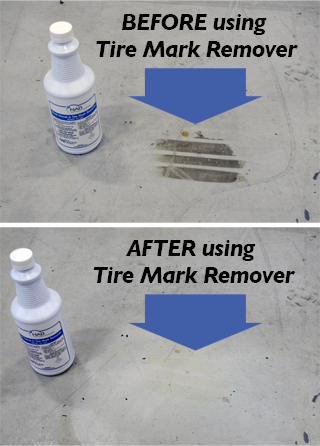
Not all degreasers work equally well on tire marks. The right products break down the rubber compounds embedded in your concrete, while ineffective ones leave you with the same unsightly stains. Krud Kutter in full-strength gel format consistently outperforms competitors in user testing, with reports of near-complete removal even for set-in marks. Orange Blast delivers comparable results with the added benefit of a pleasant citrus scent during application.
Citrus-Based Cleaners for Safe, Effective Removal
D-limonene-based cleaners like Natural Orange work exceptionally well on rubber burns and tire marks by targeting the specific compounds in rubber. Apply these products full strength and allow extended dwell times—they’re biodegradable and safer than harsh chemical alternatives. Burn Out Tire Mark Remover bonds specifically with rubber to lift stains without damaging most surfaces. These citrus options effectively remove marks while being gentler on the environment than traditional solvents.
Products That Fail on Tire Marks (Save Your Money)
Simple Green shows limited effectiveness in comparative testing, often leaving visible marks after treatment. Goof Off is too harsh for concrete and epoxy surfaces and can cause permanent damage. Muriatic acid should be avoided except by professionals in extreme situations as it damages new concrete. Always test products on a small, inconspicuous area first—some degreasers will strip concrete sealers, requiring reapplication after cleaning.
Step-by-Step Tire Mark Removal Process (With Timing)
Follow this systematic approach for maximum effectiveness when removing tire marks from concrete surfaces. Start by clearing debris from the area and covering nearby plants to protect them from runoff. Apply your chosen degreaser directly to the stained areas, ensuring full saturation of problem spots. Allow adequate dwell time—5-30 minutes for fresh marks, overnight for stubborn stains. Reapply product as needed to prevent drying, which significantly reduces cleaning effectiveness.
Hot Water Technique for Maximum Results
Combine hot water with your degreaser for dramatically better results—tire marks that go on hot come off hot. Heat helps release the same compounds that transferred when tires were warm during driving. Use hot water during rinsing and consider applying warm degreaser solution to maintain temperature benefits throughout the process. One professional cleaner noted that “marks that resist cold water treatment often disappear completely with hot water application.”
When to Switch to Mechanical Removal Methods
If chemical methods fail after two attempts, move to mechanical abrasion. Rent a Clark floor machine with black abrasion discs to physically remove the stained surface layer of concrete. This method works particularly well for large areas or set-in stains that have resisted multiple chemical treatments. Wire brushing can remove marks manually but requires significant physical effort for anything beyond small spots. For the most stubborn commercial marks, consider professional shotblasting services that remove the contaminated concrete layer.
Removing Marks From Sealed Concrete Without Damaging Finish
Sealed concrete requires special handling because most degreasers will strip the protective coating. Use non-filming detergents like SunKleen, 409, or Fantastic which clean without damaging sealers. Apply these products, allow 10-15 minutes of dwell time, then gently scrub with a medium-bristle brush before rinsing thoroughly. If you must use degreasers on sealed concrete, understand you’re slowly stripping the sealer and should plan to reapply it after cleaning.
Epoxy Garage Floor-Specific Cleaning Protocol
For epoxy-coated garage floors, use even gentler methods to maintain your floor’s appearance. Apply non-filming detergents and allow them to soak into affected areas for 5-10 minutes before scrubbing with soft-bristle brushes. Brake cleaner works well for spot treatment on epoxy surfaces but should be used sparingly with proper ventilation. Products like Burn Out Tire Mark Remover can be used on epoxy but test first—rarely, they may lighten epoxy colors. Always rinse thoroughly with clean water after cleaning to prevent residue buildup.
Preventing Future Tire Marks: 3 Proven Strategies
Stop tire marks before they start with these practical prevention techniques. Avoid sharp maneuvers and sudden stops on concrete surfaces to reduce the friction and heat that cause plasticizer transfer. In hot weather, park vehicles in garages or under carports to prevent tires from heating up before contacting concrete. When shade isn’t available, consistently park in the shadiest spot to minimize heat-related marking.
Physical Barriers That Block Tire Transfer
Place rubber mats where tires rest while parked to create a protective barrier between rubber and concrete. Driveway protectors placed under tires serve the same purpose for outdoor surfaces. These inexpensive solutions prevent direct contact and the resulting transfer of rubber compounds. For garage floors, consider installing polyaspartic coatings like SunOne which offer higher resistance to tire marks than standard epoxy finishes.
Surface Treatments for Long-Term Protection
Apply penetrating sealers to concrete driveways—these don’t create a surface film that interacts with tire plasticizers. For garage floors, invest in high-quality professionally-installed epoxy that holds up well to hot tires. Regular hosing off of affected areas prevents heavy buildup that makes future marks more difficult to remove. Incorporate driveway maintenance into your seasonal routine to maintain consistent appearance and reduce intensive cleaning needs.
When to Call Professionals for Stubborn Tire Stains
Some tire marks resist even the most aggressive DIY methods, especially when they’ve penetrated deep into concrete over many years. Consider professional help when multiple cleaning attempts fail, when marks cover large commercial areas, or when you’re preparing concrete for sealing (marks trapped beneath sealer become permanent). Professional concrete cleaners have access to industrial-strength equipment and techniques that deliver results where DIY methods fall short.
Advanced Removal Techniques Worth the Investment
For the most stubborn cases, professionals use soda blasting or shotblasting to remove the contaminated surface layer of concrete. These methods physically strip away the stained material without chemicals soaking deeper into the concrete. Edco grinders can remove the entire stained surface layer, followed by belt sanders for spot treatment of remaining marks. While these services come at a cost, they deliver permanent results for concrete that’s been marred by years of tire marks.
Testing for Complete Removal Before Sealing
Never seal concrete with remaining tire marks—the stains will be permanently visible beneath the sealer. Test cleaned areas with water; when tire mark residues remain, water beads on the surface because the staining compounds are water-repellant. When water spreads and soaks in instead, the tire marks have been successfully removed. This simple test prevents costly mistakes when preparing concrete for sealing or coating applications.
With the right approach, even the most stubborn tire marks can be removed from your concrete surfaces. Start with the least aggressive methods, progress as needed, and implement prevention strategies to maintain your clean concrete long-term. Regular maintenance prevents the accumulation of difficult-to-remove stains and keeps your driveway or garage floor looking its best year after year.