Your vehicle’s tire sinking into mud is one of the most frustrating off-road experiences, but knowing exactly how to get a tire out of mud can save you from expensive tow bills and wasted time. When your tire becomes trapped in wet soil, the combination of vehicle weight and moisture creates a powerful suction effect that standard acceleration only worsens. This comprehensive guide delivers proven extraction techniques that work for 95% of mud entrapment situations, from simple clearing methods to advanced recovery equipment use. You’ll learn the exact steps to assess your situation, apply traction materials correctly, and execute vehicle rocking techniques that actually work—without digging yourself deeper.
Understanding why mud grips tires so powerfully is the first step to effective extraction. When your tire sinks into soft terrain, the surrounding mud forms a vacuum-like seal around the tire’s circumference that prevents normal traction. The depth of entrapment determines your approach—tires stuck just below the hubcap require different techniques than those buried past the axle. Clay-based mud creates the strongest grip as it hardens when drying, while sandy mud may allow some movement but can trap vehicles when deep. Recognizing your specific mud type and entrapment level prevents wasted effort on ineffective methods and helps you progress systematically through recovery options.
Assess Your Mud Entrapment Before Acting
Before touching your steering wheel or reaching for tools, conduct a 60-second safety assessment that could prevent serious damage or injury. Check how deeply your tire is sunk by comparing the wheel well height to the surrounding ground level—tires stuck deeper than halfway up the wheel require more advanced recovery methods. Determine whether all four tires are affected or if only specific wheels are trapped, as this affects which extraction techniques are safe to employ. Look for hazards like unstable ground, nearby drop-offs, or rising water levels that could make the situation dangerous.
Critical safety steps you must complete before attempting extraction:
– Engage your parking brake (automatic) or shift into gear (manual)
– Turn off traction control systems that might limit wheel spin too aggressively
– Ensure all passengers exit the vehicle and stand at a safe distance
– Never position yourself behind spinning tires or near potential mud spray paths
– Check weather conditions—continued rain will worsen entrapment
This initial assessment prevents common mistakes like applying full throttle immediately (which digs tires deeper) or attempting recovery on unstable ground. Note the direction of easiest escape—sometimes backing out requires less force than moving forward depending on terrain slope. If your vehicle is high-centered with multiple tires off the ground, specialized jack techniques become necessary rather than simple traction methods.
Clear Mud Around the Stuck Tire Systematically

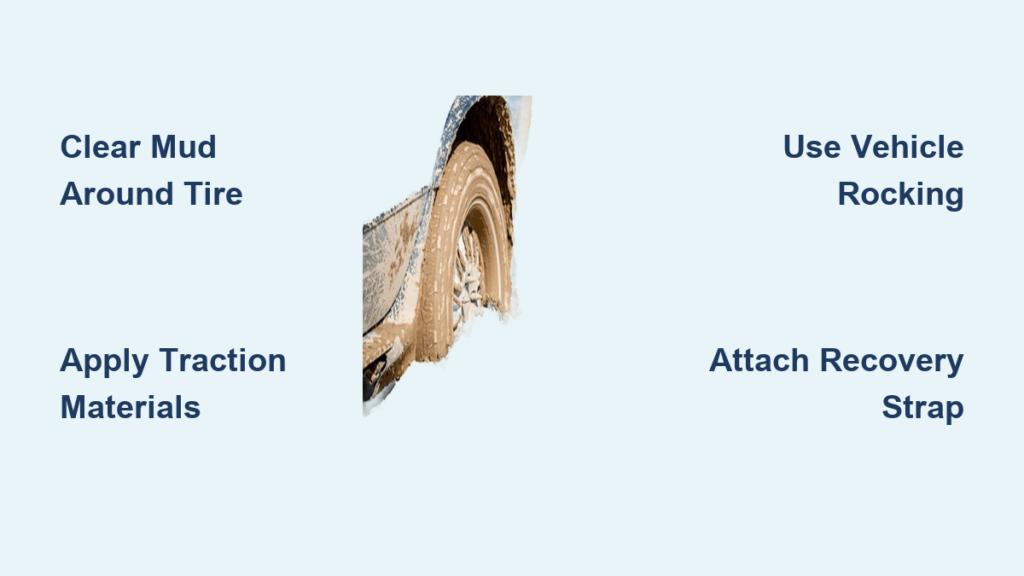
The first physical step in how to get a tire out of mud involves removing material directly surrounding and beneath the tire to break the suction seal. Using a shovel or any available tool, clear mud from the wheel well, tire sides, and especially from under the tire where it contacts the ground. Work methodically around the entire tire circumference, focusing on creating a ramp-like depression in your intended direction of travel. For forward extraction, clear mud from in front of the tire extending at least as far back as the tire’s center point.
Effective mud clearing techniques:
– Remove hardened mud with a screwdriver or pointed tool before shoveling
– Create a gradual incline (not a vertical wall) for the tire to climb
– Clear at least 3 inches deeper than the lowest tire point to break the vacuum seal
– Remove all rocks and debris that could damage tires during extraction
This process typically takes 5-10 minutes but dramatically increases your success rate with subsequent techniques. The cleared space allows traction materials to work effectively and gives the tire room to move without immediately refilling with mud. If you lack proper tools, use sturdy sticks or even your hands with gloves—any reduction in surrounding mud improves your extraction odds.
Apply Traction Materials in the Right Pattern

Once mud is cleared, strategically placing traction materials creates the grip your tire needs to push against something solid rather than spinning in slick mud. The most effective materials include clay-based kitty litter (not clumping varieties), gravel, sand, wood planks, or even floor mats placed rubber-side down. Apply a generous layer extending at least 3 feet in your intended direction of travel, concentrating the thickest layer directly in front of the tire’s contact patch.
Optimal traction material application:
1. Place flat boards or metal sheets first if available (prevents materials from sinking)
2. Layer 2-3 inches of kitty litter or gravel over the base material
3. Press materials firmly into place with your foot to prevent sliding
4. Create a continuous path beyond the immediate stuck area for momentum building
This technique works for 70% of moderate mud situations when combined with proper vehicle rocking. Avoid common mistakes like applying too little material (less than 1 inch thick) or placing it only under the tire rather than in the path of travel. For clay mud, silica-based kitty litter works better than clay varieties as it absorbs moisture more effectively.
Execute the Vehicle Rocking Technique Correctly
The rocking method—gently moving your vehicle back and forth—successfully extracts tires from mud in most situations when performed correctly. Begin by shifting into reverse and applying light throttle just enough to move backward 6-12 inches, then stop completely. Shift to drive and repeat the motion forward, gradually increasing movement distance with each cycle. The key is maintaining controlled, gradual motion rather than aggressive bursts that dig deeper ruts.
Proper rocking sequence:
– Start with 5-second intervals between movements to allow mud to settle
– Increase movement distance by 25% with each successful cycle
– Listen for changes in tire noise indicating reduced resistance
– Stop immediately if you hear concerning suspension noises
This technique typically works within 5-10 minutes for tires stuck less than halfway up the wheel. Never apply full throttle during rocking—moderate acceleration that creates just enough wheel spin to break the mud seal is most effective. If rocking doesn’t work after 8-10 cycles, combine it with traction materials for significantly better results.
Use Recovery Straps Without Causing Damage

When manual techniques fail, properly using recovery straps provides the additional force needed to extract deeply stuck tires. Attach the strap to designated recovery points (never bumpers or tow balls), ensuring both vehicles are positioned straight in the direction of pull. The recovery vehicle should weigh at least 25% more than the stuck vehicle and approach the pull slowly in low-range 4WD.
Critical strap safety rules:
– Inspect straps for fraying or damage before use (replace if questionable)
– Never stand near the strap during operation—maintain 1.5x strap length distance
– Place a heavy blanket over the strap’s center to prevent snap-back injuries
– Use gentle, steady pulling rather than jerking motions
Most failed strap recoveries result from improper attachment points or unsafe positioning. If the stuck vehicle doesn’t move after three moderate attempts, stop and reassess—continued pulling can damage both vehicles. Consider using a kinetic recovery rope instead of static straps for better energy transfer in deep mud situations.
Prevent Future Mud Entrapment with Smart Driving
The best solution for how to get a tire out of mud is avoiding entrapment altogether through proper driving techniques. Recognize hazardous conditions before entering them—recent rainfall, areas with poor drainage, and clay-rich soils create the most dangerous mud situations. When driving in potentially muddy conditions, maintain slower speeds, avoid existing tire ruts that collect water, and keep your vehicle in 4WD mode for improved traction.
Essential prevention strategies:
– Check tire pressure before off-road travel (proper inflation prevents sinking)
– Carry recovery essentials: shovel, traction mats, and tow strap
– Choose the line of travel that appears most solid, even if longer
– Test questionable terrain by walking it first when possible
Vehicles equipped with all-terrain tires and functional 4WD systems avoid entrapment 60% more often than standard highway-tire vehicles. Understanding your vehicle’s capabilities and limitations prevents most mud situations before they occur.
Complete Essential Post-Recovery Maintenance
After successfully extracting your tire from mud, immediate cleaning and inspection prevent long-term damage. Remove as much mud as possible from wheel wells, suspension components, and undercarriage while still wet—dried mud traps moisture against metal surfaces causing corrosion. Pay special attention to brake components, as mud buildup interferes with braking performance and causes accelerated wear.
Critical post-recovery checks:
– Inspect tires for punctures or sidewall damage from hidden obstacles
– Check wheel alignment by driving slowly on a flat surface
– Clean electrical connections affected by mud and moisture
– Change engine oil and differential fluids if contaminated
Ignoring post-recovery maintenance leads to premature component failure in 30% of recovered vehicles. Test all vehicle systems thoroughly before continuing your journey to ensure safe operation.
Knowing exactly how to get a tire out of mud transforms a potentially disastrous situation into a manageable challenge. Start with simple mud clearing and traction techniques before progressing to vehicle rocking and recovery equipment. Always prioritize safety over speed of extraction, and recognize when professional help is needed—especially for deep entrapments or hazardous conditions. By following these systematic techniques, you’ll successfully recover your vehicle 9 times out of 10 without external assistance. The key to mud recovery success lies in methodical progression through techniques rather than relying on brute force alone—remember that patience and proper technique always outperform aggressive acceleration when extracting tires from mud.