Getting a flat tire on your Ford F150 can turn a routine drive into a stressful situation, especially when you need to access the spare tire tucked underneath your truck. Many F150 owners find themselves frustrated when trying to release that stubborn spare tire, not realizing the process requires specific technique and proper tools. The good news is Ford designed this system to be accessible for everyday drivers, but you need to know exactly where to look and how to operate the winch mechanism correctly. This comprehensive guide will walk you through every critical step to safely and efficiently get your spare tire off your Ford F150, whether you’re stranded roadside or preparing for a tire change in your driveway.
Most Ford F150 models from the late 1990s through current production store the spare tire underneath the truck bed, suspended by a cable winch system. This location keeps the spare secure and out of the way while maintaining accessibility when needed. While minor design variations exist across model years, the fundamental removal process remains consistent for the vast majority of F150 trucks. Before attempting to lower your spare, gather the necessary tools and take proper safety precautions to prevent injury or damage to your vehicle.
Locate Your F150’s Spare Tire Access Point
The first critical step is finding the winch access cover beneath your truck bed. On most F150 models, this small rectangular or round plastic cover sits between the rear wheel well and tailgate, typically positioned near the rear differential. You’ll usually find it slightly offset toward the driver’s or passenger side depending on your specific model year.
Remove this cover by gently prying along the edge with a flathead screwdriver or plastic trim tool. Apply steady pressure to release the plastic clips holding it in place—avoid excessive force that could crack the cover. Once removed, you’ll see a metal socket protruding from the winch mechanism. This hex-shaped opening is where you’ll insert your jack handle to operate the winch system.
If you’re struggling to find the access point, consult your owner’s manual for the exact location on your model year. Note that some newer F150 configurations may store the spare differently, particularly models with tailgate-mounted spares or specialized off-road packages, though the under-bed winch system remains standard for most trims.
Gather Essential Tools and Prepare Your Workspace
Before attempting to lower the spare tire, ensure you have the correct tools and a safe working environment. The most crucial item is your factory jack handle, typically stored in the truck bed or under the rear seat. This handle usually consists of two interlocking pieces that form an extended lever when screwed together—never substitute with inappropriate tools that could damage the winch mechanism.
Park your F150 on solid, level ground away from traffic if possible. Concrete or asphalt surfaces provide the most stable base, while gravel, dirt, or grass can shift during the process. Engage your parking brake firmly and place wheel chocks against the front tires to prevent any unexpected movement. If working roadside, activate your hazard lights and set up reflective triangles 100-200 feet behind your truck for safety.
Thoroughly inspect the area beneath where the spare tire will descend. Clear away rocks, branches, or other debris that might obstruct the tire’s path. Ensure sufficient clearance behind your truck for the tire to lower completely to the ground without hitting obstructions. Take a moment to verify the spare tire appears properly secured and the cable shows no visible damage before proceeding.
Properly Operate the Winch Mechanism to Lower the Spare
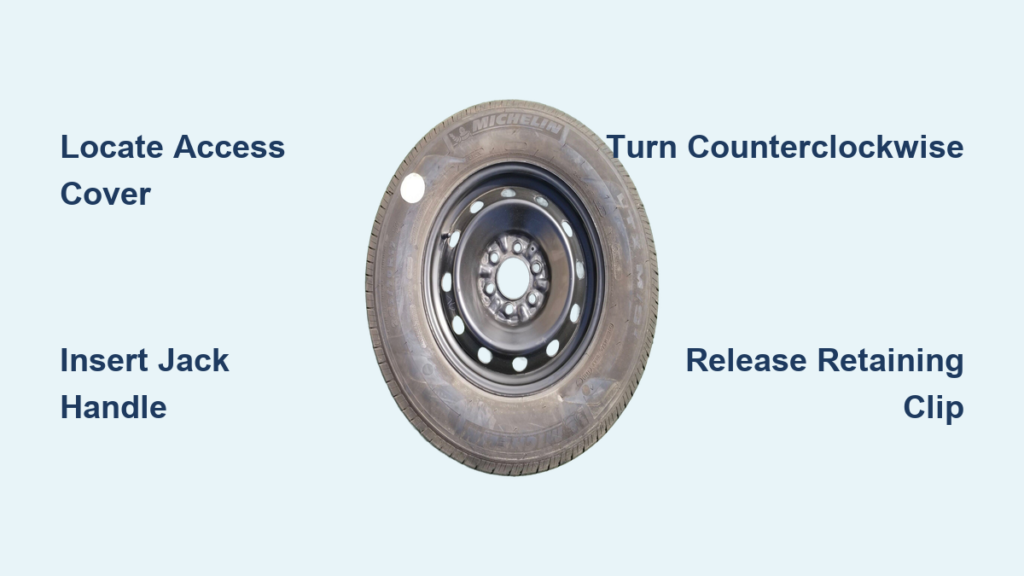
Insert the assembled jack handle into the winch socket, ensuring it’s fully seated before applying force. The handle should fit snugly with no wobble—if it spins freely, you may not have it fully engaged. Begin turning the handle counterclockwise (lefty-loosey) with steady, controlled motions. Remember: clockwise rotation will raise the tire higher, making your situation worse.
As you turn, maintain a firm grip and keep your body positioned safely away from the descending tire path. You’ll feel resistance decrease as the tire begins lowering, accompanied by the sound of the cable unwinding. Continue turning until the spare tire touches the ground, which typically requires 20-40 full rotations depending on your model year and cable tension.
If the handle becomes difficult to turn, stop immediately. Forcing it can strip the winch mechanism or cause sudden cable release. Apply penetrating oil like PB Blaster to the winch assembly and let it sit for 15 minutes before attempting again. Tap gently around the mechanism with a rubber mallet to loosen corrosion without damaging components. Never use excessive force or improvised extensions on the handle.
Safely Release and Retrieve the Lowered Spare Tire
Once the spare tire rests on the ground, you’ll notice the winch handle turns more freely as the cable goes slack. This indicates it’s time to disconnect the tire from the winch assembly. Locate the retaining mechanism where the cable attaches to the spare—typically a flat metal bar secured by a spring-loaded clip or sliding latch.
Release this connection by pressing the clip inward or sliding the latch to the side while supporting the tire’s weight. Some models require you to rotate the retaining bar 90 degrees before disengaging. As you separate the cable from the tire, be prepared for the cable assembly to retract upward into the truck bed—keep your hands clear to avoid pinching.
Carefully roll the spare tire out from under your F150, tilting it slightly if necessary to clear the truck’s undercarriage. Check the tire for proper inflation (usually 60 PSI for compact spares) and visible damage before installing it on your vehicle. Store the winch cable and hardware safely to prevent damage while you change the flat tire.
Troubleshoot Common Ford F150 Spare Tire Problems

Many F150 owners encounter a stuck winch mechanism, particularly on trucks stored in humid or coastal environments where corrosion develops. If the handle won’t turn after multiple attempts, spray penetrating oil directly into the winch housing and let it penetrate overnight. Try tapping the mechanism with a rubber mallet while applying gentle turning pressure the next day.
A frayed or broken winch cable requires immediate attention—never attempt to lower the spare with damaged cable. Inspect the cable for broken strands, kinks, or visible rust before each use. If you notice any damage, replace the entire cable assembly with a genuine Ford replacement part before storing the spare again.
Some trucks experience “binding” where the spare catches on undercarriage components during descent. If this happens, partially raise the tire again, clear the obstruction, then lower slowly while guiding the tire with a long stick or broom handle. Persistent binding may indicate bent mounting brackets that require professional repair.
Maintain Your Spare Tire System for Reliability

Prevent future problems by inspecting your spare tire system every three months. Check the spare’s inflation pressure (typically 60 PSI for compact spares) using an accurate gauge—don’t rely on visual inspection alone. Look for cracks, dry rot, or embedded debris in the tire tread that could compromise safety.
Apply silicone-based lubricant to the winch cable and mechanism annually to prevent corrosion. Operate the winch by lowering and raising the spare completely once per year to keep components moving freely. This maintenance is crucial if you live in areas with road salt, high humidity, or frequent temperature fluctuations.
Replace the winch cable immediately if you notice any signs of wear. Ford offers complete winch assembly kits that include new cable, mounting hardware, and instructions. Installing a fresh cable takes about 30 minutes and ensures your spare will deploy when needed most.
When Professional Assistance Is Necessary
Seek professional help if you encounter a completely seized winch mechanism that won’t respond to lubrication and gentle persuasion. Mechanics have specialized tools to free corroded components without causing further damage. Similarly, if the cable has snapped or shows significant deterioration, professional replacement ensures proper installation and safety.
Newer F150 models with advanced features like electronic winch systems or specialized off-road packages may require dealer-level diagnostics. If your truck has warning lights related to the spare tire system or you’re unsure about any aspect of the removal process, consult your owner’s manual or visit a Ford dealership for guidance.
Roadside assistance services can also provide immediate help if you’re stranded with a flat tire and unable to access your spare. Many insurance policies and membership programs include this service, making it a safer option than struggling with a difficult winch mechanism on a busy roadway.
Final Note: Regular maintenance of your Ford F150’s spare tire system ensures reliability when you need it most. By following these steps and performing annual inspections, you’ll avoid the frustration of a stuck spare tire during an emergency. Remember that compact spare tires are designed for temporary use only—never exceed 50 mph or drive more than 50 miles on your spare before visiting a tire professional. Keep this guide in your glove compartment along with your owner’s manual for quick reference during roadside emergencies.