Discovering you have a flat tire with no spare in your trunk creates immediate stress. Whether you’re stranded on the highway or in a remote location, knowing your options can save you time, money, and frustration. This guide covers practical solutions for handling a flat tire when you don’t have a spare available, using only methods documented in reliable automotive resources.
Immediate Safety Measures Before Addressing Your Flat Tire
Safely Pulling Over and Assessing the Situation
The moment you feel your tire go flat while driving, gently reduce speed while maintaining control of your vehicle. Avoid slamming brakes or making sudden maneuvers that could cause loss of control. Signal clearly and move to a safe location at least 10 feet from traffic, preferably on level ground with good visibility. Engage your parking brake and turn on hazard lights immediately after stopping.
Critical Safety Precautions Before Attempting Any Repairs
Before exiting your vehicle, ensure all passengers move to a safe location away from traffic. If you’re on a highway, stay behind a guardrail or as far from the road as possible. Never attempt repairs in active traffic lanes. Place reflective warning triangles or emergency flares at appropriate distances based on your location (100-300 feet behind your vehicle on highways). These safety steps prevent potentially life-threatening situations while you address your flat tire.
Tire Sealant and Inflator Kits: Your First Line of Defense

How Tire Sealant Kits Actually Work to Temporarily Repair Flats
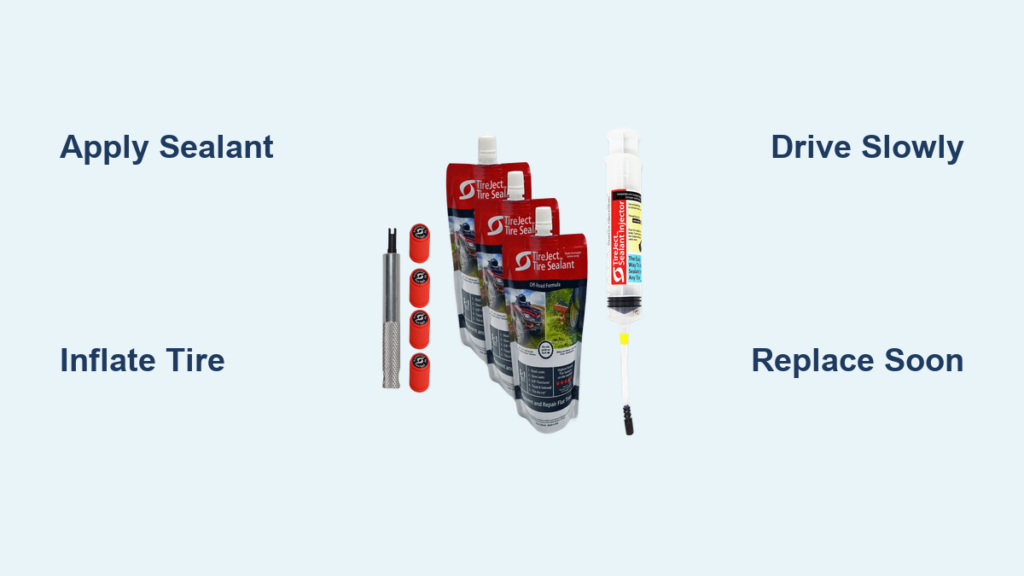
Many modern vehicles come equipped with tire sealant and inflator kits instead of traditional spare tires. These systems contain a pressurized canister of sealant and an air compressor. When properly applied, the sealant flows through the puncture as the tire rotates, creating a temporary plug that allows you to drive to a repair facility. The air compressor then reinflates the tire to a safe pressure level.
Step-by-Step Application of Tire Sealant Systems
- Park on stable, level ground away from traffic
- Remove the sealant kit from your vehicle (typically stored under the floor mat)
- Unscrew the valve cap from the flat tire
- Attach the sealant hose securely to the valve stem
- Activate the compressor according to manufacturer instructions
- Drive slowly (maximum 50 mph) for approximately 20 minutes to allow the sealant to distribute evenly
Important limitation: These kits only work for punctures up to ¼ inch in diameter, typically on the tread area—not the sidewall. They provide temporary solutions only, usually valid for about 100 miles.
Run-Flat Tires: Understanding Your Built-In Safety Feature
Identifying If Your Vehicle Has Run-Flat Tires
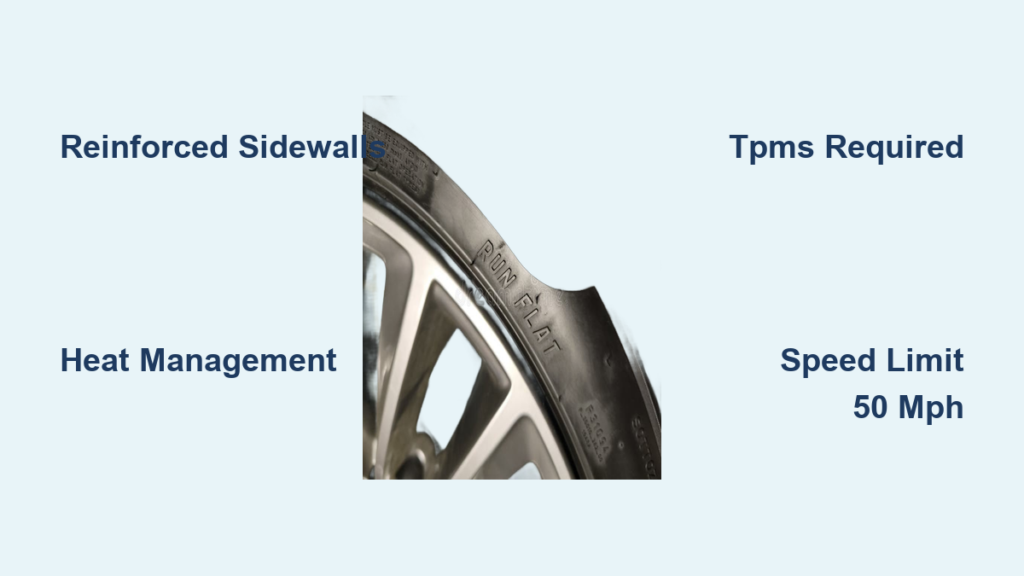
Many newer vehicles come equipped with run-flat tires that allow continued driving after a puncture. Look for specific markings on your tire sidewall such as “RFT,” “ZP,” “SSR,” “EMT,” or “RunOnFlat.” These tires feature reinforced sidewalls that support the vehicle’s weight even when air pressure is lost. Check your owner’s manual for specific driving limitations after a puncture.
Safe Driving Practices with Deflated Run-Flat Tires
If you have run-flat tires and experience a puncture, you can typically drive up to 50 miles at speeds not exceeding 50 mph. However, you must:
- Immediately reduce speed to the manufacturer’s recommended limit
- Avoid sharp turns and sudden maneuvers
- Drive directly to the nearest service facility
- Never attempt to repair run-flat tires after they’ve been driven while flat
Warning: Driving beyond the specified distance or speed limit with a deflated run-flat tire causes irreversible damage to both the tire and potentially the wheel.
Emergency Tire Repair Kits: Plugs and Patches for Temporary Fixes

When Temporary Tire Plugs Are Appropriate
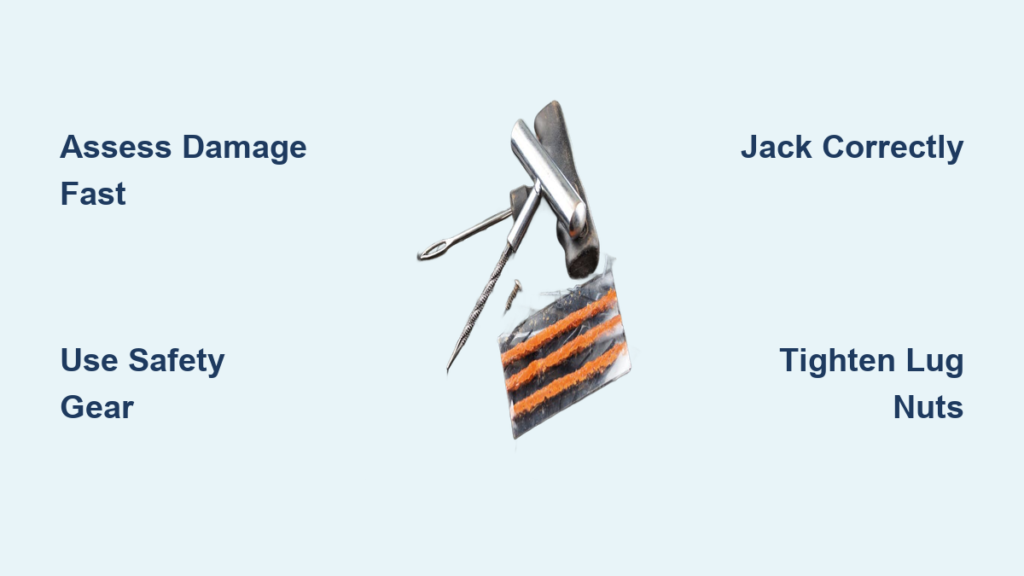
Temporary tire plug kits offer another solution for small tread punctures when no spare is available. These kits contain rubber plugs, insertion tools, and sometimes tire pressure gauges. They work best for punctures up to 3/16 inch in diameter located in the center of the tire tread. Sidewall punctures cannot be safely repaired with plug kits.
Proper Plug Installation Technique (Step-by-Step)
- Locate the puncture site by listening for hissing or applying soapy water to find air bubbles
- Remove any foreign object still embedded in the tire
- Use the reaming tool to clean and slightly enlarge the puncture hole
- Insert the plug through the hole using the insertion tool
- Pull the plug partially through until about 1/3 remains outside the tire
- Trim excess plug material flush with the tire surface
- Reinflate the tire to proper pressure using a portable air compressor
Critical safety note: This is strictly a temporary repair. Drive no more than 50 miles to reach a professional tire service center for proper repair or replacement.
When to Call for Professional Assistance Instead of DIY Repair
Recognizing When a Tire Cannot Be Safely Repaired
Certain damage scenarios require immediate professional help rather than attempted repairs:
- Punctures larger than ¼ inch in diameter
- Any damage to the tire sidewall or shoulder
- Multiple punctures close together
- Visible internal damage or exposed cords
- Tires with less than 2/32 inch of remaining tread
Expert tip: If you’re uncertain whether a puncture is repairable, always err on the side of caution. Driving on an improperly repaired tire risks sudden failure at high speeds.
Understanding Roadside Assistance Options
Most new vehicles include complimentary roadside assistance for a specific period. Check your owner’s manual for details. Alternatively, consider:
- AAA membership (if you’re already a member)
- Insurance provider roadside assistance
- Mobile tire service providers who can come to your location
- Towing services to the nearest tire repair facility
Time-saving tip: While waiting for assistance, gather your vehicle registration and insurance information to streamline the process when help arrives.
Preventing Future Stranded Situations Without a Spare
Essential Emergency Items to Keep in Your Vehicle
Since many modern cars no longer include spare tires, maintain these emergency items:
- Portable tire inflator with built-in pressure gauge
- Tire sealant kit (check expiration dates annually)
- Reflective warning triangles or LED road flares
- Basic tool kit including tire pressure gauge
- Emergency blanket and first-aid supplies
Developing a Tire Maintenance Routine
Prevent flat tires through regular maintenance:
- Check tire pressure monthly (when tires are cold)
- Inspect tires for nails, glass, and abnormal wear patterns
- Rotate tires every 5,000-7,000 miles
- Replace tires before they reach minimum tread depth (2/32 inch)
Pro tip: Keep a small notebook in your glove compartment to record tire pressure readings and maintenance dates.
Final Considerations for Safe Driving After a Flat Tire
Post-Repair Tire Monitoring Procedures
After any temporary repair, follow these safety procedures:
- Check tire pressure every 30 minutes during your drive to the repair facility
- Watch for unusual vibrations or handling issues
- Listen for additional air leaks
- Never exceed 50 mph until the tire is professionally repaired
Knowing When to Replace Rather Than Repair
Most tire manufacturers and safety organizations agree that tires should be replaced rather than repaired when:
- Repairs are needed in the sidewall area
- Multiple repairs are required on the same tire
- The tire has been driven while significantly underinflated
- The tire is more than 6 years old (regardless of tread depth)
Critical reminder: Temporary fixes like sealants and plugs are emergency solutions only. Always visit a professional tire service center as soon as possible after using any temporary repair method.
Final Note: While these methods can get you back on the road temporarily, the safest long-term solution for flat tires remains having properly maintained tires and understanding your vehicle’s specific emergency systems. Regular tire maintenance prevents most flat tire situations, but when they do occur, knowing these emergency procedures keeps you safer and reduces roadside stress. Always prioritize safety over convenience when dealing with tire issues.