
Your Mazda CX-9’s tires are the only point of contact between your vehicle and the road, making proper tire pressure critical for safety, performance, and efficiency. Maintaining correct inflation levels improves handling, extends tire life, boosts fuel economy, and prevents dangerous blowouts. While your CX-9 features a sophisticated Tire Pressure Monitoring System (TPMS) that alerts you to significant pressure loss, knowing how to manually verify and adjust tire pressure gives you complete control over this essential maintenance task. This guide shows you exactly how to check tire pressure on Mazda CX-9 properly, understand your vehicle’s warning system, and maintain optimal tire performance throughout the year.
Interpreting Your Mazda CX-9 TPMS Dashboard Warnings Correctly

The Tire Pressure Monitoring System in your Mazda CX-9 provides crucial alerts about tire pressure conditions, but understanding the different warning patterns is essential for taking appropriate action. Your dashboard displays two distinct TPMS light behaviors that indicate very different situations requiring different responses.
Steady TPMS Light: Immediate Pressure Check Required
When your CX-9 displays a steadily illuminated TPMS warning light, your vehicle is signaling that one or more tires has dropped significantly below the manufacturer’s recommended pressure specifications. This condition affects your vehicle’s handling characteristics, increases tire wear on the inner or outer edges, and reduces fuel efficiency as your engine works harder to overcome increased rolling resistance. Unlike temporary system glitches, a steady light indicates an actual physical problem with tire inflation that requires immediate attention. When you see this warning, you should check all four tires with a reliable pressure gauge and adjust inflation to the proper specifications as soon as possible—ideally before continuing your journey.
Flashing TPMS Light: System Malfunction Needs Professional Diagnosis
A flashing or blinking TPMS warning light represents a fundamentally different issue than a steady light. Rather than indicating low tire pressure, this flashing pattern signals that your CX-9’s Tire Pressure Monitoring System has detected an internal malfunction that prevents it from accurately monitoring tire pressures. This electronic problem means the system cannot be trusted to provide accurate pressure readings, even if your tires are properly inflated. Unlike underinflation issues that you can resolve yourself, a flashing TPMS light requires professional diagnostic equipment to identify and repair the underlying sensor, wiring, or control module issue. Simply adding air to your tires will not resolve this warning condition.
Identifying Common Causes of TPMS System Errors in Your CX-9
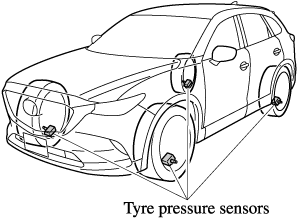
Understanding what triggers false TPMS warnings helps you determine whether you’re dealing with an actual pressure problem or a system malfunction. Several specific conditions documented in Mazda technical materials can interfere with your CX-9’s tire pressure monitoring system.
Electronic Device Interference with TPMS Sensors
Personal electronic devices operating inside your Mazda CX-9 can create electromagnetic interference that disrupts communication between your tire pressure sensors and the vehicle’s monitoring system. Laptops, tablets, and other digital devices may emit signals that interfere with the low-frequency transmissions from your wheel-mounted sensors. If your TPMS warning appears only when specific electronics are present in the vehicle and disappears when those devices are removed, interference is likely the cause. This intermittent warning pattern typically doesn’t indicate actual tire pressure problems but rather temporary communication disruption that resolves when the interfering device is no longer present.
Aftermarket Power Equipment Causing TPMS Errors
DC-AC power converters and inverters commonly used to power household electronics from your vehicle’s electrical system represent another documented source of TPMS interference for Mazda CX-9 owners. These devices can emit electromagnetic signals that disrupt the communication between your tire pressure sensors and the vehicle’s monitoring system. If you use power inverters regularly and notice TPMS warnings appearing, try operating your CX-9 without the converter to determine if the device is triggering false system errors. Many Mazda owners unknowingly create TPMS problems through routine use of aftermarket electrical equipment that interferes with the vehicle’s sensitive monitoring system.
Winter Tire Chains Triggering False TPMS Warnings
Installing tire chains for winter driving conditions frequently causes TPMS system errors in the Mazda CX-9. The physical presence of metal chains near the wheel-mounted sensors creates both physical obstruction and electromagnetic interference that disrupts normal sensor operation. Mazda documentation specifically acknowledges this as a known condition—TPMS warnings during winter tire chain use don’t necessarily indicate actual tire pressure problems but rather system interference from the chains themselves. Removing the tire chains typically resolves these false warnings without requiring any tire pressure adjustment or system service.
Professional Diagnosis for Persistent TPMS System Errors
When your Mazda CX-9 displays a flashing TPMS warning indicating system malfunction, professional service becomes necessary because troubleshooting electronic TPMS issues requires specialized diagnostic tools and technical expertise beyond standard maintenance capabilities.
Why Authorized Mazda Dealers Have Critical Diagnostic Advantage
Authorized Mazda dealers possess proprietary diagnostic equipment capable of communicating directly with your CX-9’s TPMS control module in ways that generic scanners cannot. These specialized tools can read specific fault codes stored in the system, identify which component is malfunctioning, and determine whether the issue stems from a failed sensor, wiring problem, module failure, or external interference source. Attempting to diagnose TPMS electronic issues without this equipment typically leads to unnecessary parts replacement and repeated service visits. The investment in professional diagnosis at an authorized facility saves time and money compared to guesswork-based repairs.
Providing Effective Information to Your Service Technician
When scheduling service for TPMS system errors, provide technicians with detailed documentation of when and under what conditions the warnings occur. Note whether warnings appear only when using specific electronic devices, power converters, or tire chains. Record whether the warning is steady or flashing, and describe any patterns you’ve observed regarding timing, driving conditions, or weather. This information helps technicians reproduce and diagnose the issue more efficiently, potentially identifying an interference source that can be eliminated rather than requiring component replacement. Clear communication about your specific driving conditions and warning patterns streamlines the diagnostic process and leads to more effective solutions.
Locating Your Mazda CX-9’s Exact Tire Pressure Specifications
Before checking and adjusting your tire pressure, you must know the exact pressure specifications for your specific Mazda CX-9 model year and trim level. Using incorrect pressure values defeats the purpose of the maintenance task and can lead to handling problems or accelerated tire wear.
Finding Official Pressure Recommendations
Your Mazda CX-9’s recommended tire pressure specifications appear on a sticker located on the driver’s side door jamb, visible when you open the driver’s door. This placard lists the specific PSI values for front and rear tires under different loading conditions. The same information appears in your vehicle owner’s manual, typically found in the specifications or tire section. Never rely on generic “35 PSI” values or pressures listed on tire sidewalls—those numbers indicate the maximum pressure the tire can handle, not the optimal pressure for your specific vehicle. Always use the manufacturer-specified values found in your CX-9’s documentation.
Understanding Front vs. Rear Tire Pressure Differences
Many vehicles, including the Mazda CX-9, specify different pressure requirements for front and rear tires. This difference accounts for weight distribution, suspension geometry, and handling characteristics unique to your vehicle. Front tires often require different pressure than rear tires, and using rear-tire pressures on front tires (or vice versa) disrupts your vehicle’s handling balance. Always verify you’re adding air to the correct pressure for each tire position, and check all four tires even if only one triggered a warning. This ensures balanced handling and optimal tire wear across all four wheels.
Step-by-Step Manual Tire Pressure Checking Procedure
While your Mazda CX-9’s TPMS alerts you to significant pressure loss, regular manual checks using a quality gauge provide more accurate information and help you catch gradual pressure loss before it triggers dashboard warnings.
Essential Equipment for Accurate Pressure Checks
Perform tire pressure checks using a reliable digital tire pressure gauge, which provides precise readings and is generally easier to read than analog dial gauges. Keep your gauge in the vehicle so it’s always available when needed. You’ll also need access to an air compressor—these are available at most gas stations, or you can purchase a portable unit for home use. While some gas station air compressors include built-in pressure gauges, these are often less accurate than dedicated gauges, so always verify with your own gauge.
Proper Checking Technique for Reliable Results
Check tire pressure when tires are “cold”—either first thing in the morning or after the vehicle has been parked for at least three hours. Driving heats tires and increases pressure, giving falsely elevated readings. Remove the valve cap from each tire valve stem and press your pressure gauge firmly onto the valve until you hear a brief hiss of air. Hold the gauge steadily until the reading stabilizes, then record each tire’s pressure. Compare these readings to your vehicle’s specified pressure. If pressure is too low, add air in short bursts, rechecking after each addition. If pressure is too high, press the gauge pin briefly to release excess air. Replace all valve caps securely after completing your checks.
Seasonal Temperature Impact on Tire Pressure
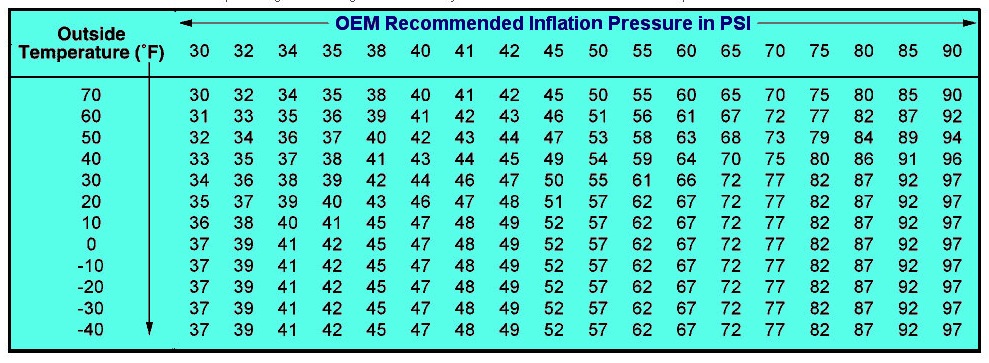
Tire pressure changes with temperature fluctuations, and understanding this relationship helps you maintain optimal inflation year-round. For every 10 degrees Fahrenheit temperature change, tire pressure shifts by approximately 1 PSI.
Managing Winter Pressure Loss
When temperatures drop significantly during winter months, tire pressure decreases correspondingly. A tire properly inflated at 70°F may lose 4-5 PSI when temperatures fall to 28°F. This natural pressure loss often triggers TPMS warnings during cold weather even when no actual leak exists. Check and adjust tire pressure more frequently during winter months, particularly after significant temperature drops. Remember that cold weather may require adding several PSI above summer specifications to maintain proper inflation when temperatures warm.
Handling Summer Pressure Expansion
Conversely, hot summer temperatures cause tire pressure to increase. A tire at correct pressure in spring may show elevated readings during summer heat. While this expansion is natural, extreme heat can push pressure dangerously high, affecting handling and increasing stress on tire components. During summer heat waves, check pressures more frequently and release air if readings exceed specifications by more than 2-3 PSI. Avoid releasing air from hot tires to reach cold specifications—this creates underinflation once temperatures normalize.
Maximizing Benefits Through Regular Tire Pressure Maintenance
Maintaining correct tire pressure on your Mazda CX-9 delivers tangible benefits across multiple aspects of vehicle ownership, from financial savings to improved safety and comfort.
Performance and Efficiency Gains from Proper Inflation
Properly inflated tires roll more easily, reducing the effort your CX-9’s engine must expend to maintain speed. This improved rolling resistance translates directly to better fuel economy—underinflated tires can reduce fuel efficiency by up to 3% according to automotive studies. Correct inflation also ensures even tire wear, extending tire lifespan and protecting your investment in replacement tires. Handling improves dramatically with proper inflation, as underinflated tires create sluggish steering response and reduced stability during cornering maneuvers.
Establishing an Effective Maintenance Schedule
Check tire pressure on your Mazda CX-9 at least once monthly, and include all four tires in each check. Increase frequency during periods of extreme temperature fluctuation, before long road trips, or if you notice your TPMS warning appearing frequently. Establishing a regular schedule—perhaps the first of each month—helps build the habit and ensures you catch pressure issues before they become serious. Many owners find that linking tire pressure checks to other regular tasks, such as monthly bill payments or weekly errands, improves consistency and prevents missed maintenance.
Regular tire pressure checks represent one of the simplest yet most impactful maintenance tasks you can perform on your Mazda CX-9. By understanding your vehicle’s TPMS warnings, recognizing common interference sources, and establishing a consistent manual checking routine, you’ll maximize tire lifespan, maintain optimal fuel efficiency, and ensure your CX-9 handles safely in all driving conditions. Proper tire inflation isn’t just about preventing dashboard warnings—it’s about optimizing your entire driving experience while protecting your investment in your Mazda CX-9.