
Stranded with a flat tire? Knowing how to change a tire on your Kia Soul transforms roadside panic into a manageable 20-minute task. Unlike many vehicles, the Kia Soul’s straightforward design makes tire changes accessible even for beginners—no special expertise required. With the right preparation and knowledge of your vehicle’s specific equipment locations, you can safely swap that flat for your spare tire and get back on the road. This guide covers every critical step, from identifying the correct jack points to properly torquing lug nuts, ensuring you handle this common emergency with confidence.
Before you face an actual flat, spend five minutes locating your Kia Soul’s emergency equipment. Your spare tire, jack, and lug wrench are stored beneath the cargo floor in the rear compartment—lift the carpeted panel to verify everything’s present and in good condition. Check that your spare tire (typically a temporary “donut” spare) is properly inflated to 60 PSI as indicated on its sidewall. Familiarizing yourself with these components now prevents frantic searching when you’re stranded on a rainy highway with traffic whizzing by.
Park Safely Before Changing Your Tire
Finding the right location to change your tire is your first critical safety step. When you notice tire trouble, carefully drive to the widest possible shoulder or pull into a parking lot—never attempt a tire change in a traffic lane. Once stopped, engage your parking brake firmly and shift into “Park” (for automatic transmissions) or first gear with the parking brake engaged (for manuals). Turn your hazard lights on immediately to alert approaching traffic.
Position wheel chocks against the tires opposite the flat (front tires if rear is flat, rear tires if front is flat) to prevent rolling. If you have reflective triangles or flares, place them 50-100 feet behind your vehicle as additional warning. These simple precautions create a safe work zone that protects you from traffic hazards while you focus on the tire change. Never work under a vehicle supported only by a jack—always use proper safety procedures.
Gather and Prepare Your Tire Changing Equipment
Your Kia Soul comes equipped with everything needed for a tire change, but accessing it properly makes the job easier. Lift the cargo area floor panel to retrieve the spare tire, scissor jack, and lug wrench. Store these items on the ground near the flat tire for easy access. If your Soul has wheel covers, locate the removal tool—often integrated into the lug wrench handle.
Essential Safety Gear to Use
- Work gloves: Protects hands from sharp lug nuts and dirty rims
- Flashlight: Crucial for nighttime changes or low-light conditions
- Sturdy board: Creates stable jack base on soft surfaces
- Lug nut wrench extension: Provides extra leverage for stubborn nuts
Before lifting your vehicle, remove any wheel cover by inserting the flat end of your lug wrench into the small notch and gently prying around the perimeter. Set the cover aside safely where it won’t roll away. This preparation step prevents fumbling later when you’re working against time and traffic.
Loosen Lug Nuts While Tire Is Grounded
One of the most common mistakes is attempting to remove lug nuts after jacking up the vehicle—this puts you at a serious mechanical disadvantage. With the tire still firmly on the ground, position your lug wrench on each nut and break them loose by applying steady downward pressure. Use your foot if necessary, but avoid excessive force that might damage the wrench.
Troubleshooting Stuck Lug Nuts
- Penetrating oil: Spray on stubborn nuts and wait 5 minutes before retrying
- Wrench extension: Slide a pipe over the wrench handle for extra leverage
- Sharp impact: Tap the wrench handle with a mallet to break corrosion free
Loosen each lug nut about a quarter-turn in a star pattern (skip every other nut) rather than sequentially around the wheel. This prevents the wheel from binding on the hub. Complete this step before raising the vehicle—you’ll thank yourself later when you’re not struggling with nuts that have seized while the car is precariously balanced on a jack.
Position the Jack at Correct Lift Points
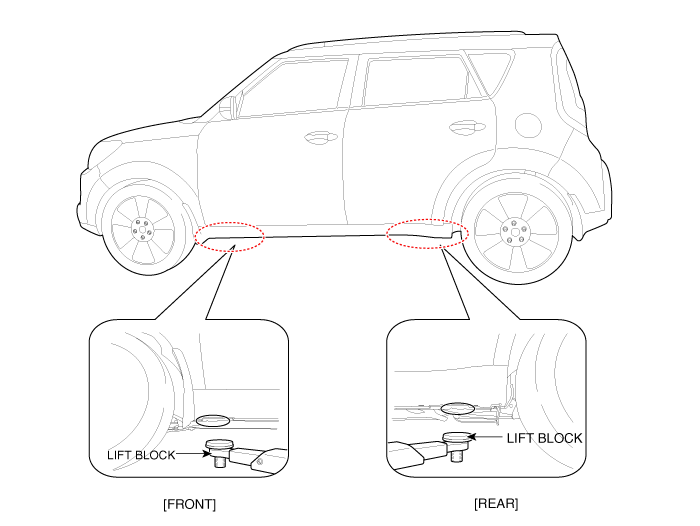
Improper jack placement risks severe damage to your Kia Soul’s unibody structure. The manufacturer-designated jack point for front tires is located in the reinforced notch along the rocker panel, approximately 12 inches behind the front wheel. For rear tires, find the matching notch about 12 inches in front of the rear wheel. These small triangular cutouts in the plastic underbody panel mark the only safe lifting points.
Place the jack base on firm, level ground—use a wooden board if on soft soil or gravel. Center the jack saddle precisely in the notch, ensuring full contact before raising. Pump the jack handle slowly while watching for any shifting or instability. Lift only until the flat tire clears the ground by about two inches—excessive height increases instability risks. Never place any body parts under the vehicle during this process.
Remove Flat Tire and Mount Spare
With lug nuts fully removed, grasp the flat tire with both hands at the 3 and 9 o’clock positions and pull it straight toward you. The wheel may stick slightly from rust or road debris—tapping the tire’s inner edge with a rubber mallet can break it loose if needed. Set the flat tire on its side nearby for safe storage later.
Lift the spare tire (using your legs, not your back) and align it with the wheel studs, pushing firmly until it seats completely against the hub. Hand-thread all five lug nuts in a star pattern to ensure even alignment. If the spare doesn’t seat flush, rotate it slightly until the valve stem aligns properly with the wheel opening. Don’t fully tighten yet—just enough to hold the spare securely while lowering the vehicle.
Torque Lug Nuts to Proper Specification

Lower the vehicle completely before final tightening—this critical step ensures proper torque application. Slowly release the jack until the spare tire bears full vehicle weight, then remove the jack completely. Using a torque wrench (not just the lug wrench), tighten lug nuts to Kia’s specification of 76-83 foot-pounds in a star pattern.
Proper Torquing Technique
- Set torque wrench to 80 ft-lbs
- Tighten each nut in star pattern to initial setting
- Make second pass to final torque specification
- Double-check each nut after completing the pattern
Under-torqued lug nuts can loosen during driving, while over-torquing can strip threads or warp brake rotors. If you don’t have a torque wrench, tighten firmly with the lug wrench until resistance increases significantly, then give each nut an additional quarter-turn.
Check Spare Tire Condition Before Driving
Your Kia Soul’s temporary spare tire has critical limitations you must understand before driving. These “donut” spares are designed only for emergency use at speeds under 50 mph and distances under 50 miles. Check the spare’s inflation pressure immediately—most require 60 PSI as indicated on the tire sidewall. Underinflated spares can overheat and fail catastrophically.
Take a short test drive at low speed to verify everything feels secure. Listen for unusual vibrations or noises from the wheel area, which could indicate improper installation. Remember that handling and braking distances will be affected—allow extra space between vehicles. Drive directly to a tire shop rather than continuing your original journey, as prolonged use of a temporary spare can damage your vehicle’s differential.
Store Equipment and Plan Next Steps
After completing the tire change, properly stow all equipment to prepare for your trip to the tire shop. Place the flat tire in the cargo area (securing it with straps if necessary), clean any dirt from tools, and return everything to their designated storage locations. Double-check that your spare tire pressure remains at 60 PSI before driving.
Contact a tire shop immediately to schedule repair or replacement of your flat tire. Most punctures in the tread area can be professionally repaired for $15-$30, but sidewall damage requires full replacement. While driving on your spare, avoid sudden maneuvers, hard braking, and highway speeds. Once at the shop, request a full tire inspection and rotation to prevent future flats.
Prevent Future Tire Emergencies
Regular tire maintenance prevents most roadside emergencies. Check all tire pressures monthly (including the spare) using a quality gauge, inflating to the specification on your driver’s side door jamb—not the maximum PSI on the tire sidewall. Inspect tires for embedded objects, uneven wear, and sidewall damage during each fuel fill-up.
Monthly Tire Check Routine
- Measure tread depth with a penny (if Lincoln’s head is fully visible, replace tire)
- Rotate tires every 5,000-7,000 miles to promote even wear
- Check for wheel imbalance signs (steering wheel vibration at highway speeds)
- Verify TPMS (Tire Pressure Monitoring System) is functioning properly
Consider keeping a portable air compressor and tire sealant in your vehicle for minor punctures, but remember these are temporary solutions only. The best prevention is regular visual inspection—most flats develop from small punctures that could be repaired if caught early.
Changing a tire on your Kia Soul becomes simple when you know the proper sequence and safety considerations. By following these steps—parking safely, loosening lug nuts before jacking, using correct jack points, and properly torquing nuts—you transform a stressful situation into a manageable task. Remember that your temporary spare has strict limitations, so drive directly to a tire shop after completing the change. Most importantly, take five minutes now to locate your emergency equipment and verify your spare’s condition—this simple preparation turns potential roadside panic into a confident, controlled response when you need it most. With this knowledge, you’ll handle tire emergencies safely and efficiently, keeping yourself and your Kia Soul moving forward.