That small yellow exclamation mark inside a tire symbol on your dashboard appears without warning, but have you ever wondered exactly how do tire pressure sensors work to detect the problem? Modern tire pressure monitoring systems (TPMS) operate as silent guardians beneath your vehicle, constantly monitoring air pressure in each tire without any input from you. These sophisticated systems have become mandatory safety equipment on virtually all new vehicles since 2007, yet most drivers remain unaware of the engineering marvel protecting them on every journey. Understanding how do tire pressure sensors work empowers you to respond appropriately to warnings, maintain your vehicle more effectively, and appreciate the technology preventing potentially dangerous tire failures.
Tire pressure monitoring systems exist in two fundamentally different forms: direct systems that physically measure pressure inside each tire, and indirect systems that calculate pressure changes through existing vehicle sensors. Both approaches achieve the same critical goal of alerting drivers to dangerous under-inflation before it leads to accidents, though they accomplish this through entirely different methodologies. The mandatory implementation of TPMS across most global markets resulted from the Firestone recall in the late 1990s, which prompted the U.S. Congress to pass the TREAD Act requiring warning systems when tire pressure reaches 25% or more below manufacturer specifications.
Direct TPMS Sensors: Inside Each Tire Valve Stem
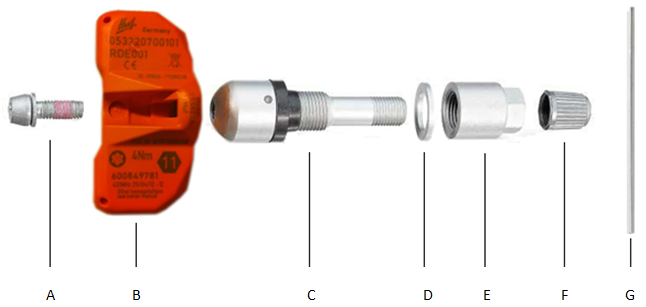
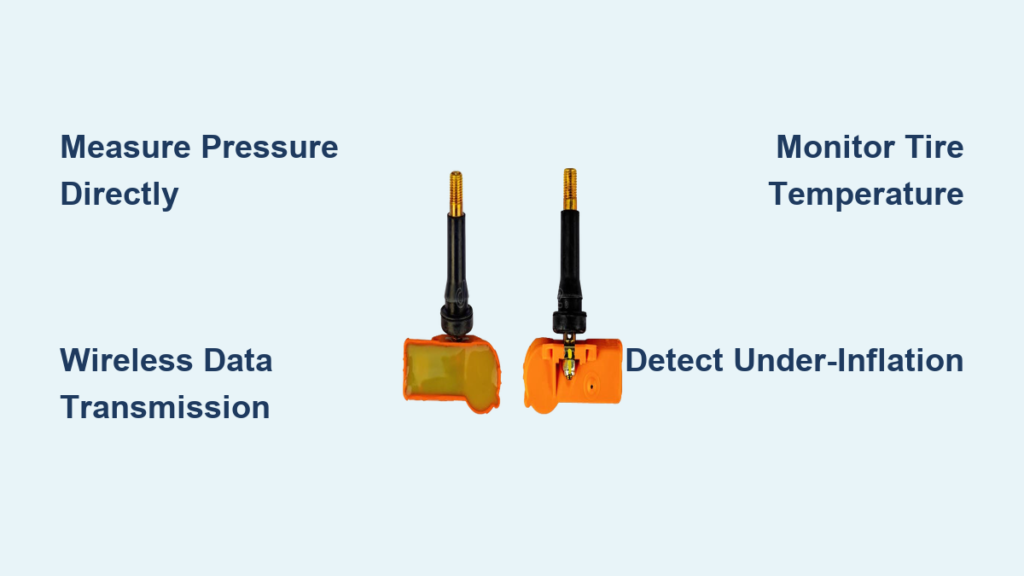
Direct tire pressure monitoring systems take a straightforward approach by placing actual pressure sensors inside each tire. In most implementations, the sensor mounts on the inside of the valve stem, though some aftermarket solutions attach externally to the wheel rim. Each sensor contains a battery-powered pressure transducer that measures the actual air pressure inside the tire and transmits this information wirelessly to your vehicle’s central control unit.
How Direct Sensors Measure Pressure and Transmit Data
A complete direct TPMS sensor module integrates multiple functions within a compact housing. Beyond pressure measurement, some advanced units also monitor tire temperature, providing additional data that helps detect problems before they result in tire damage. The wireless communication typically operates on radio frequencies, with each sensor broadcasting a unique identifier code along with pressure and temperature data so your vehicle can distinguish signals from each wheel position.
Battery Life Challenges for Wheel-Mounted Sensors
Battery life represents the primary limitation of direct TPMS systems. Most original equipment sensors contain non-replaceable batteries mounted inside the wheel, meaning sensor replacement requires tire removal when batteries eventually deplete. Manufacturers design sensors to last five to ten years under normal conditions, but extreme temperatures and frequent driving affect longevity. Some systems conserve power by transmitting only when the vehicle is in motion, while others employ two-way communication protocols allowing the central unit to wake sleeping sensors when pressure readings are needed.
Indirect TPMS Systems: ABS Sensors That Calculate Pressure
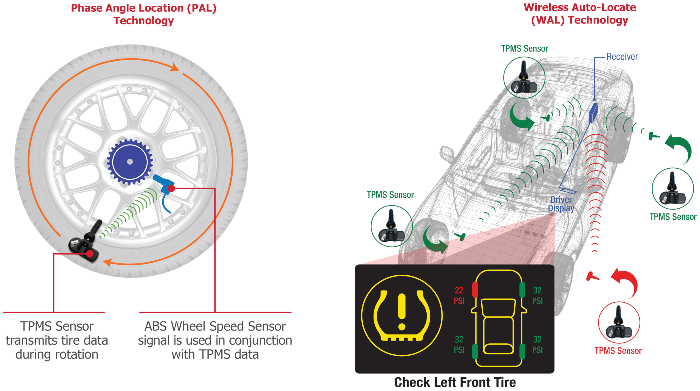
Indirect tire pressure monitoring systems estimate tire pressure without any physical sensors inside the wheels. Instead, these systems analyze data from components your vehicle already possesses for other purposes, primarily the wheel speed sensors integrated into anti-lock braking and electronic stability control systems. The underlying principle relies on a simple physical reality: under-inflated tires possess a slightly smaller diameter than properly inflated tires, causing them to rotate faster to cover the same distance.
Why Under-Inflated Tires Rotate Faster Than Properly Inflated Ones
The system continuously compares the rotational speed of each tire against the others and against stored reference values. When a tire loses pressure and its effective diameter decreases, the wheel speed sensor detects the increased angular velocity, triggering the system to flag potential under-inflation. First-generation indirect systems could only detect pressure loss in one tire at a time, as they relied solely on comparative rotation speed between wheels.
How Second-Generation Indirect Systems Detect Multiple Tire Issues Simultaneously
Second-generation indirect systems have evolved significantly, now employing spectrum analysis techniques that can detect simultaneous under-inflation across multiple tires by analyzing frequency characteristics within wheel rotation signals. These advanced systems don’t require additional hardware components beyond existing vehicle sensors, making them more cost-effective for manufacturers while still meeting regulatory requirements. Manufacturers market these systems under various names including Ford’s Deflation Detection System and Honda’s Deflation Warning System.
Critical Differences Between Direct and Indirect TPMS Technologies
Both indirect and direct TPMS approaches satisfy legal requirements for under-inflation detection, yet they differ substantially in their practical characteristics, maintenance demands, and accuracy profiles. Understanding these differences helps you evaluate your vehicle’s system and make informed decisions about maintenance.
When Direct TPMS Shows Exact PSI Readings on Your Dashboard
Direct systems offer superior accuracy by measuring actual pressure rather than estimating it from rotational behavior. When you check your dashboard display in a vehicle equipped with direct TPMS, you typically see actual pressure readings in psi or bar for each tire, enabling precise monitoring of gradual pressure loss over time. Direct systems also detect problems faster since they measure pressure directly rather than waiting for rotational differences to accumulate beyond threshold values.
Why Indirect Systems Need Reset After Tire Service
Indirect systems cannot display absolute pressure values; they operate on relative principles that require driver participation to function effectively. When you adjust tire pressures to specification, you must reset the system through a dashboard button or menu option, initiating a learning phase lasting typically 20 to 60 minutes of driving. During this period, the system learns and stores reference parameters while accounting for tire type variations, road surface differences, and individual driving patterns.
Preventing Costly TPMS Repairs During Tire Service

Owners of TPMS-equipped vehicles encounter several recurring maintenance challenges that can affect system performance or lead to unnecessary replacement costs. Understanding these issues helps you avoid common pitfalls and address problems correctly when they arise.
How Valve Stem Corrosion Damages Sensors During Routine Maintenance
Valve stem corrosion affects first-generation TPMS sensors integrated with valve stems, where metallic valve caps can become seized to their stems due to galvanic corrosion. When owners attempt to remove these caps, they sometimes break the stem entirely, destroying the embedded sensor and necessitating replacement. Using the correct replacement parts and applying appropriate anti-seize compounds during tire service prevents most valve stem problems.
Why Using the Wrong Valve Core Causes TPMS Sensor Failures
Similar problems occur when tire technicians replace original nickel-coated valve cores with aftermarket brass cores that promote corrosion. These incompatible replacements can cause sensor failures that require complete sensor replacement rather than simple maintenance. Always ensure your tire service provider understands TPMS requirements and uses manufacturer-specified components to avoid unnecessary sensor damage.
Real Safety Benefits When TPMS Detects Under-Inflation Early
The fundamental purpose of tire pressure monitoring extends far beyond dashboard convenience; these systems protect lives by preventing accidents caused by under-inflated tires. The French road safety organization estimates that 9% of all fatal road accidents are attributable to tire under-inflation, while German safety organization DEKRA links 41% of injury accidents to tire problems.
How Proper Tire Pressure Reduces Braking Distance in Emergencies
Under-inflated tires compromise vehicle dynamics in multiple dangerous ways. The reduced contact patch caused by flattened sidewalls lengthens braking distances and reduces lateral stability during cornering. Extreme under-inflation generates excessive heat through internal friction, potentially causing sudden tire destruction at highway speeds. A vehicle with tires under-inflated by 40 kPa experiences approximately 2% greater fuel consumption and 25% decreased tire service life compared to properly inflated tires.
Why Monthly Tire Checks Remain Essential Even With TPMS
Tires naturally lose air through rubber permeability at rates of 20 to 60 kPa annually even without punctures, making TPMS an essential early warning system. However, you should still check tire pressures monthly with a gauge, as TPMS typically only alerts when pressure drops 25% below specification. Regular visual inspections help you identify slow leaks or damage before they trigger the warning light.
Aftermarket TPMS Options for Older Vehicles Without Factory Sensors
Vehicles manufactured before TPMS mandates or equipped with less capable systems can benefit from aftermarket solutions that retrofit this technology to virtually any application. The aftermarket offers options ranging from simple valve-cap sensors requiring smartphone integration to comprehensive fleet management systems with real-time monitoring.
Valve Cap-Based Sensors for Budget-Friendly Monitoring
Valve cap-based TPMS systems represent the most affordable entry point, screwing onto existing valve stems like ordinary caps while containing pressure sensors and short-range transmitters. These systems pair with dedicated display units or smartphone applications, alerting you to pressure changes without requiring professional installation. While they monitor pressure effectively, external mounting exposes sensors to potential damage from road debris.
Fleet Management Systems with GPS-Integrated Tire Pressure Tracking
Commercial fleet operations represent a substantial market for advanced aftermarket TPMS solutions. These systems integrate tire pressure and temperature monitoring with GPS tracking and fleet management software, enabling dispatchers to monitor vehicle tire health remotely and schedule preventive maintenance before failures occur. The ability to track tire pressure across an entire fleet simultaneously helps transportation companies reduce roadside emergencies and improve fuel economy.
Understanding how do tire pressure sensors work reveals the sophisticated technology protecting your vehicle’s most critical contact points with the road. Whether your vehicle employs indirect calculations analyzing rotational behavior or direct sensors measuring actual pressure inside each tire, these systems provide early warning of dangerous inflation problems that might otherwise go unnoticed until causing accidents or tire failures. Regular visual tire checks combined with prompt attention to TPMS warnings together provide comprehensive protection, ensuring your tires maintain optimal contact patch, braking performance, and fuel efficiency throughout their service life. By understanding these systems, you become better equipped to maintain your vehicle safely and avoid unnecessary repair costs related to TPMS components.