That small dashboard warning light showing a flat tire with an exclamation point inside represents one of automotive engineering’s most important safety innovations. When your tire pressure monitoring system (TPMS) activates, it’s alerting you to a potentially dangerous situation that could lead to tire failure, reduced fuel efficiency, or compromised handling. Understanding how these systems function helps you respond appropriately to warnings and maintain your vehicle’s safety systems effectively. Since 2007, TPMS has been mandatory on all new passenger vehicles sold in the United States under Federal Motor Vehicle Safety Standard 138, reflecting its critical role in road safety.
The technology behind tire pressure monitoring falls into two distinct categories—direct and indirect systems—each employing different methods to achieve the same life-saving goal. Knowing how both systems operate will help you troubleshoot warning lights and maintain your vehicle more effectively. As you drive, these sophisticated systems continuously monitor your tires’ condition, providing early warnings that could prevent accidents and extend your tires’ lifespan.
Direct TPMS: Inside-the-Tire Sensors Explained
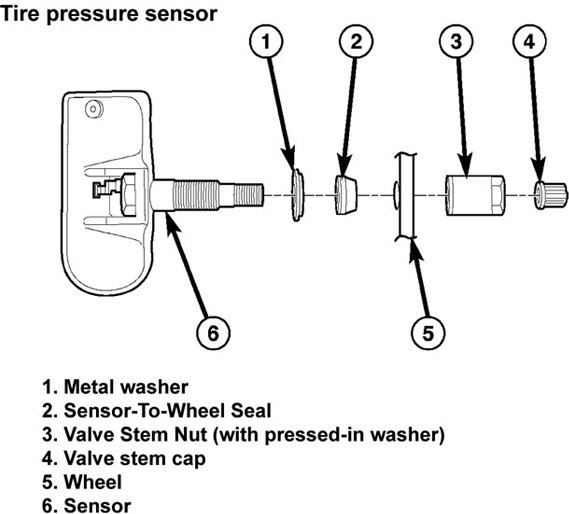
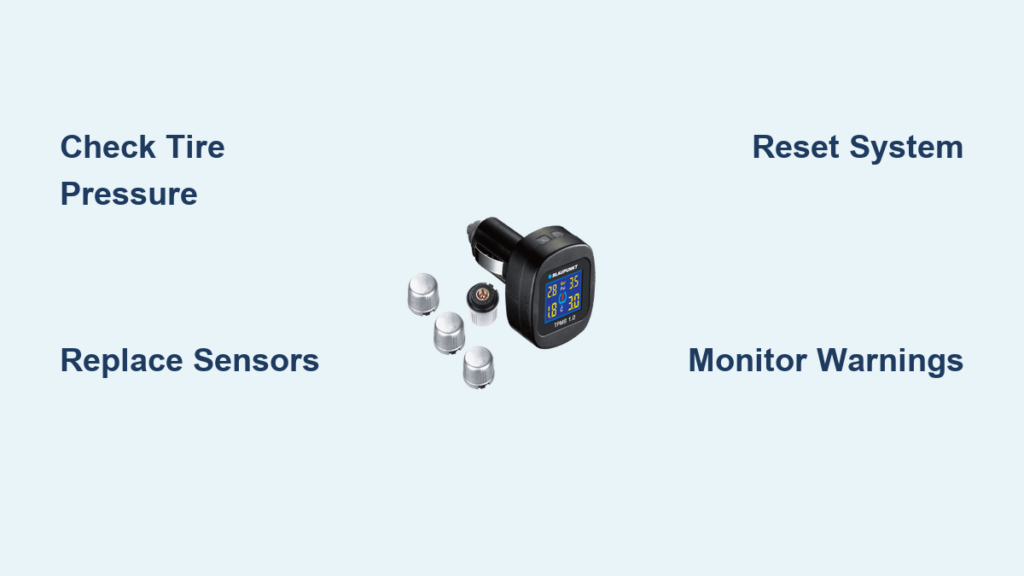
Direct tire pressure monitoring systems employ physical sensors mounted inside each tire to provide precise pressure readings. These miniature electronic devices, typically attached to the valve stem or bonded to the inner wheel, contain pressure transducers that constantly measure air pressure within their respective tires. Each sensor wakes up when vehicle motion is detected, transmitting real-time pressure data via radio frequency to your vehicle’s central receiver.
The sophisticated engineering inside these small devices enables reliable operation under extreme conditions. A direct TPMS sensor combines a pressure-sensitive element with a micro-controller, battery, and radio transmitter that communicates at 315 MHz or 433 MHz frequencies depending on your region. The transmitted data packets include not just current pressure readings but also sensor identification codes, temperature measurements, and battery status information—all processed by your vehicle’s computer to determine when to trigger dashboard warnings.
Why Direct TPMS Sensors Need Motion Activation
Direct TPMS sensors incorporate motion detection to conserve battery life during vehicle storage. The acceleration sensors inside each unit detect when the vehicle begins moving, triggering the device to start transmitting pressure data. This intelligent power management extends sensor battery life significantly compared to constant transmission. Additionally, these sensors include temperature compensation algorithms because air pressure changes with temperature according to the ideal gas law—without this feature, a tire properly inflated in cool morning temperatures might falsely trigger a low-pressure warning after highway driving when the air inside has heated and expanded.
Dashboard Display Interpretation for Direct Systems
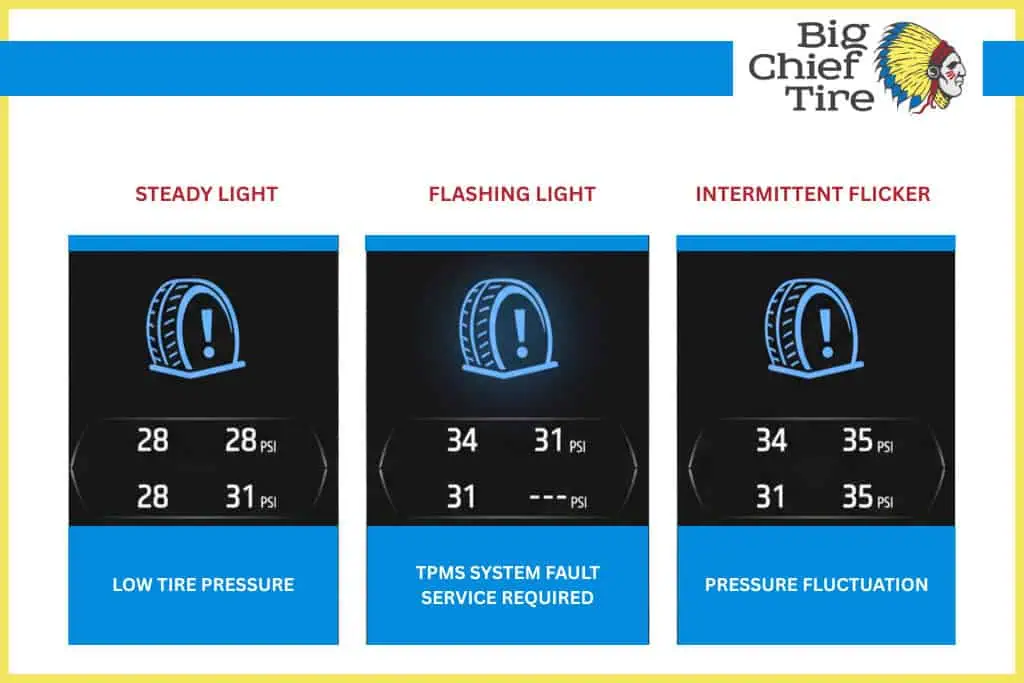
Direct TPMS systems provide the most detailed information to drivers through their dashboard displays. When functioning properly, these systems typically show individual pressure readings for all four tires (and sometimes the spare), allowing you to identify exactly which tire needs attention. The warning light illuminates steadily when one or more tires fall 25% below the manufacturer’s recommended cold inflation pressure—the threshold mandated by U.S. safety standards. Some manufacturers implement more sensitive thresholds, triggering warnings at 20% or even 15% below recommended pressure for earlier driver notification.
Indirect TPMS: Wheel Speed Monitoring Technology
Indirect tire pressure monitoring takes a fundamentally different approach by leveraging your vehicle’s existing anti-lock braking system (ABS) wheel speed sensors. Instead of measuring pressure directly, these systems detect underinflation through changes in wheel rotation speed. The principle is simple: an underinflated tire has a slightly smaller effective rolling diameter than a properly inflated tire, causing it to rotate faster to cover the same distance as the other wheels.
The vehicle’s electronic control module constantly compares rotational data from all four wheels. When one tire loses pressure and rotates faster than the others by a predetermined threshold for a sustained period, the system triggers the low tire pressure warning. Modern indirect systems incorporate sophisticated algorithms that account for normal variations in wheel speed during cornering (where inside and outside wheels naturally rotate at different speeds) and learn individual tire characteristics over time to improve accuracy.
Limitations of Indirect Monitoring Systems
Indirect TPMS presents specific challenges drivers should understand. Since this system only detects relative differences in wheel speed, it cannot identify which specific tire is low—you receive only a general warning that one of your tires needs attention. Additionally, the system requires recalibration (“relearn”) after tire rotations, inflation adjustments, or replacements, as it must reestablish baseline rotation patterns. Installing mismatched tires with different sizes, tread patterns, or wear levels can also cause false warnings, as these differences affect rotational speed independently of pressure.
Troubleshooting Common TPMS Warning Scenarios
Temperature fluctuations alone can trigger TPMS warnings without any actual air loss. Air pressure decreases approximately 1-2 PSI for every 10-degree Fahrenheit drop in ambient temperature. A tire properly inflated during warm afternoon temperatures might show a low-pressure warning the following cold morning. In these cases, simply inflating the tire to the recommended pressure (checked when cold) resolves the issue—no sensor replacement is needed.
Sensor Damage During Tire Service
TPMS sensors are vulnerable to damage during tire mounting and service procedures. The sensors mounted inside tires can be crushed or damaged when technicians use improper tools or techniques. Many professional tire shops now recommend replacing TPMS sensors when installing new tires, especially if the existing sensors are more than five years old. Corrosion around the valve stem can also cause slow leaks or intermittent sensor communication failures that mimic actual pressure problems.
Decoding Flashing vs. Steady Warning Lights

Understanding your TPMS warning pattern helps diagnose problems quickly. A steadily illuminated warning light indicates one or more tires are underinflated. If the light flashes or blinks for 60-90 seconds before staying continuously lit, this typically signals a system malfunction rather than an actual pressure problem—possibly indicating a failed sensor, receiver issues, or initialization problems requiring diagnostic attention. Professional diagnostic equipment can communicate directly with the TPMS control module to identify specific fault codes.
Maintaining Optimal TPMS Performance Year-Round
Regular manual tire pressure checks remain essential even with TPMS monitoring. These systems only warn you after pressure has dropped significantly—not when pressure is gradually decreasing toward the warning threshold. Check tire pressure monthly using a reliable gauge when tires are cold (before driving), inflating to the specifications on your door jamb sticker rather than the numbers molded on the tire sidewall.
Winter-Specific TPMS Considerations
Cold weather presents unique challenges for tire pressure monitoring systems. The natural pressure decrease during cold snaps often triggers warnings even with no actual leaks. Salt, slush, and road chemicals accelerate corrosion of valve stem components, potentially causing slow leaks. Sensor batteries that perform reliably in moderate temperatures may experience reduced output in extreme cold, occasionally causing intermittent communication failures. Keeping tires properly inflated and ensuring valve stems are protected from corrosion minimizes winter-related TPMS issues.
Benefits Beyond the Warning Light
Understanding how your TPMS works helps you appreciate its broader benefits. Properly inflated tires improve fuel efficiency by reducing rolling resistance—underinflated tires can decrease fuel economy by up to 3% according to some estimates. Even pressure across all four tires ensures even tread wear, extending tire life and providing more consistent handling. The safety implications extend beyond preventing flat tires: underinflated tires generate excessive heat during operation, increasing the risk of tread separation or blowout, while compromising braking distance and handling stability.
Regular attention to your TPMS—responding promptly to warnings, maintaining proper inflation pressures, and addressing sensor issues when they arise—ensures this critical safety system continues protecting you throughout your vehicle’s service life. The small dashboard icon represents sophisticated technology working constantly to keep you safe, and knowing how it functions makes you a more informed and proactive vehicle owner. By understanding both direct and indirect monitoring technologies, you can maintain optimal performance from this often-overlooked safety system and drive with greater confidence.