That small warning light on your Ford Focus dashboard isn’t just another annoyance—it’s a critical safety alert. When the tire pressure monitoring system (TPMS) light illuminates (shaped like a U with an exclamation point), your vehicle is telling you something’s wrong with your tire pressure sensors. Ignoring this warning risks dangerous driving conditions, reduced fuel efficiency, and potential tire damage. The good news? Most Ford Focus tire pressure sensor faults can be diagnosed and fixed without breaking the bank. This guide shows you exactly how to identify the cause and implement the right solution.
Why Your Ford Focus TPMS Light Won’t Turn Off
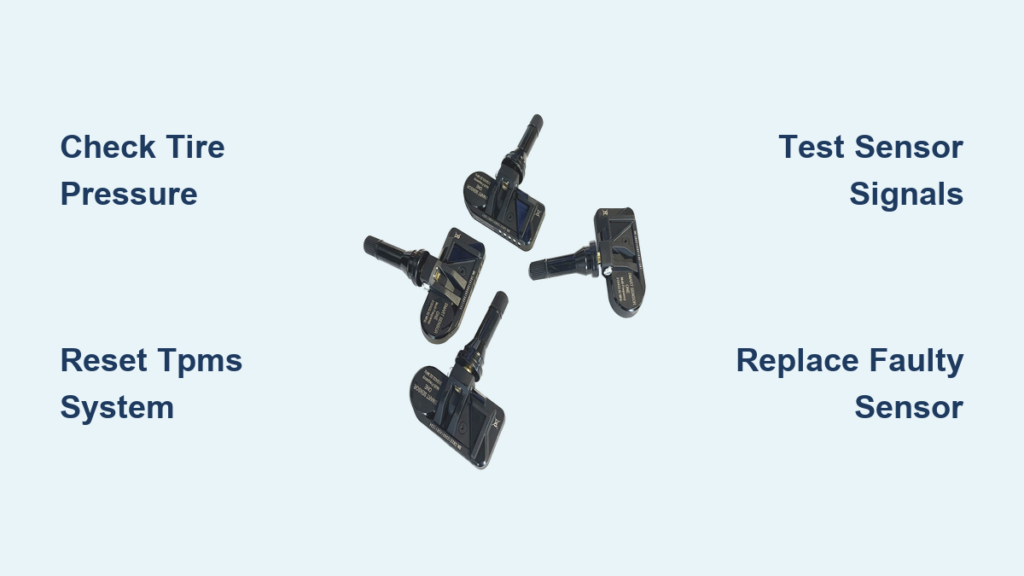
Your Ford Focus uses a direct TPMS system with individual sensors inside each wheel that transmit real-time pressure data to your vehicle’s computer. These sensors contain pressure transducers, batteries, and radio transmitters that activate when you start driving. When pressure drops below specifications (typically 25-32 PSI depending on your model), the system triggers that familiar warning light.
Newer Focus models (2015 and later) use direct TPMS with dedicated sensors, while older models might use indirect systems that calculate pressure based on wheel speed variations. The direct system is far more accurate but also more prone to sensor-specific faults. Understanding which system your vehicle uses determines your diagnostic approach—direct systems require sensor checks, while indirect systems often need reprogramming after tire rotations.
Decoding Your Dashboard Warning Patterns
Your Ford Focus communicates different TPMS problems through specific warning patterns. A solid TPMS light that stays illuminated means one or more tires is underinflated by 25% or more. This is often resolved by simply inflating tires to the pressure specifications listed on your driver’s door jamb sticker.
If the TPMS light flashes for 60-90 seconds after startup before staying solid, your vehicle has detected a sensor communication problem rather than a pressure issue. This flashing pattern indicates you need to diagnose sensor functionality, not just add air.
When your dashboard displays “TPMS Malfunction” or “Tire Pressure Monitor Fault” messages, the issue likely involves electrical problems with sensors, wiring, or the central receiver module. These warnings require more advanced diagnostics than simple inflation.
Common Causes of Ford Focus TPMS Faults

Temperature Changes Triggering False Alarms
Temperature fluctuations directly impact tire pressure—every 10°F temperature drop reduces pressure by approximately 1 PSI. If you park outside overnight during cold weather, morning drives often trigger the TPMS light even with properly inflated tires. This isn’t a sensor fault; it’s physics in action. Drive for 10-15 minutes to warm the tires, then recheck pressure when tires reach operating temperature.
Slow Leaks vs. Sensor Failures
Many TPMS warnings stem from actual tire problems rather than faulty sensors. Inspect each tire for embedded nails, screws, or punctures in the tread. Pay special attention to the valve stem area where leaks commonly occur. Remove valve caps and listen for hissing sounds or apply soapy water to detect slow leaks. If pressure drops more than 3 PSI within a week, you have a leak requiring repair—not a sensor fault.
Sensor Battery Depletion (The Silent Killer)
TPMS sensors contain non-replaceable lithium batteries designed to last 5-10 years. As these batteries weaken, sensors transmit weaker signals or stop communicating entirely. If your Ford Focus is 7+ years old and the TPMS light behaves erratically (flashing intermittently), dead sensor batteries are likely the culprit. Battery failure is the most common reason for actual sensor replacement—not pressure issues.
Damage During Tire Service
Tire rotations, replacements, or balancing can damage sensors if technicians aren’t careful. The sensors mount on the wheel rim opposite the valve stem and can crack during tire mounting/dismounting. If your TPMS warning appeared within a week of tire service, request the shop inspect for sensor damage—they may fix it at no charge if they caused the problem.
Quick Diagnostic Steps You Can Do Today
Verify Actual Tire Pressure
Don’t trust the TPMS light alone—always verify with a quality tire gauge. Check pressure when tires are cold (before driving), comparing readings to specifications on your driver’s door jamb sticker. Inflate all tires to the recommended PSI, then drive for 10-15 minutes above 15 mph. If the light remains on after proper inflation, you have a genuine sensor fault requiring further diagnostics.
Perform a TPMS System Reset
Many Ford Focus models allow manual TPMS reset through the information display. With the vehicle running but parked, navigate to Settings > TPMS Reset using steering wheel controls. Select “Reset” and confirm. Some models require driving above 15 mph for several minutes to complete the reset. If your vehicle lacks this menu option, consult your owner’s manual for model-specific reset procedures.
Check Sensor Signals with an Affordable Tool
For $30-100, you can purchase a TPMS diagnostic tool to test each sensor individually. With the vehicle on but engine running, hold the tool against each tire sidewall near the wheel rim. A functioning sensor displays its ID number, current pressure reading, and battery status. If one tire shows no reading or “low battery,” you’ve identified your faulty sensor. Many auto parts stores offer free sensor checks if you prefer not to buy a tool.
Repair vs. Replace: Making the Right Call

When Simple Fixes Work
Not every TPMS fault requires sensor replacement. If the light comes on only during cold weather but disappears after driving, it’s likely temperature-related—no repair needed. Similarly, if pressure checks reveal underinflated tires that hold air after inflation, the issue was maintenance-related, not a sensor fault.
When Replacement Becomes Necessary
Replace sensors when diagnostics confirm dead batteries, physical damage, or complete signal failure. Corroded valve stems can sometimes be cleaned or replaced separately, but cracked sensor housings or failed electronics require full sensor replacement. If multiple sensors fail simultaneously or you receive persistent “TPMS Malfunction” messages despite proper tire pressure, the problem likely involves the receiver module rather than individual sensors.
Cost-Effective Sensor Replacement Strategies

OEM vs. Aftermarket Sensors
OEM (Original Equipment Manufacturer) sensors cost $50-100 each but guarantee perfect compatibility and longer lifespan. Aftermarket equivalents ($20-50 each) work well for most Focus models but vary in quality—verify compatibility with your specific year and trim before purchasing. Universal programmable sensors offer flexibility but require additional programming tools or dealer visits.
Professional Installation vs. DIY
Replacing sensors requires tire removal, making professional installation advisable unless you have tire-changing equipment. Dealerships charge $75-150 per sensor including programming, while independent shops typically charge $20-50 per sensor. If your Focus is under warranty, sensor defects may be covered—check your warranty documentation before paying for repairs.
Preventing Future TPMS Faults
Check tire pressure monthly using your own gauge—don’t rely solely on the TPMS light. Always replace missing valve stem caps, which protect sensors from moisture and debris. When getting tires serviced, remind technicians about your TPMS sensors to prevent accidental damage. In winter climates, periodically inspect valve stems for corrosion from road salt and clean as needed.
Cost Breakdown: What to Expect
Basic TPMS diagnostics are often free at auto parts stores. Sensor replacement costs $25-100 per sensor depending on quality, with professional installation adding $20-50 per sensor. A complete four-sensor replacement ranges from $150-400 with aftermarket parts or $400-600 with OEM sensors. Receiver module replacement costs significantly more ($300-700 total) but is rare compared to individual sensor failures.
Final Resolution Steps
Don’t ignore that TPMS warning light—it exists for your safety. Start with basic pressure checks and system reset before assuming sensor failure. When replacement becomes necessary, compare OEM and aftermarket options based on your vehicle’s age and how long you plan to keep it. For Focus models under warranty, always check coverage before paying for repairs. If diagnostics exceed your comfort level, consult a professional—proper TPMS function is too critical to risk guessing wrong. Regular tire maintenance prevents most sensor faults, keeping your Ford Focus operating safely while avoiding unnecessary warning lights and repair costs.