If you’re considering Dextero tires for your vehicle, you should know these budget-friendly options come with significant drawbacks that many owners have experienced firsthand. While Dextero tires offer an attractive low price point—often available through retailers like Walmart—they’ve accumulated widespread complaints about premature tread wear, dangerous traction deficiencies, and inconsistent manufacturing quality. Understanding these Dextero tire problems before purchasing can save you from unexpected replacements, safety risks, and frustration down the road. This guide examines the most commonly reported issues, helping you determine whether these tires align with your driving needs and safety priorities.
The problems documented here stem from verified consumer reports, professional assessments, and technical analysis of Dextero tire performance across multiple models and driving conditions. While some drivers report satisfactory experiences, the consistent pattern of complaints across various sources suggests fundamental issues prospective buyers should seriously consider. By the end of this article, you’ll have a clear understanding of the potential dangers and drawbacks associated with Dextero tires, along with guidance on whether they might work for your specific situation.
Why Your Dextero Tires Wear Out Before 25,000 Miles
Dextero tire problems begin with their most notorious issue: premature tread wear that forces owners to replace tires far sooner than expected. While quality all-season tires typically deliver 40,000-60,000 miles of service, Dextero owners frequently report needing replacements after just 15,000-25,000 miles. This accelerated degradation means the initial cost savings quickly evaporate when you factor in earlier replacement expenses.
Identifying Early-Stage Uneven Wear Patterns
Beyond simple premature wear, Dextero tires commonly develop irregular wear patterns within the first 10,000 miles that accelerate deterioration. Owners report experiencing:
- Cupping: Bowl-shaped depressions across the tread surface
- Feathering: Tread edges worn smooth on one side but sharp on the other
- Scalloping: Wavy patterns around the tire circumference
These irregular patterns create additional problems beyond reduced tread life, including vibration at highway speeds and dangerous uneven contact with the road surface. If you notice these patterns despite following recommended rotation schedules every 5,000-7,500 miles, the tires themselves may be the root cause rather than alignment issues.
How Dextero’s Rubber Compound Causes Rapid Tread Loss
The accelerated wear stems directly from Dextero’s tread compound formulation, which prioritizes cost savings over durability. Unlike premium tires that balance grip with longevity, Dextero appears to use a softer compound that provides initial traction but wears down rapidly. For high-mileage drivers, this means Dextero tires often cost more per mile despite their lower purchase price. If you drive more than 15,000 miles annually, you’ll likely replace Dextero tires twice before premium alternatives need changing.
Dangerous Traction Failures in Wet and Winter Conditions
Dextero tire problems become safety hazards when traction fails during critical driving situations. These budget tires demonstrate significant limitations in wet and cold conditions that can compromise your ability to control your vehicle when it matters most.
Hydroplaning Risks at Highway Speeds on Wet Roads
Multiple consumer reports document dangerous hydroplaning incidents with Dextero tires at speeds as low as 45-55 mph on moderately wet roads—speeds where quality tires should maintain secure contact. The tread design fails to evacuate water effectively despite its symmetric pattern, leading to:
- Extended braking distances (up to 30% longer than premium alternatives)
- Reduced cornering stability during rain
- Complete loss of steering control on wet surfaces
If you commute in regions with frequent rainfall, these Dextero tire problems represent serious safety concerns that the low purchase price cannot justify. Always reduce your speed significantly below posted limits when driving Dextero tires on wet roads.
Why Dextero Tires Fail as “All-Season” Options in Winter
Despite their all-season marketing, Dextero tires become dangerously inadequate when temperatures drop below 40°F. The tread compound hardens significantly in cold conditions, resulting in dramatically reduced traction on snow and ice. Unlike proper winter tires, Dextero models lack sufficient siping (small slits in tread blocks) that provide critical grip on slippery surfaces.
Critical winter driving limitations:
– Near-zero traction on packed snow
– Extremely long stopping distances on icy roads
– Poor acceleration control from stoplights
Consumers in northern climates consistently report needing separate winter tires for safe cold-weather transportation, completely negating any cost savings from Dextero’s year-round marketing claims.
Unbearable Noise and Vibration Cutting Short Your Road Trips
Dextero tire problems significantly impact your daily driving comfort through noise, harshness, and vibration issues that develop within the first few thousand miles of use—ruining what should be pleasant commutes and road trips.
Highway Noise That Makes Long Drives Exhausting
Elevated noise levels rank among the most consistently reported Dextero tire problems. Owners describe an intrusive “roaring” or “humming” sound that increases with speed and becomes particularly noticeable above 55 mph. This noise:
- Develops early in the tire’s life
- Worsens as the tires wear
- Becomes fatiguing during drives exceeding 30-40 minutes
If you frequently take road trips or commute on highways, this constant noise transforms comfortable journeys into exhausting experiences that leave you drained after relatively short drives.
Persistent Vibration That Won’t Go Away After Balancing
Many Dextero owners report steering wheel vibration beginning as low as 45 mph that intensifies with speed. The problem often persists even after multiple wheel balancing and alignment services, indicating inherent construction flaws rather than simple maintenance issues. This vibration:
- Creates hand fatigue during extended driving
- Transmits through the seat causing whole-body discomfort
- Worsens as uneven wear patterns develop
If you experience persistent vibration with Dextero tires, have them inspected immediately—this could indicate developing structural problems beyond simple imbalance.
Manufacturing Defects That Make Each Purchase a Gamble

Dextero tire problems extend to inconsistent manufacturing quality that turns each purchase into a game of chance regarding tire performance and longevity.
Unpredictable Performance Between Identical Tires
The range of experiences among Dextero tire owners is startling. Some consumers report satisfactory performance lasting 30,000-40,000 miles, while others experience serious problems within the first 5,000 miles. This inconsistency manifests as:
- Visible defects like uneven tread depth across the same tire
- Sidewall bulges appearing shortly after installation
- Cosmetic imperfections indicating poor quality control
When you purchase Dextero tires, you’re essentially gambling on whether you’ll receive a functional set or problematic ones destined for early failure.
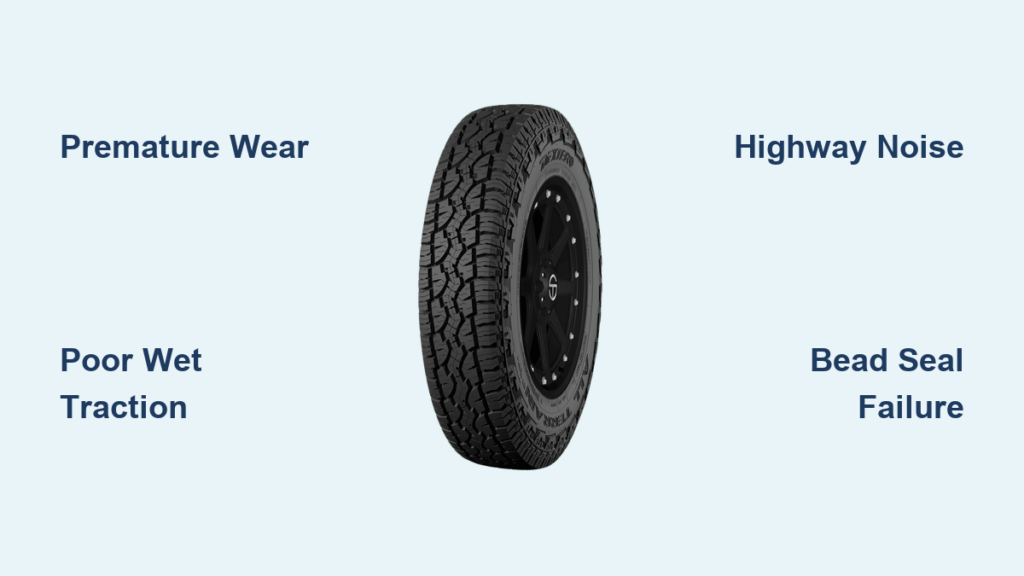
Bead Seal Failures Causing Constant Air Loss
Numerous Dextero tire problems involve bead seal failures where the tire doesn’t create an airtight seal with your wheel rim. This issue causes:
- Slow air leaks requiring frequent reinflation
- Uneven wear patterns from inconsistent pressure
- Potential safety hazards during high-speed driving
If you find yourself constantly adding air to your Dextero tires, this bead seal problem is likely the culprit rather than simple punctures. Have a professional inspect the seal immediately—driving on improperly sealed tires risks sudden deflation.
Who Actually Benefits From Dextero Tires (And Who Should Run)
Despite documented Dextero tire problems, these budget options might work for specific driving scenarios—if you understand and accept their limitations.
Limited Situations Where Dextero Might Make Sense
Dextero tires could serve as a temporary solution for:
– Low-mileage drivers (under 8,000 miles annually) who primarily drive in fair weather
– Secondary vehicle owners whose spare car sees minimal use
– Budget-constrained consumers who prioritize immediate savings over long-term value
If you fall into one of these categories, the low upfront cost might justify the known limitations—provided you understand you’ll likely replace them sooner than expected.
Drivers Who Should Absolutely Avoid Dextero Tires
You should steer clear of Dextero tires if you:
– Live in regions with significant rainfall or winter weather
– Drive more than 12,000 miles annually
– Prioritize safety and consistent performance
– Frequently take highway trips longer than 30 minutes
– Own a vehicle with sensitive handling characteristics
For these drivers, the minimal upfront savings quickly evaporate when factoring in premature replacement costs, reduced safety margins, and compromised driving comfort.
Before purchasing Dextero tires, carefully weigh these documented problems against the attractive low price. For most drivers, the potential for early replacement, dangerous traction limitations, and ruined driving comfort makes the minimal upfront savings a poor economic and practical choice. If you decide to proceed despite these concerns, set aside funds for earlier-than-expected replacement and reduce your speeds significantly in wet conditions. Alternatively, investing slightly more in tires from established manufacturers with better track records will likely serve you better over your vehicle’s lifetime—providing not just better performance, but potentially saving you from dangerous situations when you need reliable traction most. Your safety on the road is worth far more than the initial savings Dextero tires promise.