Choosing the right Bridgestone tire types isn’t just about keeping your vehicle rolling—it’s about ensuring your safety, optimizing performance, and getting the most value from your investment. With Bridgestone offering over a dozen distinct tire categories designed for specific driving conditions, vehicle types, and performance needs, selecting the wrong option could mean compromised safety during rainstorms, reduced fuel efficiency, or premature wear that costs you hundreds in unnecessary replacements. Whether you’re navigating icy winter roads in Minnesota, cruising California highways in a sports car, or taking your truck off-road in Colorado, understanding the precise differences between Bridgestone tire types helps you avoid costly mistakes and match your tires perfectly to your actual driving patterns. This guide cuts through the marketing jargon to give you clear, actionable information about each Bridgestone tire category so you can make a confident, informed decision for your specific needs.
Why Your Climate Determines Which Bridgestone Tires You Need
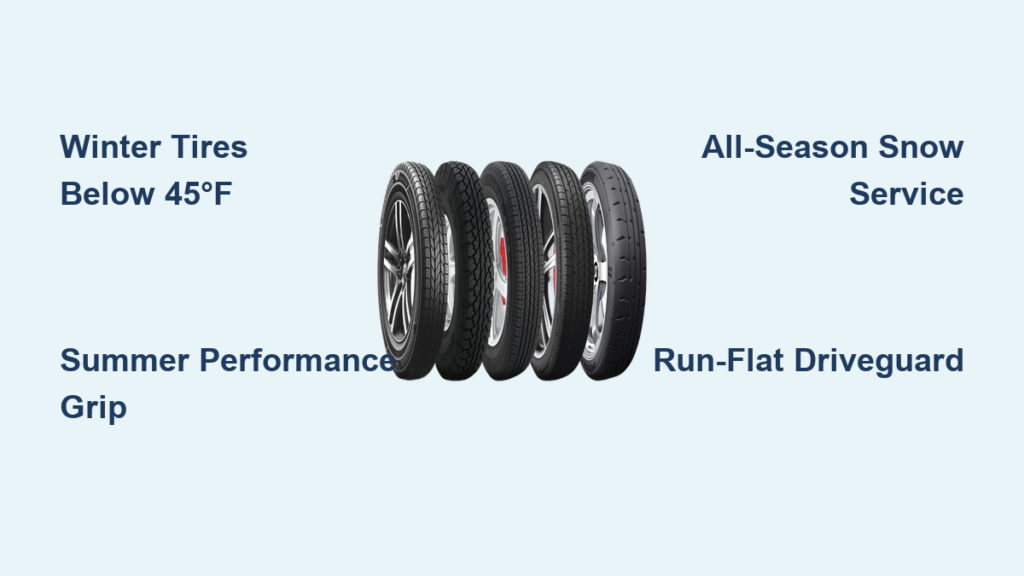
Your geographic location and typical weather conditions should be the primary factor influencing your Bridgestone tire selection, as rubber compounds behave dramatically differently across temperature ranges. Standard all-season Bridgestone tires begin losing traction when temperatures drop below 45°F—meaning drivers in northern states who keep all-season tires year-round are essentially driving on hardened rubber during winter months with significantly reduced grip on cold pavement, let alone snow and ice.
How Winter Tires Outperform All-Season Options Below 45°F
When temperatures consistently fall below freezing, Bridgestone Blizzak winter tires become essential rather than optional. These specialized tires use a unique rubber compound that stays pliable in extreme cold, allowing the tread to conform to road imperfections and maintain maximum contact. The Blizzak’s multi-cell compound technology contains microscopic pores that actively pull water away from ice surfaces, creating actual rubber-to-ice contact rather than hydroplaning on a thin water film like conventional tires.
Critical mistake to avoid: Installing winter tires on only the drive axle creates dangerous handling imbalances. For safety, always mount winter tires in sets of four to maintain balanced traction across all wheels during emergency maneuvers.
Recognizing When All-Season Tires Suffice for Your Region
If you live in areas with mild winters where temperatures rarely dip below freezing and snow accumulation is minimal, Bridgestone’s Turanza or Ecopia all-season tires provide excellent year-round performance without seasonal changes. These tires feature high-silica rubber compounds that maintain flexibility in cooler temperatures while delivering responsive handling in warm conditions. Look for the Three-Peak Mountain Snowflake symbol on the sidewall to verify your all-season tires meet severe snow service requirements for occasional winter driving.
Performance Tires That Match Your Driving Style, Not Just Your Car
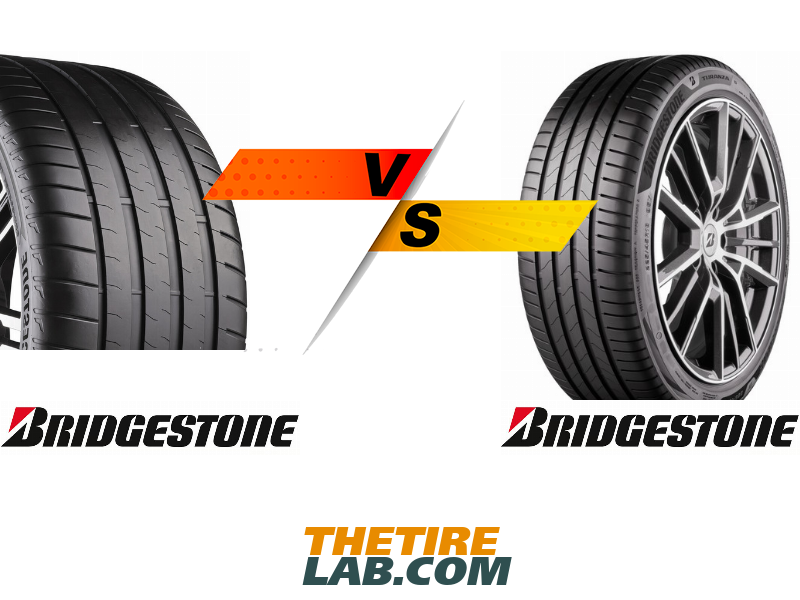
Selecting Bridgestone performance tires requires honest assessment of your actual driving habits rather than simply matching what came with your vehicle. Many drivers mistakenly choose summer performance tires for daily commuting, only to discover uncomfortable ride quality, excessive road noise, and rapid tread wear that makes these tires impractical as year-round solutions.
Bridgestone Potenza Tires: When Warm-Weather Grip Matters Most
If you track your sports car or simply enjoy spirited driving on dry roads, Bridgestone Potenza summer performance tires deliver exceptional grip through specialized tread patterns with minimal grooving and high-grip rubber compounds. These tires excel when pavement temperatures exceed 50°F, providing precise steering response and maximum cornering capability. However, they become dangerously stiff below freezing temperatures—never install summer tires for winter driving as they lose up to 50% of their traction capability in cold conditions.
All-Season Performance Tires for Daily Drivers Who Want Extra Responsiveness
Bridgestone’s Turanza QuietTrack represents the sweet spot for drivers of sporty sedans and coupes who want enhanced handling without seasonal tire changes. These all-season performance tires feature asymmetric tread designs that balance wet and dry grip with reasonable snow capability, plus noise-reducing technology that makes them suitable for daily commuting. Expect approximately 15-20% better dry handling than standard all-season tires but with slightly faster wear rates—typically 40,000-50,000 miles versus 60,000-80,000 for touring tires.
Off-Road Capability Without Sacrificing Highway Comfort
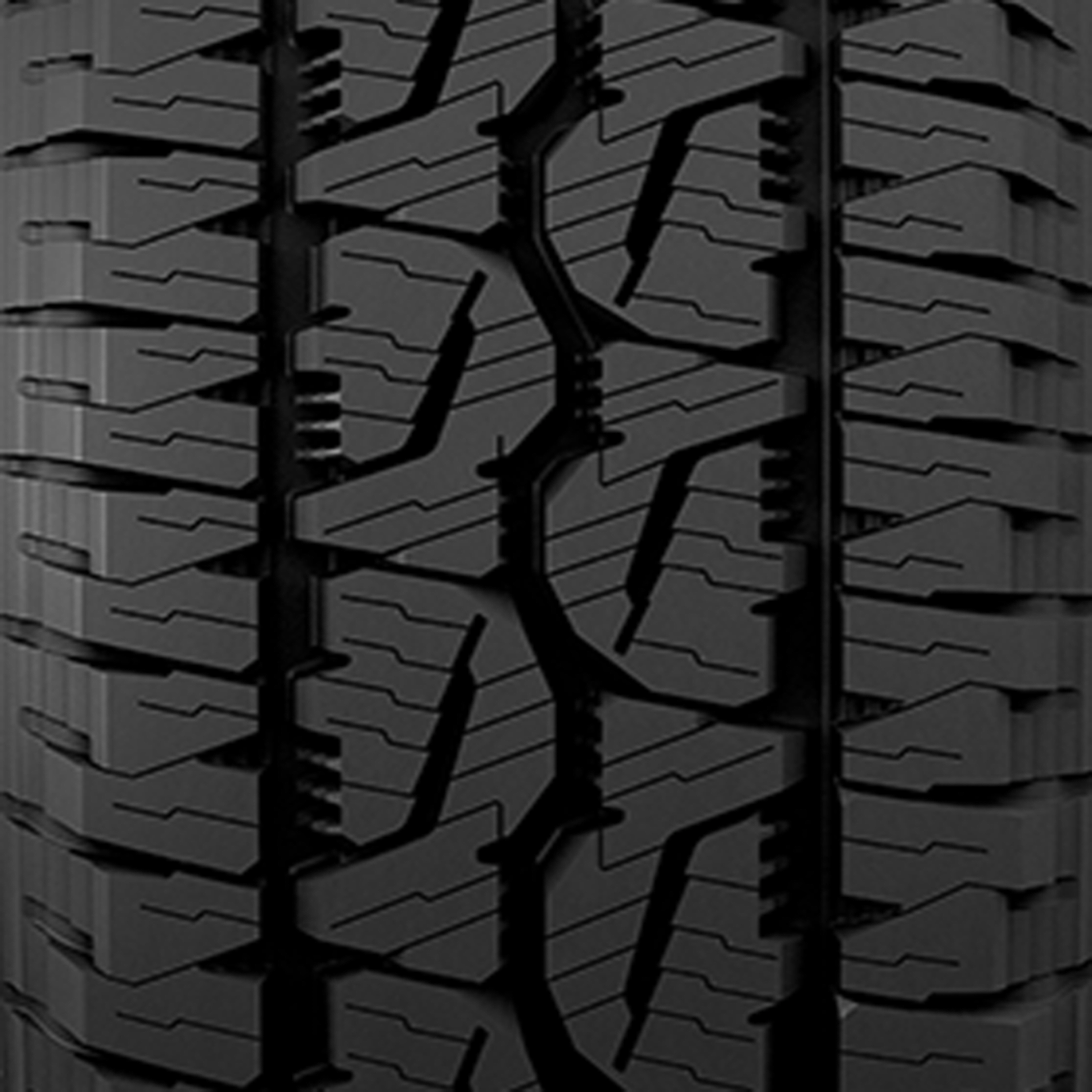
For truck and SUV owners who split time between paved roads and unpaved trails, selecting the right Bridgestone all-terrain tire means balancing two competing requirements: sufficient tread aggression for off-road traction while maintaining acceptable noise levels and ride comfort on highways.
Bridgestone Dueler H/T vs. A/T Tires: Which Matches Your Adventure Level?
The critical decision point comes down to how much off-roading you actually do:
-
Bridgestone Dueler H/T Radial: Choose this highway terrain option if 90%+ of your driving occurs on paved roads with occasional gravel roads. These tires feature symmetric tread patterns optimized for quiet operation and long tread life (typically 60,000+ miles) with minimal off-road capability.
-
Bridgestone Dueler A/T Revo 3: Select this all-terrain tire if you regularly encounter dirt roads, light mud, or snow-covered surfaces. The aggressive shoulder design and reinforced sidewalls provide serious off-road traction while maintaining surprisingly good highway manners—most drivers won’t notice significant noise differences until speeds exceed 65 mph.
Pro tip: If you frequently carry heavy loads or tow, look for the “E” load range designation which indicates stronger sidewalls capable of handling higher inflation pressures.
Run-Flat Technology That Actually Works When You Need It
Bridgestone DriveGuard represents the most reliable run-flat technology for drivers who prioritize safety over carrying a spare tire. Unlike some run-flat systems that severely limit driving distance after punctures, DriveGuard tires allow you to continue driving up to 50 miles at 50 mph after complete air loss—enough distance to reach a safe location or service center in most emergency situations.
How DriveGuard Tires Maintain Control During Flat Operation
The engineering behind Bridgestone’s run-flat technology centers on reinforced sidewall construction that supports your vehicle’s weight even when deflated. Special heat-resistant rubber compounds prevent sidewall overheating during extended flat operation, while the tire’s internal structure maintains proper contact patch geometry for predictable braking and cornering. Unlike conventional tires that collapse when flat, DriveGuard tires preserve enough structural integrity to work effectively with your vehicle’s stability control and ABS systems.
Important limitation: DriveGuard tires require proper inflation monitoring—never drive on a significantly underinflated tire as this can cause internal damage that compromises the run-flat capability.
Correct Tire Rotation Patterns for Each Bridgestone Type

Maintaining even tread wear extends the life of your Bridgestone tires and preserves optimal performance characteristics, but rotation patterns vary significantly depending on your tire type and vehicle drivetrain:
- Symmetric all-season tires (front-wheel drive): Move front tires straight back, rear tires diagonally forward
- Directional tires (all models): Rotate front-to-rear only, staying on same side of vehicle
- Asymmetric performance tires: Move front tires diagonally to opposite rear positions
- All-terrain tires with aggressive tread: Rotate every 5,000 miles (more frequent than standard tires)
Critical warning: Never mix tire types on the same axle—this creates dangerous handling imbalances that can cause loss of control during emergency maneuvers.
How to Store Seasonal Tires Properly to Extend Their Life
When you switch between seasonal Bridgestone tire sets, proper storage prevents premature aging and maintains performance for when you reinstall them. Follow these steps for optimal storage:
- Clean tires thoroughly with mild soap and water to remove brake dust and road grime
- Inflate to 50% of recommended pressure (approximately 15-20 PSI)
- Place each tire in an individual opaque storage bag (never clear plastic)
- Stack horizontally with maximum four tires per stack
- Store in cool, dry location away from direct sunlight and ozone sources
Expert tip: Place a piece of cardboard between stacked tires to prevent sidewall marking and allow air circulation.
Choosing Your Ideal Bridgestone Tire in 3 Decision-Making Steps
Follow this practical framework to select the perfect Bridgestone tire type without getting overwhelmed by options:
-
Assess your primary driving conditions: Track how many miles you drive in rain, snow, or off-road environments versus dry pavement. If you drive less than 2,000 miles annually in snow, all-season tires with the Three-Peak Mountain Snowflake symbol may suffice.
-
Evaluate your vehicle’s actual performance needs: A family SUV rarely needs high-performance tires—match tire capabilities to how you actually drive, not how you wish you drove. Most daily drivers benefit more from touring tires’ comfort and longevity than performance tires’ responsiveness.
-
Calculate the true cost of ownership: Divide a tire’s purchase price by its expected mileage to determine cost per mile. A $200 tire lasting 40,000 miles costs $0.005/mile, while a $300 tire lasting 70,000 miles costs just $0.0043/mile—making the more expensive option actually cheaper long-term.
Understanding these Bridgestone tire types prevents costly mismatches between your tires and actual driving needs. Whether you prioritize winter safety with Blizzak tires, year-round versatility with Turanza models, or off-road capability with Dueler A/T Revo 3 tires, matching your selection to your specific conditions ensures optimal safety, performance, and value. Remember that no single Bridgestone tire type excels in all conditions—your perfect match depends on honest assessment of where and how you drive most frequently. Regular maintenance and proper rotation extend tire life regardless of type, maximizing your investment while keeping you safely on the road.