A sudden thump followed by sluggish handling—every ATV rider dreads the telltale signs of a flat tire deep in the woods. Unlike car drivers who can simply pull over to the shoulder, off-road enthusiasts face the reality of being stranded miles from help with no cell service. Sharp rocks, hidden nails, and thorny brush transform what should be an adventurous ride into a frustrating repair session that often means cutting your trip short. The good news? Modern sealant-based ATV flat tire repair solutions have revolutionized how riders handle these common trail emergencies, turning potential disasters into minor inconveniences. By understanding and implementing these preventive measures, you can enjoy uninterrupted trail time while protecting your investment in quality tires that often cost over $100 each.
Why Your ATV Tires Fail on the Trail
ATV tires endure punishment that passenger vehicle tires never experience, making punctures an almost inevitable part of off-road ownership. While driving through dense brush, your tires constantly battle thorns that penetrate rubber treads like tiny needles, creating slow leaks that might not be noticeable until hours later. These insidious punctures gradually reduce pressure, compromising handling without immediate warning—until you return from your ride to find one tire completely deflated.
Construction zones and abandoned properties introduce another hazard: metal debris like nails and screws that embed themselves in your tread. Unlike car tires that typically encounter these hazards at high speeds (causing immediate blowouts), ATVs often roll slowly enough for these objects to become lodged without immediate failure. This creates a ticking time bomb where air leaks steadily until the tire becomes unusable. The worst offenders are barbed wire remnants along rural trails that create jagged tears rather than clean punctures, challenging even the most effective sealants.
Running on a flat ATV tire does more than just ruin your day—it threatens your entire machine. Without proper inflation, your tire can’t cushion impacts effectively, transmitting damaging forces directly to your wheel rims and suspension components. Uneven tire wear accelerates dramatically, potentially requiring premature replacement of what should be a long-lasting tire. Most critically, compromised handling increases accident risk when navigating steep inclines or rocky terrain where precise control matters most.
How Modern Sealants Fix Flats Automatically
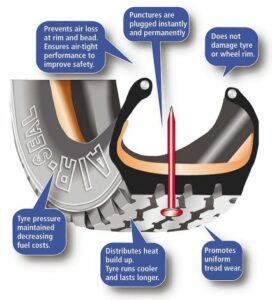
Sealant-based ATV flat tire repair works through a brilliantly simple chemical process that activates the moment a puncture occurs. When properly applied inside your tire, the liquid sealant coats the interior surface and remains dormant until air begins escaping through a hole. As pressure forces the sealant toward the puncture site, exposure to oxygen triggers rapid coagulation that forms a flexible plug within seconds—often before you’ve even noticed the flat.
This automatic response provides crucial advantages over traditional plug kits that require stopping, removing the tire, and manually inserting repairs. While riding, the sealant continuously coats interior surfaces as your tire rotates, ensuring protection across the entire tread area and sidewalls. Even punctures that occur while stationary will eventually seal as the tire rotates during normal operation, though the process takes slightly longer without the centrifugal force of movement.
Sealants excel at handling the most common ATV puncture types: thorn holes seal almost instantly due to their small size, while nails and screws typically get encapsulated as the sealant flows around the embedded object. Barbed wire damage presents more of a challenge due to the irregular tear pattern, but many sealants can still address smaller tears effectively. The key limitation involves large punctures exceeding 1/4 inch or severe sidewall damage where structural integrity has been compromised—situations requiring professional tire replacement.
TireJect Solutions for Every Riding Need

TireJect offers three distinct product options designed specifically for ATV flat tire repair scenarios, each matching different usage patterns and budget considerations. The Off-Road Tire Sealant Single Tire Repair Kit provides complete protection for one tire at a cost of $21.99-$34.99, making it ideal for emergency kits or riders treating just one problematic tire. This compact solution costs less than ten dollars per tire for preventive protection—pennies compared to replacement tires that often exceed $100.
For serious ATV enthusiasts with multiple machines, the ATV Tire Sealant Tire Protection Kit delivers better value at $59.99-$104.99 for enough sealant to treat several tires. This option makes economic sense for families with multiple ATVs or riders who frequently encounter puncture risks on their regular trails. The per-tire cost drops significantly compared to purchasing multiple single-tire kits, providing substantial savings while ensuring complete fleet protection.
Commercial operations and high-volume users should consider the Gallon Tire Repair Kit priced at $139.99. This industrial-strength solution offers the best value per ounce of sealant, making it cost-effective for rental fleets, guide services, or groups of riders who share maintenance responsibilities. While the initial investment seems higher, the gallon format translates to just a few dollars per tire when properly portioned according to the off-road dosage chart.
Perfect Your Sealant Application Technique
Proper application makes the difference between reliable flat tire protection and wasted product that fails when needed most. Before adding sealant, verify your valve stem is in good condition—worn stems leak air independently of tire punctures, creating confusion about pressure loss sources and potentially wasting sealant through the valve mechanism. Replace any damaged stems before proceeding with sealant installation.
Follow the off-road dosage chart precisely for your specific tire size, as ATV applications require more sealant than standard automotive uses due to larger tire volumes and more demanding conditions. Using a funnel or application pump, slowly introduce the recommended quantity through the valve stem while monitoring pressure. After installation, mount the tire and rotate it slowly for several minutes to distribute the sealant evenly across all interior surfaces—this crucial step ensures complete coverage from tread center to sidewall.
The sealant remains liquid during operation, continuously coating interior surfaces as your tire flexes across obstacles. When a puncture occurs, the escaping air pressure forces sealant toward the hole where it coagulates to form a flexible plug that accommodates ongoing tire movement. This dynamic response happens automatically, often allowing you to continue riding without even noticing the repair has occurred.
Maintain Continuous Flat Tire Protection

Sealant effectiveness diminishes over time due to natural drying and repeated puncture sealing, requiring regular maintenance to ensure continuous ATV flat tire repair capability. Establish a monthly pressure check routine using an accurate gauge, as gradual pressure loss indicates sealant exhaustion or drying that requires replenishment. Sudden deflation suggests either a puncture exceeding sealant capability or mechanical issues needing conventional repair.
Before each riding season, inspect sealant condition by removing the valve core and checking for proper liquid consistency—thickened or separated product requires replacement. Tires stored through winter months often need fresh application due to sealant degradation during temperature fluctuations. When punctures occur, remove any embedded objects like thorns or nails to allow proper sealing, as the sealant typically forms an effective plug within minutes of object removal.
Visual inspection complements pressure monitoring—check for unusual wear patterns, embedded debris, or damage that might indicate problems beyond sealant capability. Pay special attention to the tire shoulder area where sidewall meets tread, as this high-stress zone often develops punctures that challenge sealant effectiveness. Regular inspection reveals developing issues before they escalate to complete tire failure.
Maximize Your Repair Investment Value
The economic case for sealant-based ATV flat tire repair becomes undeniable when comparing costs. At less than ten dollars per tire for preventive protection, sealants pay for themselves after preventing just one flat that would otherwise require expensive tire replacement. Emergency roadside assistance for remote flats often costs more than treating your entire ATV fleet with sealant—plus the invaluable time saved by avoiding repair sessions that can consume hours of potential riding time.
Traditional repair methods carry hidden costs beyond monetary value—time spent removing tires, applying patches, and reinstalling wheels represents hours that could be spent enjoying the trails. Sealant application typically requires minutes compared to hours for conventional repair, a difference that compounds significantly for frequent riders. The preventive nature of sealant protection transforms reactive emergency repairs into proactive maintenance that keeps you riding through minor punctures.
For serious off-road enthusiasts, the value proposition extends to tire longevity. By addressing punctures immediately before significant air loss occurs, sealants prevent the accelerated wear patterns that develop when running on under-inflated tires. This extended tire life represents additional savings that further improve the already compelling return on investment for sealant-based flat tire repair solutions.
Get Expert Support When Needed
TireJect provides multiple support channels for riders implementing their ATV flat tire repair system. Contact their technical team via email at help@tireject.com for detailed product documentation and non-urgent questions, or call 607-333-7343 for immediate assistance with application challenges or technical issues. Their specialists understand the unique demands of off-road applications and can provide tailored guidance for specific tire configurations and riding conditions.
Subscribing to their newsletter delivers ongoing value through advance notice of sales events and special pricing opportunities. Frequent users and fleet operators particularly benefit from these notifications, as periodic sealant replenishment becomes more economical with subscriber discounts. The manufacturer also provides updated dosage charts and application techniques as product formulations improve, ensuring you always have access to the most current best practices for effective flat tire protection.
Sealant-based ATV flat tire repair represents a paradigm shift from reactive emergency fixes to proactive trail readiness. By treating your tires before punctures occur, you transform a common source of frustration into a manageable aspect of off-road ownership that costs less than ten dollars per tire to address. The combination of automatic puncture sealing, extended tire life, and uninterrupted trail time makes this approach an essential component of any serious ATV maintenance strategy—turning potential ride-ending flats into nothing more than a minor trailside footnote.