You’ve probably stared at the mysterious string of numbers and letters on your tire’s sidewall, wondering what it all means. Learning how to read tire measurements is essential for selecting the right replacement tires, understanding your vehicle’s capabilities, and ensuring safe operation. These codes aren’t random—they’re a standardized system that tells you exactly what your tire can handle. Without this knowledge, you risk buying tires that won’t fit properly, can’t support your vehicle’s weight, or might fail under normal driving conditions.
The numbers and letters on your tire follow precise standards developed by organizations like the Tire and Rim Association and European Tyre and Rim Technical Organization. When you know how to read tire measurements correctly, you can confidently shop for replacements, understand why certain tires are recommended for your vehicle, and avoid costly mistakes. This guide breaks down each element of tire sizing so you’ll never feel confused by those sidewall markings again.
Break Down Every Number on Your Tire Sidewall
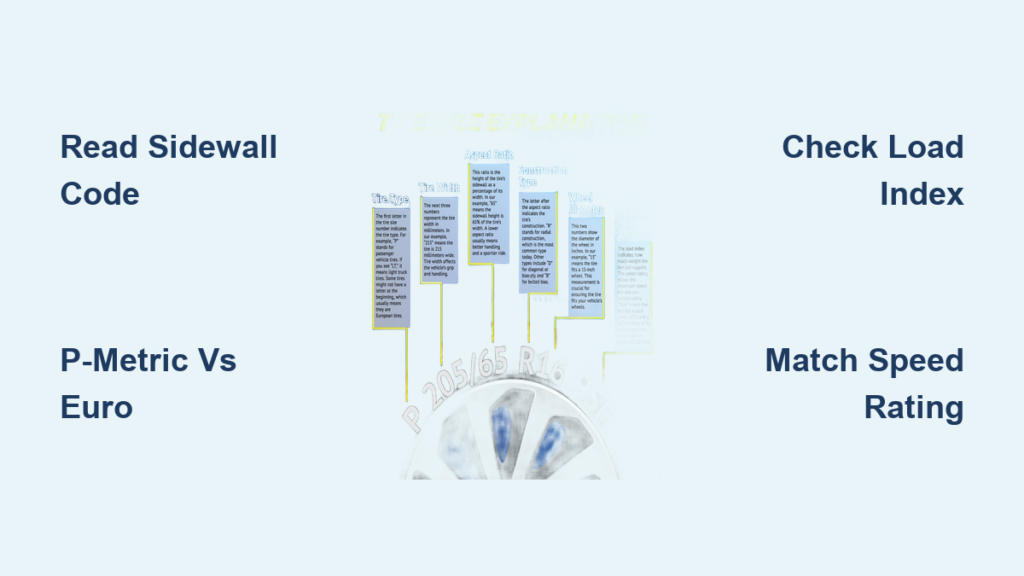
Your tire’s size code contains five critical elements that work together to define its specifications. Take a common size like P225/70R16 91S—each segment reveals specific information about the tire’s dimensions and capabilities. The first number (225) indicates the tire’s width in millimeters. The number after the slash (70) represents the aspect ratio—the sidewall height as a percentage of the width. The letter “R” signifies radial construction, while the following number (16) shows the rim diameter in inches. Finally, the load index (91) and speed rating (S) tell you the maximum weight capacity and safe speed limit.
When examining your tire, look for these elements in sequence from left to right. The positioning matters—mistaking one element for another could lead to selecting the wrong replacement tire. Pay special attention to the construction letter, as radial (“R”) and bias-ply (“D” or “-“) tires have significantly different performance characteristics. If you see two load index numbers separated by a slash (like 119/116), you’re looking at a light truck tire designed for dual mounting applications.
Spot the Critical Difference Between P-Metric and Euro-Metric Tires

The presence or absence of a “P” at the beginning of your tire size reveals which standardization system applies. P-Metric tires (with the leading “P”) follow North American standards and appear as P225/70R16 97H. Euro-Metric tires omit the “P” and display as 225/70R16 98H. While these sizes look nearly identical, their load capacity ratings differ significantly.
This critical distinction means you can’t assume identical load index numbers provide the same weight capacity across systems. A Euro-Metric tire with load index 98 may carry a different weight than a P-Metric tire with the same index number. Always verify the actual load capacity specified by the manufacturer rather than relying solely on the index number. When replacing tires, match the original system (P-Metric or Euro-Metric) unless you’ve confirmed the alternative system provides equivalent or greater load capacity for your specific vehicle.
Identify LT-Metric Tires for Your Heavy-Duty Truck
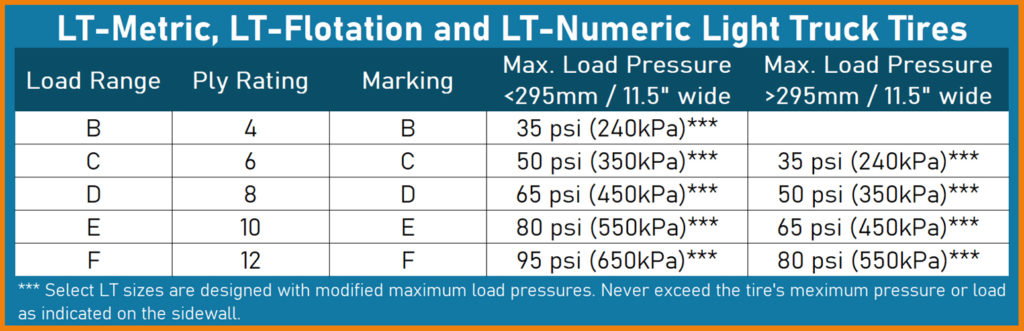
If you drive a ¾ ton or larger pickup truck, your tires likely follow the LT-Metric sizing system. These tires feature a leading “LT” designation and appear as LT245/75R17 119/116R. The dual load index numbers (119/116) indicate different weight capacities depending on whether the tire is used in single application (first number) or dual application (second number).
LT-Metric tires are engineered to handle heavier loads than standard passenger tires. The “Load Range E” designation often appears alongside these sizes, indicating higher maximum inflation pressure and load capacity. Never substitute passenger tires for LT-Metric tires on heavy-duty applications—passenger tires lack the reinforced sidewalls needed for heavy cargo loads and could fail catastrophically when overloaded.
Calculate Actual Tire Width from Sidewall Measurements
The first number in your tire size (like 225 in P225/70R16) represents the section width in millimeters—the distance between sidewalls at the tire’s widest point when properly mounted and inflated. This measurement excludes raised lettering or decorative elements. While the number suggests 225mm width, the actual mounted width varies based on rim width.
Wider rims cause tires to spread outward, increasing contact patch but reducing sidewall height. For every half-inch change in rim width, expect approximately 5-10mm change in actual tire width. When considering aftermarket wheels, verify that the new rim width falls within the tire manufacturer’s recommended range to prevent uneven wear or compromised handling.
Determine How Aspect Ratio Affects Ride Comfort

The aspect ratio (70 in P225/70R16) reveals your tire’s profile height as a percentage of its width. In this example, the sidewall height equals 70% of 225mm, or 157.5mm. Lower aspect ratios (55 or below) create shorter, stiffer sidewalls that improve handling response but transmit more road shock, resulting in a harsher ride. Higher aspect ratios (70 or above) offer taller, more flexible sidewalls that absorb bumps better but may reduce cornering stability.
When considering different aspect ratios, remember that changing by 10% will alter your effective gear ratio by approximately 10%. This affects speedometer accuracy and can make your engine rev higher at cruising speeds, potentially reducing fuel economy. A 65-series tire instead of a 70-series might seem minor, but this 5% difference could require speedometer recalibration for accurate readings.
Recognize Radial vs Bias Construction at a Glance
The construction letter appears after the aspect ratio and tells you how the tire’s internal cords are oriented. “R” indicates radial construction—the standard for over 99% of modern tires—where ply cords run perpendicular to the direction of travel. Radial tires offer better heat dissipation, fuel efficiency, and ride comfort than bias-ply alternatives.
If you see “D,” “B,” or a dash “-” instead of “R,” you’re looking at bias-ply construction with diagonally running cords. These are rare on modern passenger vehicles but still appear on some trailers, classic cars, and agricultural equipment. Never replace radial tires with bias-ply on standard vehicles—the different construction creates incompatible handling characteristics that can compromise safety.
Verify Your Tire’s Maximum Weight Capacity Correctly
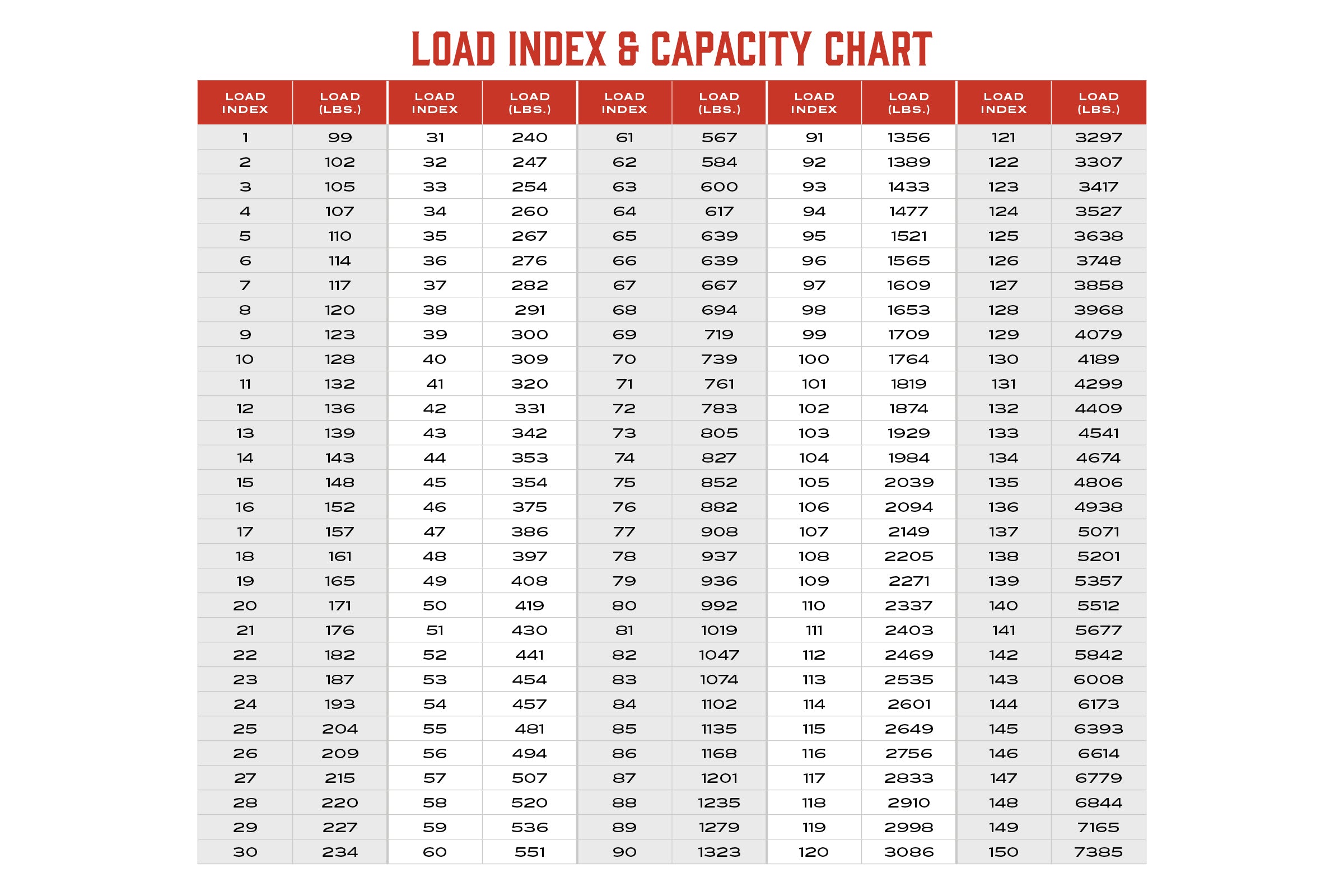
The load index number (91 in P225/70R16 91S) indicates maximum weight capacity per tire when properly inflated. A load index of 91 corresponds to 1,356 pounds, but you’ll need a load index chart to translate other numbers. Light truck tires display two numbers (119/116) showing different capacities for single versus dual mounting.
Critical mistake to avoid: Assuming identical load index numbers mean identical capacity across different tire types. P-Metric and Euro-Metric tires use different load capacity scales. When replacing tires, verify the actual pound capacity rather than relying solely on the index number. For vehicles that regularly carry heavy loads, consider Extra Load (XL) tires that support greater weight at higher inflation pressures.
Match Speed Ratings to Your Driving Needs
The final letter in your tire size (S in P225/70R16 91S) indicates maximum speed capability under laboratory conditions. An “S” rating means the tire can safely maintain 112 mph, while “H” equals 130 mph and “V” equals 149 mph. Never interpret speed ratings as recommended driving speeds—these are maximum capabilities under ideal conditions.
When replacing tires, always match or exceed your vehicle’s original speed rating. Installing lower-rated tires (like S-rated instead of H-rated) limits your vehicle’s top speed capability and can affect handling balance. If mixing tires, place the lowest-rated tires on the rear axle to maintain predictable handling characteristics during emergency maneuvers.
Decipher Flotation Sizing for Off-Road Tire Selection
Off-road tires often use flotation sizing like 33X12.50R17LT 120Q, which differs significantly from metric sizing. The first number (33) represents overall diameter in inches, while the second (12.50) indicates section width in inches. This system makes visualizing tire dimensions more intuitive for off-road applications.
Flotation tires cannot be used in dual applications, unlike LT-Metric equivalents. The “LT” designation confirms light truck application, while the single load index (120) and speed rating (Q) follow standard conventions. When selecting flotation tires, verify adequate clearance through full suspension travel to prevent rub damage during off-road use.
Use UTQG Grades to Compare Tire Performance
The Uniform Tire Quality Grading system provides three performance metrics: treadwear (300), traction (AA), and temperature (A). A higher treadwear number suggests longer expected life under test conditions, but real-world performance varies based on driving habits and road conditions. Traction grades (AA being highest) measure straight-line wet braking only—not cornering ability. Temperature grades reflect heat resistance under controlled testing.
Important limitation: UTQG ratings apply only to passenger car tires, not light truck or winter tires. Use these grades for comparative shopping between similar tire types, not as absolute predictors of performance. A tire with AA traction grade may still hydroplane if driven too fast on wet roads.
Avoid 3 Costly Mistakes When Replacing Tires
When shopping for new tires, always start by checking your vehicle manufacturer’s specifications on the driver’s door jamb or in the owner’s manual. This ensures you select tires that match your vehicle’s engineering requirements for safety and performance. Never deviate from recommended sizes without professional consultation—incorrect sizes can affect ABS, stability control, and speedometer accuracy.
Critical replacement rule: When replacing only two tires, always mount the new tires on the rear axle regardless of drive type. This prevents dangerous oversteer conditions that occur when worn front tires lose grip before the rears. For all-wheel drive vehicles, replace all four tires simultaneously to prevent drivetrain damage from mismatched tire diameters.
Consult an authorized tire retailer before making size changes—they can identify potential clearance issues, assess impacts on vehicle systems, and verify load capacity meets your needs. Properly sized tires ensure optimal handling, safety, and vehicle performance while preventing premature wear or catastrophic failure.