Stranded on the side of the road with a flat tire is stressful enough without struggling to access your spare. Many Kia Sorento owners panic when they realize their spare tire is hidden underneath the vehicle with no obvious way to reach it. This guide provides the exact steps to remove your Kia Sorento spare tire quickly and safely using only the tools that came with your vehicle. Whether you’re preparing for an emergency or checking your spare’s condition, knowing how to remove your Kia Sorento spare tire could save you hours of waiting for roadside assistance.
The Kia Sorento stores its spare tire beneath the vehicle using a cable-driven lowering mechanism operated from inside the cargo area. Unlike some vehicles with externally mounted spares, the Sorento’s underbody storage keeps your cargo space clear but creates a challenge when you actually need the spare. This comprehensive guide walks you through each step of the removal process, including critical safety precautions and troubleshooting tips for common problems that might prevent your spare from lowering properly.
Locate Spare Tire Under Vehicle
Your Kia Sorento’s spare tire sits directly underneath the cargo area, secured by a cable and retainer system. This strategic placement maximizes interior space while keeping the spare protected from damage. The lowering mechanism connects to a fixing bolt you access through the cargo floor, allowing you to control the spare’s position without crawling under your vehicle.
To find the access point, open your liftgate and look at the cargo floor near the rear of the vehicle. The spare tire fixing bolt cover is typically positioned toward the center of the floor and clearly marked with “spare tire” text or a tire icon. This cover conceals the hex-shaped bolt that connects to your vehicle’s lug nut wrench. Some model years feature a slightly different configuration, but the access point always remains within easy reach from the cargo area—never requiring you to exit the vehicle during the removal process.
Pro Tip: Familiarize yourself with this location while parked at home. When you’re dealing with a flat tire on a dark, rainy night, knowing exactly where to look for the access cover will reduce stress and save valuable time.
Gather Required Tools
Before starting the spare tire removal process, locate your vehicle’s emergency tool kit, usually stored beneath the cargo floor or in a dedicated compartment. The only tool you need is the socket and wheel lug nut wrench included with your Sorento. This versatile tool serves two critical functions: removing wheel lug nuts and operating the spare tire lowering mechanism.
The wrench features a socket end specifically designed to fit the spare tire fixing bolt. When using it for tire removal, ensure you’re using the correct end—some owners mistakenly try to use the lug nut removal end, which won’t connect properly to the fixing bolt. The socket end is typically larger and hollow to accommodate the bolt’s shape. Check that the wrench moves smoothly and isn’t damaged, as a compromised tool could slip during operation and cause injury.
Warning: Never attempt to remove the spare tire without this specific wrench. Improvised tools might damage the fixing bolt head, making future removal impossible without professional assistance.
Access Cargo Floor Properly
Clear the cargo area of all items that might obstruct your movement or block access to the floor. Open the liftgate fully and secure it in the open position—many Sorento models have a liftgate hold function that prevents accidental closure during maintenance. Park your vehicle on level ground before starting the removal process; an uneven surface could cause the spare tire to swing unpredictably as it lowers.
Take a moment to inspect the cargo floor for the spare tire access cover. It’s usually positioned within arm’s reach of the liftgate opening and features distinctive markings. If you’re having difficulty locating it, consult your owner’s manual for the exact position, as it may vary slightly between model years. Before removing the cover, ensure your vehicle has cooled down if you’ve recently been driving—the metal components can become extremely hot and cause serious burns.
Remove Access Cover Correctly

Locate the small lip or notch along the edge of the access cover. Using your fingers or a flat-head screwdriver for leverage, gently pry upward to release the cover’s retaining tabs. Most Sorento models feature a snap-in cover that removes easily without tools. Set the cover aside in a safe location where it won’t get lost or damaged.
Beneath the cover, you’ll see the spare tire fixing bolt—a hex-shaped component that connects to your lug nut wrench. Inspect this area for debris, rust, or damage before proceeding. If the bolt head appears corroded or rounded, this could complicate removal. In such cases, apply penetrating oil and allow it to work for several minutes before attempting to connect your wrench.
Critical Safety Note: Never touch the metal surface around the access point immediately after driving. The engine heat transfers to these components, creating serious burn hazards. Always turn off your vehicle and allow it to cool before beginning the removal process, or wear protective gloves.
Connect Wrench to Fixing Bolt Securely

Take the socket end of your lug nut wrench and firmly press it onto the spare tire fixing bolt. Ensure full engagement by checking that all sides of the bolt head are properly seated within the socket. A secure connection is essential—any slippage could damage the bolt or cause injury from sudden tool movement.
Hold the wrench with both hands, positioning yourself for optimal leverage. Before turning, confirm the correct rotation direction: counterclockwise lowers the spare tire, while clockwise raises it. This distinction is crucial—turning the wrong direction will only tighten the mechanism rather than releasing the tire.
Pro Tip: If your wrench connection feels loose, try tapping it gently with a rubber mallet to ensure full engagement. A solid connection prevents rounding the bolt head, which would make future removal much more difficult.
Lower Spare Tire to Ground Safely
Begin turning the wrench counterclockwise with steady, controlled motions. The screw-type mechanism will gradually unwind the cable, lowering the spare tire toward the ground. Maintain consistent rotation speed—too fast could cause the tire to swing unpredictably, while too slow makes the process unnecessarily lengthy.
As you turn, you’ll hear clicking sounds from the mechanism, which is normal operation. Continue turning until the spare tire makes firm contact with the ground. At this point, rotate the wrench one or two additional full turns counterclockwise. This extra rotation engages the mechanism that pulls the tire out from beneath the vehicle, positioning it where you can easily access it from the side.
Warning: Stop immediately if you encounter significant resistance or grinding noises. Forcing the mechanism could damage the cable assembly, requiring expensive repairs. If resistance occurs, apply penetrating oil and allow time for it to work before continuing.
Detach Retainer Clip Completely
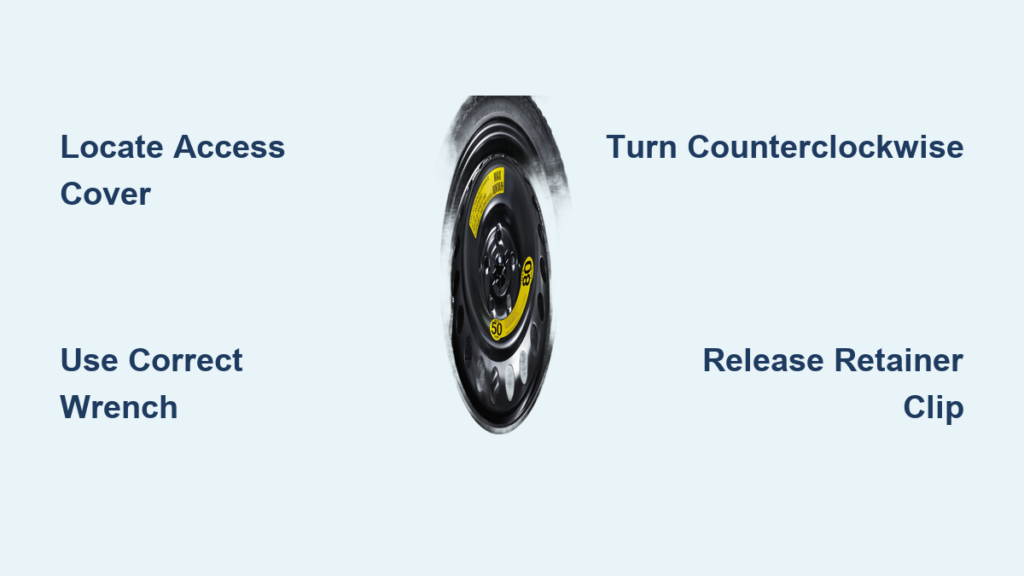
With the spare tire fully lowered and positioned accessibly, locate the retainer at the center of the wheel. This clip secures the tire to the carrier cable and must be released before you can remove the spare. The retainer typically features a small metal or plastic component with an attached cable.
Pull the retainer outward and away from the wheel center with firm but controlled pressure. It should release with moderate force—the design allows for easy detachment when the tire is properly positioned on the ground. As you remove the retainer, keep the attached cable taut to prevent backlash or binding in the mechanism.
Pro Tip: Before fully removing the spare tire, double-check that the retainer has completely disengaged. A partially attached retainer could cause the tire to drop unexpectedly or make reinstallation difficult later.
Troubleshoot Common Removal Problems

Even when following proper procedure, you might encounter issues preventing successful spare tire removal. If the wrench slips off the fixing bolt, the connection likely isn’t secure or the bolt head has become damaged. Reconnect the wrench firmly, ensuring full socket engagement. For severely damaged bolts, you may need locking pliers to grip the bolt directly.
When the spare tire won’t lower despite turning the wrench, corrosion or binding in the mechanism is likely the culprit. Apply penetrating oil to the fixing bolt and surrounding components, then wait 5-10 minutes before trying again. Avoid excessive force, as this could damage the cable system.
If the tire lowers but won’t come out from under the vehicle, you probably haven’t turned the wrench enough after the tire contacted the ground. Continue turning counterclockwise for those critical additional rotations that pull the tire into an accessible position. Also verify the retainer is fully released—sometimes it appears detached but remains partially engaged.
Maintain Spare Tire System Properly
Prevent future removal problems by inspecting your spare tire system every six months. Lower the spare to check tire condition, inflation pressure, and tread depth. A spare in poor condition won’t help you when you need it most, so replace it if you notice dry rot, cracks, or inadequate tread.
Lubricate the fixing bolt and visible moving parts annually with light grease to prevent corrosion. After applying lubricant, operate the mechanism through several full raise-and-lower cycles to distribute the lubricant evenly. This maintenance is especially important if you live in coastal areas or regions with harsh winters where salt accelerates corrosion.
Ensure your tool kit remains complete and accessible. The lug nut wrench is essential for spare tire operation, so verify it’s present and undamaged during your inspections. Store it in a location where you can quickly find it during an emergency—some owners keep it in the cargo area’s tool compartment, while others prefer a more visible spot for faster access.
Store Spare Tire Correctly After Use
When reinstalling the spare, position it with the valve stem facing upward for proper alignment. Insert the retainer through the wheel center, ensuring it fully engages with the carrier mechanism. Turn the wrench clockwise until you hear a distinct clicking sound—this indicates the spare has been properly raised and secured.
Critical Safety Note: Never drive with the spare tire partially lowered or improperly secured. A loose spare could detach while driving, causing serious accidents or damage to your vehicle. Always verify the clicking sound confirms proper installation before closing the liftgate and resuming your journey.
Final Note: Regular practice removing your Kia Sorento spare tire ensures you’ll be prepared when you actually need it. By following these steps and maintaining your spare tire system, you’ll transform what many consider a stressful emergency into a manageable roadside procedure that takes less than 15 minutes. Keep this knowledge fresh in your mind and your spare tire ready for action—your next flat tire might strike when you least expect it.