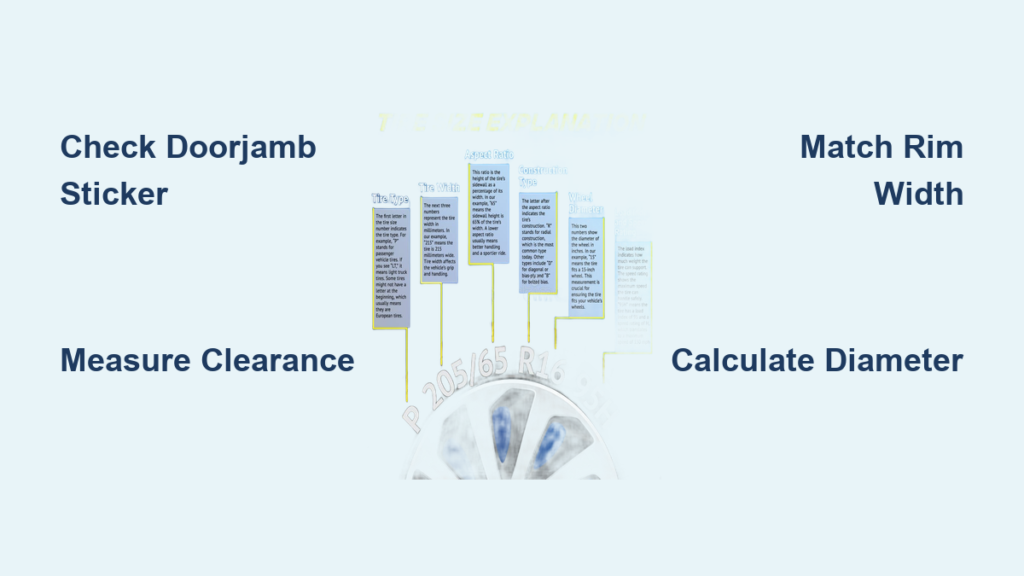
Choosing the right tire width for your compact car isn’t just about aesthetics or performance—it’s about safety, efficiency, and preserving your vehicle’s engineered handling characteristics. Many compact car owners make the critical error of selecting wider tires without understanding how this single change affects multiple aspects of their vehicle’s performance. The tire width you select directly impacts your car’s fuel economy, braking distance, cornering stability, and even how your speedometer reads. This guide cuts through the confusion with specific, actionable steps to determine the optimal tire width for your specific compact vehicle model, driving habits, and climate conditions. You’ll learn exactly where to find your manufacturer’s specifications, how to interpret tire codes correctly, and when it’s safe (or dangerous) to deviate from recommended widths.
Locate Your Vehicle’s Exact Tire Specifications
Your compact car’s manufacturer designed a specific tire width range to work harmoniously with your suspension, steering, and braking systems. Ignoring these specifications can lead to dangerous handling issues or premature wear. Start by checking two critical locations that provide your vehicle’s engineered tire requirements.
Check the Driver’s Side Doorjamb Sticker Immediately
Open your driver’s side door and examine the sticker mounted on the doorjamb. This sticker contains your vehicle’s original equipment tire size specifications, including the precise width range approved by the manufacturer. For most compact cars like the Honda Civic, Toyota Corolla, or Mazda3, you’ll typically find specifications like P205/55R16 or similar. This sticker also lists the recommended cold inflation pressure for each tire position—critical information that changes when you alter tire width.
Consult Your Owner’s Manual for Alternative Sizes
Your owner’s manual contains additional tire width options that maintain the same overall diameter while varying width and aspect ratio. Look for the “Tires and Wheels” section, which often lists acceptable alternative sizes with specific warnings about clearance limitations for your particular model. For example, some compact cars may allow a width increase of up to 10mm wider than stock if you simultaneously reduce the aspect ratio to maintain proper overall diameter.
Analyze Your Compact Car’s Clearance Limitations

Compact cars have significantly tighter wheel well clearances than larger vehicles, making width selection especially critical. Installing tires that are too wide can cause dangerous rubbing issues that compromise safety and damage your vehicle.
Measure Your Current Clearance
With your compact car parked on level ground, use a ruler or tape measure to determine the distance between your current tire’s outer edge and the nearest fender lip or suspension component. Most compact cars have between 15-25mm of clearance. When considering a wider tire, ensure you maintain at least 10mm of clearance to accommodate suspension movement over bumps and during hard cornering.
Test for Suspension Compression Clearance
Jack up your compact car and manually compress the suspension while watching for potential contact points. Rotate the tire through its full range of motion to identify where rubbing might occur with a wider tire. Pay special attention to inner fender liners and control arm locations—common problem areas when exceeding recommended widths on compact platforms.
Calculate Proper Width-to-Aspect Ratio Combinations

Changing tire width requires corresponding adjustments to aspect ratio to maintain proper overall diameter. Get this calculation wrong, and you’ll throw off your speedometer, odometer, and potentially your ABS and traction control systems.
Use the Tire Diameter Formula Correctly
Calculate overall tire diameter using this formula: (Rim Diameter × 25.4) + 2 × (Width × Aspect Ratio ÷ 100). For example, a stock P205/55R16 tire has an overall diameter of (16 × 25.4) + 2 × (205 × 55 ÷ 100) = 631mm. When selecting a wider tire, such as 215mm, you’d need to reduce the aspect ratio to approximately 50 to maintain the same overall diameter: (16 × 25.4) + 2 × (215 × 50 ÷ 100) = 627mm (within the acceptable 3% variation limit).
Recognize the Handling Trade-offs
A 215/50R16 tire on your compact car will deliver noticeably sharper turn-in response than the stock 205/55R16 due to the shorter sidewall, but at the cost of increased road noise and harsher ride quality. The reduced aspect ratio means less sidewall flex, which improves handling precision but transmits more road imperfections into the cabin—particularly noticeable on compact cars with stiffer suspension tuning.
Match Width to Your Rim Width Properly

Your compact car’s wheels have specific rim width ranges that work optimally with certain tire widths. Ignoring these compatibility requirements risks poor handling, uneven wear, and potential safety issues.
Verify Rim Width Compatibility Before Purchase
Most wheels have their recommended tire width range stamped somewhere on the back of the wheel spokes. For example, a common 6.5-inch wide rim for compact cars typically accommodates tires between 205mm and 225mm. Installing a 235mm tire on this rim width will cause excessive sidewall bulge, reducing cornering stability and accelerating shoulder wear.
Understand the Visual and Performance Effects
A 205mm tire on a 6.5-inch rim will have a more rounded profile, while the same tire on a 7-inch rim will develop a flatter contact patch. For compact cars primarily driven on highways, the wider rim with appropriate tire width can improve high-speed stability, but may compromise comfort on rough roads.
Calculate Fuel Efficiency Impact Before Deciding
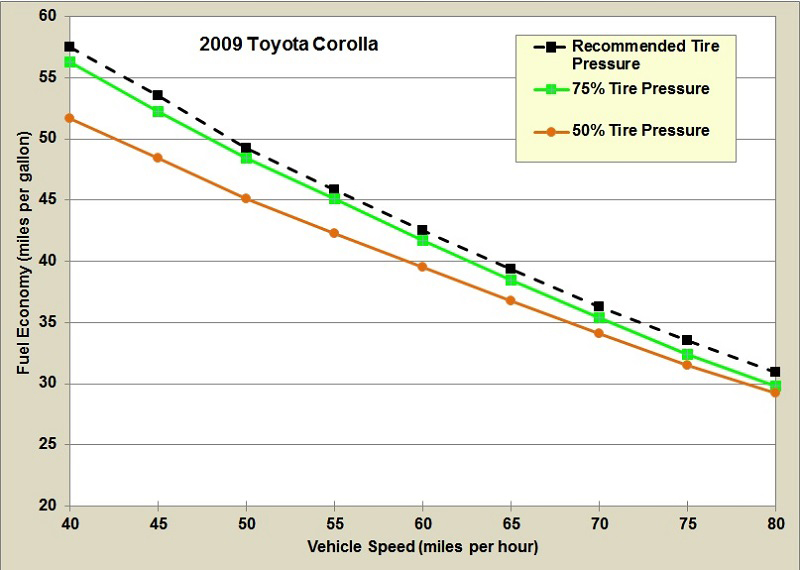
Wider tires directly impact your compact car’s fuel economy—a critical consideration since many buyers choose compact vehicles specifically for their efficiency.
Estimate Miles Per Gallon Reduction
For every 10mm increase in tire width, expect approximately 1-2% reduction in fuel economy. On a compact car averaging 35 MPG, switching from 205mm to 225mm tires could cost you 0.7-1.4 MPG. Over 15,000 annual miles at $3.50 per gallon, this translates to $15-$30 extra in fuel costs each year.
Consider Rolling Resistance Ratings
When selecting wider tires, prioritize models with low rolling resistance ratings (look for the UTQG treadwear grade of 400 or higher). Some premium tire manufacturers offer wider options specifically engineered for fuel efficiency that minimize the typical MPG penalty associated with increased width.
Avoid These Three Critical Width Selection Errors
Compact car owners make predictable mistakes when selecting tire width that compromise safety and performance. Knowing these common pitfalls helps you make a smarter decision.
Mistake #1: Assuming Wider Always Means Better Grip
Wider tires don’t automatically improve traction, especially on compact cars with lighter weight. Beyond a certain point (typically 10-15mm wider than stock for most compacts), you lose the optimal pressure distribution across the contact patch. This can actually reduce wet braking performance as the wider tire tends to hydroplane more easily by riding on top of water rather than channeling it through the tread.
Mistake #2: Ignoring Load Index Changes with Width
Wider tires often come with different load index ratings than their narrower counterparts. A seemingly minor width increase from 205 to 215 might include a load index change from 91 (1,356 lbs) to 92 (1,389 lbs)—usually acceptable. But jumping to 225mm could drop to a lower load index if you’re not careful, creating a serious safety risk for your compact car’s weight capacity.
Mistake #3: Forgetting Speedometer Calibration
Even small changes in overall tire diameter affect speedometer accuracy. A 2% increase in diameter means your speedometer reads 2% slower than your actual speed. At 60 MPH, you’re actually traveling 61.2 MPH without realizing it. For compact car owners, this seemingly minor discrepancy can put you over speed limits without awareness and affect odometer readings for maintenance schedules.
Make Your Final Width Decision with Confidence
Selecting the right tire width for your compact car requires balancing multiple factors specific to your vehicle and driving needs. For most compact car owners, staying within 10mm of the manufacturer’s recommended width provides the optimal balance of safety, comfort, and performance. If you prioritize fuel efficiency and comfort, consider staying at or slightly below the stock width. For those seeking improved dry handling response on smooth roads, a modest 10mm increase with corresponding aspect ratio adjustment usually delivers noticeable benefits without compromising safety or creating clearance issues.
Before making your final purchase, visit a reputable tire retailer who can physically check clearance on your specific vehicle with the proposed width. They should mount the tire on your wheel and simulate full suspension travel to verify no rubbing occurs. Remember that tire width doesn’t work in isolation—always consider how your width choice affects aspect ratio, rim compatibility, load capacity, and inflation requirements. The right width choice enhances your compact car’s driving experience while maintaining the safety margins engineered by the manufacturer.