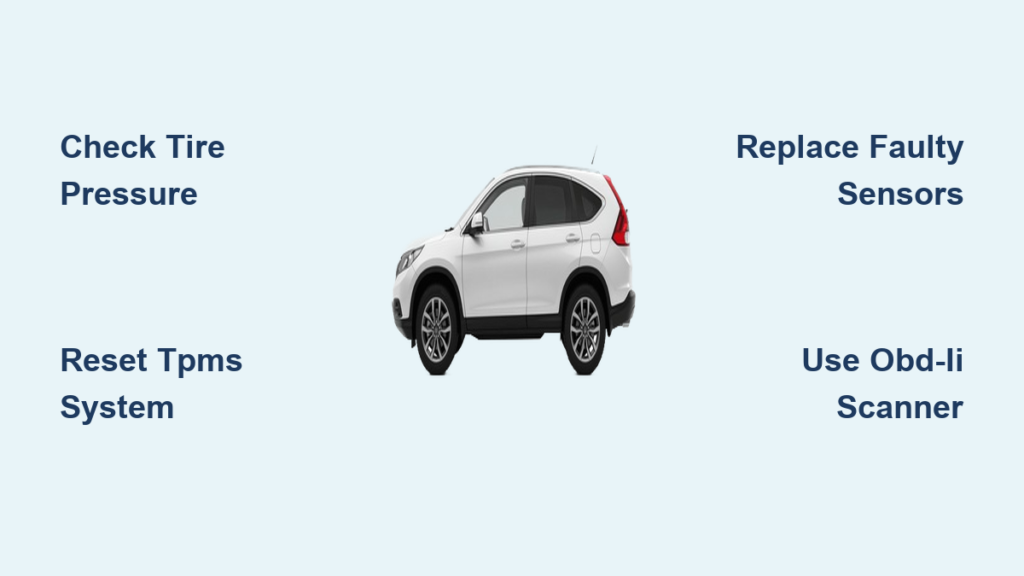
That persistent orange tire pressure warning light on your Honda CRV dashboard isn’t just an annoyance—it’s your vehicle’s critical safety alert telling you something’s wrong with your tires. When this light illuminates, your CRV’s Tire Pressure Monitoring System (TPMS) has detected pressure below the manufacturer’s recommended level, which could lead to poor handling, reduced fuel efficiency, or even a dangerous blowout. The good news is that most Honda CRV owners can clear this warning light themselves in under 15 minutes without visiting the dealership. Whether you’re dealing with simple low pressure or a stubborn light that won’t reset, this guide provides every verified method to clear your Honda CRV’s tire pressure warning light for good.
Verify and Correct Tire Pressure Before Resetting
Before attempting any reset procedures, address the most common cause of the warning light: actual low tire pressure. Your Honda CRV’s TPMS triggers when pressure drops 25% below the recommended level, typically around 24 PSI when your tires should be at 32 PSI. Locate the tire pressure specification sticker inside the driver’s door jamb—most CRV models require 33 PSI for front tires and 30 PSI for rear tires when cold. Use a quality digital pressure gauge (not the one at the gas station, which is often inaccurate) to check all four tires when they haven’t been driven for at least three hours. If any tire reads below specification, inflate it to the exact recommended pressure. After proper inflation, drive your CRV for 10-15 minutes at speeds above 20 mph to allow the sensors to update. In many cases, the light will turn off automatically without needing a manual reset.
Why Proper Inflation Must Come First
Attempting to reset the tire pressure light without correcting actual low pressure creates a dangerous situation where your CRV shows “normal” operation while tires remain underinflated. Underinflated tires generate excessive heat during driving, significantly increasing blowout risk—especially on hot days or during highway travel. The TPMS light will typically return within 20 minutes of driving if you skip this critical step. Always verify pressure on all four tires, including the spare if your CRV model includes one (check your owner’s manual, as some newer models eliminate the spare tire).
Execute Model-Specific Dashboard Reset Procedures
When tires are properly inflated but the warning light persists, you’ll need to manually reset the TPMS system using your CRV’s dashboard controls. The exact procedure varies significantly between model years, so identify your CRV’s year before proceeding.
For 2015-2022 Honda CRV Models
- Confirm all tires are inflated to the correct pressure listed on the driver’s door jamb
- Sit in the driver’s seat with all doors closed and turn the ignition to “ON” (press the START button twice without pressing the brake)
- Press the MENU button on the left side of the steering wheel until the driver information display shows vehicle settings
- Use the +/- scroll buttons to navigate to “TPMS CALIBRATION” or “TPMS SET”
- Press and hold the ENTER button for approximately 3 seconds until “Calibration started” appears
- Turn off the ignition, wait 10 seconds, then start your CRV normally
- Drive at speeds above 15 mph for 5-10 minutes to complete system verification
For 2023-2024 Honda CRV Models
- Ensure correct tire pressure on all four tires
- Press the home button on the center touchscreen to access the main menu
- Navigate to Settings > Vehicle Settings > TPMS Calibration
- Select “Calibrate” and confirm the action when prompted
- The system will display “Calibration Complete” within 10 seconds
- Drive for several minutes above 20 mph to allow the system to verify proper operation
Pro Tip: If the light flashes rapidly for 60-90 seconds before staying solid, your CRV indicates a TPMS system malfunction rather than low pressure—proceed to diagnostic steps instead of resetting.
Diagnose Persistent Warning Light Issues
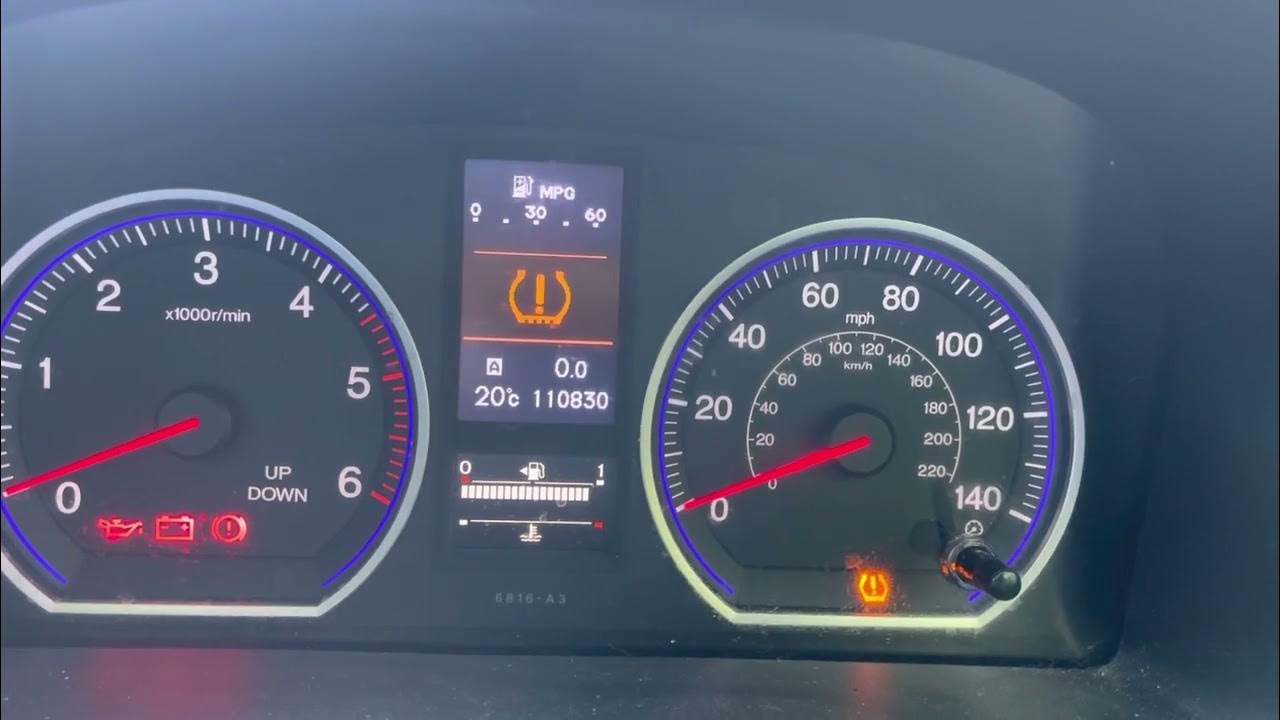
When the tire pressure light refuses to clear despite proper inflation and correct reset procedures, your CRV is signaling a more serious problem with the TPMS system itself. A flashing light that eventually becomes solid indicates sensor communication failure, while a constantly illuminated light usually means one or more sensors have stopped transmitting data. Each TPMS sensor contains a non-replaceable lithium battery with a typical lifespan of 7-10 years—once depleted, the sensor stops functioning. Modern CRVs store diagnostic trouble codes that identify which specific wheel’s sensor has failed, but retrieving these codes requires specialized equipment.
Common TPMS Failure Indicators
- Warning light appears immediately after starting the vehicle (not after driving)
- Light remains illuminated even after multiple reset attempts
- Different warning messages appear on the dashboard display (e.g., “TPMS Malfunction”)
- Recent tire service (rotation, replacement, or repair) preceded the warning
- Cold weather exacerbates the problem (failing sensors often struggle in low temperatures)
Critical Warning: Never ignore a persistent TPMS light—even if your tires feel properly inflated. A failed sensor means you have no warning if actual low pressure develops, putting you at risk for tire failure.
Replace Failed TPMS Sensors Properly
Replacing a faulty TPMS sensor requires specialized tools and knowledge, making it a job most owners should entrust to professionals. Each sensor mounts inside the wheel assembly and connects to the valve stem, requiring tire removal for access. Attempting DIY replacement without proper equipment often results in damaged sensors or wheels.
Professional Sensor Replacement Process
- Technician identifies the failed sensor using a TPMS scan tool
- Removes the affected tire from the wheel
- Detaches the old sensor from the valve stem inside the wheel
- Installs the new sensor with fresh sealing components
- Rebalances the tire and remounts it on the wheel
- Registers the new sensor to your CRV’s system using diagnostic equipment
- Performs a full TPMS reset and verification drive
Sensor costs range from $45-$85 per wheel depending on brand (OE Honda sensors cost more but ensure perfect compatibility), with installation typically $25-$40 per tire. For CRVs with over 80,000 miles, many owners replace all four sensors simultaneously since they likely have similar battery life remaining.
Utilize OBD-II Scanners for Advanced Diagnostics
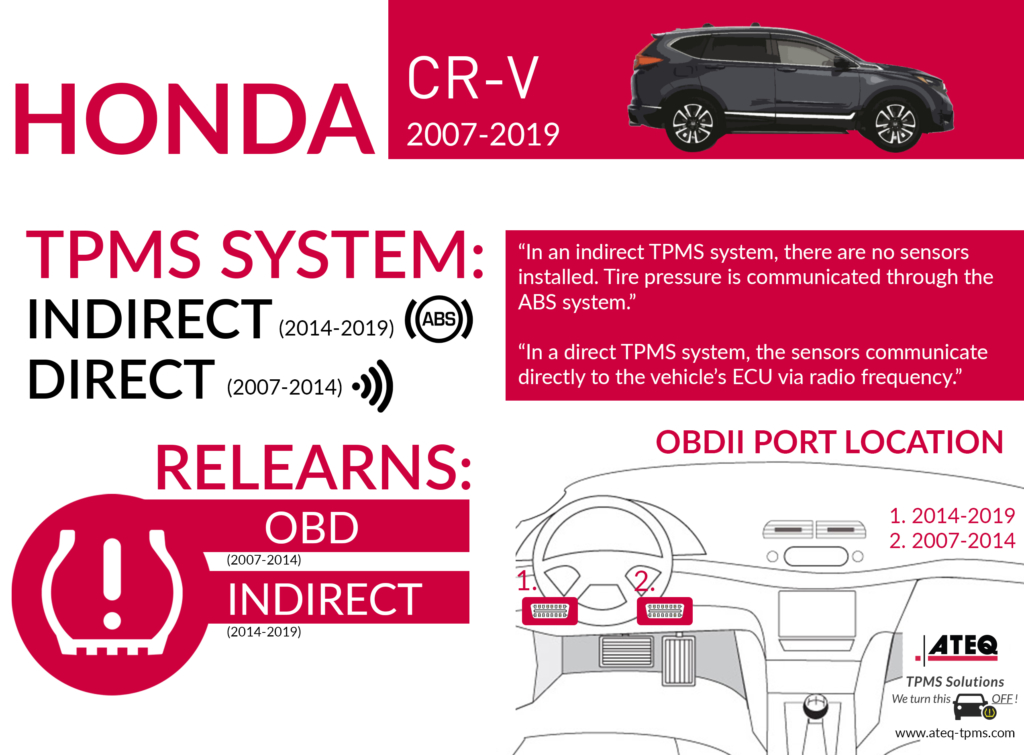
While dashboard resets work for standard low-pressure situations, persistent warning lights often require professional-grade OBD-II scanners with TPMS functionality. These tools connect to your CRV’s diagnostic port (located beneath the driver’s dashboard) and can:
- Read specific TPMS trouble codes identifying which sensor has failed
- Display real-time pressure readings from each tire
- Perform sensor relearn procedures after replacement
- Clear stubborn warning lights that dashboard controls can’t reset
Basic OBD-II code readers (under $50) typically lack TPMS capabilities—look for models specifically advertising “TPMS reset” or “sensor relearn” functions. Many auto parts stores (AutoZone, O’Reilly, Advance Auto Parts) offer free diagnostic scans that can identify sensor issues, potentially saving you a service fee if the problem is simple.
Implement Proactive Tire Pressure Maintenance
The most effective way to prevent TPMS warning lights is maintaining proper tire pressure through regular checks and seasonal adjustments. Temperature fluctuations significantly affect tire pressure—pressure drops approximately 1 PSI for every 10°F decrease in ambient temperature. During winter months, check pressures weekly as cold mornings followed by warm afternoons create substantial pressure variations.
Essential Tire Maintenance Routine
- Check pressures monthly using a quality digital gauge (never rely on gas station gauges)
- Inflate to the exact specifications on your door jamb sticker (not the tire sidewall)
- Increase pressure by 3-4 PSI during extreme cold weather (below freezing)
- Check pressures before long trips or highway driving
- Inspect tires for slow leaks if pressure consistently drops between checks
- Replace valve stem caps (they maintain pressure and keep debris out)
Expert Note: Properly inflated tires improve fuel economy by up to 3% and extend tire life by as much as 15%, making regular pressure checks one of the most cost-effective vehicle maintenance tasks.
Recognize When Professional Help Is Necessary
Certain TPMS issues require professional diagnosis and repair that exceed DIY capabilities. Seek professional assistance if:
– The warning light flashes continuously for more than 90 seconds
– Multiple warning lights appear simultaneously (ABS, VSA, and TPMS)
– You’ve recently had tire service and the light won’t clear
– You notice physical damage to any tire valve stems
– The TPMS warning appears along with handling issues or unusual noises
Most Honda dealerships charge $100-$150 for TPMS diagnostics and reset, while independent shops typically charge $50-$80. However, this professional assessment prevents costly mistakes from misdiagnosis—especially important since TPMS sensors represent a significant investment if replaced unnecessarily.
Clearing your Honda CRV’s tire pressure light usually requires nothing more than proper inflation and a simple reset when the system triggers correctly. When the light persists despite correct pressures, the issue almost always involves failing TPMS sensors that need professional replacement. By implementing regular tire pressure checks and understanding your CRV’s specific reset procedures, you’ll eliminate unnecessary service visits while maintaining optimal safety and performance. Remember that the tire pressure warning light exists for your protection—never ignore it, and always address the underlying cause rather than just clearing the symptom.