That persistent flashing tire pressure light on your Ford Ranger dashboard can be incredibly frustrating, especially when you know your tires are properly inflated. This warning indicator serves as your truck’s critical communication system for tire health, and understanding its specific flashing pattern is essential for proper diagnosis. Unlike a steady illuminated light that typically signals low tire pressure, a flashing tire pressure light indicates a malfunction within the tire pressure monitoring system (TPMS) itself. Ignoring this warning could compromise your safety on the road and potentially lead to more expensive repairs down the line.
When your Ford Ranger’s tire pressure light begins flashing, it’s sending a clear signal that requires immediate attention. The flashing pattern—usually blinking continuously for 60 to 90 seconds before settling into a steady state—means your TPMS has detected an internal system problem rather than simply reporting low pressure. This distinction is crucial because the troubleshooting process differs significantly between a straightforward pressure issue and a system malfunction. Getting this diagnosis right from the start saves you time, money, and unnecessary service visits.
Decoding Your Ford Ranger’s Flashing TPMS Light Pattern
The specific behavior of your tire pressure light reveals exactly what’s wrong with your system. A solid illuminated TPMS warning typically means one or more tires have dropped below the recommended pressure threshold by approximately 25%. However, when the light flashes continuously for about 60-90 seconds before becoming steady, your Ford Ranger is signaling a TPMS system malfunction rather than a simple pressure issue.
This flashing pattern, technically known as the “TPMS warning lamp malfunction indicator,” means your truck cannot accurately monitor tire pressure. Without functioning sensors, you lose the ability to detect dangerous underinflation before it causes tire damage or safety hazards. The system enters this fault mode when it detects communication failures between the sensors and the vehicle’s receiver module. Recognizing this specific pattern prevents you from wasting time checking tire pressures when the real issue lies with the monitoring system itself.
Most Common Causes of Flashing TPMS Light on Ford Ranger
Temperature fluctuations represent one of the most frequent triggers for a flashing tire pressure light, especially during seasonal transitions. As ambient temperatures drop, tire pressure naturally decreases—approximately 1 PSI for every 10-degree Fahrenheit decrease. When these changes push pressures near the system’s threshold, the TPMS may enter malfunction mode rather than simply reporting low pressure.
Sensor battery failure ranks as the second most common cause of persistent flashing lights. TPMS sensors contain internal batteries designed to last five to ten years, but constant exposure to road vibrations, temperature extremes, and moisture accelerates their degradation. When a sensor battery fails, it can no longer transmit pressure data to your Ranger’s receiver, causing the system to register a malfunction even when tire pressures are perfect.
Physical damage to sensors often occurs from road debris, curb impacts, or aggressive off-road driving. Since sensors mount inside each wheel assembly on valve stems, they’re vulnerable to damage during tire changes or when wheels scrape against obstacles. Even minor impacts can dislodge sensors or damage internal components, disrupting communication with the TPMS module and triggering that annoying flashing light.
Essential Visual Inspection Steps Before Diagnosis

Before attempting complex diagnostics, perform these critical visual checks on all four tires:
- Examine each valve stem for damage, corrosion, or debris accumulation
- Verify valve stem caps are securely in place (missing caps allow dirt and moisture entry)
- Inspect tire sidewalls for bulges, cuts, or embedded objects
- Confirm all tires match the manufacturer’s recommended pressure specification
- Check for uneven wear patterns that might indicate alignment issues
- Ensure all tires are the same size and type as originally equipped
Document any irregularities you find during this inspection, as they provide valuable clues to the underlying problem. Pay special attention to the valve stem area where sensors attach—this is a common failure point that’s easily overlooked. If you notice damaged valve stems or missing caps, addressing these issues might resolve your flashing light problem without further diagnostics.
Step-by-Step TPMS Reset Procedure for Ford Ranger
If your visual inspection reveals no obvious issues, attempt a TPMS reset following these model-specific procedures:
For most Ford Ranger models, begin with the ignition in the “on” position (without starting the engine). Locate the TPMS reset button, typically found beneath the steering wheel or in the fuse panel area. Press and hold this button until the tire pressure light flashes three times, then release. Start the engine and drive above 50 mph for approximately ten minutes to complete the relearn process.
If your Ranger lacks a dedicated reset button, access the tire pressure monitoring menu through your steering wheel controls or infotainment screen. Navigate to the TPMS settings and select the reset or relearn option. Follow the on-screen prompts carefully, which usually involve confirming each tire’s position as the system detects sensor signals. This method is standard for newer Ranger models with digital driver displays.
When to Verify Tire Pressure Manually
Even with a functioning TPMS, regular manual pressure checks remain essential for accurate readings. Use a quality digital tire pressure gauge (analog gauges are less precise) and check tires when they’re cold—meaning the vehicle hasn’t been driven for at least three hours or more than one mile.
Compare your measurements against the manufacturer’s specification, typically 30 PSI for front tires and 35 PSI for rear tires on two-wheel-drive Ford Rangers. All-terrain or heavy-duty configurations may differ, so always verify against your specific model’s placard inside the driver’s door jamb. If any tire measures more than 2-3 PSI below specification, inflate it to the correct pressure.
After adjusting pressures, monitor the TPMS light for several driving days. If the light remains solid rather than flashing after proper inflation, the system may simply need time to register the correction. However, if the light resumes flashing despite correct pressures, you’ve confirmed a sensor or system malfunction requiring further attention.
Diagnosing Sensor Failure vs System Malfunction
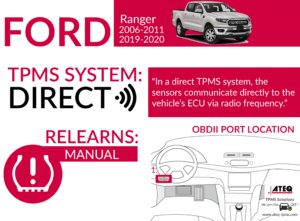
Distinguishing between a failed sensor and broader TPMS issues determines your repair approach. If one specific tire consistently shows pressure errors while others display normally, the problem likely involves that tire’s individual sensor. Conversely, if all tire readings appear erratic or unavailable, the issue probably concerns the TPMS receiver module, wiring harness, or central control unit.
A simple diagnostic test involves temporarily swapping a suspected malfunctioning sensor with a known good sensor from another wheel. If the problem follows the sensor to its new location, you’ve confirmed sensor failure. If the problem stays with that wheel position regardless of which sensor is installed, the issue lies with the wheel well mounted receiver antenna or wiring connection.
Sensor Replacement Costs and Considerations

When sensor replacement becomes necessary, understand your options before proceeding. Ford Ranger TPMS sensors require tire removal for access, making professional installation typically cost $50 to $100 per sensor including mounting and programming. The sensors themselves range from $30 to $80 each from Ford dealers or reputable aftermarket suppliers.
OEM sensors from Ford ensure perfect compatibility but command premium pricing. Aftermarket sensors offer comparable performance at lower cost, though you must verify compatibility with your specific model year. Some aftermarket sensors require specific programming to match your Ranger’s TPMS frequency—confirm this before purchasing to avoid returns or additional programming fees.
Consider replacing all four sensors simultaneously if your Ranger has high mileage. While single-sensor replacement solves immediate problems, aging sensors will likely fail in sequence, leading to repeated TPMS warnings and additional service visits. Bulk replacement often proves more economical when accounting for labor costs.
Temperature Sensitivity and False Alerts Prevention
Temperature fluctuations significantly impact both tire pressure readings and TPMS behavior. Cold mornings frequently trigger pressure warnings as overnight cooling drops tire pressure several PSI below daytime levels. This represents normal physics rather than a system problem, but can confuse drivers unfamiliar with temperature-pressure relationships.
Prevent false alerts through proactive maintenance:
– Inspect valve stems and sensor assemblies during every tire rotation
– Maintain tire pressures at specification year-round, checking monthly
– Always install valve caps to protect against moisture and debris
– Avoid using tire sealants unless absolutely necessary
– Reduce pressures by 2-3 PSI for winter driving to account for cold contraction
Professional Diagnostic Options Worth Considering
When DIY troubleshooting fails, professional diagnosis provides comprehensive system evaluation. Dealership service departments possess factory scan tools capable of reading detailed TPMS diagnostic data, including sensor battery voltage and transmission history. This information pinpoints failing components with certainty rather than guesswork.
Independent shops with TPMS expertise often provide more competitive pricing while maintaining equally capable diagnostic equipment. Request a written estimate detailing all potential charges before authorizing work. Some mobile tire services now offer TPMS programming and sensor replacement at your location, eliminating the need to drive with a malfunctioning system.
Final Resolution Steps for Persistent Flashing Lights
A flashing tire pressure light demands attention but rarely indicates catastrophic failure. Most cases resolve through proper pressure adjustment, sensor replacement, or system resets. Understanding the difference between pressure warnings and system malfunctions guides your troubleshooting approach.
Regular tire maintenance—proper inflation, periodic rotations, and damage inspections—keeps your TPMS functioning reliably. When sensor replacement becomes necessary, weighing OEM against aftermarket options and considering bulk replacement for high-mileage vehicles optimizes long-term value. Addressing flashing warning lights promptly ensures your Ford Ranger continues providing the safety and performance you expect, keeping you and your passengers protected on every journey. Remember that while the flashing light indicates a system problem, your tires remain fully functional—you just lack the monitoring protection until the issue is resolved.