That flashing tire pressure light on your Nissan dashboard isn’t just an annoyance—it’s a specific diagnostic signal demanding immediate attention. Unlike a steady TPMS light indicating simple underinflation, a flashing tire pressure light Nissan owners see signals a malfunction within the tire pressure monitoring system itself. This critical distinction changes how you address the problem. A steady light might resolve with air fill, but a flashing light points to sensor failures, electrical issues, or communication problems requiring deeper investigation. Understanding what triggers this warning and how to address it properly saves time, money, and frustration from repeated service visits.
Modern Nissan vehicles rely on sophisticated TPMS technology to monitor tire pressure in real-time. When this system detects a fault—anything from a dying sensor battery to damaged wiring—it responds by flashing the warning light instead of displaying a steady alert. This flashing pattern tells you the vehicle can’t trust the pressure data it’s receiving, or one or more sensors have stopped communicating entirely. This guide walks you through common causes of a flashing tire pressure light in Nissan vehicles, provides diagnostic procedures you can perform yourself, and helps determine when professional assistance becomes necessary.
What Flashing TPMS Light Indicates
A flashing tire pressure light in your Nissan communicates a specific system status that differs significantly from a steadily illuminated warning. When the light flashes continuously for approximately 60 to 90 seconds before transitioning to a steady glow, the system is alerting you to a malfunction rather than simple underinflation. This fault condition persists until the underlying issue is resolved and the system is reset, meaning the problem won’t disappear on its own even if tire pressures return to normal specifications.
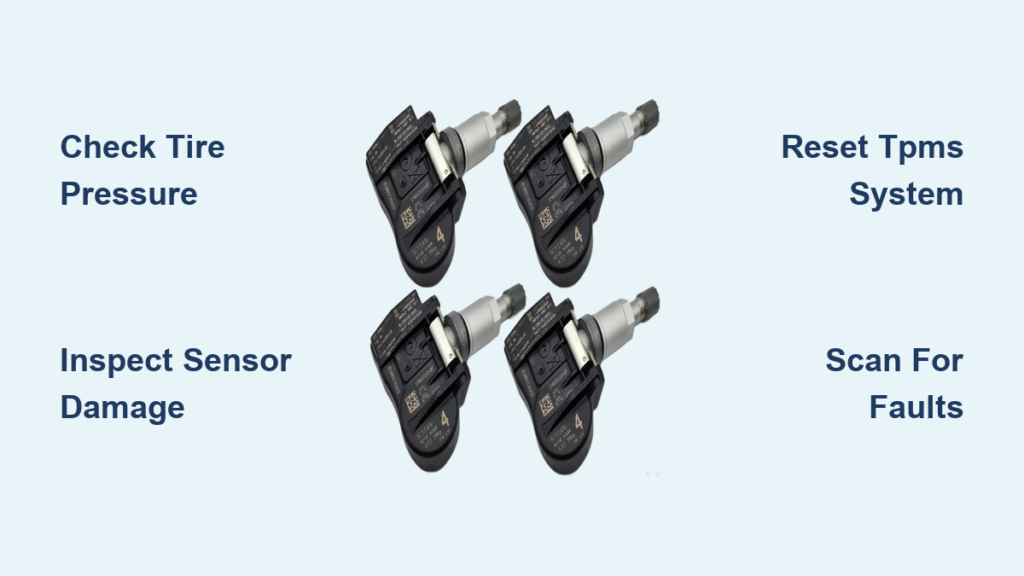
The TPMS control module monitors communication with each wheel-mounted sensor, tracking signal strength, battery voltage, and data consistency. When the module detects a sensor that has stopped transmitting, produces erratic signals, or fails internal diagnostics, it triggers the flashing warning pattern. Similarly, if multiple sensors show inconsistent readings simultaneously, or if the receiver module itself experiences communication errors, the system defaults to the fault warning mode. This built-in failsafe ensures you don’t inadvertently rely on potentially incorrect pressure information.
Understanding your Nissan’s specific TPMS configuration helps frame the diagnostic process. Most Nissan models from 2013 onward use direct TPMS, where individual sensors in each tire continuously transmit pressure data to a central receiver. Some earlier or more basic trims utilize indirect systems that estimate pressure based on wheel speed differences detected through the ABS system. Direct systems are more precise but introduce more components that can fail, while indirect systems have fewer failure points but can’t pinpoint which specific tire is experiencing issues.
Common Causes of Flashing Warning
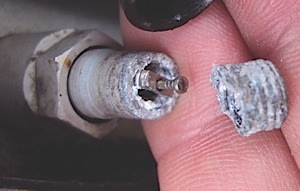
The flashing tire pressure light on your Nissan most frequently stems from a handful of recurring problems that affect TPMS reliability. Sensor battery depletion ranks as the leading cause, as the lithium-ion batteries inside wheel-mounted sensors typically last five to ten years before their power output diminishes to the point of unreliable transmission. When batteries weaken, sensors may transmit intermittently, produce signals too weak for the receiver to process consistently, or cease transmission entirely—any of which triggers the system fault warning.
Physical damage represents another primary culprit behind flashing TPMS lights. TPMS sensors mount inside each tire, attached to the valve stem, making them vulnerable to impact damage from potholes, curbs, and road debris. Corrosion around valve stem components, particularly in regions where road salt and moisture are prevalent, can compromise electrical connections and sensor housing integrity. Even routine tire service poses risks if technicians aren’t careful—tire mounting irons can crack sensor housings, and excessive force during bead seating can damage internal components. The sealed design that protects sensors from the tire environment also means that once damaged, sensors typically require complete replacement rather than repair.
Wireless signal interference presents a less obvious but equally problematic cause of TPMS malfunctions. The radio frequency signals that sensors transmit can be disrupted by electronic interference from aftermarket accessories, nearby radio transmitters, or even certain vehicle configurations. The TPMS control module itself may experience glitches, connector corrosion, or electrical faults that prevent proper sensor communication. Additionally, rapid temperature fluctuations can cause sensor electronics to behave erratically, particularly in extreme cold conditions where battery performance diminishes and internal components stress from thermal cycling.
Quick Diagnostic Steps to Identify the Problem
When your Nissan’s TPMS light begins flashing, start your diagnosis with the most straightforward checks before moving to more complex procedures. First, verify actual tire pressures across all four tires using a reliable pressure gauge—don’t rely on dashboard displays alone for critical diagnosis. Remove the valve cap, press the gauge firmly onto the valve stem, and record the reading for each tire. Compare these readings to the manufacturer’s recommended pressure listed on the driver-side door jamb placard or in your owner’s manual. Add air as needed to reach specifications, being careful not to overinflate. After adjusting pressures, the light may require a specific driving cycle to reset, typically involving speeds above 15 mph for several minutes.
If pressure normalization doesn’t resolve the flashing light, conduct a visual inspection of each sensor through the valve opening. Look for obvious signs of damage: cracked sensor housings, corrosion deposits, moisture inside the housing, or damaged valve stems. Check that valve cores seal properly and that valve nuts are tight enough to seal against the wheel without cracking the sensor housing. Note that some Nissan TPMS sensors mount in positions that make visual inspection difficult without tire removal, in which case you’ll need to proceed to electronic diagnostics or professional assessment.
Document which tires required pressure adjustment and whether the light behavior changes after your intervention. Tires that consistently lose pressure may indicate slow leaks that are triggering sensor warnings, while tires that maintain pressure but still trigger the flashing light suggest sensor electronics problems rather than inflation issues. This documentation helps narrow the diagnostic path and provides valuable information if you need to consult a professional technician.
Nissan-Specific TPMS Characteristics
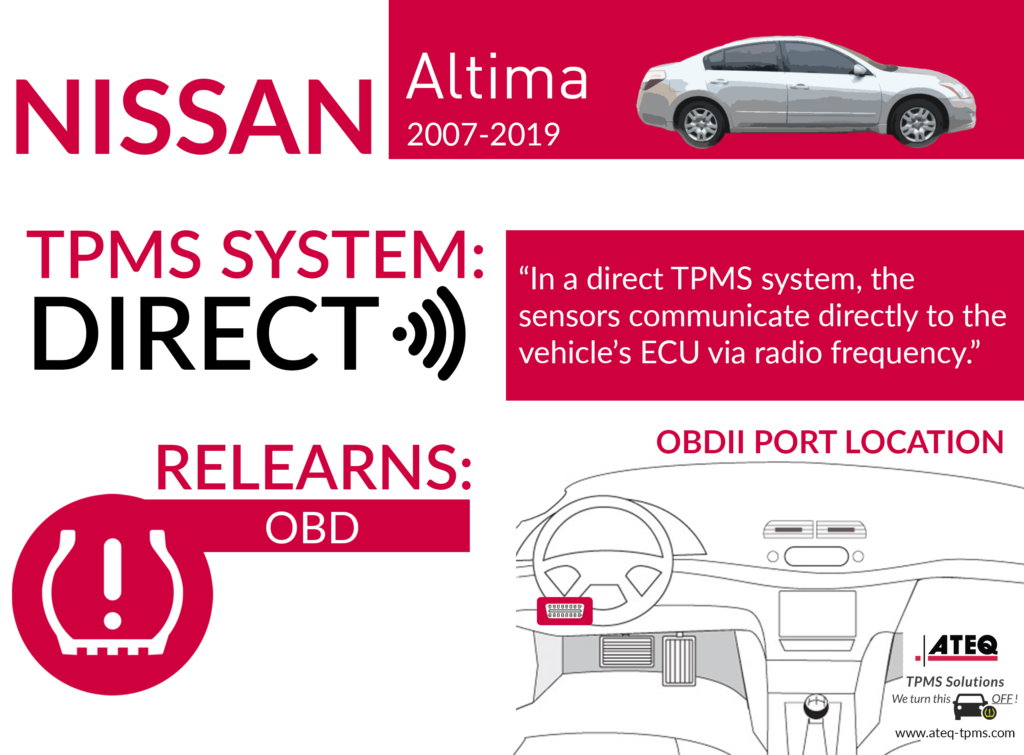
Different Nissan models exhibit unique TPMS behaviors and common failure patterns that inform effective diagnosis and repair. The Altima and Sentra incorporate direct TPMS sensors with identification protocols specific to these platforms. These vehicles typically display individual tire pressure readings on the vehicle information display when warnings activate, allowing you to identify which specific wheel is experiencing issues. The Altima’s system proves particularly sensitive to wheel weight placement during balancing procedures, as the sensor position can be affected by excessive weight concentration. Common issues in these models include valve stem corrosion at the sensor mounting point and premature battery failure in sensors manufactured during certain production periods.
Nissan’s crossover and SUV platforms, including the Rogue and Pathfinder, utilize TPMS systems calibrated for heavier load-carrying characteristics. The Rogue includes load-sensing capabilities that adjust warning thresholds based on detected vehicle weight, which can occasionally trigger false warnings when carrying heavy cargo or towing light trailers. The Pathfinder’s TPMS integrates with its vehicle dynamics control systems, meaning TPMS warnings may accompany stability control warnings if correlations between tire pressure and handling are detected. Both models have experienced occasional sensor communication issues related to TPMS control module locations that proved susceptible to water intrusion during severe weather events.
Truck owners driving the Frontier or Titan should note that these platforms incorporate TPMS systems calibrated for pickup truck applications, with higher rear tire pressure thresholds accounting for potential payload and trailer towing. The spare tire in many Nissan trucks contains an active TPMS sensor that can trigger warnings if significantly underinflated or if the sensor battery has depleted during long storage periods. Off-road activities pose particular risks, as impacts with rocks and obstacles can dislodge or damage wheel-mounted sensors. Maintaining spare tire pressure and function is particularly important for these vehicles.
When Professional Diagnosis Becomes Necessary
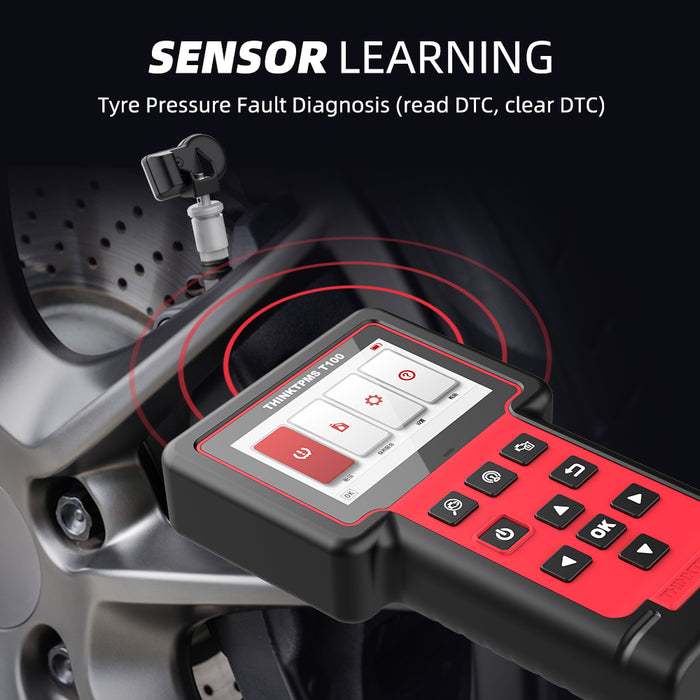
While many TPMS issues resolve through basic troubleshooting and component replacement, certain situations warrant professional diagnostic assessment. Intermittent TPMS warnings that appear and disappear without clear pattern may indicate signal interference, weak sensor batteries that are functioning inconsistently, or control module issues that require specialized equipment to diagnose accurately. These intermittent problems prove particularly frustrating to diagnose without professional-grade scan tools that can capture and analyze sensor communication patterns over time.
Warnings that appear alongside other dashboard indicator lights, particularly those related to braking, stability control, or electrical systems, may indicate broader vehicle issues that require comprehensive diagnostic assessment. The TPMS in many Nissan models communicates through the same CAN bus network as other vehicle systems, meaning TPMS warnings can sometimes be symptoms of larger electrical system problems. Low battery voltage, alternator issues, or other power supply problems can affect TPMS function, making it important to address the primary electrical issue rather than focusing exclusively on tire pressure components.
Vehicles that have been involved in accidents, even minor ones, may have damaged TPMS components that aren’t immediately apparent. Impact forces sufficient to damage wheels or suspension components can also damage wheel-mounted sensors or their wiring harnesses. If your TPMS light began flashing after a collision or impact event, professional inspection of both the sensor hardware and the TPMS control module location is advisable.
Maintenance Practices to Prevent TPMS Issues
Establishing regular tire pressure monitoring habits extends TPMS sensor longevity and prevents many warning light occurrences. Check tire pressures monthly when tires are cold, before driving, as pressure increases with heat generated during operation. Maintaining proper tire pressure reduces the frequency of TPMS warnings and minimizes stress on sensor components from pressure cycling. When adding air, avoid overinflation, which can cause the TPMS to register excessive pressure readings and potentially damage sensors over time through constant high-pressure stress.
Informing service providers that your vehicle is equipped with TPMS ensures appropriate handling during tire service. Request that technicians take precautions near sensor locations, use bead lubricants carefully to avoid getting lubricant on sensor components, and avoid using tire irons near the sensor when possible. After any tire service, verify that TPMS function is normal before leaving the facility. If the warning light appears after service, return immediately for assessment, as this may indicate damage that occurred during the service process.
Seasonal transitions, particularly into and out of winter, present opportunities for proactive TPMS maintenance in colder climates. Temperature drops can cause pressure decreases that trigger warnings, requiring more frequent pressure monitoring during winter months. Road salt and moisture exposure can accelerate valve stem corrosion, making post-winter inspection of sensor components advisable. Vehicle owners in severe winter climates should consider having TPMS function verified as part of spring maintenance routines.
The flashing tire pressure light on your Nissan serves as an important diagnostic tool, alerting you to TPMS malfunctions before they compromise your vehicle’s safety systems. By understanding what causes this warning, performing basic diagnostics, and knowing when professional assistance is warranted, you can address TPMS issues efficiently and effectively. Regular tire maintenance, proper handling during tire service, and attention to seasonal pressures help prevent many TPMS problems before they develop into warning conditions. When issues do arise, the combination of proper diagnosis and quality repairs ensures reliable TPMS function for miles to come.