That persistent blinking tire pressure light on your Toyota Camry dashboard isn’t just another warning—it’s sending a specific message about your TPMS (Tire Pressure Monitoring System) that requires immediate attention. Unlike a steady light indicating low tire pressure, a blinking pattern that continues for 60-90 seconds before becoming solid signals a system malfunction rather than simply underinflated tires. Understanding this distinction could save you hundreds in unnecessary repairs while ensuring your Camry maintains optimal safety performance on the road.
When your Camry’s tire pressure indicator starts its distinctive blinking pattern, the TPMS has detected it cannot properly read sensor data or has identified an electrical fault somewhere in the monitoring network. This guide delivers precise, model-specific solutions to diagnose, repair, and prevent Toyota Camry tire pressure light issues—all based on verified technical information for your exact vehicle. Whether you drive a 2007 model or the latest Camry, you’ll learn exactly what triggers this warning and how to respond effectively.
Why Your Camry Tire Pressure Light is Blinking (Not Staying Solid)
The blinking pattern of your tire pressure light carries critical information that distinguishes it from a steady warning. A solid illumination simply means tire pressure has dropped approximately 25% below Toyota’s recommended specification, triggering a low-pressure alert. In contrast, a blinking light that persists for 60-90 seconds before settling into a solid state tells you the system has encountered a malfunction and cannot reliably monitor tire pressure.
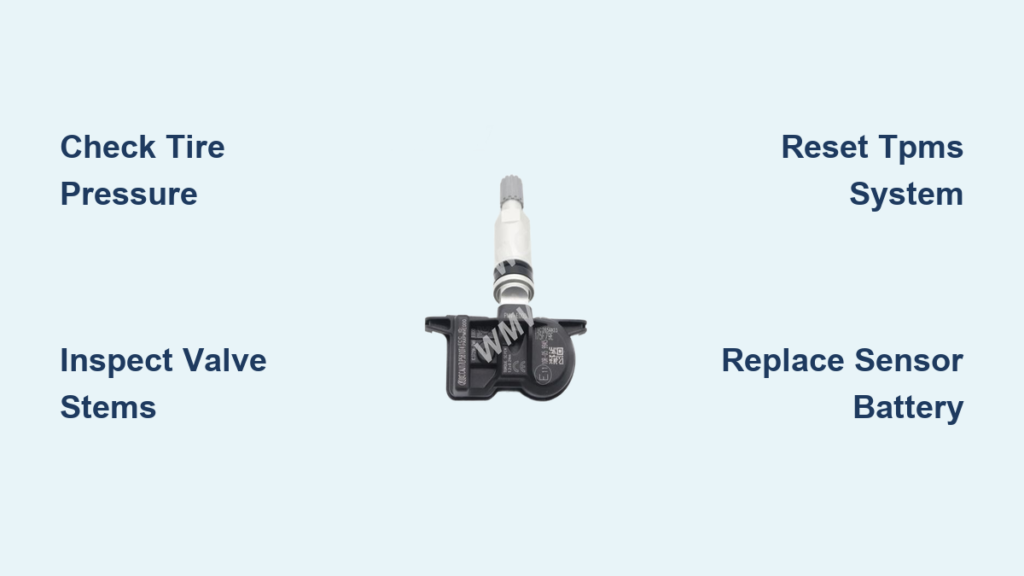
Your Camry uses direct sensing technology, with each tire containing a pressure sensor mounted on the valve stem. These sensors continuously measure actual tire pressure and transmit data to your vehicle’s electronic control unit. When the system detects a fault—whether from a dead sensor battery, damaged component, or electrical interference—it responds with the blinking warning pattern. Understanding this difference prevents unnecessary repairs and helps you communicate more effectively with service professionals when needed.
Top 4 Causes of TPMS Warning Light Blinking
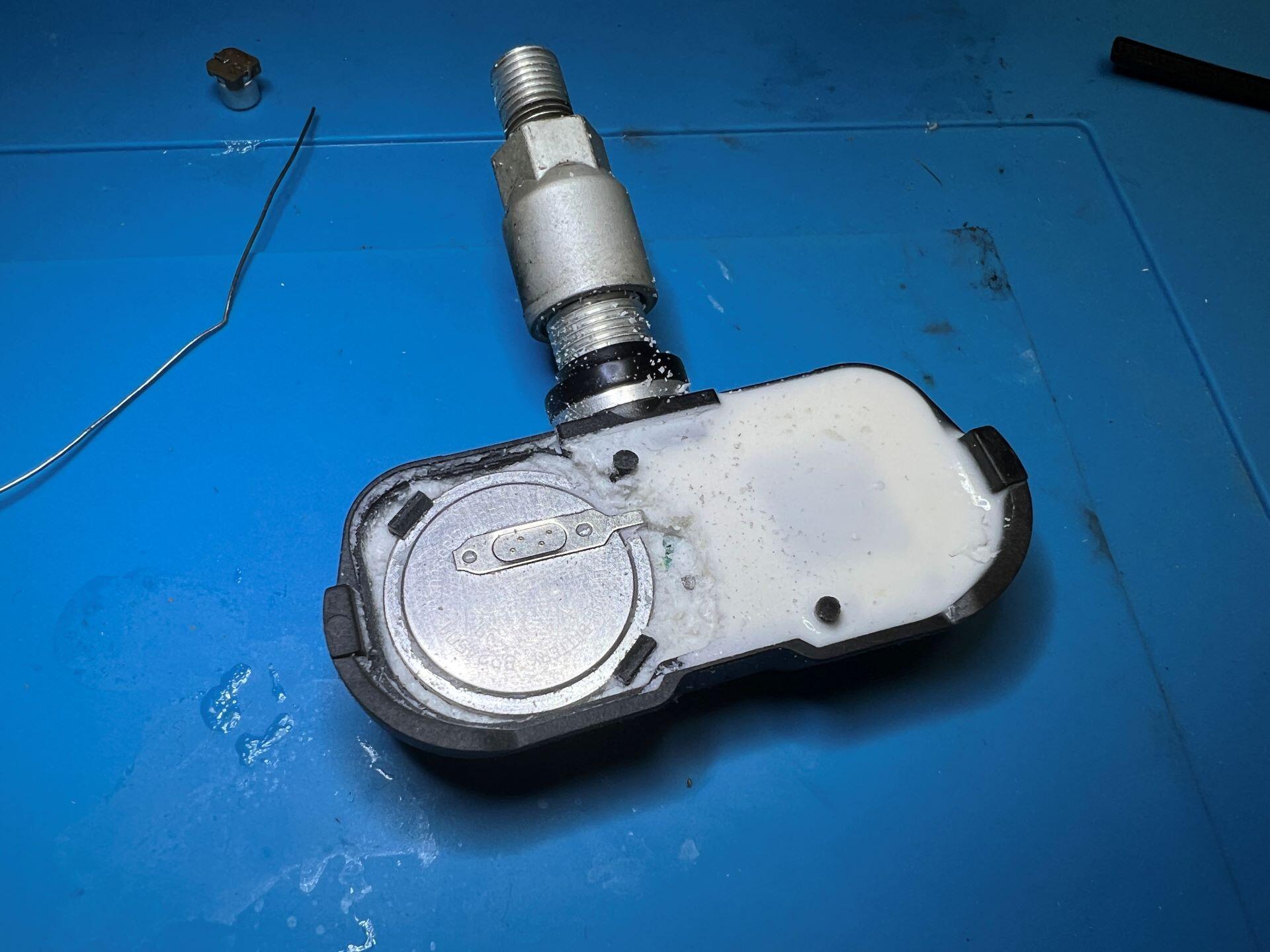
Dead Sensor Batteries (Most Common Cause)
Battery depletion causes over 60% of TPMS malfunctions in Toyota Camry vehicles. Each wheel-mounted sensor contains a small lithium-ion battery designed to last 5-10 years, but extreme temperature fluctuations and frequent short trips can accelerate battery degradation. When a sensor battery fails completely, the sensor stops transmitting data, triggering the blinking warning light. Sensor battery replacement typically costs $30-80 per sensor plus installation.
Physical Damage from Road Hazards
Hitting potholes at speed, striking curbs during parking, or road debris can damage sensor bodies, mounting hardware, or valve stems. Bent valve stems often cause slow air leaks that eventually trigger low pressure warnings, while direct impact trauma can render sensor electronics completely inoperative. If you’ve recently encountered significant road hazards and noticed the blinking light afterward, physical inspection of your wheel assemblies should be your first diagnostic step.
Electrical System Glitches
The TPMS operates within your Camry’s electrical ecosystem, making it vulnerable to wiring faults, connector corrosion, or ECU malfunctions. Corrosion at sensor connector terminals develops frequently in regions where road salt is applied during winter. Damaged antenna wires, blown fuses related to TPMS circuits, or interference from aftermarket electronic devices can all cause intermittent or complete system failures. Diagnosing these issues typically requires professional diagnostic equipment.
Signal Interference from Aftermarket Accessories
Aftermarket accessories like wireless tire pressure monitors, certain dash cameras, or smartphone mounts operating on similar radio frequencies can disrupt communication between your Camry’s TPMS sensors and the receiver module. Similarly, installing new sensors without proper coding to your vehicle’s ECU will trigger fault codes and blinking lights. Professional tire service facilities should perform TPMS relearn procedures following any tire or wheel service to prevent this issue.
3-Minute DIY Diagnostic Checklist
Before scheduling professional service, perform these quick checks that might resolve your blinking light without cost. These initial steps take only minutes and can identify common problems you can often address yourself.
Verify Correct Tire Pressure First
Begin by confirming all tires are properly inflated to Toyota’s recommended specifications (typically 32-35 PSI for front tires and 33-36 PSI for rear tires). Check pressures when tires are cold—meaning the vehicle has been parked for at least three hours. Use a quality pressure gauge rather than relying on air station displays. After adjusting pressures, drive for 10-15 minutes above 15 mph to allow the system to register updated readings.
Inspect Valve Stems for Damage
Look for signs of corrosion, damage, or foreign objects attached to valve cores. Gently press each valve core to ensure it clicks properly and doesn’t stick. Check that valve stem caps are present and tight, as missing caps allow moisture and debris into the sensor cavity. Examine each wheel for impact damage or bent rims that might indicate sensor trauma—especially important if you’ve recently hit potholes or curbs.
How to Reset Your Camry’s TPMS System Properly
Manual Reset Procedure for Older Models (2007-2017)
For many pre-2018 Camry models, the reset procedure involves inflating all tires to 3 PSI above recommended pressure. Then, deflate the driver’s front tire completely and wait for the horn to chirp, indicating system registration. Repeat this process for passenger front, passenger rear, and driver’s rear tires in sequence. Once complete, inflate all tires to correct specifications and verify the warning light has extinguished.
Simple Reset Method for Newer Camrys (2018+)
Newer Camry models feature simplified reset procedures. Locate the TPMS reset button (typically beneath the steering column or in the glove compartment), hold it until the tire pressure light blinks three times, then release. Start the vehicle and let it run for 20 minutes to complete the relearn process. This procedure programs the system to recognize current sensor locations and pressure readings without specialized equipment.
When You Need New TPMS Sensors
Sensor Replacement Cost Breakdown
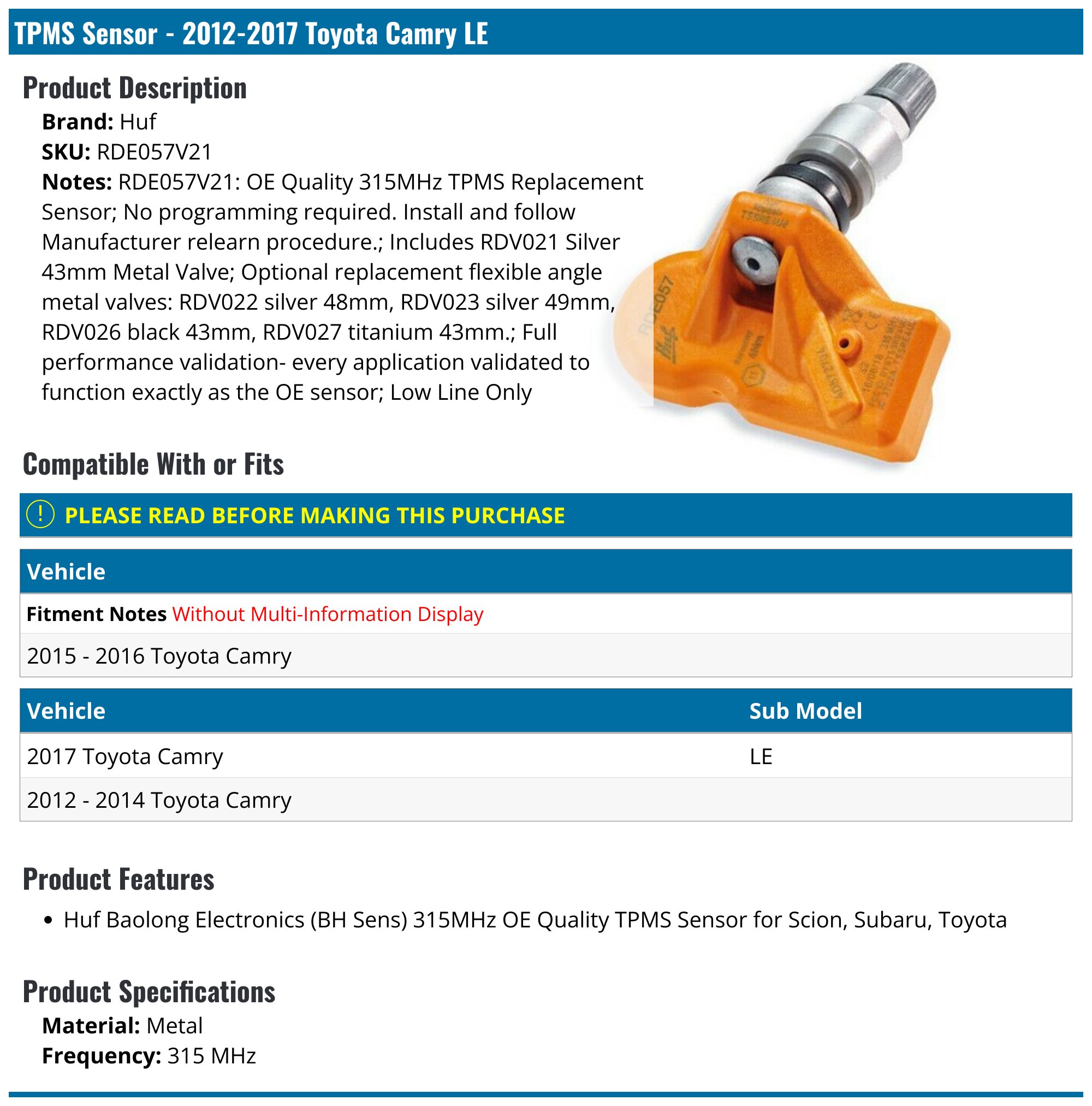
A single sensor replacement including parts and labor typically costs $100-150 at a Toyota dealership or $75-120 at an independent tire shop. If all four sensors require replacement due to age-related battery failure, total costs range from $300-600. Valve stem replacements add $10-30 per wheel. Some shops include TPMS relearn procedures in their pricing, while others charge an additional $30-75.
OEM vs. Aftermarket Sensor Options
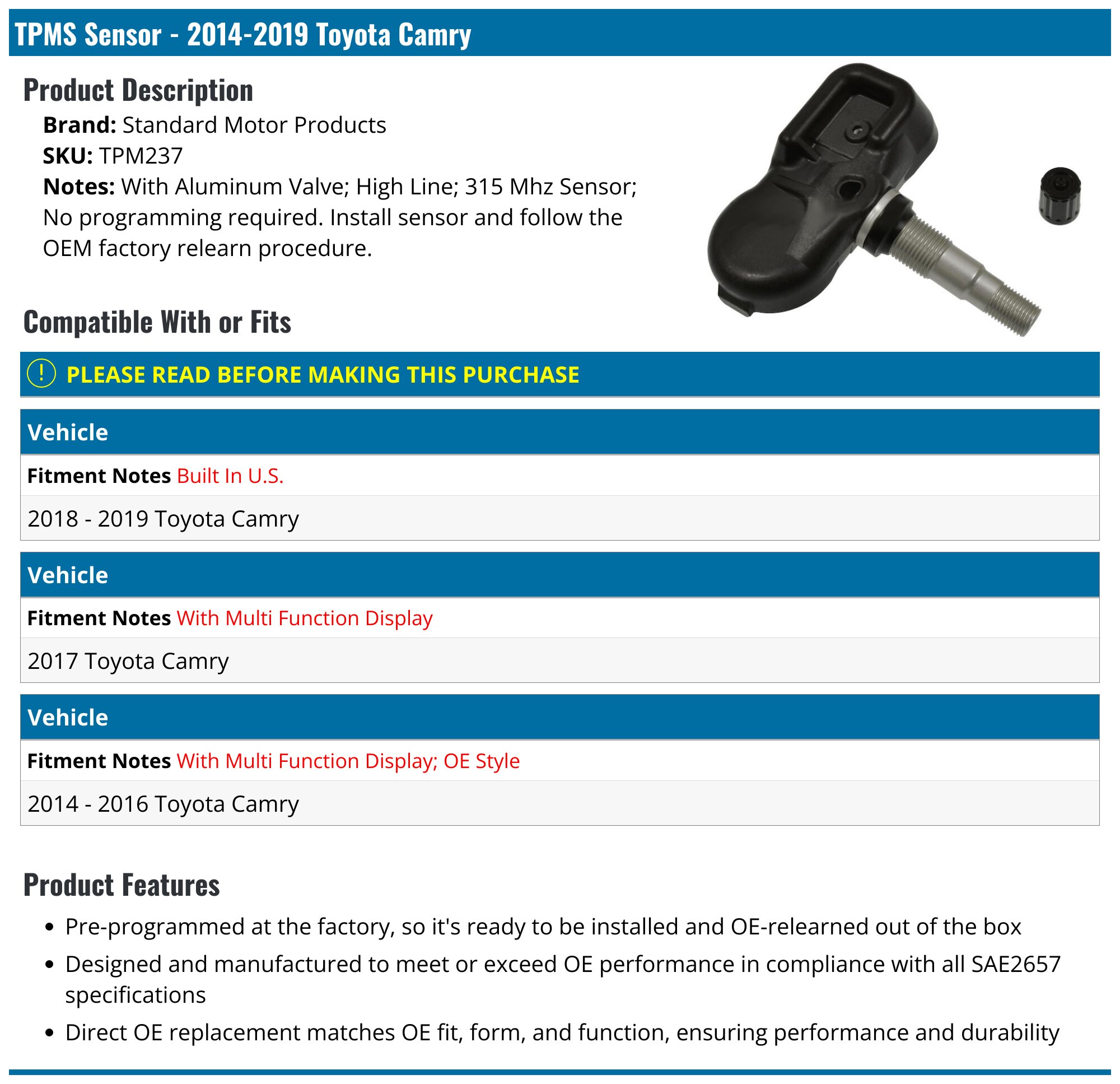
OEM sensors cost $50-80 each and are guaranteed compatible with your Camry’s TPMS system. Aftermarket sensors range from $15-40 each, but verify they’re specifically programmed for Toyota Camry applications. Match the frequency—315 MHz for 2007-2017 models and 433 MHz for 2018+ models—to ensure proper communication with your vehicle’s receiver.
Prevent Future TPMS Warning Lights
Monthly Maintenance Routine
Check tire pressures at least monthly using an accurate pressure gauge, including the spare if equipped with a sensor. Seasonal temperature changes significantly affect pressure—expect a 1 PSI drop for every 10°F decrease in ambient temperature. During winter months, tire pressure may decrease by 5-10 PSI compared to summer readings, potentially triggering unnecessary warnings.
Protecting Sensors During Tire Service
When having tires serviced, remind technicians your vehicle has TPMS and request careful handling of valve stems. Request OEM-quality valve core replacements rather than generic alternatives. Install valve stem caps on all wheel positions to protect valve cores from contamination. Avoid using high-pressure water spray directly at wheel assemblies when cleaning your vehicle, as water intrusion can damage sensor electronics.
When to Call a Toyota Specialist
Warning Signs Needing Professional Help
Seek professional diagnosis if the warning light blinks continuously for more than two minutes after starting your Camry, or if it blinks while driving despite proper inflation. Multiple sensors failing simultaneously often indicates a receiver module or electrical system issue rather than individual sensor failures. Professional diagnosis typically costs $50-100 but can prevent costly misdiagnosis and unnecessary part replacements.
Choose a service provider with specific experience on Toyota vehicles and proper TPMS diagnostic equipment. Dealership service departments have factory-level tools but charge 30-50% more than independent shops. Verify that any quoted sensor replacement includes programming and relearn procedures—some shops quote only parts costs. Quality sensors should carry 1-2 year warranties against premature failure.
A blinking tire pressure light on your Toyota Camry indicates your vehicle’s monitoring system needs attention, but it rarely requires emergency service. By understanding what the blinking pattern means, performing initial diagnostic checks, and knowing when professional assistance becomes necessary, you can resolve most TPMS issues efficiently and cost-effectively. Regular tire pressure maintenance and careful attention to warning patterns will keep your Camry’s monitoring system functioning reliably for years to come. Remember that proper TPMS function isn’t just about avoiding warning lights—it’s a critical safety feature that helps maintain optimal vehicle handling, fuel efficiency, and tire longevity.